
Bosch converts a gasoline V6 into a hydrogen-powered engine with over 650 horsepower that emits only water from its exhaust pipe.
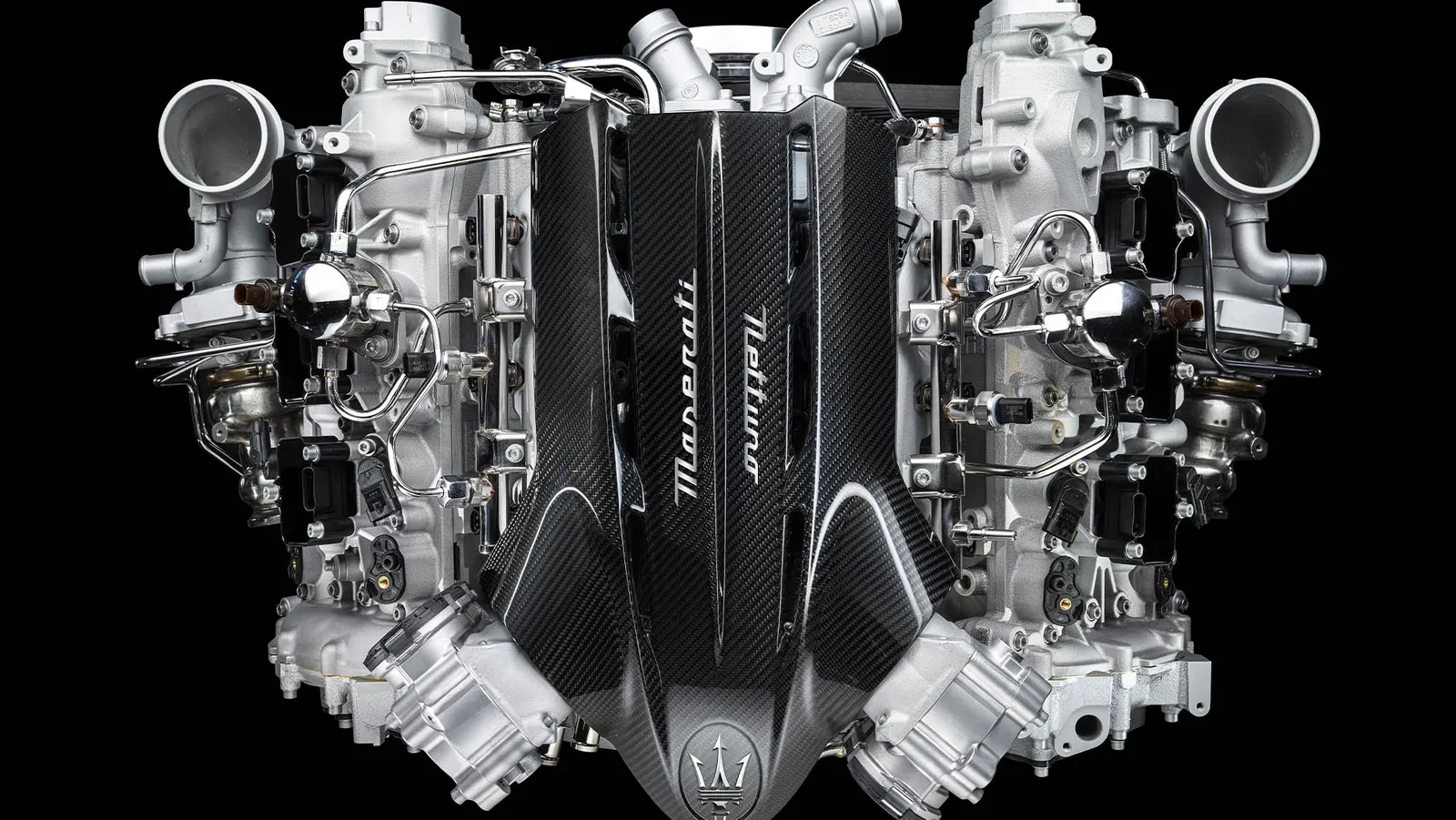
Electrification dominates automotive development, but hydrogen also opens new possibilities for internal combustion engines. Bosch has just demonstrated this with one of the most ambitious projects to date: transforming a gasoline V6 twin-turbo engine into a hydrogen-powered engine capable of producing 653 HP (480 kW) without starting from a completely new design.
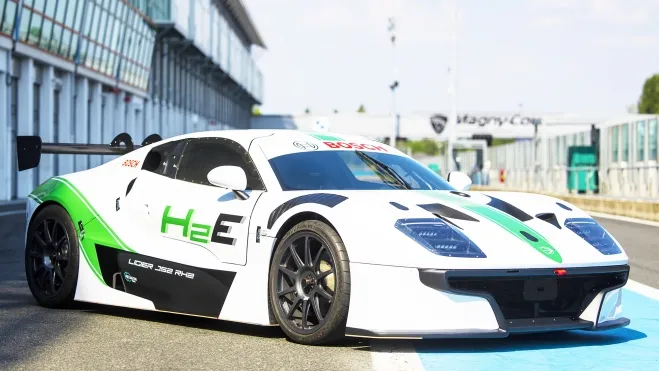
The result is embodied in the Ligier JS2 RH2, a racing prototype developed jointly by Bosch Engineering, Ligier Automotive, and Maserati, designed to validate hydrogen’s potential as a fuel in high-performance applications.
A Maserati engine converted to hydrogen
The heart of the project is the well-known Maserati Nettuno, a 3.0-liter V6 twin-turbo engine used in the brand’s Italian models. Rather than designing a new engine from scratch, engineers utilized this existing mechanism as a foundation to show that current engines can be adapted to alternative fuels while retaining much of their original architecture.
After the modification, the engine delivers 480 kW (653 horsepower) and a maximum torque of 880 Nm, figures typical of a modern supercar. Additionally, the prototype has already accumulated over 8,000 kilometers of testing on circuits, one of the most demanding environments for validating any propulsion technology.
Hydrogen internal combustion engines (not to be confused with fuel cells, which only produce water) burn H2 mixed with air in a conventional thermal engine, emitting primarily water vapor (H2O) and nitrogen oxides (NOx) through the exhaust. NOx is the most significant pollutant from this type of engine, and it actually requires NOx reduction systems similar to those in diesel engines (or lean mixtures/EGR to control it).
In very small amounts, trace amounts of CO2, CO, and hydrocarbons (HC) may be present, coming from the lubricating oil that burns partially in the cylinder. These amounts are minimal compared to gasoline or diesel engines. Additionally, for the same reason, traces of particulate matter may also be found.
Most of the original engine remains intact
The cylinder block, the overall architecture of the engine block, and the turbochargers continue to be those from the Maserati Nettuno. This decision shows that the transition to hydrogen-powered engines can leverage a significant portion of existing industrial knowledge and technology.
However, adaptation has required substantial modifications to the systems directly related to combustion.
Bosch Engineering has redesigned the pistons, developed a new ignition system, a specific electronic management system, and a completely different fuel supply system to address the unique properties of hydrogen.

Direct hydrogen injection to maximize performance
The main difference from a gasoline engine lies in the fueling system.
The prototype uses direct hydrogen injection technology via new Bosch HIDI LCV injectors, designed specifically for this type of application.
By injecting hydrogen directly into the combustion chamber with high precision, the system improves process stability, boosts engine performance, and helps reduce emissions, especially nitrogen oxides, thanks to much more precise combustion control.
A Technical Challenge Above 7,000 Revolutions
Adapting a racing engine for hydrogen involves overcoming challenges that are very different from those of a conventional engine.
To achieve this, Bosch optimized the injection strategy, mixture management, and electronic engine control, resulting in stable operation even under the high loads typical of a racing vehicle.
The Transformation Isn’t Limited to the Engine
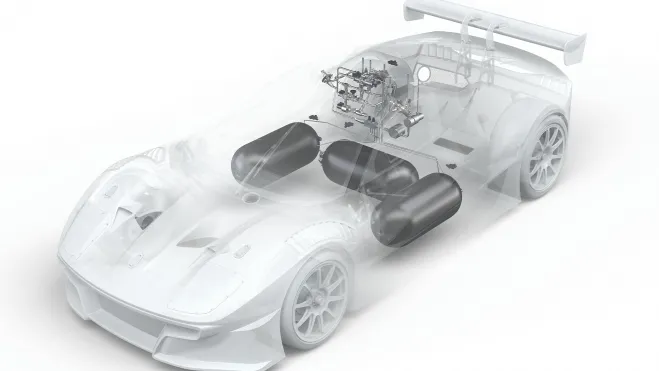
The Ligier JS2 RH2 features a specialized storage system consisting of three carbon fiber tanks capable of holding hydrogen at 700 bar pressure.
One of the tanks is located behind the cockpit, while the other two are integrated into the sides of the vehicle to optimize weight distribution and make better use of available space.
The entire system is monitored by the Hydrogen Storage Control Unit (HSCU), an electronic unit developed by Bosch that continuously tracks parameters such as pressure, temperature, and system status.
If any anomaly is detected, the control unit can activate various levels of protection, ranging from simple alerts to the driver to isolating specific circuits or completely disconnecting the system. Additionally, the vehicle is equipped with specialized sensors to detect potential leaks, ventilation ducts, and multiple safety measures designed to prevent hydrogen buildup.
The competition as a laboratory for the road
Although the Ligier JS2 RH2 was designed as a race vehicle, Bosch believes that the technologies developed through this project can later be applied to production vehicles.
Endurance racing represents one of the most demanding test environments for validating solutions related to fuel injection, electronic management, hydrogen storage, and safety systems.
This development also aligns with Bosch’s multitechnology strategy, which focuses on combining different solutions for decarbonizing transportation. In addition to hydrogen-powered combustion engines, the company is also working on fuel cell systems for heavy vehicles, electrolysis technologies, and solutions for the entire hydrogen value chain.
With this prototype, Bosch demonstrates that internal combustion engines still have room for improvement. Adapting existing mechanisms to work with hydrogen allows leveraging decades of industrial development and offering a high-performance alternative with significant potential to reduce emissions without sacrificing the driving experience typical of thermal engines.