
BMZ Poland and Chinese company Eve Energy are establishing a partnership. BMZ will manufacture batteries using LMFP cells from Eve.
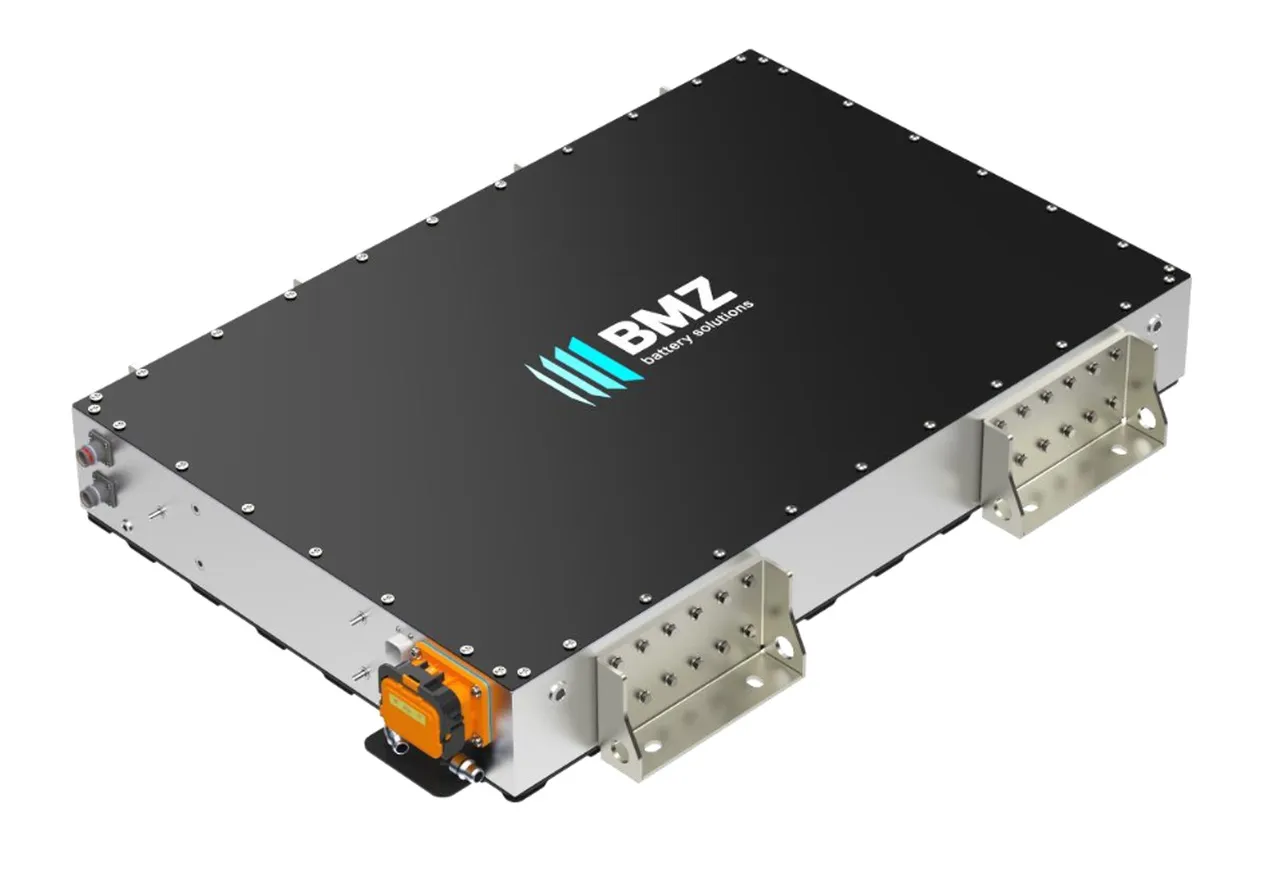
BMZ Poland, the Polish branch of Germany’s BMZ, and Eve Energy, a lithium-ion cell manufacturer that supplies cells to companies including BMW, announced a partnership under which BMZ Poland will develop battery packs using manganese-doped LFP (LMFP) cells produced by Eve Energy. These cells retain all the advantages of LFP cells while offering energy densities similar to those of high-nickel cathode cells (Li-NCM).
Will LMFP batteries start being used in buses, tractors, and trucks?
Table of contents
Will LMFP batteries start being used in buses, tractors, and trucks?
BMZ Versora, Li-NCM, and LMFP are physically and voltage-compatible
BMZ Poland handles heavy transportation, primarily buses. It has previously supplied Li-NCM batteries (lighter or larger capacity but more expensive) or LFP batteries (heavier or lower capacity but cheaper) – manufacturers adapted to both options, with the final decision resting with the customer who chose based on budget and vehicle application. We don’t have any reliable statistics, but by reviewing the awarded contracts, we had the impression that cities preferred Li-NCM batteries. However, this might be because larger cities have more money to spend and require greater range...
LMFP cells can create some confusion in the market. The new BMZ Versora line uses manganese-doped LFP cells, which, according to Eve Energy, can be 10 percent lighter than standard LFP cells (meaning they have a higher energy density). They also support charging at up to 1 MW and 2.2 C, allowing the battery to reach 10 to 80 percent charge in less than 25 minutes. Under the same conditions, a battery built with regular LFP cells [from Eve Energy] would take 35 minutes.
Example configuration of the BMZ Versora battery
The battery using LMFP cells is designed to withstand “over 4,500” full-depth discharge cycles until complete depletion, at which point it should exhibit a 20 percent degradation level (=80 percent of its original capacity). Additionally, at -20 degrees Celsius, its capacity is expected to be 85 percent of the nominal capacity compared to 75 percent for LFP [modern cells from Eve Energy]. The next generation of cells from a Chinese supplier promises even 5,500 discharge cycles with the same degradation level of -20 percent.
BMZ Versora, Li-NCM, and LMFP are physically and voltage-compatible
The new batteries will be suitable for use in buses, trucks, agricultural and construction machinery, as well as special-purpose vehicles and vessels. The Versora line offers two types of solutions (Compact, Versus) that can be installed in the floor, under the body, or traditionally on the roof. Their enclosures and voltages remain identical regardless of whether they contain LMFP cells or Li-NCM cells. Therefore, vehicle manufacturers will be able to use them interchangeably.
Pilot versions of the Versora NMC packs are already being delivered to key BMZ customers. Their mass production is set to begin in 2027. The first samples of Versora LMFP will appear in 2027, with mass production starting in 2028 (source).
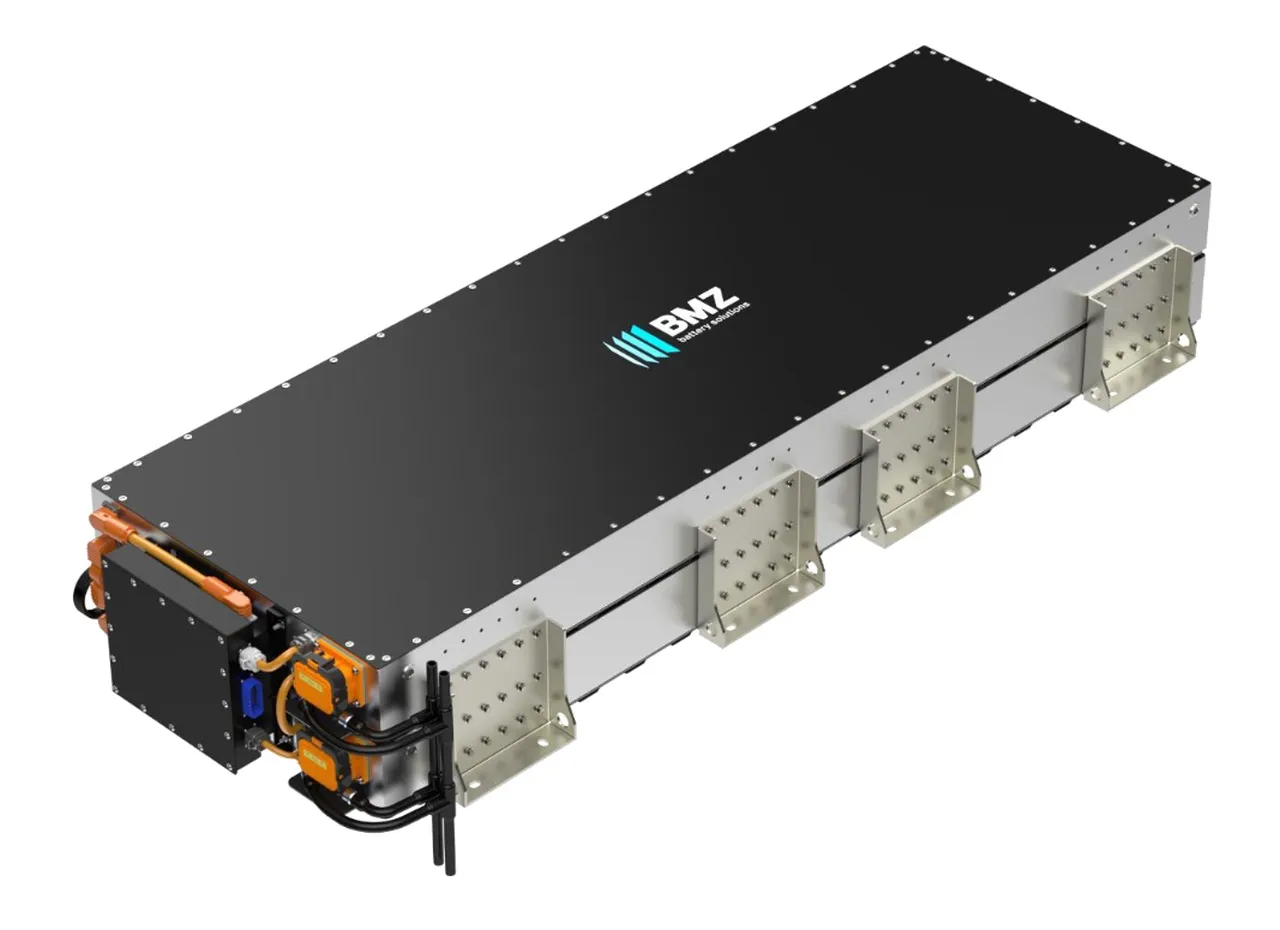
Another type of Versora pack (c) BMZ
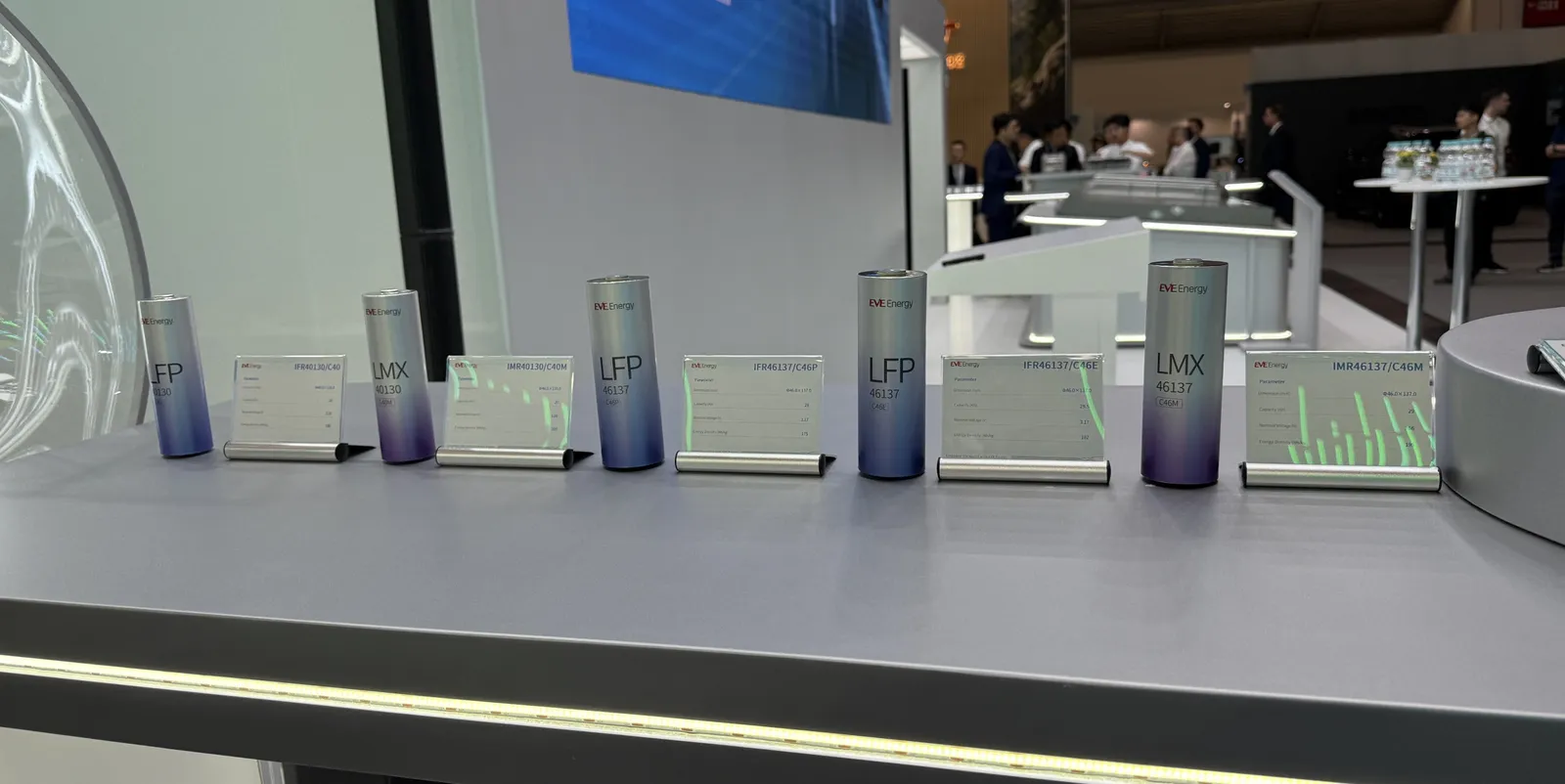
Editor’s note from Elektrowozu: Eve Energy uses the designation LMX for LMFP cells (image above), which should be interpreted as “manganese-doped cells with various chemistries.” Interestingly, just a year ago the company claimed this technology represented its greatest challenge and explained it in such vague terms that we assumed LMX referred to lithium-metal cells with metal halides.
Article rating
Readers’ ratings
[Total: 5 votes Average: 4.8]
Don’t miss new content — CLICK and FOLLOW Elektrowoz.pl on Google News. You might also be interested in the following ads: