
BMW has launched a Gen6 battery factory for 1 billion euros. Deliveries will begin first for the i3.
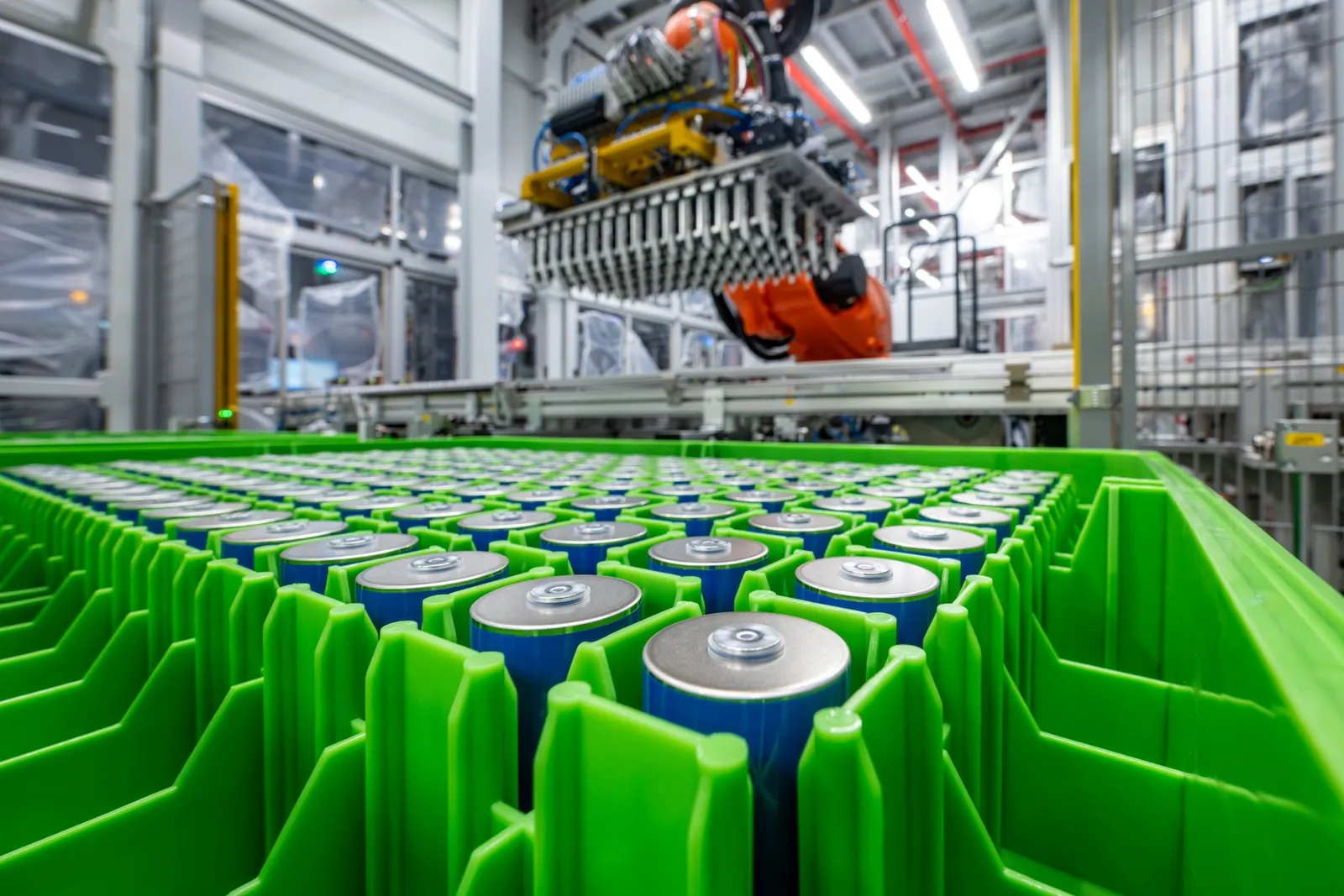
BMW officially opened its facility in Irlbach-Straßkirchen on October 2, 2026, and began mass production of Gen6 batteries. The Lower Bavarian plant already supplies batteries for the new BMW i3, which is being manufactured in Munich.
Construction started in April 2024, and the first pre-production batteries rolled off the assembly line in March 2026. Thus, the entire facility went into production after about two and a half years. BMW invested around 1 billion euros in this project, and due to high demand for the Neue Klasse models, it started operating on two shifts earlier than originally planned.
The factory covers an area of approximately 60 hectares. It is intended to produce several hundred high-voltage batteries per day on two assembly lines, with the workforce expected to grow to around 1,600 people. Bavaria’s Prime Minister Markus Söder attended the opening and spoke about the significance of this investment for the region’s industry and electric mobility sector.
The road to construction was not entirely smooth. The facility faced local opposition, and final approval came only through a referendum held among residents in September 2023. By spring 2025, BMW had already announced the completion of the main building and the start of installing production equipment.
Gen6 features cylindrical cells and an 800 V system
Irlbach-Straßkirchen does not produce the cells itself. BMW purchases them from external suppliers, where they are inspected, grouped into clusters, fitted with cooling systems, welded together, and reinforced with foam. The finished battery then undergoes final quality checks.
Gen6 uses cylindrical cells with a diameter of 46 mm, which BMW claims have about 20% higher energy density than the prismatic cells used previously. The company is also shifting to an 800 V architecture and a cell-to-pack design, meaning the cells are mounted directly inside the battery housing. The housing itself is then connected to the vehicle body structure in a setup known as pack-to-open-body.
The production process is highly automated. Approximately 500 robots operate on a surface area of around 50,000 m2, and over 3,500 data points are recorded during the assembly of each battery. AI-powered systems analyze these data points in real time to assist in controlling process quality.
The first BMW i3 will come equipped with a battery having a capacity of 108.7 kWh. For the i3 50 xDrive version, the manufacturer claims a WLTP range of up to 906 km, fast charging at up to 400 kW, and the ability to regain 423 km of range in just 10 minutes. The vehicle also supports two-way charging. These are BMW’s claims, with independent tests required to confirm their accuracy.
The German plant is part of a global network
The batteries produced in Lower Bavaria are also intended for use in other BMW car factories across Germany. Similar assembly plants are being established or already operating in Debrecen, Shenyang, Woodruff, and San Luis Potosí. The manufacturer describes this model as “local for local” because the batteries are meant to be manufactured as close as possible to the car factories.
BMW also claims to use recycled materials, including cobalt, lithium, and nickel, as well as renewable energy in the production of cells and electrode materials. According to the company, the CO2 footprint per watt-hour is expected to be about 33% lower than that of Gen5.
The infrastructure is supplemented by development and pilot production centers in Parsdorf, Hallbergmoos, and Munich. Starting at the end of 2025, a center for direct recycling of cells and production waste will also operate in nearby Salching. What’s most interesting now is not the speed at which 500 robots will work, but whether the series-produced i3 will truly achieve the promised 906 km range and 400 kW output outside of laboratory conditions.
LovEV Newsletter
Want more content like this?
Sign up — we’ll send you a weekly summary once the newsletter goes live.
