
BMW begins production of Gen6 batteries in Irlbach-Straßkirchen
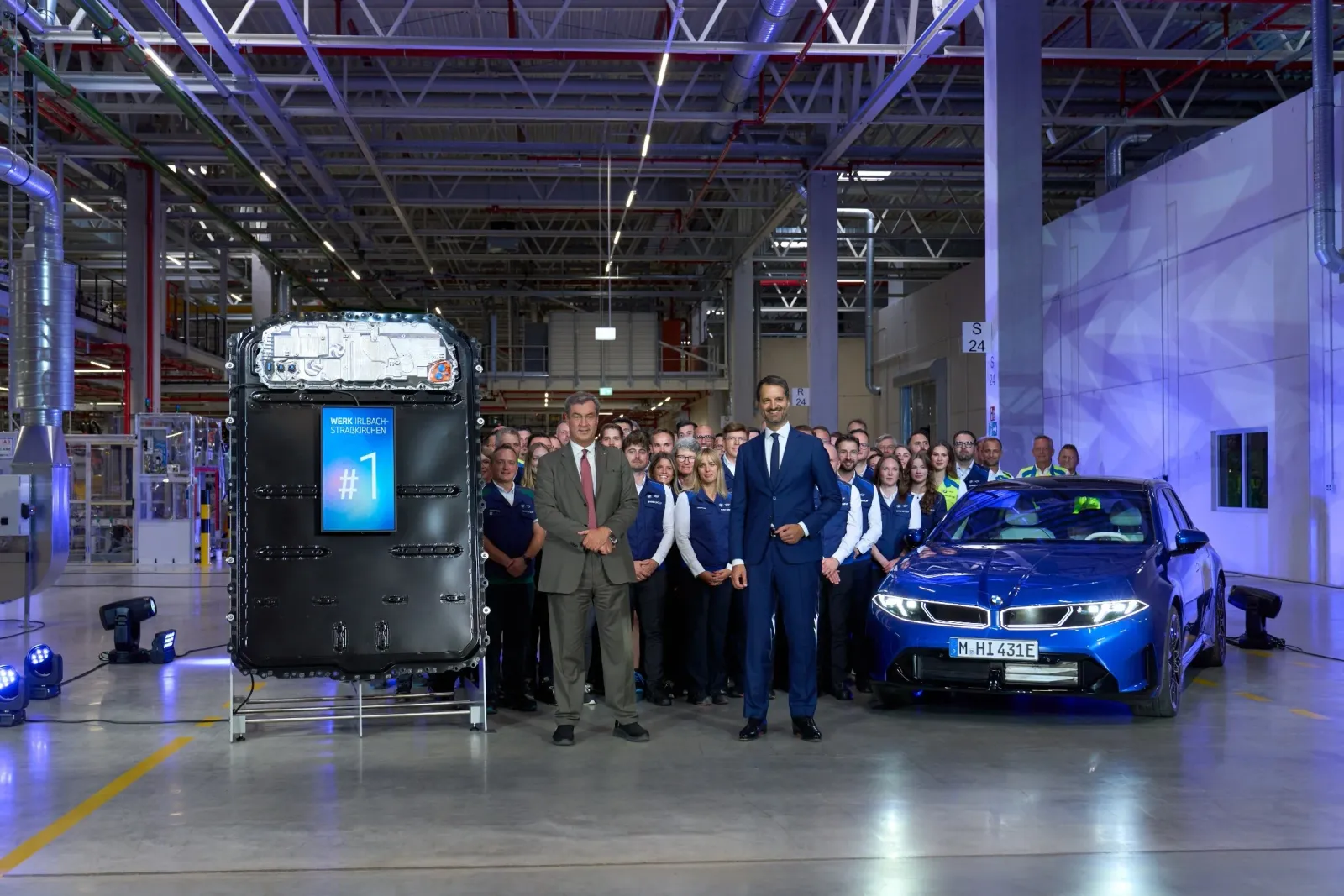
BMW officially opened its new battery plant in Irlbach-Straßkirchen and began mass production. This facility initially supplies sixth-generation high-voltage batteries for the new BMW i3 from Munich and is set to play a key role in Germany’s production network going forward.
Markus Söder at the opening of the new BMW plant in Irlbach-Straßkirchen.
Image: BMW
Just two and a half years after construction began, BMW’s new Irlbach-Straßkirchen plant in Lower Bavaria has started mass production. Bayern’s Prime Minister Markus Söder was also present at the plant’s opening, emphasizing the significance of this location south of Regensburg for industrial value creation and electric mobility in Bayern. Due to high demand for the models from the New Class series, BMW is expanding the plant faster than originally planned and starting operations with two shifts right away. The manufacturer is investing roughly one billion euros in this plant in total.
Initially, Irlbach-Straßkirchen supplies the Munich plant with sixth-generation high-voltage batteries for the new BMW i3. In the long term, this facility is intended to serve as a central hub to supply additional German vehicle plants with Gen6 batteries. The production site was established on a site covering approximately 60 hectares. It took less than two years from the start of construction in April 2024 to the assembly of the first pre-production batteries in March 2026. Once fully operational, around 1,600 people are expected to work there. BMW plans to assemble several hundred high-voltage batteries per day on two production lines.
The new BMW location was initially controversial in the region. It wasn’t until a citizen referendum in September 2023 that the way was cleared for its establishment. By spring 2025, BMW reported that the main production building had been completed as planned, allowing for the installation of manufacturing equipment.
BMW Uses 800 Volt and Cell-to-Pack in Gen6
The start of production in Irlbach-Straßkirchen is part of the larger Gen6 technology transition tied to the new class of vehicles. BMW is adopting an 800-volt architecture and large cylindrical cells with a diameter of 46 millimeters for the first time. According to BMW, these new cylindrical cells are expected to offer about 20 percent higher energy density compared to the previous prismatic cells.
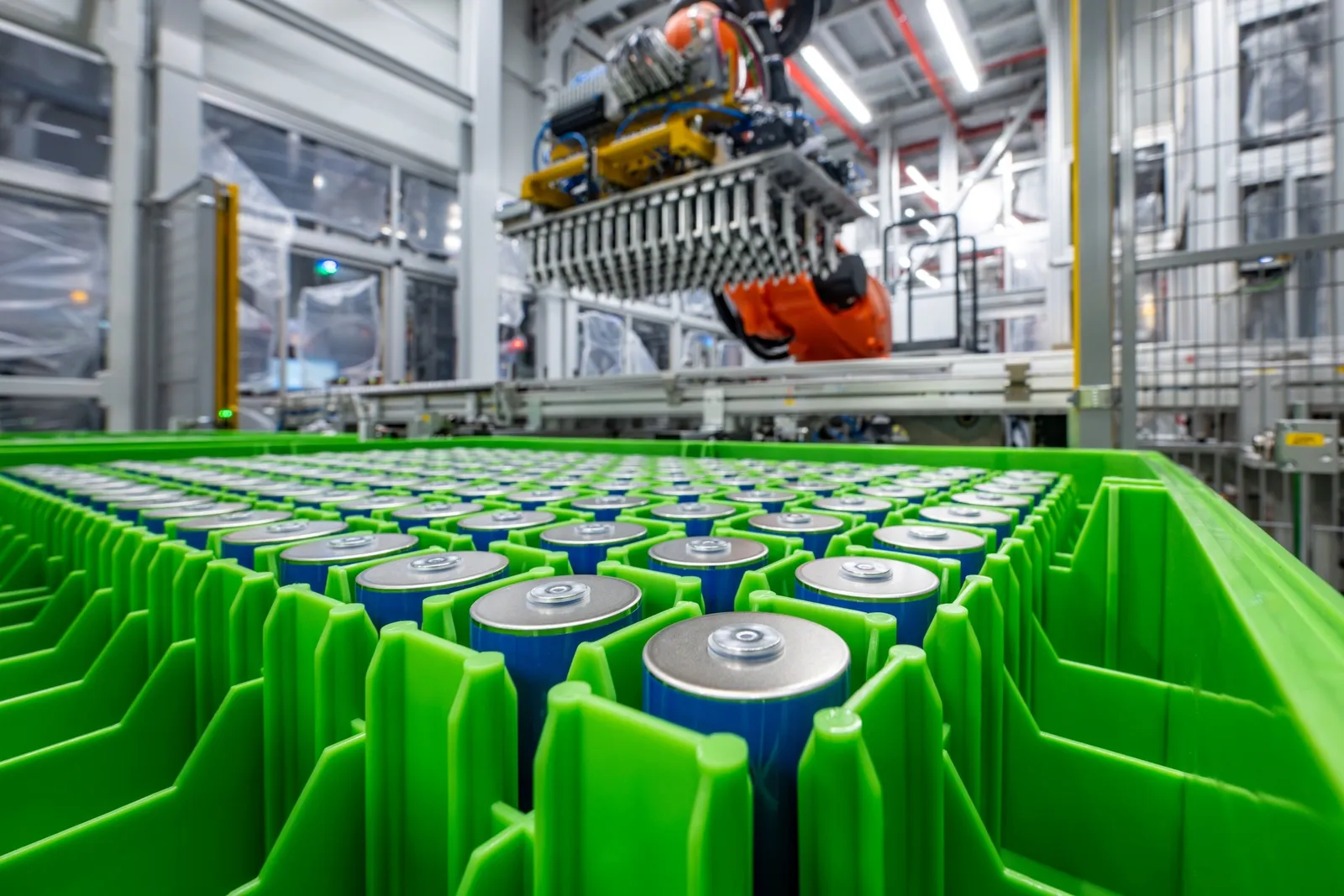
The supplied cells are integrated directly into the high-voltage battery using the cell-to-pack principle. The battery housing itself becomes part of the vehicle structure through the pack-to-open-body approach. BMW promises that Gen6 technology will offer faster charging and longer ranges compared to Gen5.
The manufacturing process in Irlbach-Straßkirchen is highly automated. Approximately 50,000 square meters of production space are equipped with 500 robots. Over 3,500 data points are collected and monitored in real time during the production of each battery. AI-based assistance systems are designed to analyze this data and ensure process quality.
For the Gen6 batteries, BMW follows a global “Local for Local” strategy. In addition to Irlbach-Straßkirchen, new assembly plants are being built or have already been established in Debrecen, Shenyang, Woodruff, and San Luis Potosí. The goal is to locate battery assembly as close as possible to the respective vehicle factories.
BMW sources the battery cells themselves from external cell manufacturers. For the new plant in Lower Bavaria, it is CATL. At the assembly site, the cells are tested, combined into cell clusters, connected to coolers, and then welded together. A foaming process mechanically bonds the components to enhance stability and protection. Finally, each high-voltage battery undergoes a complete end-of-line inspection.
BMW also aims to improve its CO2 footprint in terms of material usage. The Gen6 cells incorporate secondary materials for cobalt, lithium, and nickel. According to BMW, renewable energy is used in the production of anode and cathode materials as well as during cell manufacturing. This approach is expected to reduce CO2 emissions per watt-hour by around 33 percent compared to Gen5 cells.
The new BMW i3 comes standard with a 108.7-kWh battery produced in Lower Bavaria. BMW claims the i3 50 xDrive can achieve up to 906 kilometers of WLTP range. Thanks to 800-volt technology and a maximum DC charging capacity of 400 kW, up to 423 kilometers of range can be added in just ten minutes. The i3 also supports two-way charging.
The facility is part of a larger Bavarian battery network. Development and pilot production take place in locations such as Parsdorf, Hallbergmoos, and the Munich Research and Innovation Center. Since late 2025, BMW has also been operating a competence center for the direct recycling of battery cells and production residues in nearby Salching.
