
BMW Series 3 drops diesel and changes everything
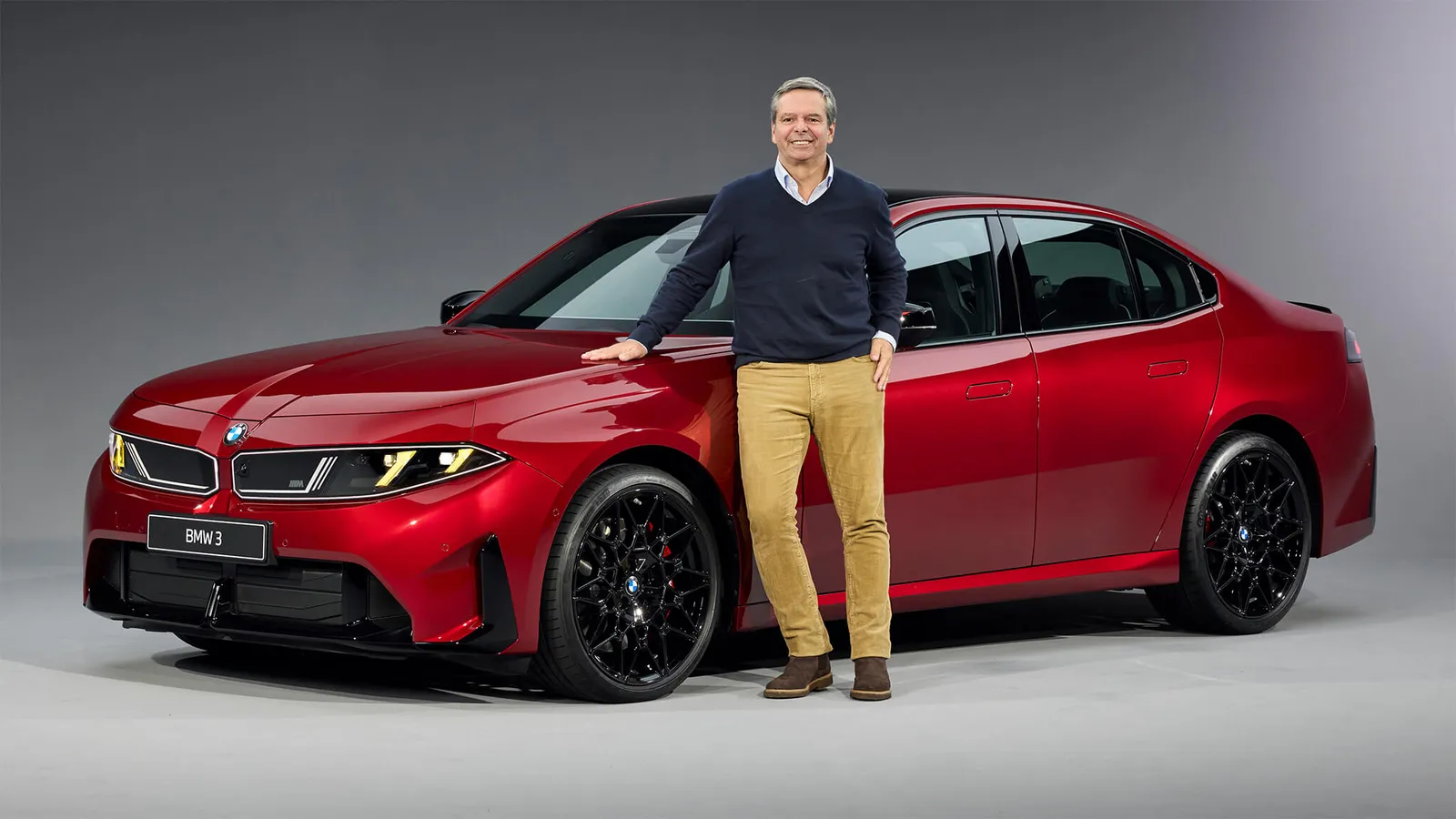
After the i3, it’s BMW’s turn to introduce the new Series 3, which moves away from diesel engines and focuses on electrified gasoline engines.
After seven generations and around 14 million units produced, the BMW Series 3 has just undergone one of the biggest transformations in its 51-year history, which began in 1975.
It still features internal combustion engines, but for the first time it will have to share the spotlight with the i3, the 100% electric version that BMW introduced months ago and has already started producing.
But what separates the newly unveiled Series 3 from the i3 we’ve known since March? We went to meet it firsthand in Munich, Germany, to see what has changed. Take a look:
On the outside, the new Series 3 retains the proportions of a 2.5-volume sedan, with a long wheelbase and a rearward-leaning body shape.
The edges are highly defined by the front and rear lighting signatures, which can appear even more striking when the Iconic Glow package is installed in the car.
This refers to a illuminated front grille that makes the car more easily recognizable, especially during nighttime driving, and it also contributes to the welcome animations that the Series 3 displays for its owner when they approach with the car key in hand.
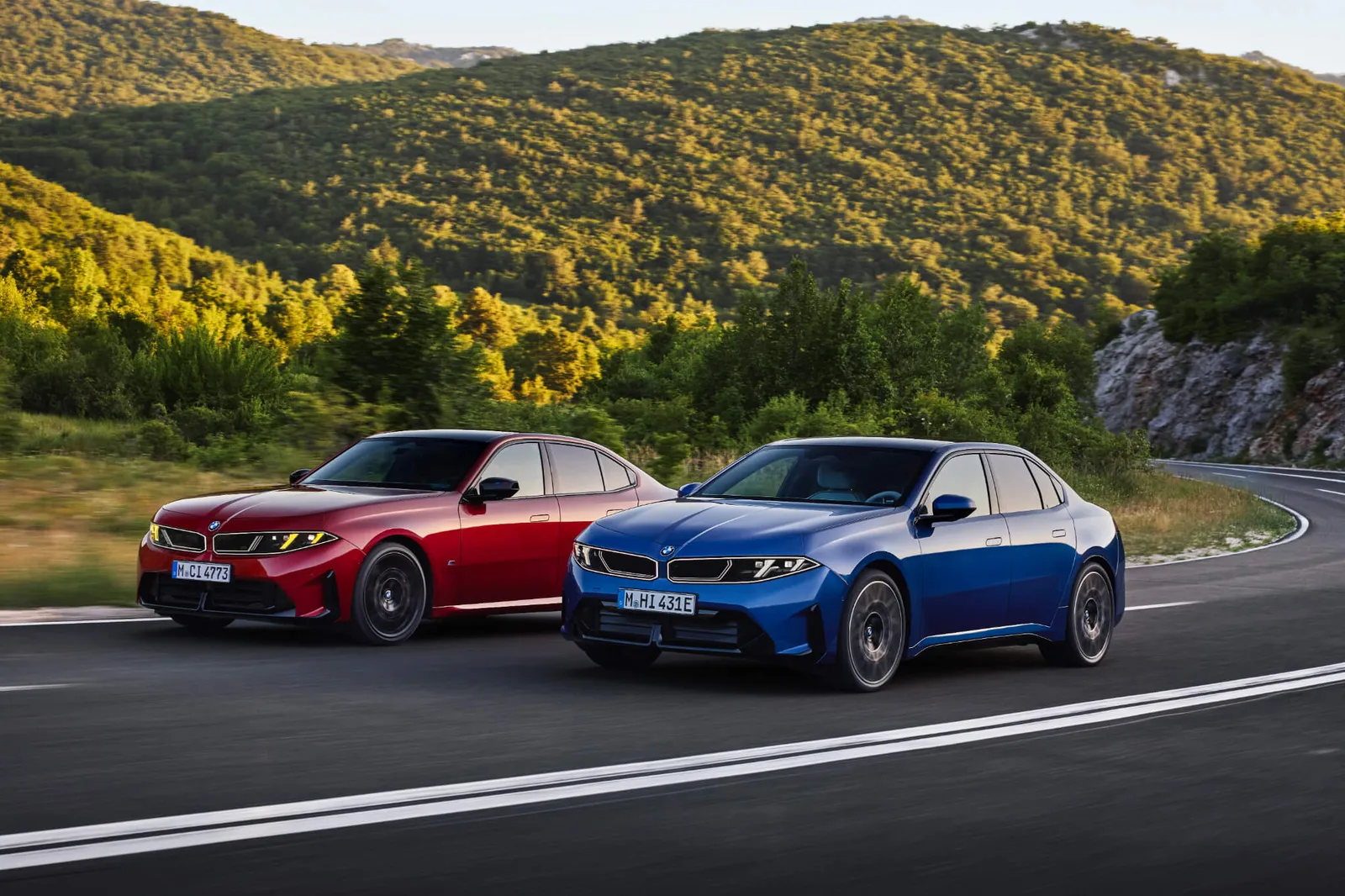
Both the front headlights (which form a single unit with the grille) and the rear headlights, which have a 3D effect, are narrow and horizontal, extending so far from each side that they almost touch in the center.
The shortened body lines, the “muscular” wheel arches, the panoramic roof covering the entire cabin area, and the rear track slightly wider than the front also contribute to defining the exterior appearance of the Series 3.
Growing in Every Direction
Compared to its predecessor, it has grown by 5.2 cm in length (to 4.765 meters), is 2.3 cm wider (1.850m), and only 0.7 cm taller (1.455m).
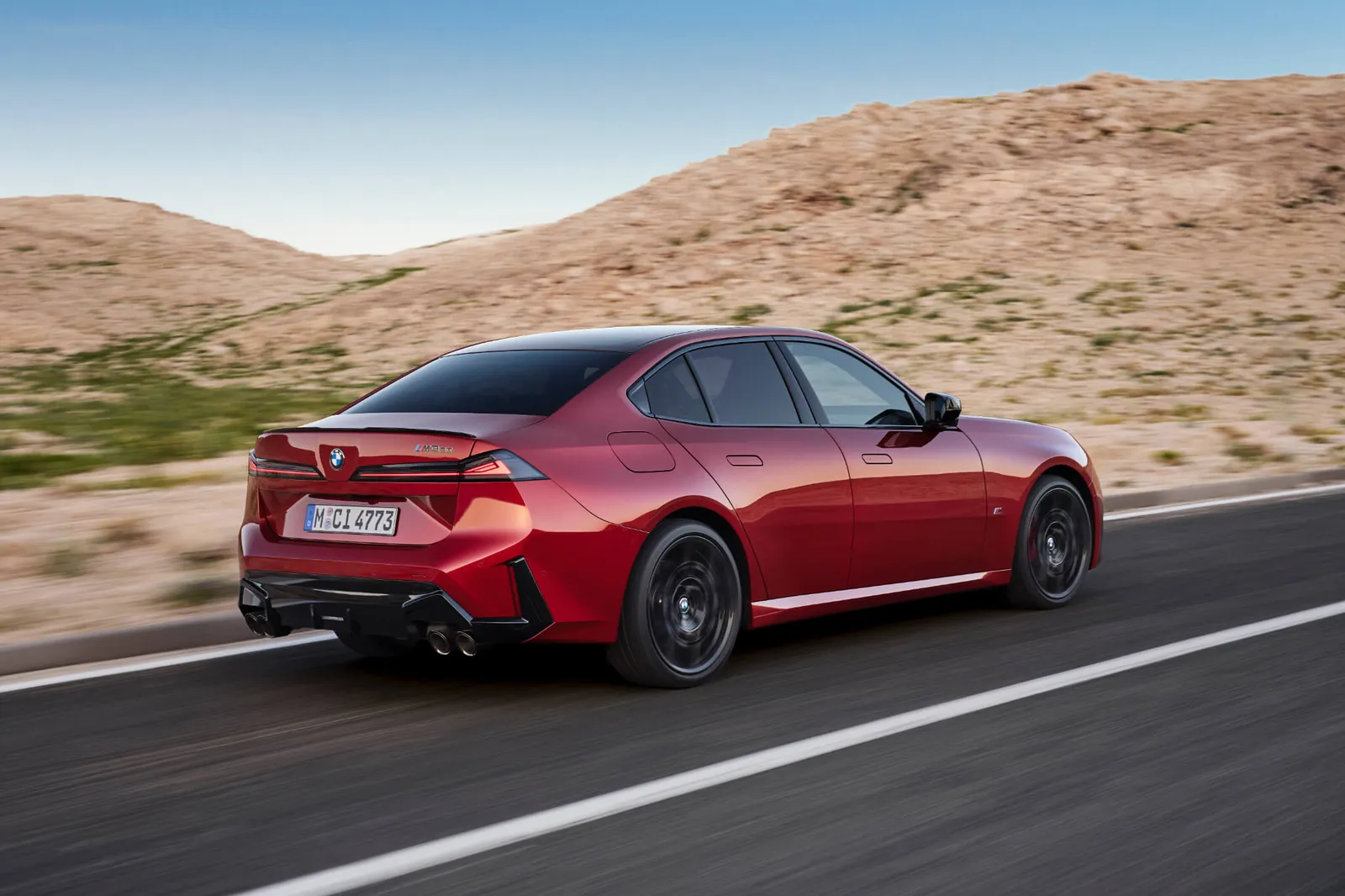
If we compare it to the i3, which shares its chassis, electronics, exterior design, and interior layout, we find that the electric Series 3 is 1.5 cm wider, has a front track that’s 1 cm longer, and a rear track that’s 0.3 cm shorter. It differs primarily in terms of its wheelbase, which is 3.7 cm longer, and its body height, which is 2.5 cm higher. It is here that the presence of the large battery from the i3 between the axles becomes most noticeable.
What about the interior?
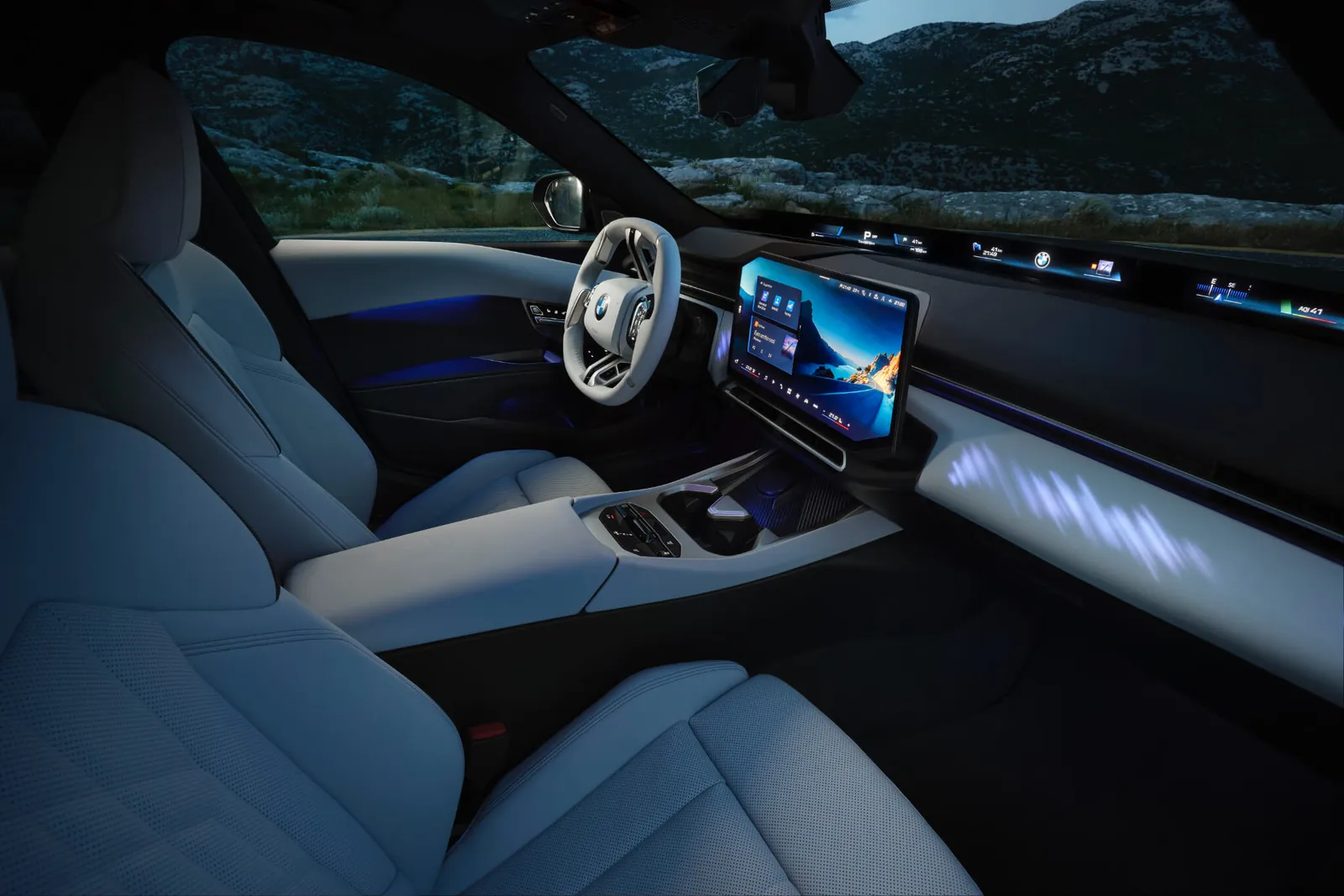
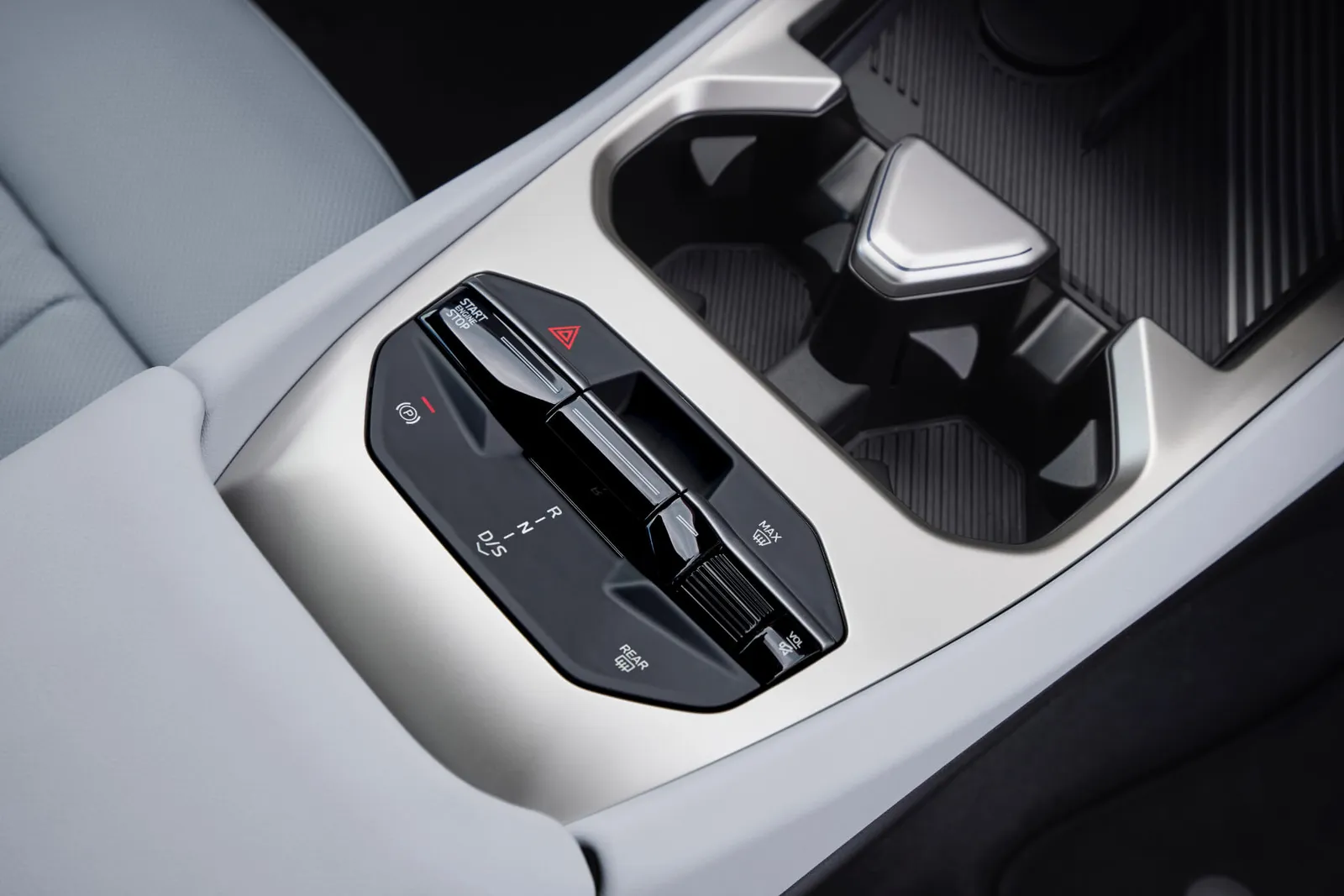
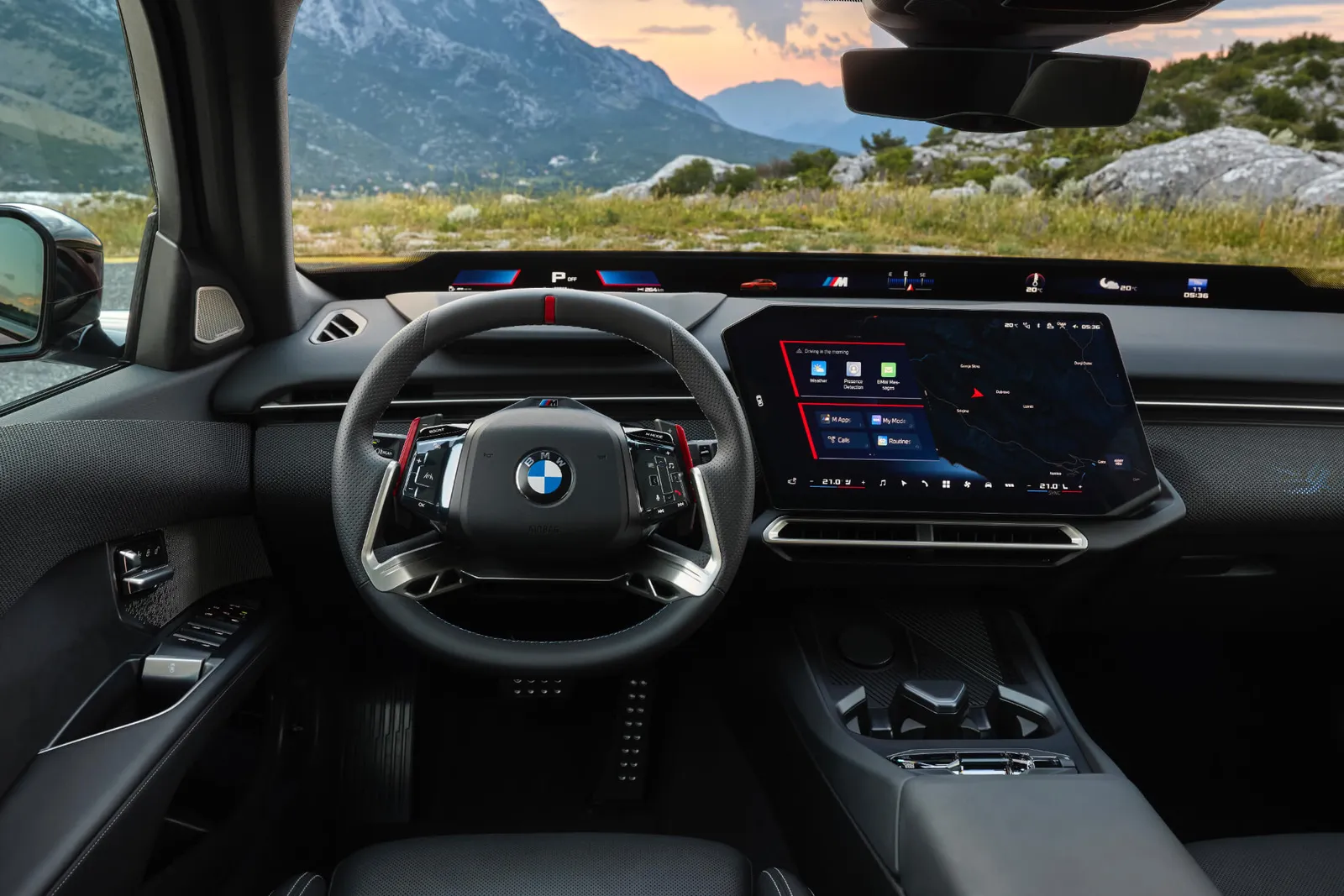
Inside, we find visual and functional elements similar to those recently introduced in the iX3 (and also seen in the i3), such as the BMW Panoramic iDrive infotainment system with its content projection across the entire lower horizontal strip of the windshield.
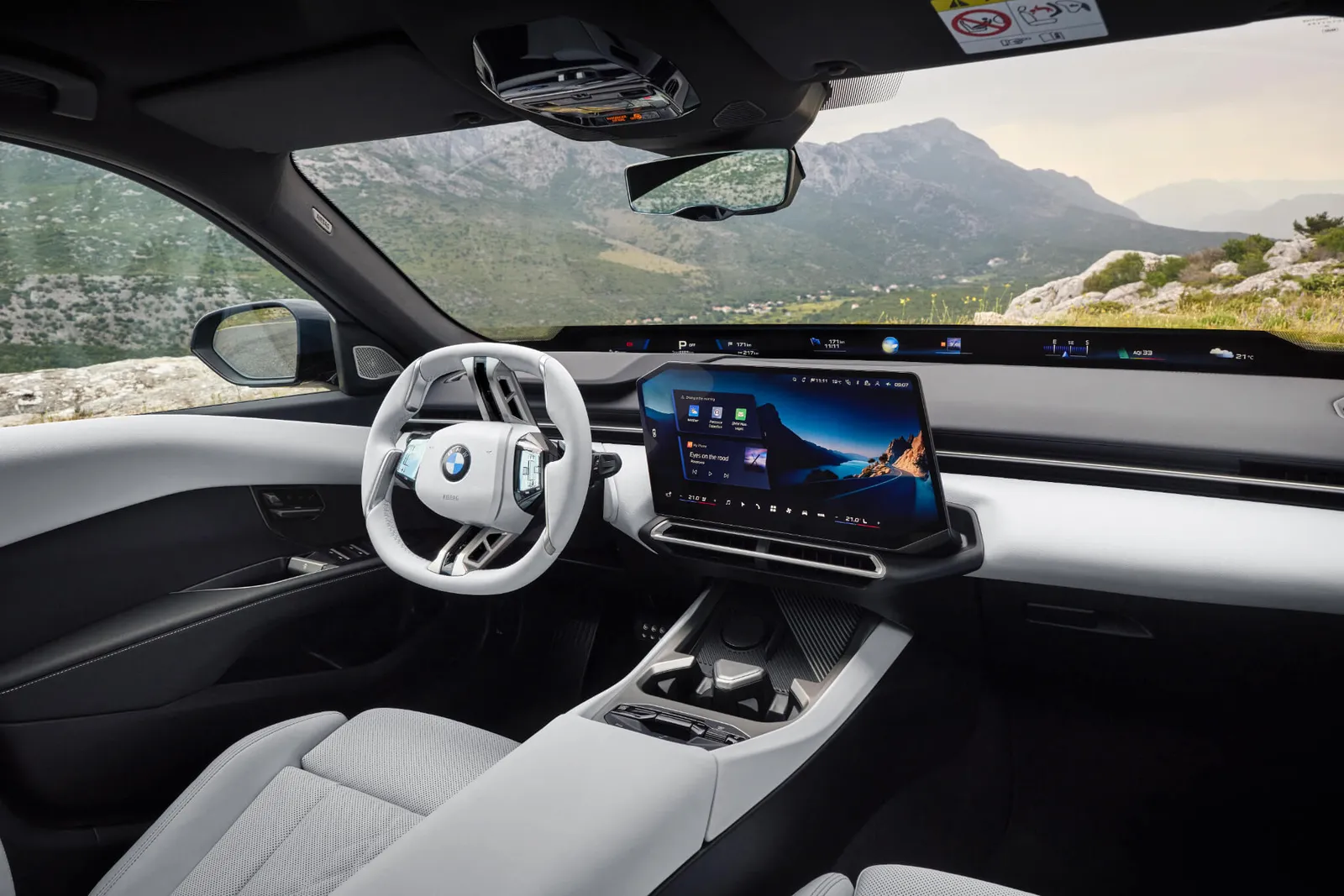
On the driver’s side, this extended display shows information related to its function, with the remaining space being customizable. Data can be transferred to or received from the 17.9” backlit infotainment screen (which is slightly more tilted toward the driver—specifically three degrees—compared to the iX3).
4 images
The small-diameter steering wheel with a thick rim and straight sections on top and bottom features haptic controls that are backlit in some cases, turning white when the function is available and green when it is active.
The technological sophistication is further demonstrated by the head-up display with animated graphics, 3D effects (optional), and augmented reality, as well as by the intelligent in-car assistant that combines artificial intelligence features with Amazon Alexa.
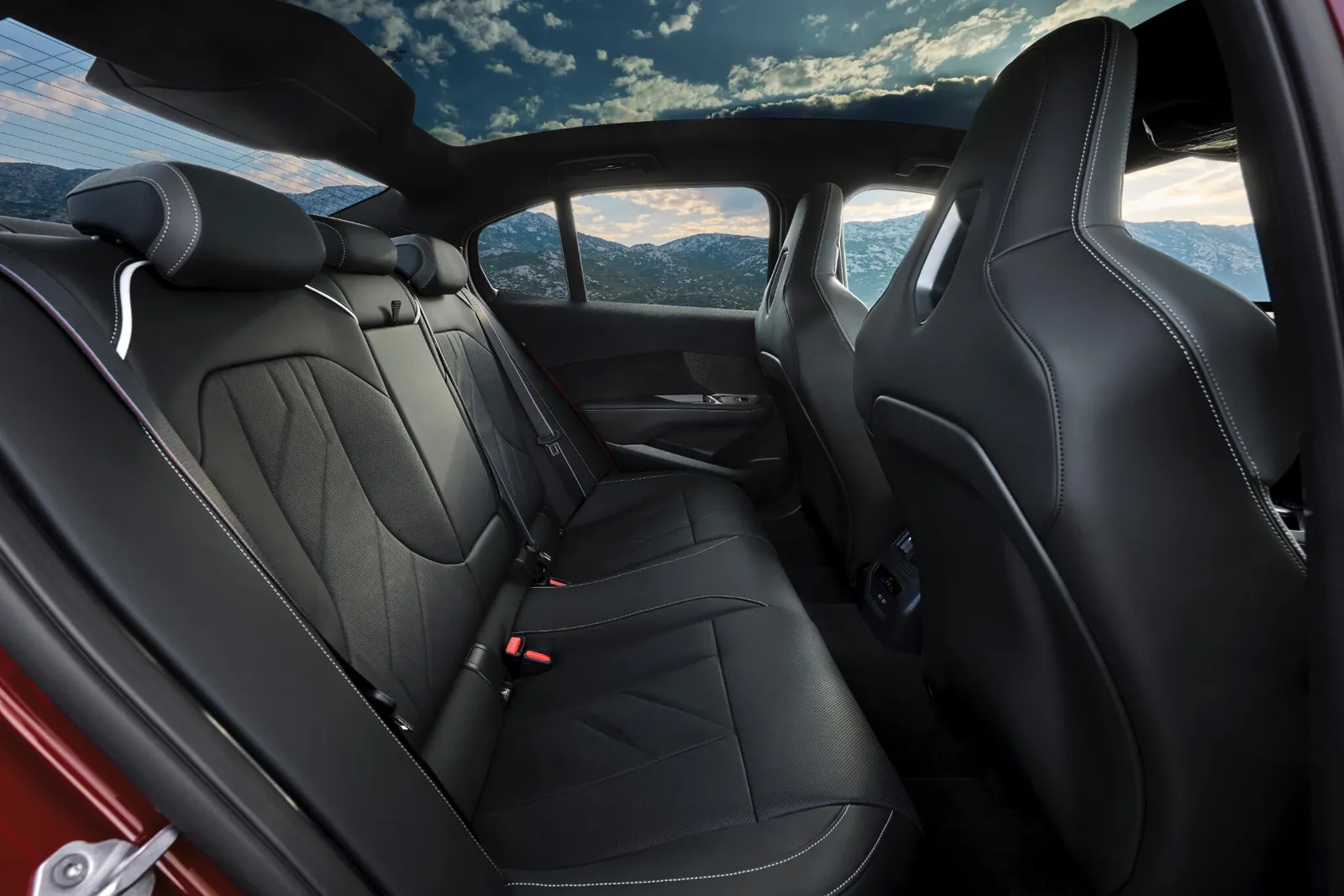
The Series 3 may be equipped with a panoramic roof running the full length of the cabin, making the interior brighter during daytime driving and featuring a solar ray filtering system to prevent overheating.
Trunk capacity reduced by 30 liters
The trunk has a capacity of 450 liters, 30 liters less than the previous model, and can be expanded by folding the backrests of the rear seats entirely or in a 40:20:40 split.
In comparison, the i3 has a slightly smaller main trunk (420 liters), attempting to compensate with an additional 31 liters of storage under the front hood. Overall, the cargo space is exactly the same between the two models.
No diesel engines
The new Series 3 lineup consists of three gasoline engines, all turbocharged and all paired with a 48V mild hybrid system.
Diesel engines? Not in sight. But a plug-in hybrid version will arrive by 2027. Regardless of the engine choice, the transmission is always handled by the eight-speed automatic Steptronic gearbox (with a binary converter).
We’ll have the 318 with rear-wheel drive, featuring a four-cylinder 2.0-liter engine producing 156 hp/250 Nm, capable of reaching a top speed of 215 km/h and accelerating from 0 to 100 km/h in 9.5 seconds, with an approved average fuel consumption of 7.5 liters/100 km.
One tier up, the 320 uses the same engine block but boosts power to 211 hp/330 Nm, improving performance with a top speed of 240 km/h and an acceleration time of 7.4 seconds.
In both cases, the mild hybrid system with 48 volts utilizes a small electric motor (installed in front of the engine where the alternator would normally be) with 8 kW/11 hp and 25 Nm of torque.
However, when compared to its predecessor, the 320, the addition of this electric motor has little impact on performance (same acceleration and only an extra 5 km/h in speed), nor does it result in lower fuel consumption: on the contrary, the previous 320 had a fuel consumption of 6.5 l/100 km.
The reason is the significant increase in weight of the 320, from 1590 to 1755 kilograms, which “cancels out” the improvement in performance (the new 320 has an extra 27 hp and 30 Nm of torque).
The top-of-the-line model for now is the M350 xDrive (4×4), featuring a six-cylinder in-line engine, a mild hybrid system (assisted by a 0.9 kWh battery, double that of the previous model), and a 3.0-liter engine.
The gasoline engine produces 426 hp/540 Nm, with the electric motor contributing 13 kW/18 hp and 200 Nm, bringing the total power output to 443 hp/580 Nm.
Compared to the previous M340i xDrive, this new version offers an increase of 51 horsepower and 50 Nm of torque, along with a two-tenths improvement in the 0 to 100 km/h acceleration time.
The chassis has also changed
Regarding the chassis, the new Series 3 features two independent axles, with double wishbones in the front wheels and multi-link suspensions (5 links) at the rear, variable electronic shock absorbers (310 in the standard version and M350 xDrive), ventilated discs on all four wheels, and variable sports steering assist in the top-tier models.
Always above 55,000 euros
The prices of the new Series 3 in Portugal are not yet known, but the entry-level model (318) will likely cost over 55,000 euros, with the 320 model expected to exceed 60,000 euros and the M350 xDrive surpassing 100,000 euros.
DO NOT MISS:
New BMW iX3 sets a new record for orders from the German brand
Here, it’s natural for a considerable number of potential buyers to lean toward the i3, as its prices end up being more attractive than in other markets, since electric cars in our country are subject to lower taxes compared to those with internal combustion engines.