
BMW prepares its most radical M3: four electric motors and a battery over 100 kWh
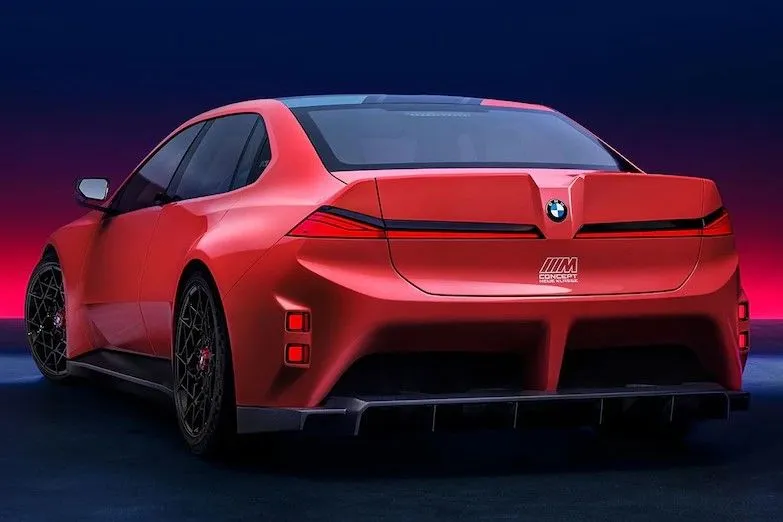
BMW has associated the letter M with performance, precision, and tuning designed for driving pleasure for decades. Electrification will not change this philosophy, though it will force the German sports division to completely rethink how to achieve it. And the next M3 will be one of the first models to demonstrate this.
The arrival of the Neue Klasse has paved the way for a new generation of BMW M models that use an electric architecture developed specifically for them. BMW has already confirmed that this new family will arrive starting in 2027, with a four-electric-motor system serving as one of its core components.
BMW’s approach isn’t simply to pack a massive amount of power under the accelerator and turn the M3 into a machine for setting spectacular straight-line times. The brand aims to carry over to the electric era one of the characteristics that have historically defined its M models: the ability to enter a corner, shift weight, and exit it with precision that is hard to match.
The challenge also has a new element. In recent years, electric sports cars from China have emerged with power figures that were not long ago reserved for hypercars. A good example is the DENZA Z, which uses three engines to deliver up to 1,604 horsepower, with its Racing version achieving 0 to 100 km/h acceleration in 1.96 seconds.
BMW seems to understand that relying solely on power to enter that competition wouldn’t be enough for an M3. That’s why the real innovation lies in how those four engines are utilized.
Four engines, one per wheel, to take the electric M3 to a new level
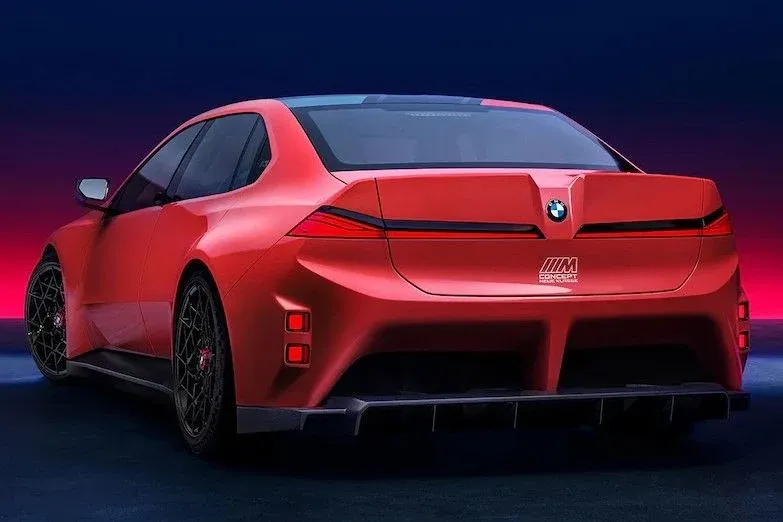
The future electric M3 will use the BMW M eDrive system, an architecture that features an independent electric motor in each wheel. This allows the car to avoid simply distributing torque between the two axles, enabling individual adjustment of power delivery to each of its four wheels. BMW has officially confirmed this configuration and its integration with the BMW M Dynamic Performance Control system.
The difference compared to a conventional all-wheel drive system can be enormous. Instead of using a differential to distribute power between the wheels, electronics can determine in near real time how much torque each wheel needs. This allows for much more precise control over the car’s behavior when accelerating, braking, or turning.
BMW also wants to maintain a clearly rear-oriented character. Although the M3 will have all-wheel drive, the system will even allow the front engines to be completely disconnected when not needed. In this way, under certain conditions it can operate with behavior similar to a rear-wheel drive car, while reducing energy consumption.
The solution is particularly interesting because it allows combining two features that have traditionally been difficult to integrate in a high-performance electric car: the immense traction capacity of a four-motor system and the agility of a layout that favors the rear axle.
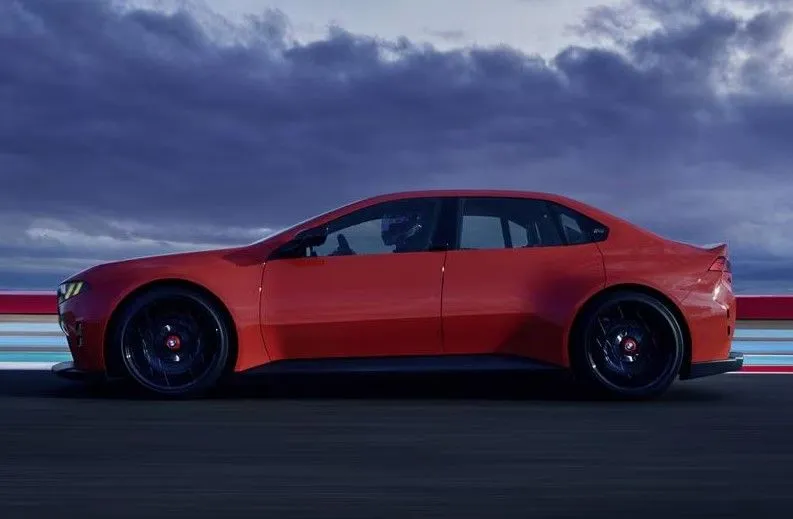
The system will also affect energy recovery and braking. BMW explains that individual control of each wheel will enable much more precise coordination of propulsion and braking, something that should have a particularly significant impact when the car approaches its traction limits.
Regarding power, it’s important to distinguish between what BMW has confirmed and the figures circulating as predictions. The brand has not yet provided a definitive figure for the production M3. Some reports suggest an initial version with around 670 horsepower, while other speculations estimate the potential of this engine architecture to reach nearly 1,300 horsepower.
This latter figure is related to the technological potential demonstrated by BMW in its development prototypes, but it should not be interpreted as the confirmed power output of the M3 that will reach dealerships. In fact, BMW is making it clear that the main goal of this project is not to set a record-breaking power figure, but rather to achieve a dynamic performance typical of the M division.
The technical foundation will be the 800-volt architecture of the Neue Klasse, along with a high-voltage battery boasting a capacity of over 100 kWh. BMW has also developed a specialized version of its sixth-generation cylindrical cells for these models, optimized to deliver large amounts of energy and support high-power charging.
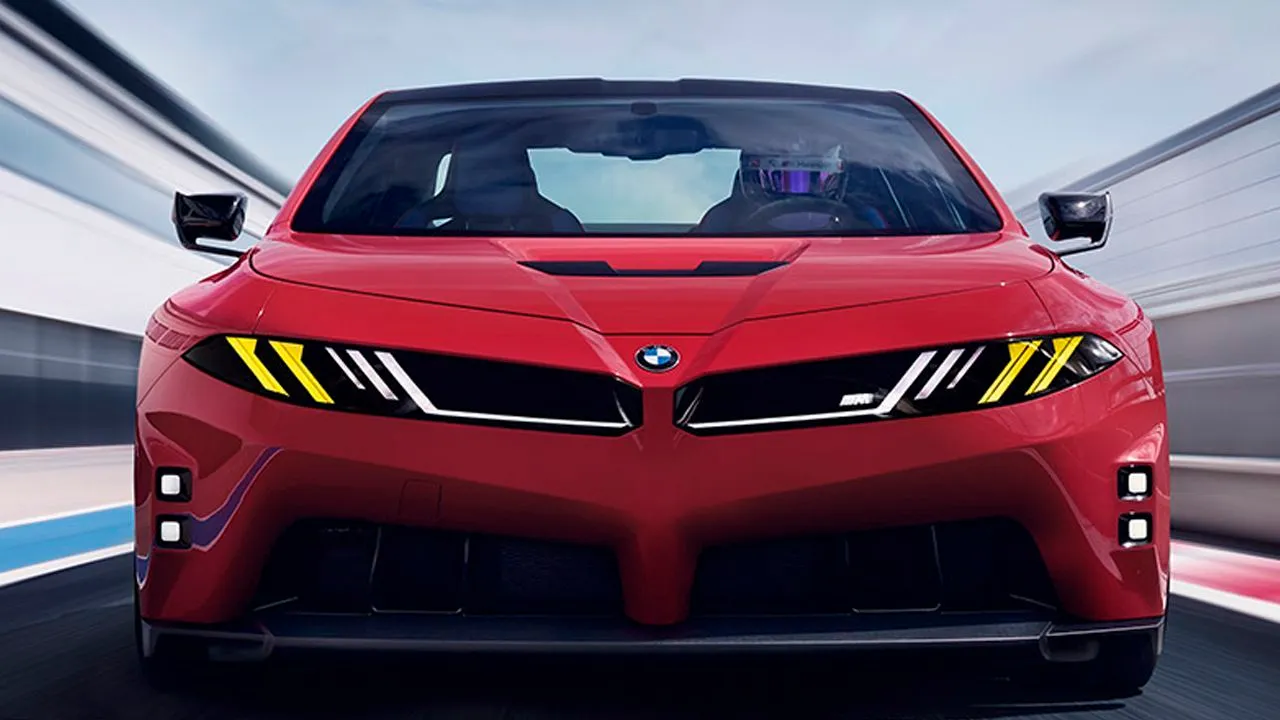
This should enable the electric M3 to be fast not only on secondary roads or racetracks but also suitable for long-distance trips. The brand explicitly mentions a high range and fast charging times thanks to the combination of an 800-volt architecture, a new battery, and highly efficient energy recovery.
So far, BMW has not officially announced the final usable battery capacity, certified range, maximum charging power, or acceleration figures for the production model. There is also no official price yet for Spain. Therefore, any finalized figures that appear before its launch should be considered estimates or leaks rather than definitive data.
What is confirmed is that BMW M will move to four electric motors by 2027, introducing a new generation of sports models that will utilize Neue Klasse technology.
There is another important detail. Although the name iM3 has been used for months to refer to the future model, BMW has not officially confirmed this designation. The latest reports suggest the model might simply retain the name M3, regardless of whether it uses an electric system instead of a combustion engine.
The electric sports sedan will thus face a much more complex challenge than simply achieving spectacular acceleration. It will need to prove that a M3 can transition to new technology without losing what has made the M family recognizable for decades: immediate response, rear-wheel drive dominance, and above all, the ability to turn power into fun when approaching a curve.