
BMW iX3 or Volvo EX60: 800 km Range: A Comparison of Premium Electric SUVs
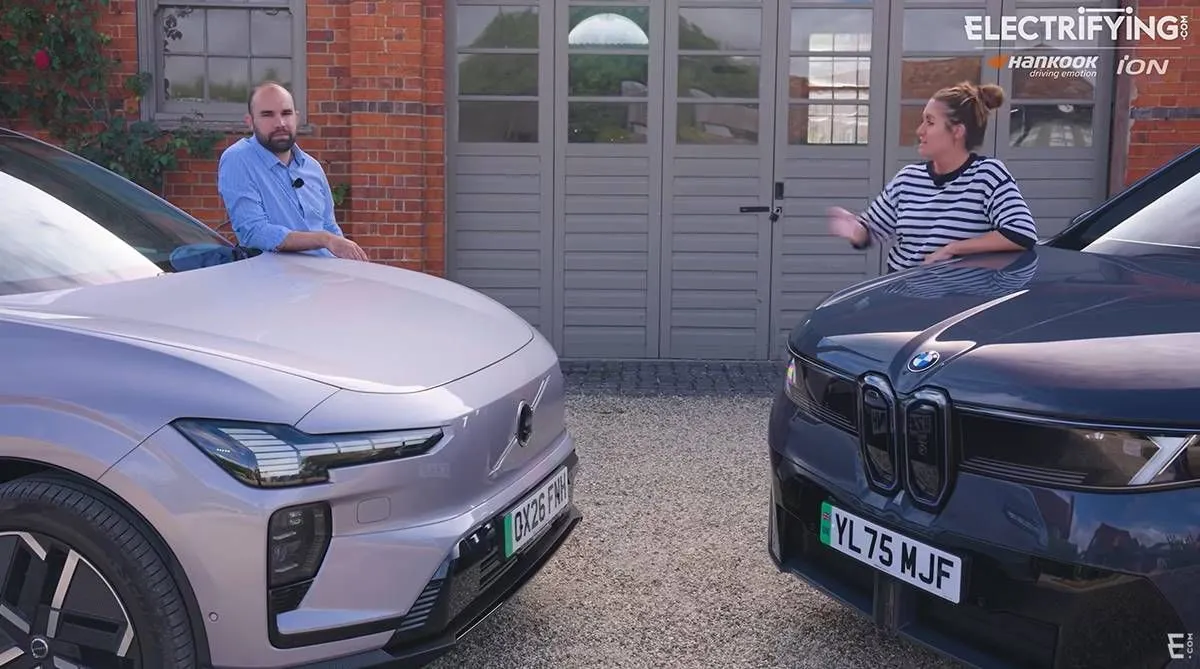
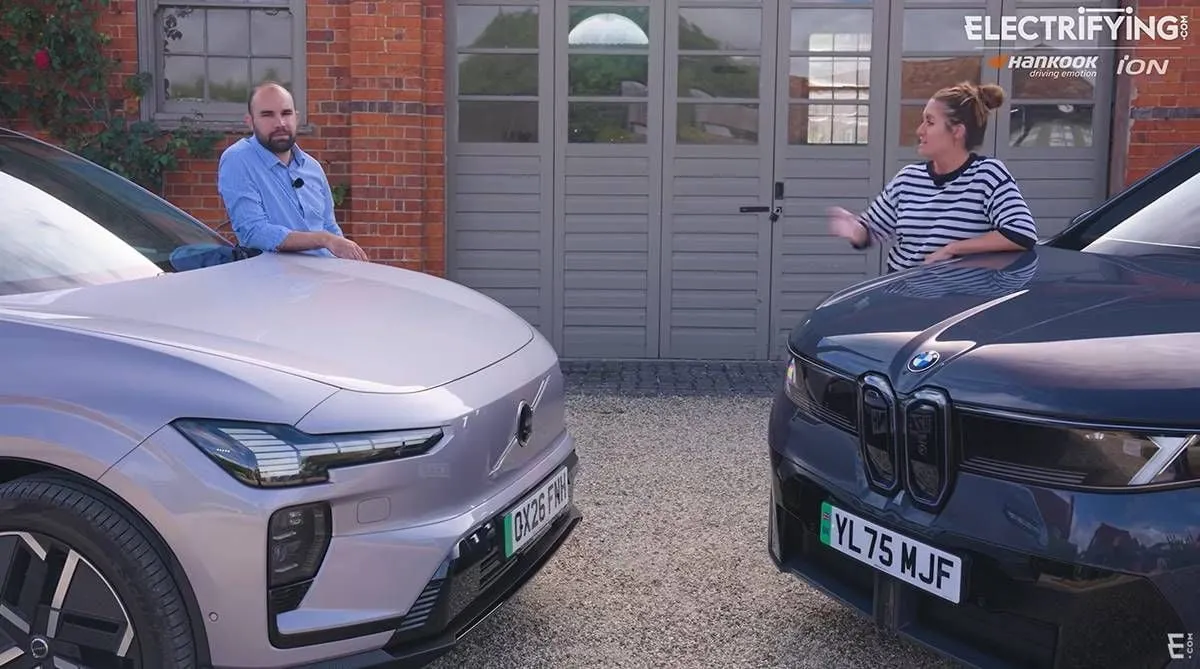
There are comparisons where it’s easy to choose a winner. Then there are matchups like the one conducted by the British channel Electrifying between the BMW iX3 and the Volvo EX60, two electric SUVs equipped with next-generation technologies, long ranges, 800-volt charging, and a build quality that makes earlier generations seem outdated.
The BMW iX3 has a significant advantage: it has already proven its ability to combine an extremely high range with dynamic performance that retains much of BMW’s traditional character. The Volvo EX60 takes a different approach. It is quieter, more comfortable, and relaxed, clearly aiming to turn every journey into a peaceful experience.
Therefore, rather than seeking an absolute winner, this comparison serves to determine how far the electric cars of this new generation have managed to overcome many of the limitations that plagued earlier models.
BMW iX3 vs. Volvo EX60: Two very different philosophies
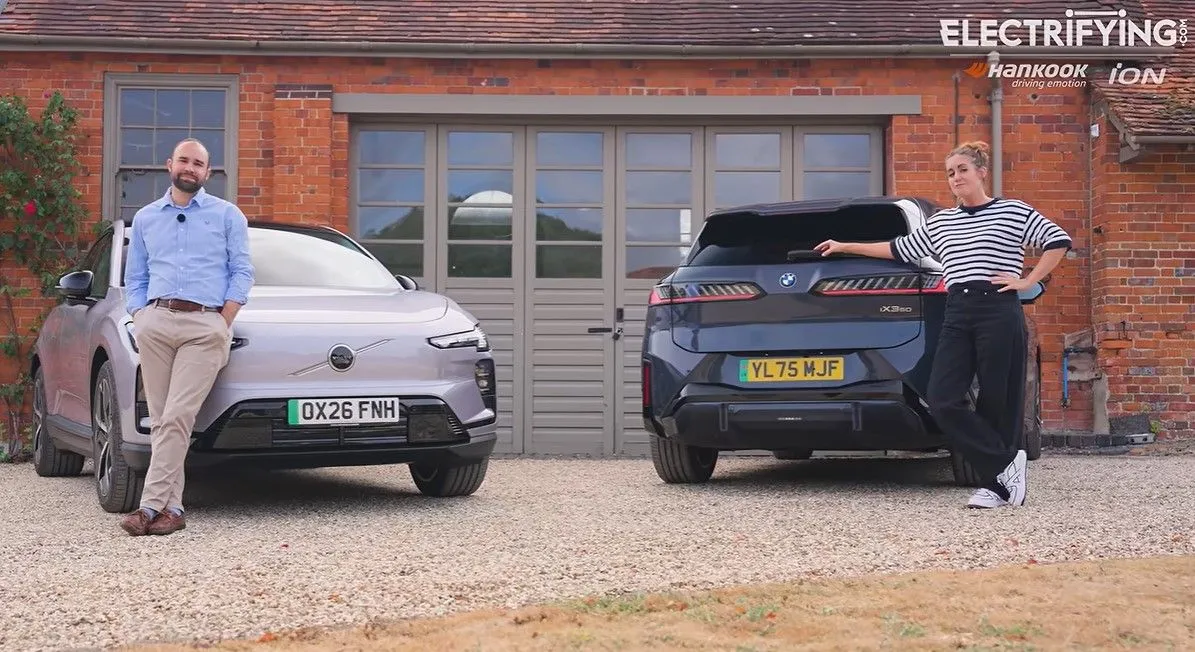
The exterior design makes the differences clear at first glance. The BMW iX3 introduces the brand’s new design language and features a much more assertive appearance, with a raised front end, a very square body shape, and a silhouette that clearly resembles an SUV. The new front end may even include a illuminated grille, a striking element that will surely catch everyone’s attention.
The iX3 50 xDrive is 4.78 meters long, 1.89 meters wide, and 1.63 meters high, with a wheelbase of 2,897 mm. Its trunk holds 520 liters, expanding to 1,750 liters when the rear seats are folded down. Additionally, there are 58 liters of space under the front hood.
The Volvo EX60, on the other hand, has a length of 4.80 meters, a width of 1.89 meters, and a height of 1.63 meters, with a wheelbase of 2,970 mm. Its trunk capacity is 523 liters, while the front compartment provides 52 liters of space.
The Volvo EX60 adopts a much more consistent interpretation of the brand’s design. Simply cover the logo to immediately recognize it as a Volvo, with its signature headlights inspired by Thor’s hammer and a body style that even resembles an elevated family sedan. It appears softer visually than the BMW and conveys a sense of being a car designed for relaxed travel.
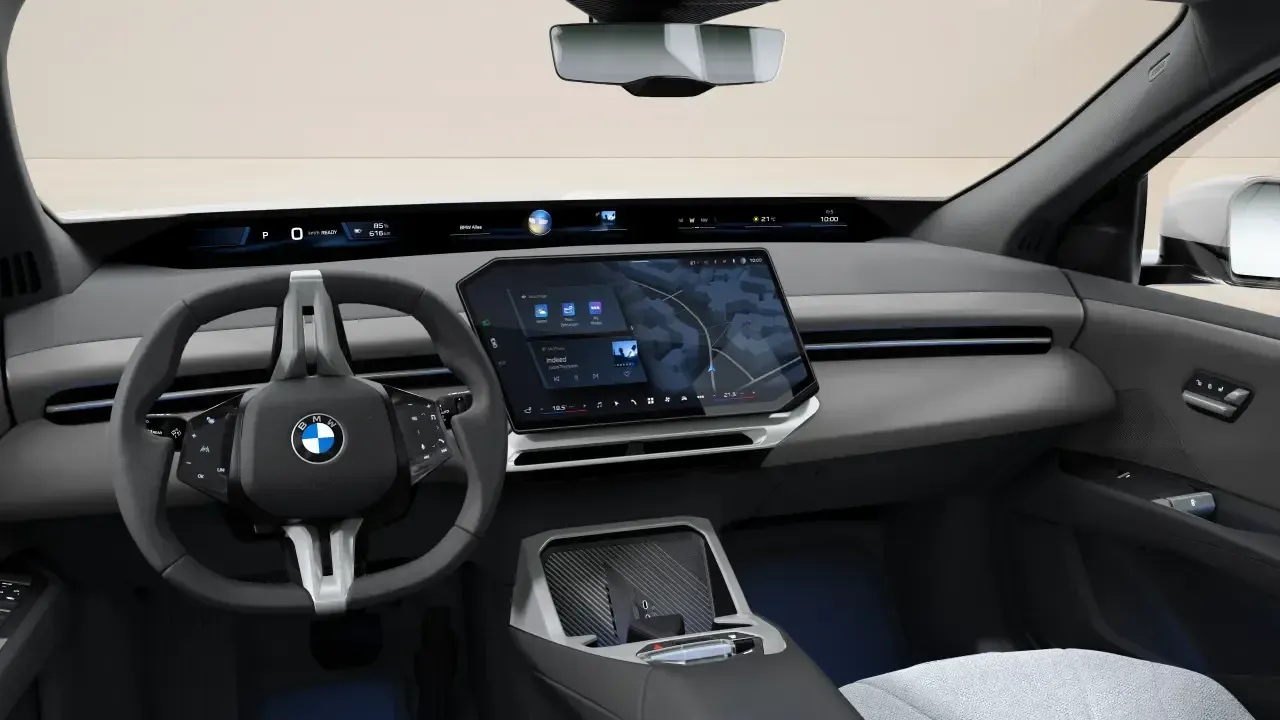
Inside, the same difference in approach is evident. The BMW features its massive panoramic iDrive screen that spans the dashboard area, allowing control over a wide range of information. It also introduces a uniquely designed steering wheel and retains some physical controls to simplify operation of certain functions.
The iX3’s interior stands out for its high-quality materials, ample space in the rear seats, and especially the sense of openness provided by its completely flat floor. However, some features that one would expect to come standard in a car at this price point are optional, such as heated seats or a panoramic roof.
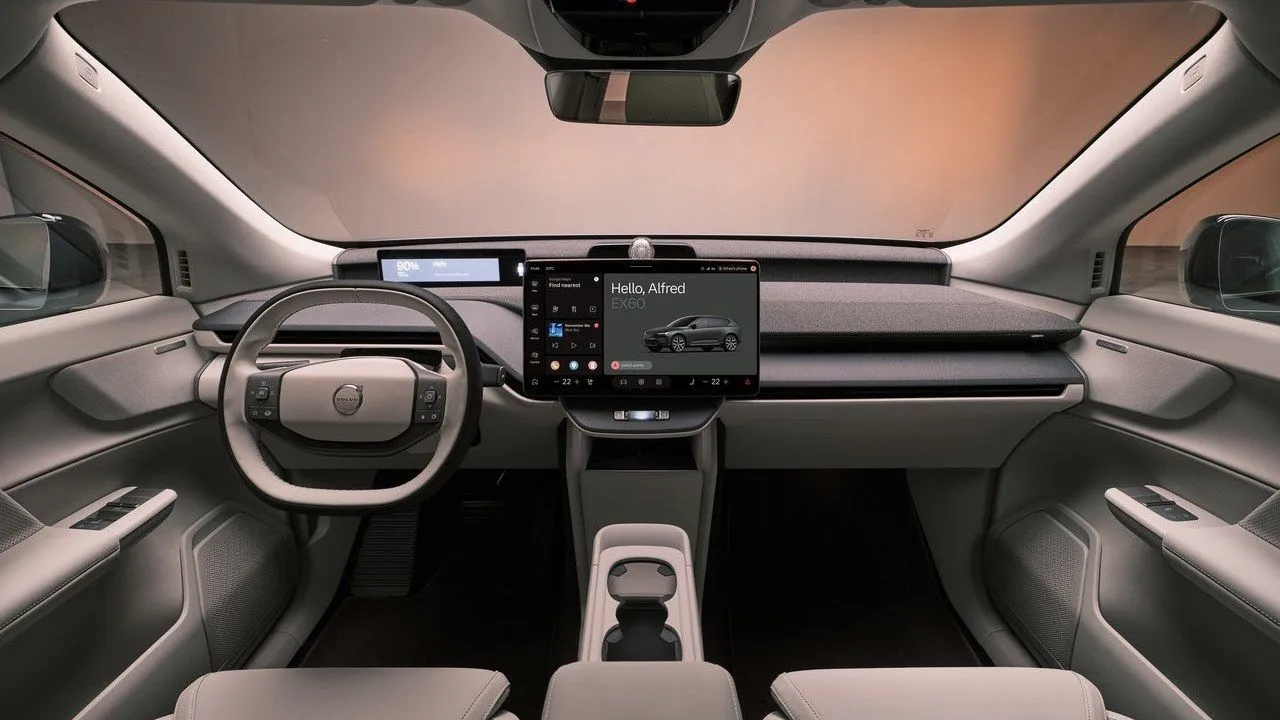
The EX60 offers an even more minimalist interior, though Volvo has avoided pushing this trend to the extreme like in other models. The 15-inch central screen handles most functions, but it still retains some physical controls, including a volume knob.
The screen uses Google’s system, and the EX60 is also the first Volvo to deeply integrate Gemini into the vehicle, enabling more natural voice commands.
The brand also offers a Bowers & Wilkins audio system with 28 speakers and 1,820 watts in the higher trims.
The rear space is one of Volvo’s strengths. The long wheelbase and flat floor provide ample legroom. The trunk offers 532 liters with the seats up and 1,647 liters when they are folded down, while the BMW provides slightly more capacity when the seats are folded.
On the road, this is where the two models differ most. The BMW iX3 50 xDrive delivers 469 horsepower and accelerates from 0 to 100 km/h in 4.9 seconds. Its tuning aims to offer more than just performance: the steering, chassis, and throttle response make it surprisingly enjoyable to drive for a SUV of this size.
The intelligent recovery system also contributes to this by adjusting regenerative braking based on what’s ahead of the car. It can recover more energy when approaching an intersection or another vehicle, allowing it to move forward almost by inertia when braking isn’t necessary. It’s a system that requires adaptation, and many prefer to disable it as it can feel somewhat annoying and artificial.
The Volvo EX60 P10 AWD takes things a step further, boosting power to 510 horsepower and achieving 0 to 100 km/h in 4.7 seconds. But the way it delivers that power is completely different. The EX60 doesn’t try to mimic a sports car and instead focuses on providing a gradual response and a much more relaxed driving experience.
The adaptive suspension effectively filters out almost any imperfections in the road surface, and its sound insulation is one of its major strengths. Even at high speeds, the cabin remains surprisingly quiet. It is precisely in this area that the Volvo stands out compared to the BMW.
Regarding the available versions, the EX60 offers a rear-wheel-drive P6 with 374 horsepower, a P10 AWD model with 510 horsepower, and a P12 AWD version that delivers 680 horsepower. The latter is equipped with an 112 kWh battery and achieves up to 810 kilometers of WLTP range.
BMW also has a broader lineup. The iX3 40 uses rear-wheel drive and reaches up to 300 kW of charging power, while the iX3 50 xDrive utilizes two motors to achieve up to 400 kW.
The battery in the 50 xDrive model has a capacity of 108.7 kWh, allowing it to go from 10% to 80% charge in just 21 minutes under optimal conditions.
The maximum advertised range for the iX3 50 xDrive is around 805 kilometers, whereas the EX60 P12 AWD reaches up to 810 kilometers. Additionally, according to Volvo, the vehicle can recover up to 340 kilometers of range in ten minutes using a 400 kW charger.
The comparison becomes even more interesting when it comes to trailers. The BMW can pull up to 2,000 kg, while the EX60 P10 and P12 can handle 2,400 kg. If the vehicle is intended for transporting a caravan or a heavy trailer, the Volvo has a clear advantage.
In terms of price, the BMW iX3 currently starts at 62,990 euros in Spain for the iX3 40 model, while the tested version, the iX3 50, begins at 69,900 euros. The Volvo EX60 is priced higher depending on the version and equipment, starting at 64,900 euros for the P6 Plus version, with the top-of-the-line P12 AWD model costing 73,975 euros.
The BMW iX3 is the choice for those who want an electric SUV that’s fast, agile, and offers more enjoyable driving. The Volvo EX60 is better suited for those who prioritize comfort, quietness, a relaxed driving experience, and an eleganter design.
There’s no clear winner because their priorities aren’t exactly the same. The BMW shows that an electric car can still have character and be fun to drive, while the Volvo elevates comfort and technology to a higher level.
What’s most interesting is what both represent. The new generation of electric cars is beginning to offer ranges of over 600-800 kilometers, ultra-fast charging, and performance features that were previously reserved for much more expensive models.
And when two cars like the BMW iX3 and the Volvo EX60 enter the market offering all that at the same time, the question shifts from whether an electric car is ready for road trips to which one fits each driver better.