
The BMW iX3 has received 100,000 orders in Europe. The factory in Hungary is now operating 24 hours a day.
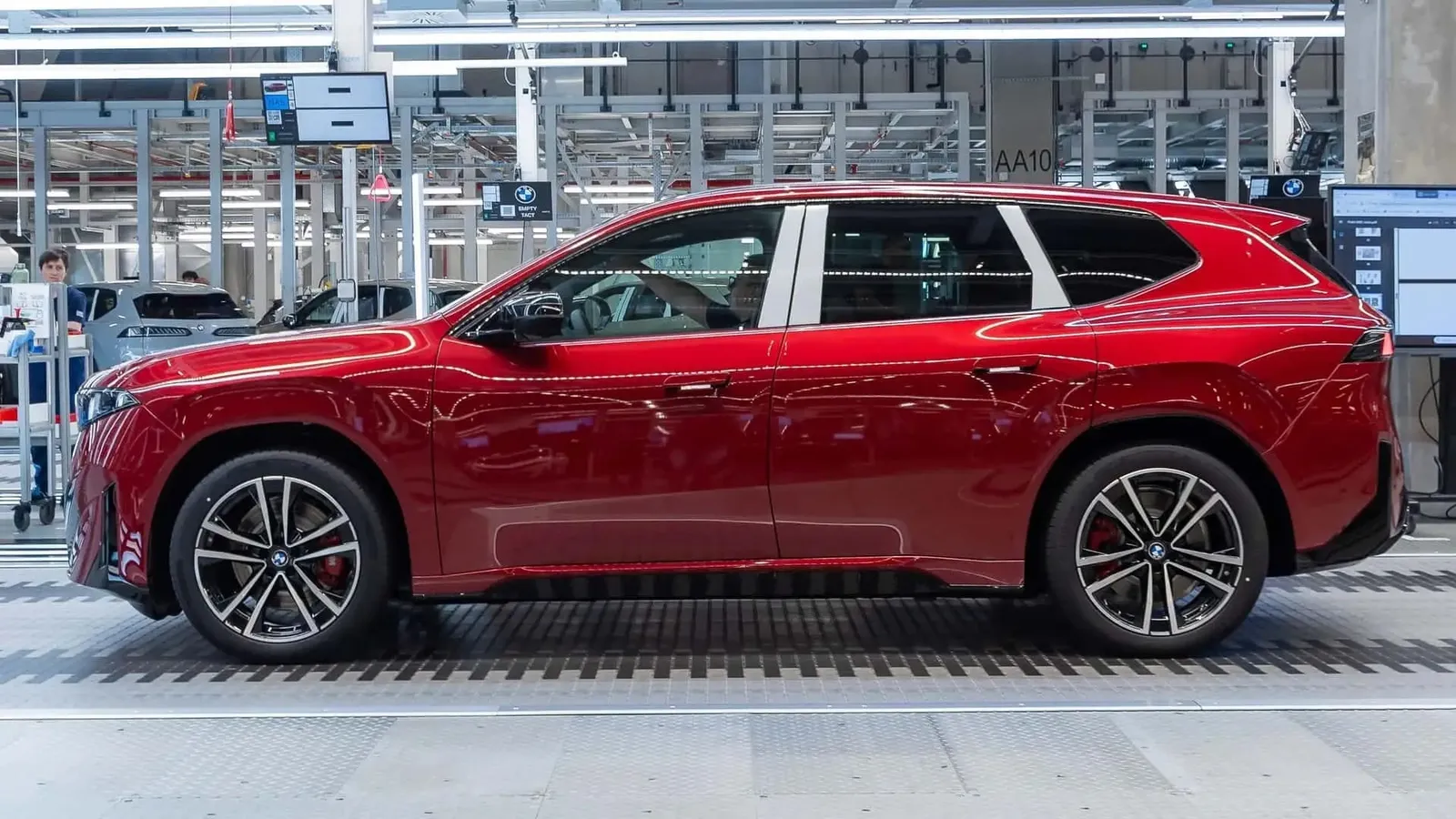
BMW has accelerated production in Debrecen and introduced a third shift for the iX3 starting in September. The reason is simple: 100,000 orders have already been placed in Europe for this electric Neue Klasse SUV, and the plant went from partial operation to 24/7 production in just about eight months.
Table of Contents
Show
Hide
This is a signal to drivers that the iX3 is no longer just a “promising model on paper.” It’s actually selling well, and BMW needs to keep up with demand.
100,000 orders and 50,000 units produced. BMW speeds up in Debrecen
BMW’s factory in Debrecen, Hungary, is now operating on a three-shift basis, meaning around the clock. The manufacturer states outright that this is due to high demand for the iX3, the first series model in the Neue Klasse family.
The numbers look impressive. BMW claims that since the global launch of the model, 100,000 orders have been received in Europe, with 50,000 units already rolled off the production line. In other words, half of the waiting list is still awaiting vehicle production.
The launch timeline itself is also striking. Production in Debrecen was announced for October 2025, and by March 2026, BMW had already planned to operate on two shifts. A third shift was added in September. The manufacturer states this is the fastest ramp-up for a new factory in BMW Group’s history.
It sounds good, but one caveat should be noted: we’re talking about production and sales success within a single premium brand. This doesn’t yet mean BMW has found a solution for mass-market EVs for everyone. The iX3 starts at a price point that still excludes a significant portion of the market.
What sells so well: Two versions of the iX3, up to 805 km WLTP range, and 400 kW charging capability.
For now, the iX3 range is simple. There are two versions, both produced exclusively in Debrecen.
BMW iX3 40
BMW iX3 50 xDrive
Powertrain
RWD
AWD
Power
235 kW
345 kW
Torque
500 Nm
645 Nm
0-100 km/h
5.9 s
4.9 s
Top speed
200 km/h
210 km/h
WLTP range
635 km
805 km
Battery capacity
82.6 kWh
108 kWh
DC charging power
300 kW
400 kW
DC charging 10-80%
21 min
21 min
Price
63,400 euros
70,900 euros
On paper, these are very impressive figures. Especially the iX3 50 xDrive version with an advertised WLTP range of 805 km and a charging speed of up to 400 kW. The problem is that WLTP remains just WLTP, and peak charging rates without a charging curve don’t solve anything. Only road tests will show whether the Neue Klasse truly delivers an advantage over today’s competitors.
Still, it’s hard to be surprised by the interest. With a 10-80% charge time of 21 minutes and specifications similar to those of top mid-to-high-end electric vehicles, the iX3 appears to be a proper successor to the gasoline SUV, rather than a compromise for brand fans.
The Neue Klasse is starting to make an impact. BMW has timed its market entry well.
The iX3 is the first mass-produced car with BMW’s new architecture, so demand holds more significance than just the sales of a single model. If the first product from this platform receives 100,000 orders in Europe alone, it serves as confirmation for Munich that the costly technological shift was worthwhile.
The plant in Debrecen was established specifically for this program. The investment was estimated at around 2 billion euros, or approximately 2.3 billion dollars according to some foreign publications. Currently, about 5,000 people work at the factory.
BMW also highlights its iFACTORY production model, which features high levels of digitalization and flexibility in manufacturing lines. Marketing aside, the final result is clearly visible: within eight months, the plant went from startup to operating 24/7. This cannot be achieved merely through a PowerPoint presentation.
There is another interesting insight for the European market. The German brand built its hit EV not in China nor under a license of another platform, but within its own industrial ecosystem in Central Europe. While some manufacturers still attribute poor results to “uncertain demand,” BMW shows the opposite.
Debrecen will receive a second model this fall. It is most likely the iX4.
The story with the iX3 isn’t over. BMW has announced that production of a second, entirely new Neue Klasse model will begin in Debrecen in the fall of 2026.
The company hasn’t revealed the name, but there have been months of speculation about a project codenamed NA7, an electric SUV-coupe that is likely to hit the market as the BMW iX4. This would be a logical move. BMW has long favored pairing classic SUVs with more “stylish” coupe variants, so extending this approach to the Neue Klasse seems obvious.
Earlier, in March 2023, BMW announced that it would introduce six Neue Klasse models within 24 months once the platform went into production. Today, the first two of these are already on the market or just before production begins. If the schedule holds, 2026-2027 will represent a test not just for one vehicle but for an entire new generation of electric cars for BMW.
Production solely in Hungary will not last long. Mexico will start production from 2027, along with China for the LWB version.
Currently, all European iX3 models are produced in Debrecen, but this monopoly won’t last forever. BMW is already preparing parallel production in Mexico starting in 2027, specifically at the San Luis Potosi plant. This is mainly important for the North American market and logistics.
A separate market is China. There, a locally produced version of the iX3 with an extended wheelbase is set to appear, a configuration well-suited to Chinese purchasing preferences. This is important because it shows that the Neue Klasse won’t be a single global platform for everyone, but rather a family of models tailored to each region.
For Europe, this means one thing: Debrecen was and remains a launch factory for the new generation of BMWs, but ultimately production volume is expected to be spread more widely. Otherwise, with such demand, waiting lists would grow faster than production capacity allows.
In Poland, the most interesting question now is whether actual delivery timelines and real energy consumption will confirm this market enthusiasm, as orders are only half the story.
If the iX3 maintains demand as more competitors enter the market, BMW will be able to claim that the Neue Klasse has launched with a strong start, rather than just on promise. How do you view these 100,000 orders: is it due to the novelty factor, brand strength, or truly an excellent car?