
BMW opens its Bavarian factory for electric vehicle batteries
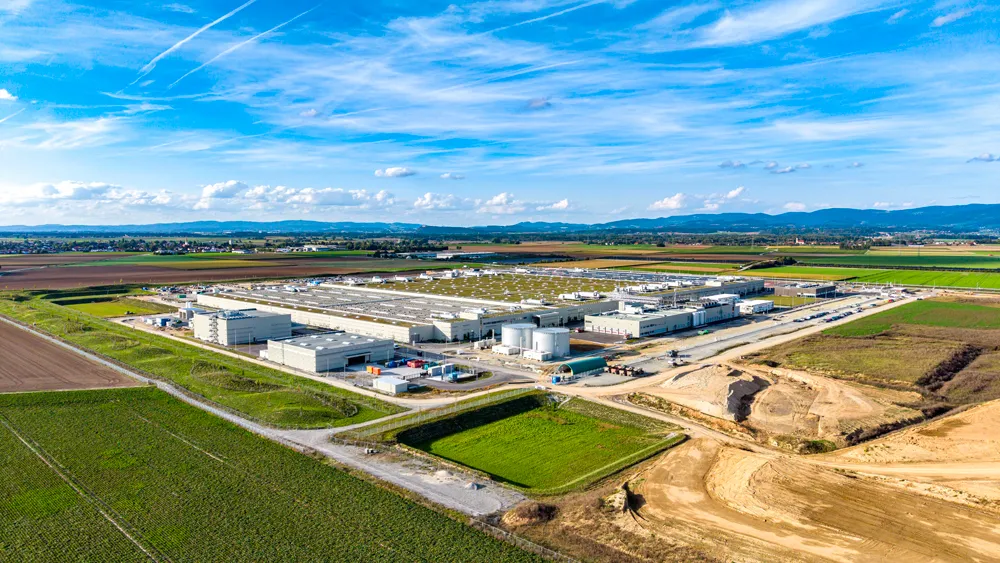
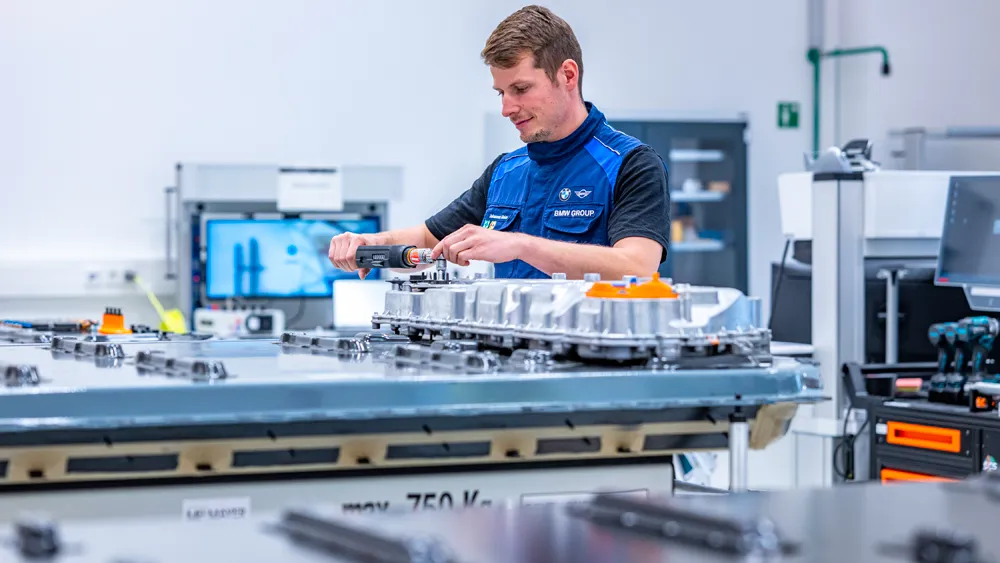
Starting in March 2026, BMW’s factory located in Irlbach-Strasskirchen, Germany, began producing pre-series batteries. Due to the high demand for electric vehicles in the Neue Klasse series, production accelerated faster than expected. On October 1, 2026, this strategically important site for both the region and the manufacturer was officially inaugurated, marking the start of mass production.
Local Components
BMW has recently built not one but five state-of-the-art high-voltage battery assembly plants around the world. Located on a 60-hectare site, the plant in Irlbach-Strasskirchen, Germany, joins those in Debrecen, Hungary; Shenyang, China; Woodruff, United States; and San Luis Potosí, Mexico.
By being situated near the group’s vehicle assembly sites, they share a strategy of local production for local assembly. There is no need to transport lithium packs hundreds or thousands of kilometers to be installed in the electric vehicles they are meant for.
By doing this and maintaining control over the distances between various production sites, BMW preserves local jobs despite the introduction of robots, assistants, and other AI-powered systems. During the construction phase of the facilities in Irlbach-Strasskirchen, the “local for local” principle was also applied by choosing German companies, two-thirds of which were from the state itself. This provides further support for the local economy and strengthens Bavaria as an industrial hub. It’s worth noting that the facility operates without fossil fuels. The German company invested around a billion euros in this project.
Alignment of Planets
From the start of construction in April 2024 to the production of the first pre-series battery in March 2026, less than two years passed. This relatively short timeline, considering all the elements that needed to be put in place, was made possible by a true alignment of interests among the company, political decision-makers, authorities, regional partners, and the local population. In France, it is all too often the lack of support from the local community that delays projects.
Through intensive quality communication and ongoing dialogue among all stakeholders, the referendum held in September 2023 regarding the construction of the factory showed that 75% of voters were in favor, with a participation rate of nearly 77%. Operating from the start with two teams rotating shifts, the facility now supplies sixth-generation high-voltage batteries (108.7 kWh) to the Munich plant for use in the new electric BMW i3 sedan.
"Highly skilled employees, modern production facilities, short distances within Germany’s industrial hub, and a highly competitive regional environment. These factors place us in an optimal position to continue growing and meet the rising demand for fully electric vehicles," said Raymond Wittmann, head of production at BMW AG.
Hundreds of batteries per day
The sixth-generation (Gen6) drive battery, developed in-house, benefits from advanced and intelligent production processes. Following the "cell-to-pack" principle, new cylindrical cells that meet the most stringent technical standards are integrated directly into the pack, which is part of the vehicle’s body structure ("pack-to-open-body").
To ensure that only defect-free and safe batteries are used in BMW’s electric vehicles, every stage of production is continuously monitored online and thoroughly documented in real time. This task falls particularly on the artificial intelligence assistants and agents developed by BMW, which operate on site with the help of 500 robots working within a 50,000 m2 production area.
Earlier in the process, digital twins of production lines and virtual reality applications are utilized to streamline planning and employee training. Once fully operational, the Irlbach-Strasskirchen factory will employ around 1,600 people. It will then produce several hundred traction batteries daily from its two production lines.
Recycled Materials in Cells
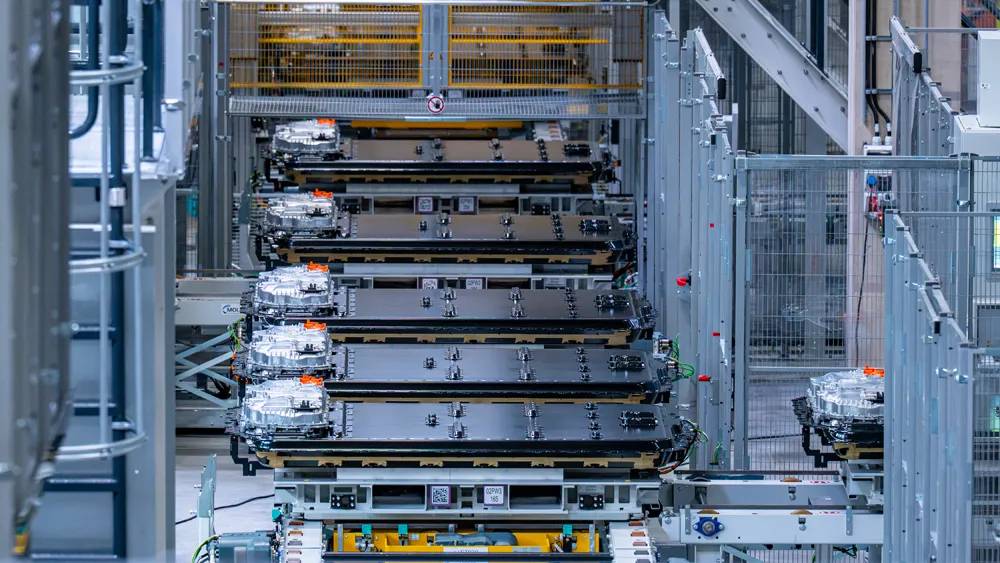
After a check that includes verifying their voltage, cells containing recycled cobalt, lithium, and nickel are connected to the cooling systems. Ultra-precise welds are made following laser cleaning of the contacts and systems. Foam padding is used to protect the cells, ensuring the safety, stability, and durability of the high-voltage battery. The casing is then closed, sealed, and riveted.
"During the final stage, the Energy Master, the central control unit, is installed on the high-voltage battery. A permanent elastic sealing adhesive is applied to ensure perfect airtightness. Finally, each high-voltage battery undergoes 100% final quality control before leaving the production line," BMW explained in a press release dated October 1, 2026.
The Cell Recycling Competence Center (CRCC) in Salching, located just sixteen kilometers from Irlbach-Strasskirchen, began operations in December 2025. Thanks to it and an internally developed direct recycling process, battery materials can be recovered without relying on conventional energy-intensive chemical or thermal methods. These materials are then reused in the production of new cells.
What about battery repairability? This is a relevant question given that many drivers need reassurance about the durability of lithium batteries before switching to electric vehicles.
