
BMW opens its €1,000,000,000 battery factory that will power a new generation of electric cars
04/10/2026 15:00
Updated to
04/10/2026 15:00
Building a battery factory from scratch and having it in series production within less than two and a half years is not typical in the automotive industry. BMW Group has achieved this with its new plant in Irlbach-Straßkirchen, Bavaria, which was officially inaugurated with the start of series production. Just two and a half years after construction began, the facility is already supplying sixth-generation high-voltage batteries to the Munich plant for use in the new BMW i3.
The strong demand for the Neue Klasse models has accelerated production rates beyond initial expectations, with the factory operating in two shifts from day one. "The new plant plays a key role in our production network: as a central platform, it will supply high-voltage sixth-generation batteries to our German vehicle plants," explained Raymond Wittmann, member of BMW AG’s board of management responsible for production.
A 1 billion euro investment as a signal to Germany
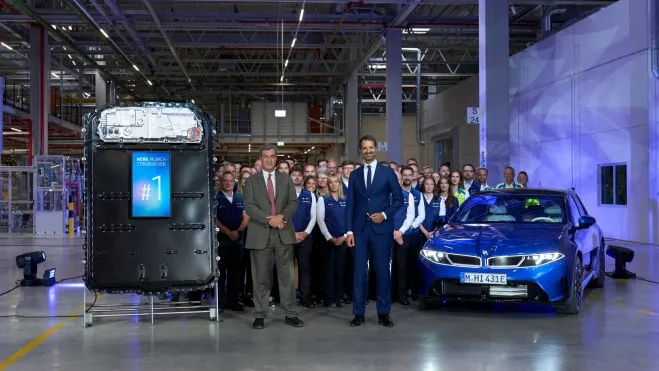
BMW Group’s investment of around 1.0 billion euros underscores the company’s commitment to Germany’s industrial base. “With our plant in Irlbach-Straßkirchen, we are sending a strong message: for our technological competitiveness, for electric mobility, and for Germany as a business hub,” said Wittmann, adding that the decisive factor for keeping industrial production possible in the country is having a reliable and competitive framework.
The construction of the plant on a 60-hectare site and the setup of the production lines were completed in record time: it took less than two years from the start of construction in April 2024 to the production of the first pre-series battery in March 2026. With this new plant, BMW Group expands its industrial presence in eastern Bavaria, where around 40% of all BMWs ever produced have been manufactured thanks to the plants in Dingolfing and Regensburg.
500 robots, 1,600 workers and more than 500 patents
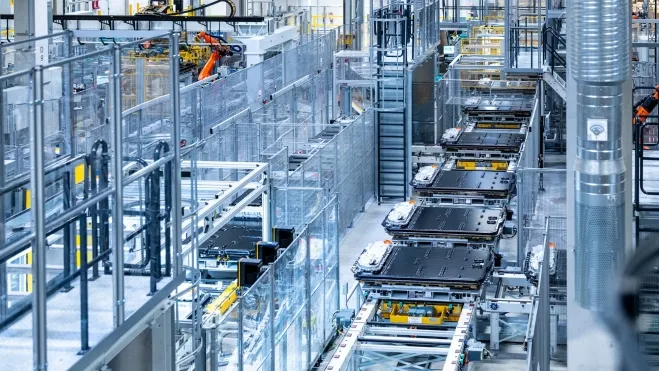
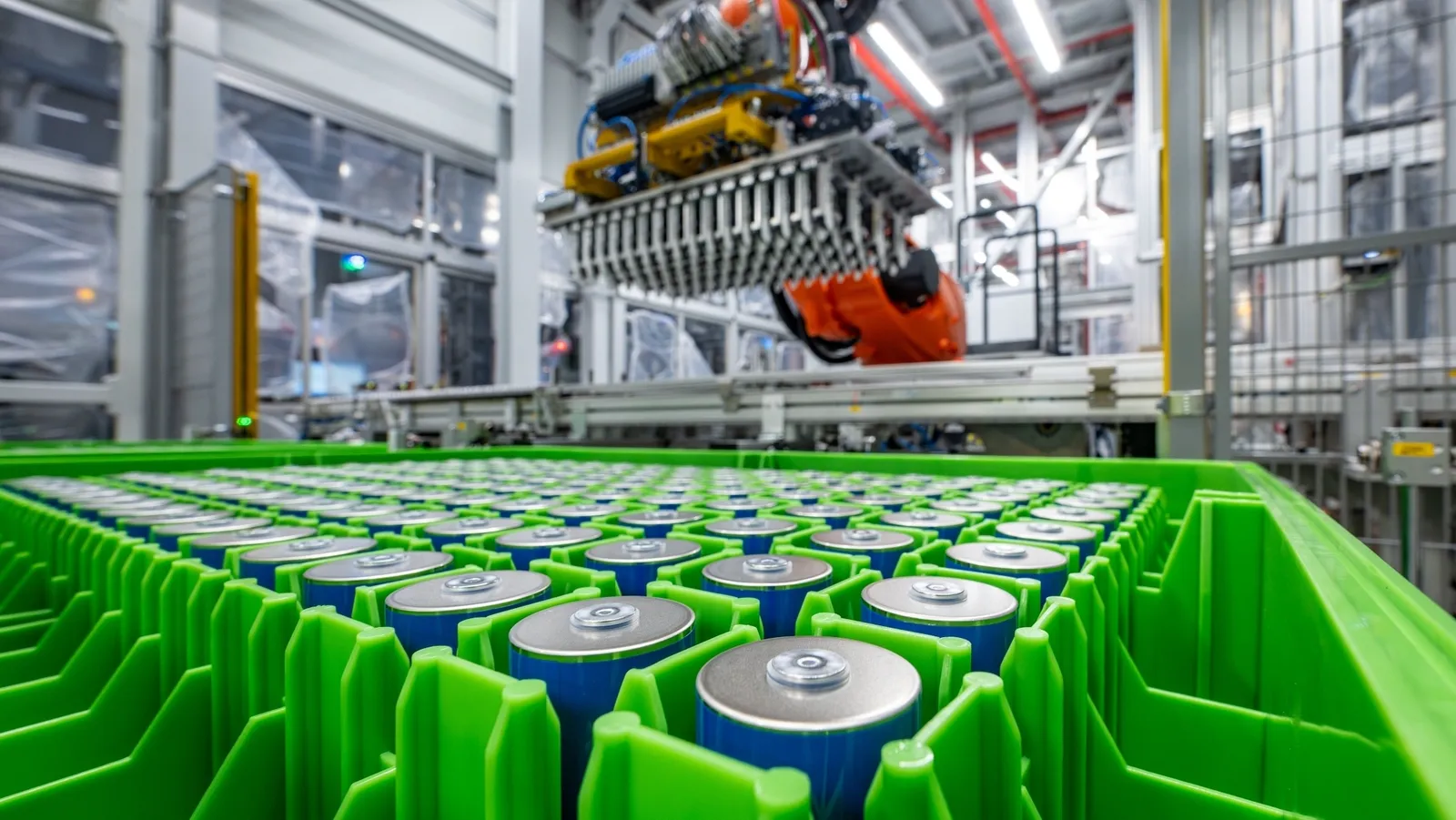
The production of the in-house developed sixth-generation (Gen6) high-voltage battery relies on smart and efficient manufacturing processes. The new cylindrical cells are integrated directly into the battery following the “cell-to-pack” principle, with the battery itself becoming an integral part of the vehicle’s body structure under the “pack-to-open-body” concept. All production steps are continuously monitored in real time and documented instantly. This is achieved through the use of artificial intelligence alongside a workforce of 500 robots working side by side with 1,600 employees.
The Gen6 battery concept will be used in all vehicle segments of the BMW Group. To develop this sixth generation of eDrive technology, the company has filed patent applications for over 500 innovations. During manufacturing, more than 3,500 data points per battery are collected and monitored in real time. The process includes grouping cells connected to cooling systems, precision laser welding, an innovative foaming process that protects all components as a single mechanical unit, and 100% final inspection of each battery before it leaves the production line.
Five factories worldwide under the “local for local” principle
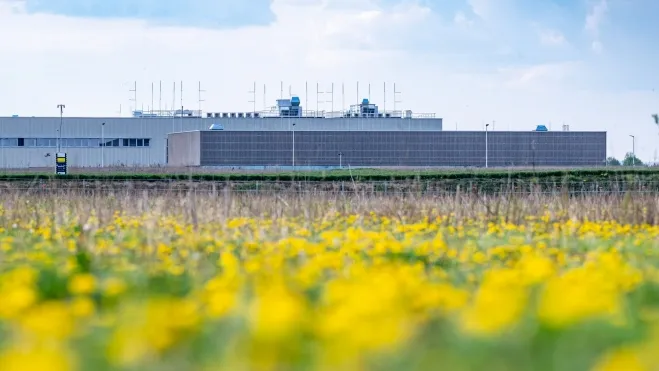
The installation of Gen6 batteries takes place at five new production facilities around the world, built near the vehicle factories themselves following the “local for local” principle. In addition to Irlbach-Straßkirchen, the BMW Group has established high-voltage battery assembly plants in Debrecen (Hungary), Shenyang (China), Woodruff (United States), and San Luis Potosí (Mexico). In the case of Irlbach-Straßkirchen, all directly contracted construction companies are from Germany, two-thirds of them from Bavaria, and more than three-quarters of the plant engineering suppliers are also German, with one-third of them from Bavaria.
The Irlbach-Straßkirchen plant does not require fossil fuels for its normal operation. A photovoltaic system generates part of the electricity needed directly on site, while the remaining energy comes entirely from renewable sources. The process is designed so that installing high-voltage batteries does not require water. The Gen6 cells used in the Neue Klasse also incorporate alternative materials in part of their cobalt, lithium, and nickel content, and renewable energy is used both in manufacturing the anode and cathode materials and in the production of the cells themselves. Compared to the Gen5 cells in the previous model, CO2 equivalent emissions per watt-hour have been reduced by approximately 33%.
