
BMW i7 Facelift (2026) Review: More Beautiful, Smarter – Truly Better?
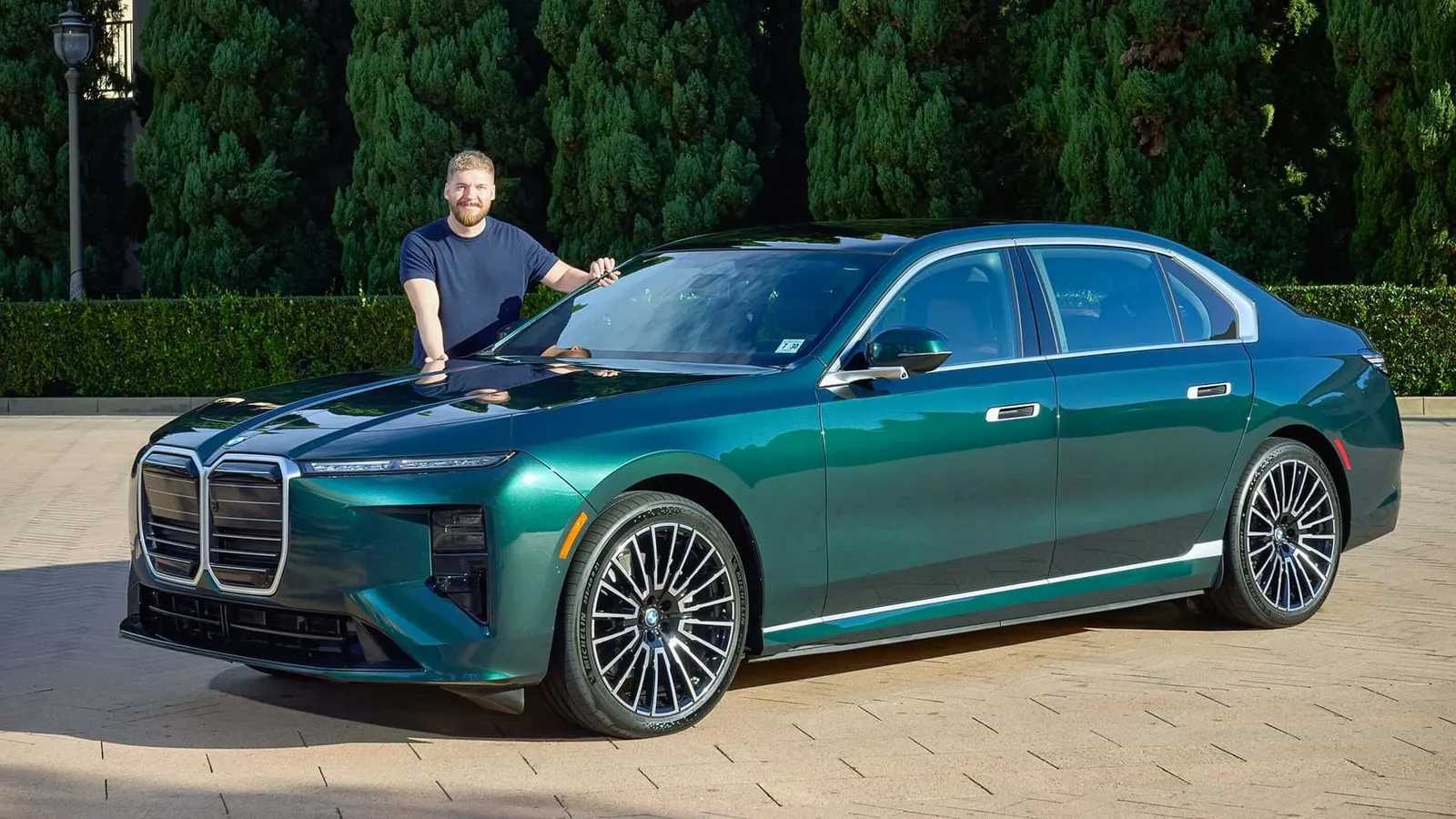
While the luxury market leader, the Mercedes S-Class, has recently shown signs of weakening, the 7 Series managed to record growth of over five percent in the U.S. alone last year. Once again, it seems to be true: it’s the interior qualities that matter. Otherwise, the success of the current 7 Series is hard to explain. Given its appearance, the G70 could only have been purchased by those with rather unconventional tastes. In mid-year, BMW pulled the plug.
And that was through the biggest model update in the company’s history. It not only gives Munich’s flagship a less chaotic exterior but also brings substantial technological upgrades that are truly impressive. A completely new interior for the New Class, plenty of technology for the electric i7, and various new or improved combustion engines have piqued our interest greatly for the first test drive.
We’ll tell you now whether the 7 Series has what it takes to continue its upward trend and whether you’re better off with an electric version or the new base six-cylinder 740.
Image Gallery: BMW i7 60 xDrive (2026) in Test
More battery capacity, barely faster charging speed
When the seventh generation of the 7 Series was unveiled in early 2022 with a lot of fanfare at the Munich Olympic Hall, many local journalists showed signs of disappointment due to the vehicle’s design. On the other hand, wealthy customers from the Middle East and China cheered at first sight, according to official sources. The problem is that the extremely important Chinese market no longer shows any interest in European luxury sedans and currently prefers domestic luxury SUVs, if at all.
It’s clear, though, that the show must go on. And BMW invested heavily in this update. The “most extensive model overhaul in BMW Group history” not only gives the 7 Series a largely new exterior but also makes significant technical improvements to its existing structure. This luxury vehicle retains the proven CLAR platform but is equipped with the digital core and battery technology from the “New Class.”
The full-electric i7 received the most attention. BMW introduces the sixth generation of its eDrive technology (Gen6) here. The new battery cells feature a 20 percent higher volumetric energy density. The usable energy capacity of the battery increases from 101.7 to 112.5 kWh (net). As a result, there is a significant boost in range: the i7 50 xDrive and i7 60 xDrive now achieve over 700 kilometers of range according to WLTP standards.
Charging still looks much less promising compared to the iX3, iX5, and similar models. Although the maximum charging power at DC fast chargers increases from 195 kW to 250 kW, it remains far behind the up to 460 kW offered by those models. The reason is simple: upgrading to 800-volt technology would have been too costly and would even have required new axles. As it stands, it now takes ten minutes to charge enough energy for a range of around 200 kilometers. The iX5 can achieve up to 360 kilometers of range.
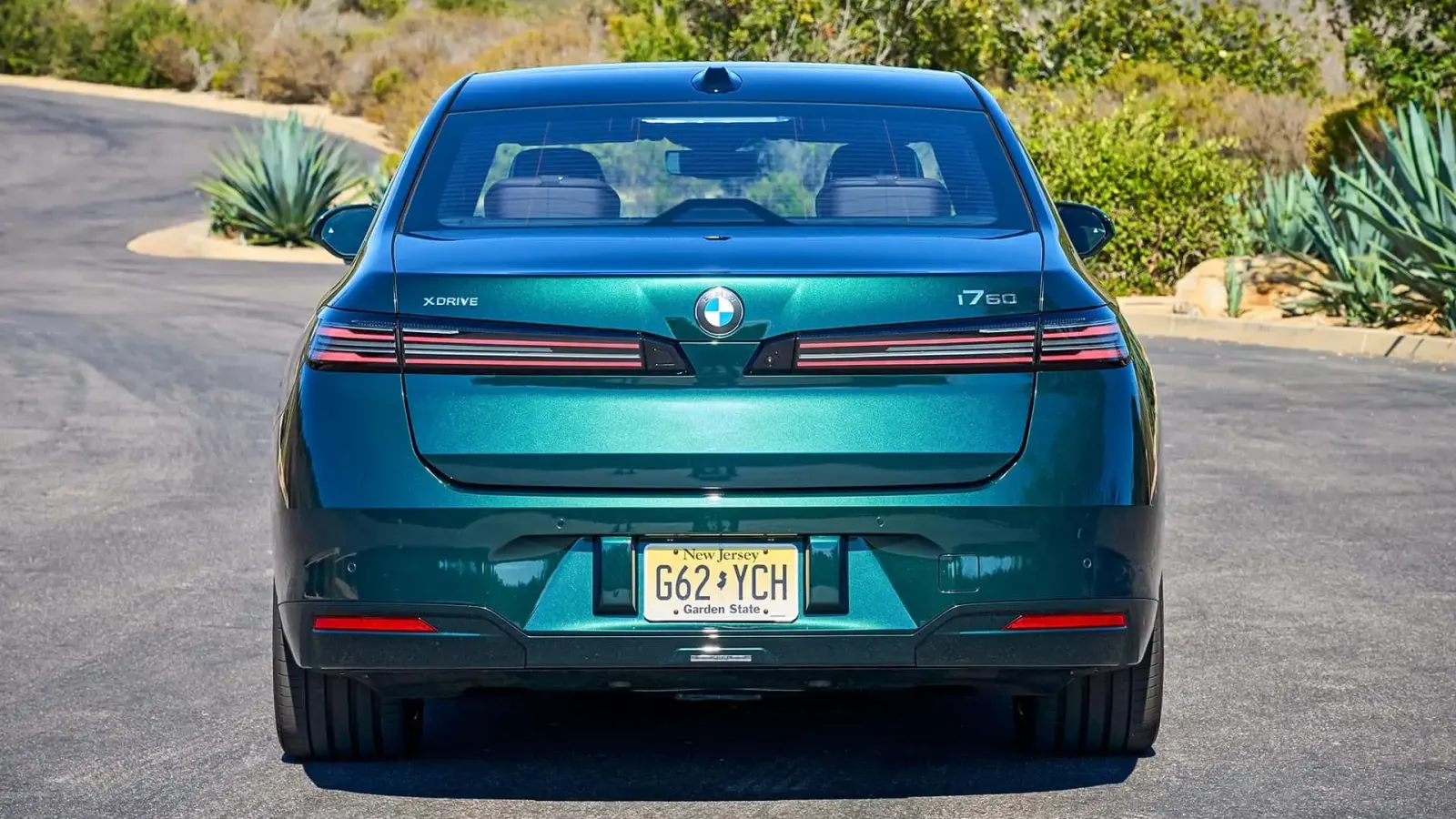
BMW i7 60 xDrive (2026) in Test
Image by: BMW
Overall, the powertrain portfolio remains diverse, featuring two six-cylinder mild hybrids, two six-cylinder PHEVs, an V8 gasoline engine, and three electric variants. The base six-cylinder gasoline engine, the 740 xDrive, is new to this lineup. Additionally, the V8 engine is set to make its long-awaited return in the new M760 xDrive, powering the majority of 7 Series models in the United States.
The adaptive two-axis air suspension with electronically regulated dampers is now standard across all models. Those seeking greater agility can opt for “Adaptive Chassis Control,” which includes integral active steering (rear-wheel steering). The top-tier suspension, “Adaptive Chassis Control Professional,” adds active roll stabilization powered by a 48-volt system.
A brief update on assistive systems: Under the name “BMW Symbiotic Drive,” the interaction between human and machine is designed to feel more natural. As was the case during the tests of the iX3 and X5, it’s positive to note that BMW avoids the constant beeping typical of many other manufacturers. “Let things be and let them live” is simply a Bavarian principle. That’s good. And in the 7 Series as well, you can now remove your hands from the steering wheel permanently while driving on the highway at up to 130 km/h if you wish.
Attractive, but still not a beauty
Basically, the dimensions of the white and blue flagship remain unchanged. The 7 Series stays a massive vehicle, being its own ultra-long version with a length of 5.40 meters and a wheelbase of 3.22 meters. For comparison, the S-Class measures 5.18 meters or 5.29 meters. It offers decent maneuverability (at least for this segment) with a width of 1.95 meters and a turning radius of 12.3 meters when equipped with the optional rear-wheel steering; otherwise, it’s 13.1 meters. However, the S-Class model reaches at most 10.5 meters in length.
Attentive readers of this report have likely already noticed that I’m not a huge fan of the current G70 design. The facelift version appears much more confident, imposing, and proportionally elegant, especially at the front. Yet it still won’t likely win many awards for timeless elegance. In that regard, we still look back with deep nostalgia at the 1990s E38 generation.
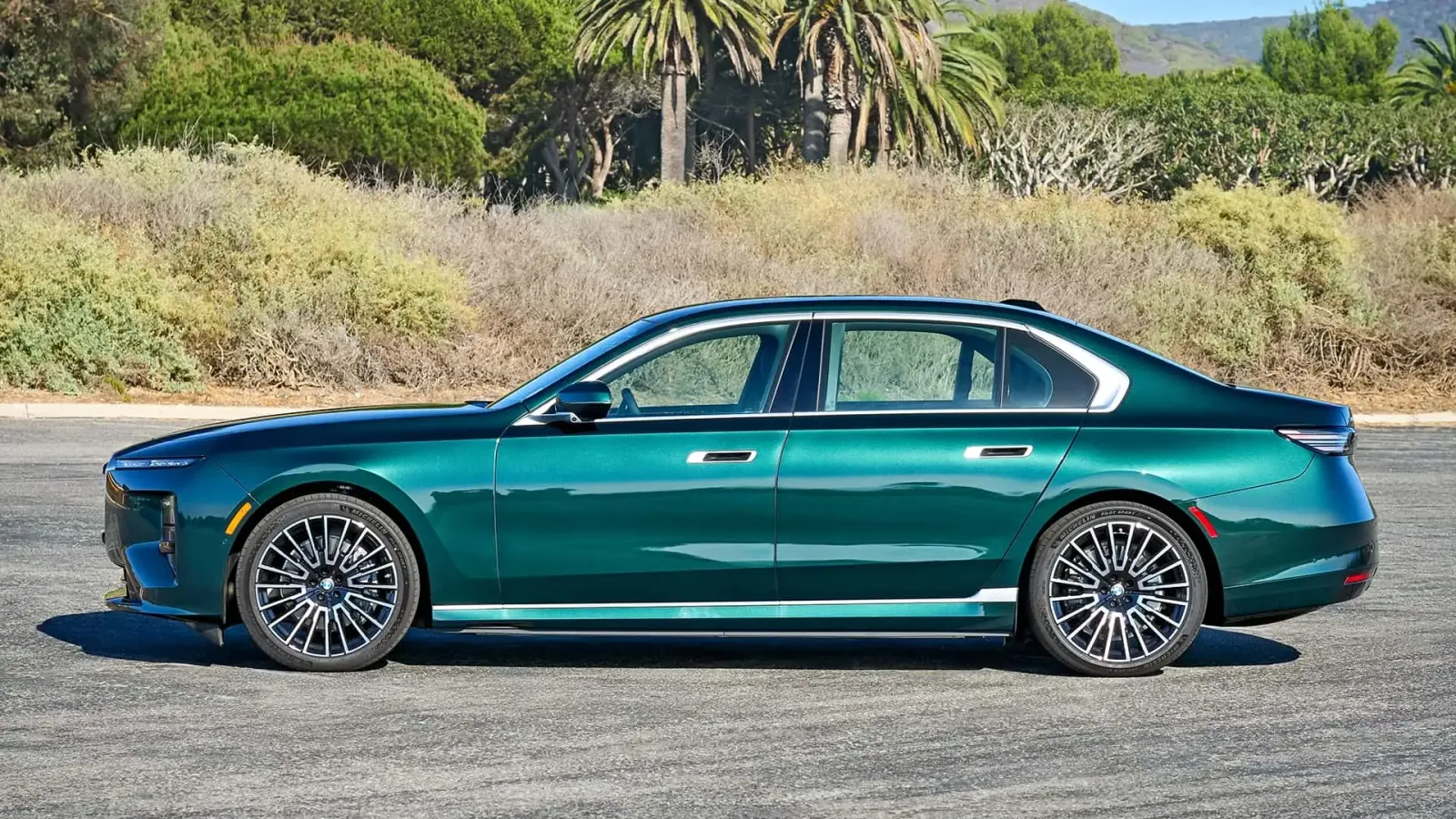
BMW i7 60 xDrive (2026) in Test
Image by: BMW
What definitely wasn’t available in the good old days is the highly successful “BMW Individual Dual-Finish.” Completely new and particularly demanding in terms of manufacturing is the two-color paint finish combined with matte paint. According to BMW, only they can currently offer this. The process for a single vehicle takes over three days. The cost for this elaborate option is well over 14,000 euros. This new look is complemented by an expanded wheel portfolio that now includes 22-inch wheels as standard for the first time.
A New Class at Its Best
What recently led various members of the Motor1 editorial team to criticize the vehicles: Despite the technical excellence of the new Panoramic Vision cockpit, the material quality inside the iX3, i3, and even the six-figure luxury flagship X5 falls short in some areas. This is hard to understand. In Munich, people must be aware of the amount of anger and mockery Audi has faced recently for similar reasons. In Ingolstadt, corrections were made swiftly wherever possible. Munich should take this issue seriously as well.
Regarding the new 7 Series, I can give some reassurance on that front. However, there’s really no room for experimentation or excessive cost-cutting with this flagship model. As a result, the material selection is both refined and tasteful. It’s also quite extensive. Those who aren’t interested in leather—given its exceptionally smooth texture and generous coverage—can opt for a highly sophisticated and stylish wool-cashmere fabric for their mobile living space.
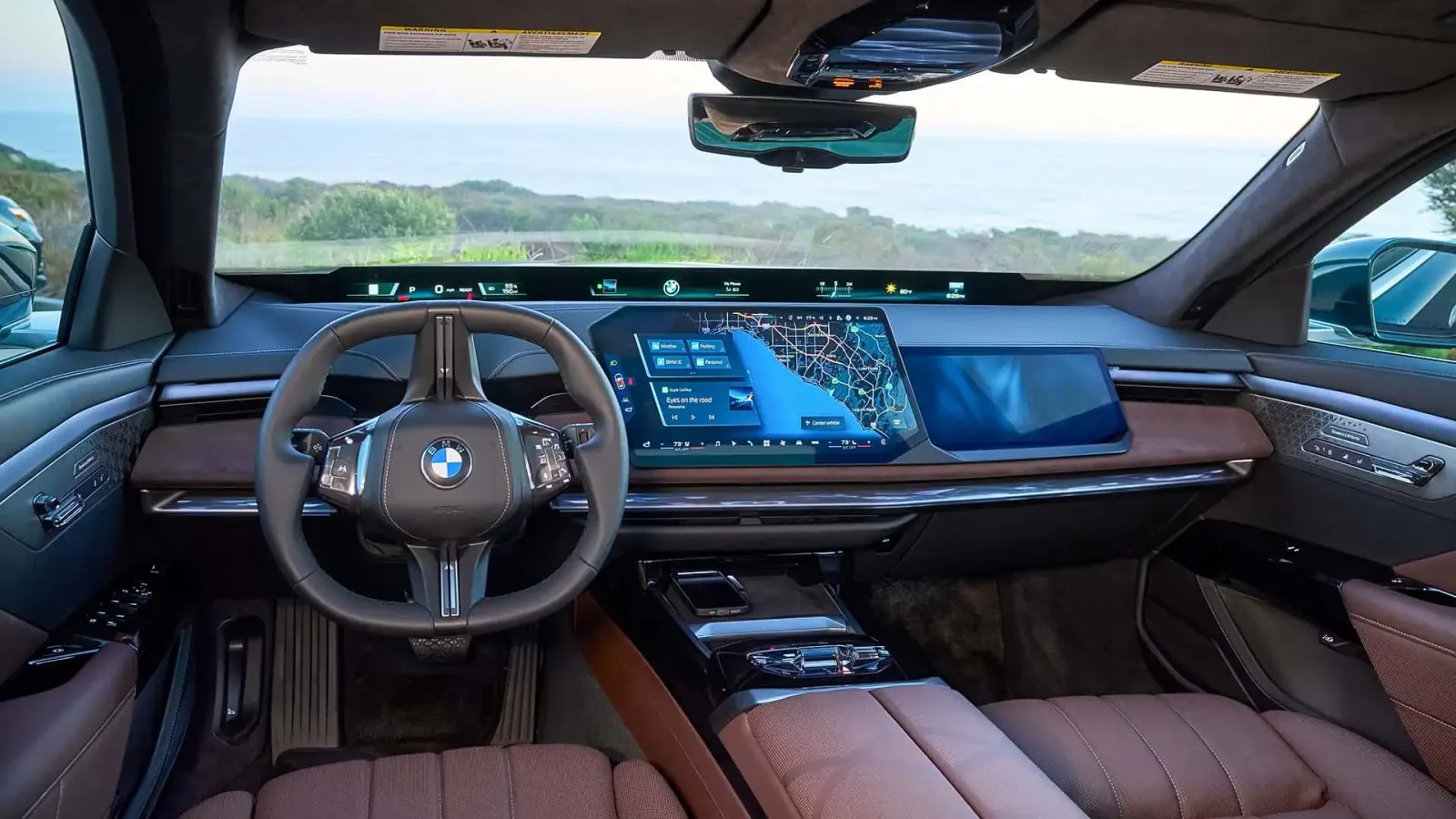
The quality of construction is evident in every detail, as one would expect from a vehicle of this caliber. In my opinion, the design of the cockpit has also improved. The Panoramic Vision display, acting as an information strip across the entire windshield, functions well in everyday use and remains unobtrusive, which is important in this class.
BMW i7 60 xDrive (2026) in Test
Image by: BMW
One can argue about the oddly shaped infotainment screen and the new 14.6-inch passenger display, but the setup is definitely more refined compared to the previous facelift model with its large detachable screen and awkward ambient light strip. Not to mention the rather unpleasant disaster of the giant screen in the S-Class facelift.
I already discussed the overall functionality in the review of the new X5 and iX5. The same pattern is evident in the 7 Series. The countless features require a fairly complex sub-menu structure. One workaround is to use programmable routines, which allow settings such as automatic seat massage activation upon startup or disabling of annoying mandatory assistants.
Personally, I miss physical buttons for adjusting driving modes. Additionally, manually adjustable air vents would be desirable. Having to navigate to the sub-menu each time is cumbersome. Moreover, the graphically appealing and user-friendly central display was too slow during the initial test. This shouldn’t happen with the so-called speed miracle known as Operating System X. It will likely be fixed through an update.
The new steering wheel may look unusual at first, but it feels good to hold and doesn’t draw negative attention while driving. However, I prefer the old steering wheel button layout to the transparent button cluster that has been adopted now. On the other hand, the system shines with its completely new navigation feature. With this graphical display, it’s the most intuitive and best navigation system I’ve used so far.
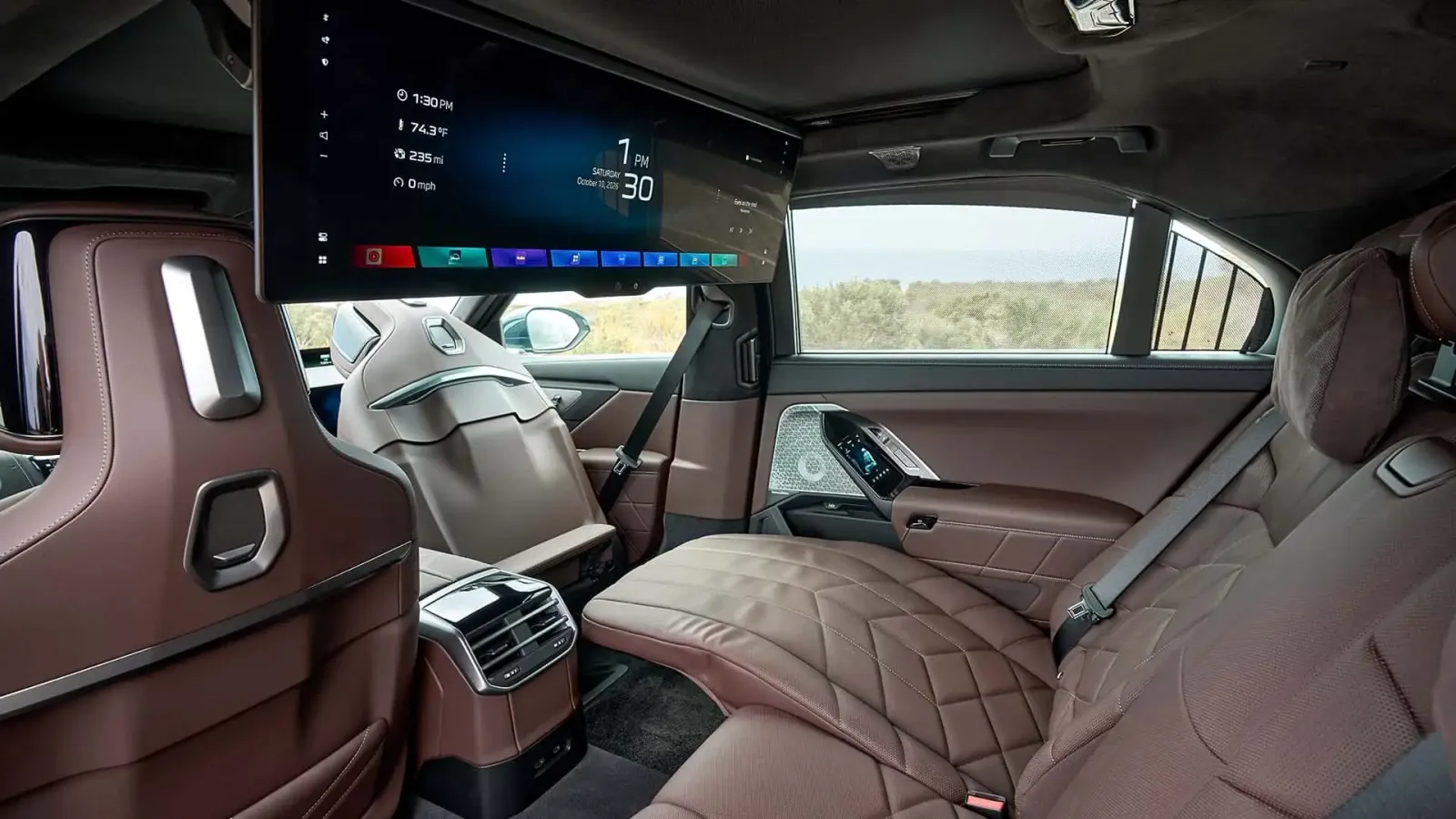
BMW i7 60 xDrive (2026) in Test
Image by: BMW
Surprisingly, the rear seating in the updated 7 Series remains extremely comfortable as well, while thankfully it’s not Gen Z who controls the setup there—instead, it’s the luxuriously comfortable reclining seats along with the optional 31-inch “auto cinema” screen, which now delivers 8K resolution and can be operated via touch. It also includes a bass-back massage function from the Bowers&Wilkins sound system for an authentic cinematic experience.
For completeness, let’s take a look at the trunk volume. The electric i7 models have 500 liters, plug-in hybrids offer 525 liters, and the conventional gasoline versions come in at 540 liters.
You can find a detailed driving review of the new BMW i7, along with comparisons to its gasoline-powered variants and all relevant data/prices, on our sister site Motor1.com Deutschland.
More news from Munich