
Future batteries, electric motors, and F1 technologies: we’ve uncovered what Mercedes is preparing!
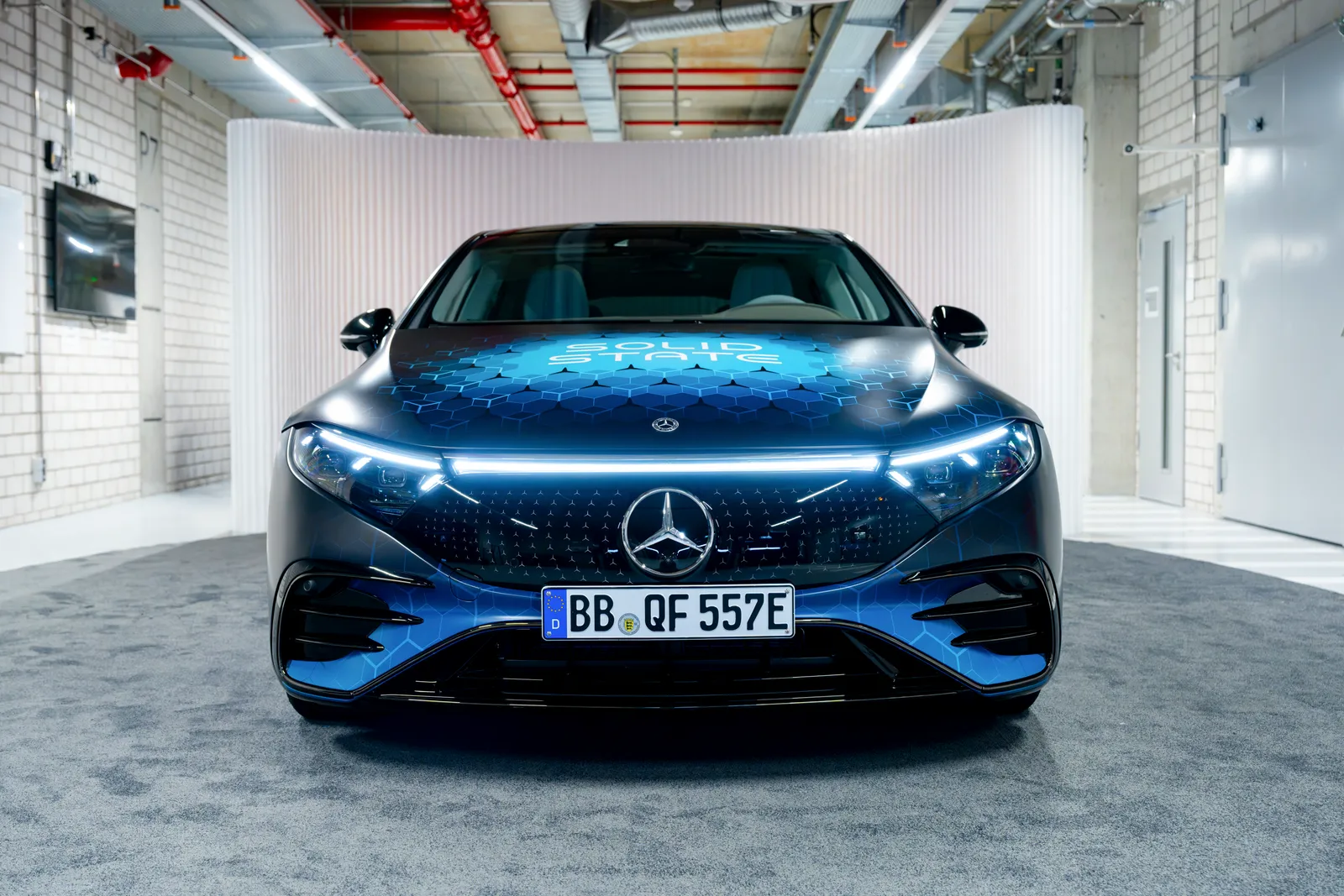
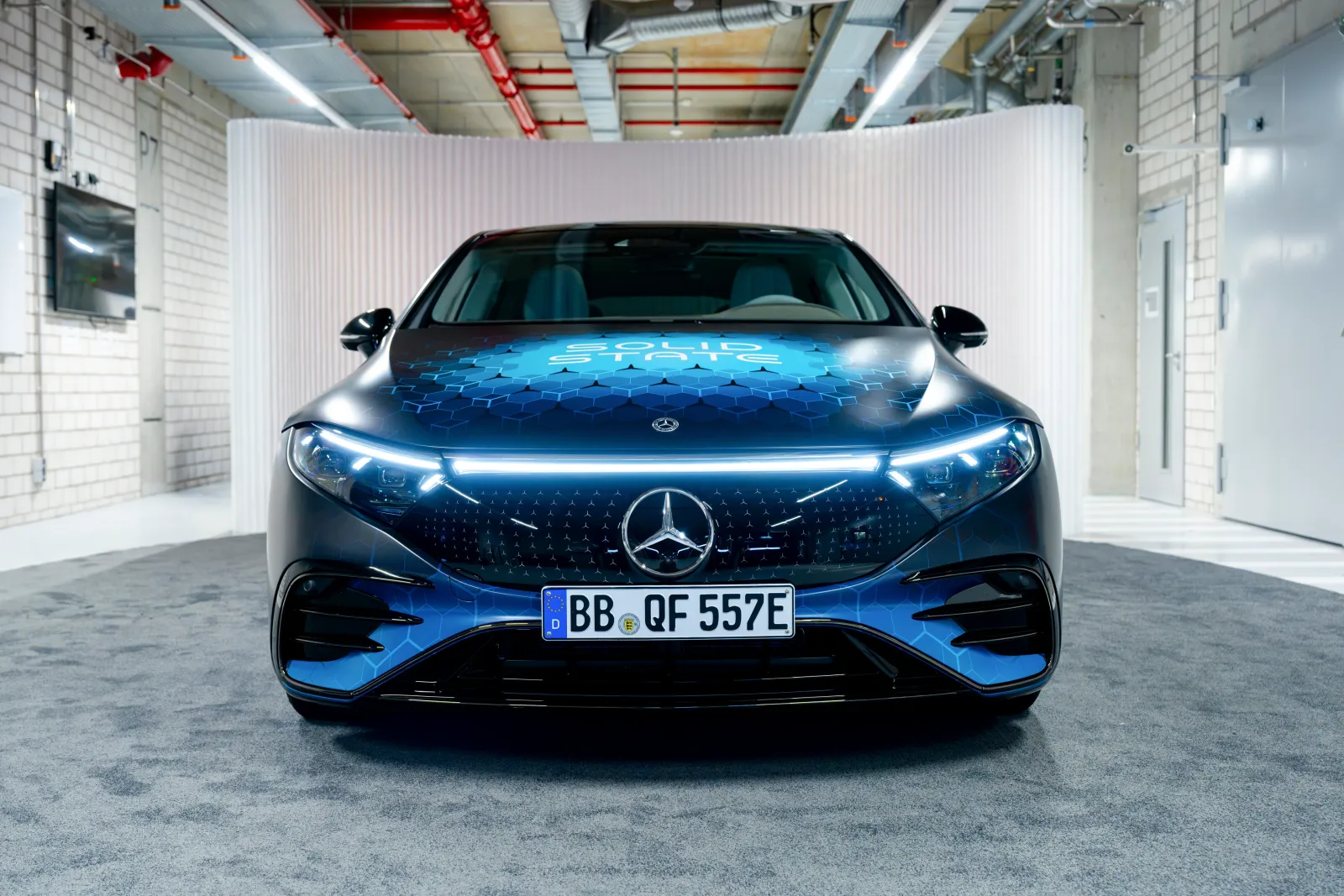
Mercedes continues to work on the powertrains of tomorrow. At the Tech Experiences held in Stuttgart, the German automaker showcased its latest advancements, from new battery chemistries to 800-volt electric motors, not to mention an impressive turbocharger developed using Formula 1 expertise. Some of these technologies could change many things.
What will the engines in future Mercedes vehicles look like? This is one of the questions the German automaker tried to answer during its Tech Experiences, held on October 15 and 16, 2026, in Stuttgart. We attended these two days to discover several innovations developed by the brand. Mercedes is currently preparing a major overhaul of its lineup, with over 40 new models planned by the end of 2027.
Also read
Rechargeable hybrid cars: what if we reduced their fuel tanks to force them to run on electricity?
To support this offensive, the German company aims to expand its range of technical solutions. Electric vehicles, hybrids, and plug-in hybrids will continue to coexist in its lineup. But behind this strategy lie several interesting developments, particularly in the field of batteries. Mercedes is working on new chemistries that could significantly improve the range of its future electric vehicles. We’ll tell you everything we’ve seen.
Up to 30% more range?
This is probably one of the most intriguing announcements from these presentations. Mercedes is currently developing several new battery cell chemistries, with a clear goal of improving the energy density of batteries while reducing their cost and dependence on certain raw materials. Among the approaches being explored is a combination of materials based on lithium manganese oxide (LMO) and nickel manganese cobalt oxide (NMC). The idea is to use more manganese, a less expensive material, and reduce the proportion of nickel and cobalt.
But Mercedes is going even further with another chemistry called LNMO, which stands for lithium, nickel, and manganese oxide. This technology could do without cobalt entirely and require much less nickel than current NMC batteries. Its main advantage lies in its energy capacity. According to Mercedes-Benz, these cells could offer up to 30% more range compared to LFP batteries, at a similar weight and size.
To better understand, imagine an electric car capable of traveling 500 km with an LFP battery. Under equivalent conditions, a 30% improvement would theoretically extend its range to 650 km without increasing the battery’s size. However, caution is still needed. Mercedes is referring here to potential technology rather than performance already achieved in a production vehicle. The durability of the cells, their safety, and production costs must be addressed before large-scale commercialization can be considered.
Mercedes continues to invest in solid-state batteries
The German automaker is also continuing its research on solid-state electrolyte batteries, which are seen as one of the promising technologies for improving the range of electric vehicles. Mercedes is working with Factorial Energy and ProLogium in particular. With the former, the brand has already made significant progress thanks to an experimental EQS equipped with a solid-state electrolyte lithium-metal battery.
This vehicle managed to travel 1,205 kilometers from Stuttgart in Germany to Malmö in Sweden without any intermediate charging. This demonstration shows the potential of this technology for long-distance trips.
The advantages of solid-state batteries extend beyond range. Mercedes is also working to develop more compact and lightweight systems that can free up space in vehicles and reduce the amount of raw materials required. Meanwhile, the manufacturer is collaborating with ProLogium on fourth-generation battery cells. Research focuses on aspects such as their performance, thermal resistance, and safety. Mercedes has not yet specified when these various technologies might be integrated into its production vehicles. It is clear, however, that the manufacturer aims to have multiple solutions available to meet the needs of its future models, particularly to avoid relying on a single battery chemistry.
Also read
Testimonial – He didn’t want to hear about electric cars, but his DS N°8 changed his mind
Electric motors developed in-house
Batteries are only part of the equation. Mercedes is also working on improving the efficiency of its entire electric drive system. The manufacturer has introduced its EDU 2.0 drive unit, which is developed and manufactured internally. This system relies on an 800-volt architecture, helping to enhance charging speeds and energy efficiency. Mercedes also uses silicon carbide in the inverter, a component responsible for managing electricity flow between the battery and the motor. This technology helps reduce energy losses.
Another feature is that the EDU 2.0 includes a two-speed gearbox. This is still a relatively rare solution in electric cars, most of which rely on a fixed gear ratio. The goal is to find a better balance between acceleration, high-speed performance, and energy consumption. The system was specifically designed to remain efficient under real-world driving conditions, not just during certification tests.
This architecture, developed as part of the Vision EQXX concept, is set to be used in various electric vehicle models. Mercedes also plans to adapt it for larger vehicles, including future Classe E and Classe S models.
Technologies from Formula 1?
While electric power plays a significant role in its strategy, Mercedes is not abandoning internal combustion engines. In fact, the manufacturer continues to introduce technical innovations in this area, leveraging its expertise from Formula 1. During the Tech Experiences, Mercedes unveiled an upgraded version of its 1.5-liter electrified gasoline engine, named the M 252 LS. This four-cylinder engine generates 170 kW, or approximately 231 horsepower, with an additional electric contribution of 23 kW, equivalent to 31 horsepower.
But the main innovation lies with the turbocharger. For the first time in a Mercedes vehicle, this engine features an electric turbocharged by the 48-volt onboard battery system. The device has an electrical power output of 5 kW. It uses an electric motor to accelerate the rotation of the turbocharger and improve its responsiveness, especially when the exhaust gases do not yet provide enough energy. This technology draws on the expertise of Mercedes-AMG High Performance Powertrains, the British company based in Brixworth that develops engines used in Formula 1. The goal is to enhance acceleration performance and reduce response time while minimizing fuel consumption.
Mercedes announces a 17% reduction in CO2 emissions compared to the previous generation M 260. The turbocharger can also recover some of the energy from exhaust gases, generating an estimated 2 kW of electrical power in this mode of operation. This shows that even after several decades of development, internal combustion engines still have room for improvement.
Mercedes has options
This presentation in Stuttgart ultimately illustrates the strategy Mercedes has adopted for the coming years. Rather than focusing all its efforts on a single powertrain, the manufacturer intends to continue developing multiple solutions. This approach relies heavily on modularity. Electric powertrains, battery systems, and software are designed to be adapted to different models. On the thermal side as well, Mercedes applies this principle to its FAME engine family, which is used across various vehicle segments.
The manufacturer also uses anonymized data from connected vehicles to better understand its customers’ driving habits. This information is then used to define the characteristics of future engines, which are subsequently tested virtually and on test benches. The implications are clearly industrial and economic. By sharing more components and technologies across its models, Mercedes hopes to accelerate their development while controlling costs.
It’s hard to say which innovations will actually make it onto our roads and at what pace. LNMO batteries and solid-state cells, in particular, show interesting potential, but bringing them to industrial scale remains a challenge. It’s clear, however, that Mercedes isn’t focusing solely on electric cars that can travel ever farther. The manufacturer is also working to improve engine efficiency, optimize energy use, and maintain multiple powertrain options.
This strategy confirms that the automotive transition depends not only on battery capacity but also on the efficiency of the entire vehicle.