
Liquid or solid batteries: what if there’s a third option?
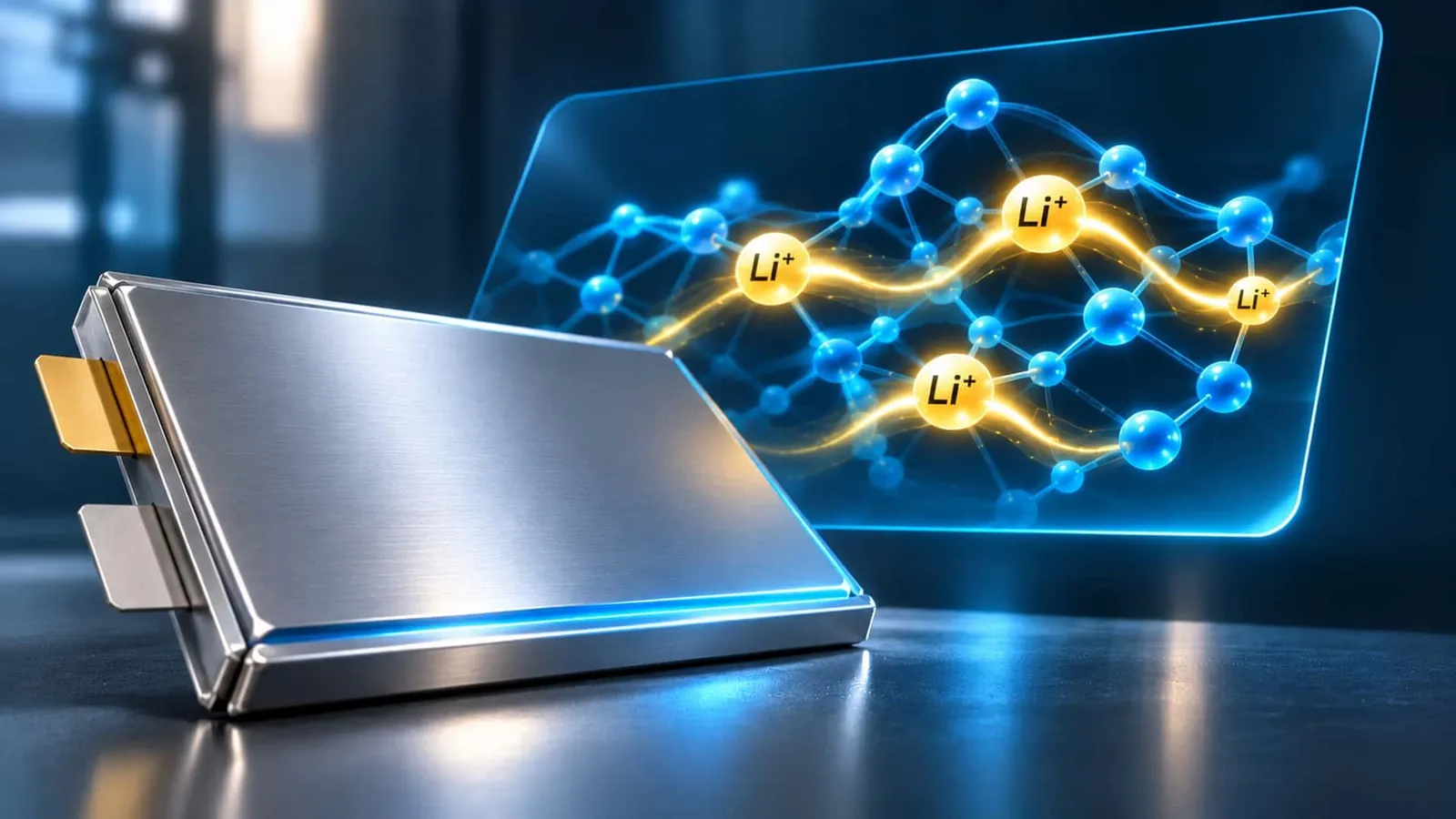
Will future batteries be solid-state? Manufacturers are working in this direction, but research also shows other possibilities. ProLogium, for example, has introduced a new technology that promises to combine the advantages of liquid electrolytes with those of solid ones, thanks to a different mechanism for transporting lithium ions. And no, we’re not talking about semi-solid batteries.
The solution is called GEN4 and is based on a superfluidified inorganic electrolyte, known as SFIE (Superfluidized Inorganic Electrolyte). It’s not a semi-solid battery in the strictest sense, where solid and liquid components coexist, but rather a special development of solid-state batteries.
It uses a material capable of altering its mechanical behavior in response to applied forces. According to the Taiwanese company, the real innovation lies in the way lithium ions move within the electrolyte, through a structure known as the Dynamic Coordination Network (DCN).
An electrolyte that "adapts" to the electrodes
In conventional batteries with liquid electrolytes, lithium ions move through the material via solvent-assisted diffusion. In solid electrolytes, however, they migrate along paths determined by the material’s structure, which is generally more rigid. The solution developed by ProLogium presents a third scenario: specific chemical aggregates called “ligands” form a dynamic coordination network that allows lithium ions to transfer rapidly between locally changing structures. This system simultaneously limits the mobility of anions, facilitating the transport of lithium ions and reducing concentration differences that can occur during charging and discharging.
Another key feature is the “non Newtonian” behavior of the SFIE electrolyte. When subjected to stress, the material can deform and flow, adapting to the surfaces of the electrodes. Once the stress is removed, it regains a more solid structure. This behavior enables a more uniform contact between the electrolyte and electrodes even during dimensional changes caused by charging and discharging cycles. This reduces the electrical resistance at the interface, which is known to be one of the obstacles to solid-state battery development, while also minimizing the need to maintain cells under high compression pressures.

Mercedes and ProLogium: the partnership for solid-state batteries
From 5% to 80% in just over six minutes
The efficiency results claimed by ProLogium for charging are particularly interesting. The SFIE electrolyte reportedly achieved an ionic conductivity of 57 mS/cm at room temperature during test sessions supervised by the certification body SGS. According to the company, in internal tests the GEN4 cells demonstrated the ability to go from 5% to 80% charge level in 6.4 minutes, withstanding over 1,000 fast charging cycles. They also managed to retain 90% of their capacity at -20 °C, along with a discharge capacity of up to 15C, a value indicating the capability to deliver particularly high-intensity currents.
The charging speed could improve further with subsequent technological advancements: ProLogium is currently developing the GEN4.2 version, which uses a porous ceramic separator impregnated with the same SFIE electrolyte. According to the company, this configuration should enable charging from 5% to 80% in less than five minutes. In terms of safety, the technology also includes a system called ASM (Active Safety Mechanism), designed to deactivate the most reactive materials when the temperature reaches around 125 °C, thereby preventing reactions that could cause thermal leakage.
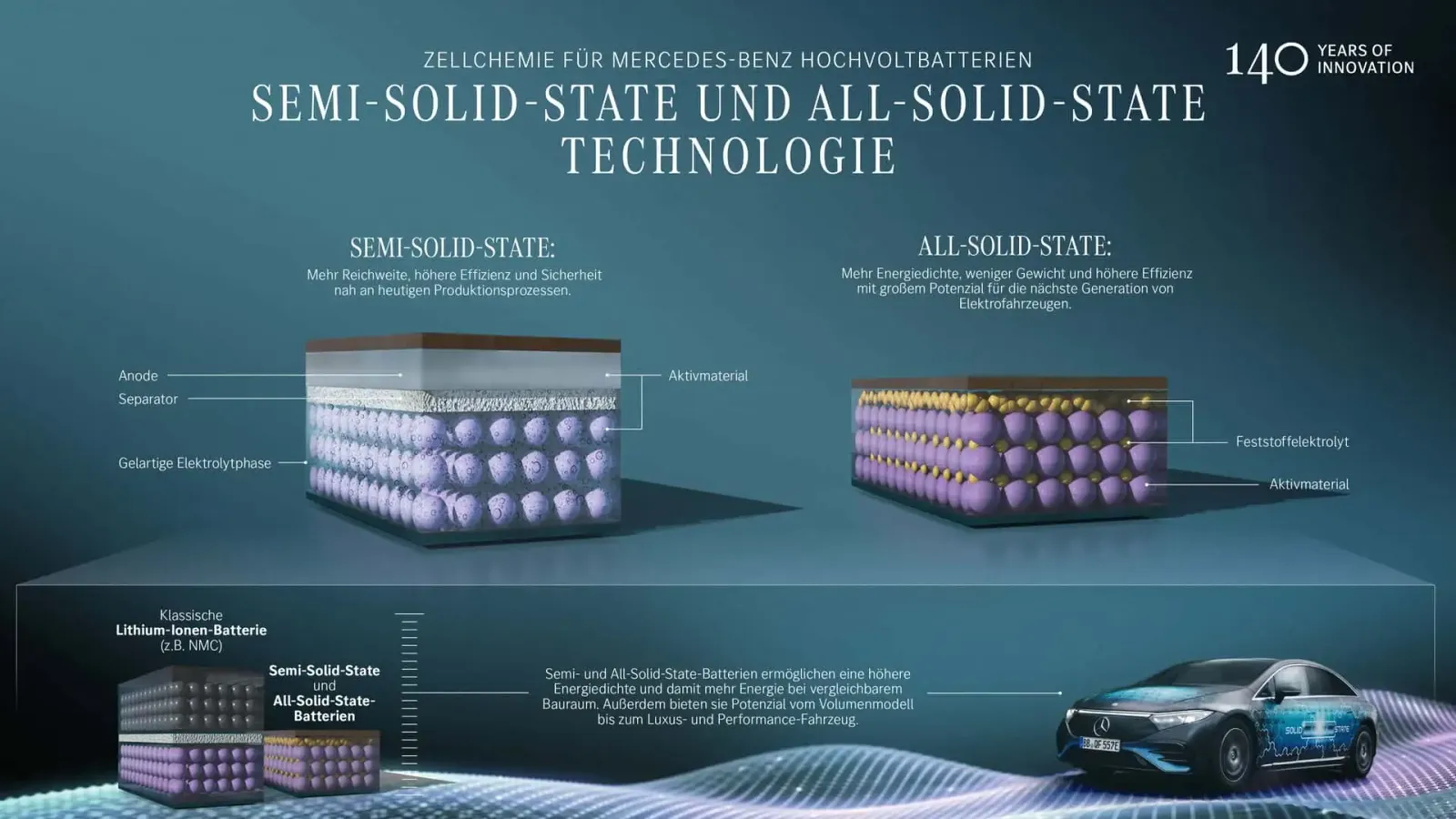
Solid and Semi-Solid Batteries from Mercedes and ProLogium
Photo by: Mercedes-Benz
Mercedes FEV and OPmobility among the partners
GEN4 technology is not meant to remain confined to material research. ProLogium is working with various automotive partners to explore its integration into energy storage systems for electric vehicles. Among them is Mercedes, with whom the Taiwanese company has been collaborating for nearly a decade and which the German manufacturer identifies as its key partner in developing solid-state batteries. A recent agreement grants Mercedes priority access to the new GEN4 cells, which will undergo electrical, thermal, and safety tests to assess their potential use in future models.
At the 2026 Paris Motor Show, ProLogium also showcased applications developed in collaboration with FEV and OPmobility. The former created a battery module that incorporates Taiwanese cells, while the latter is developing a battery pack prototype intended for various vehicle categories.
Meanwhile, ProLogium is expanding its production capacity. In addition to the existing manufacturing lines in Taoke, Taiwan, it will add a gigafactory in Dunkerque, France. The first phase of this facility will have an annual production capacity of 4 GWh, with this figure set to increase gradually by 2030. The company is also focusing on the recyclability of materials: estimates suggest that the SFIE electrolyte could achieve a 90% recovery rate, allowing it to be reused in production.
Solid-state batteries: the race continues
Photo gallery: Mercedes and ProLogium for solid-state batteries