
Batteries will need a passport, but not everything is clear.
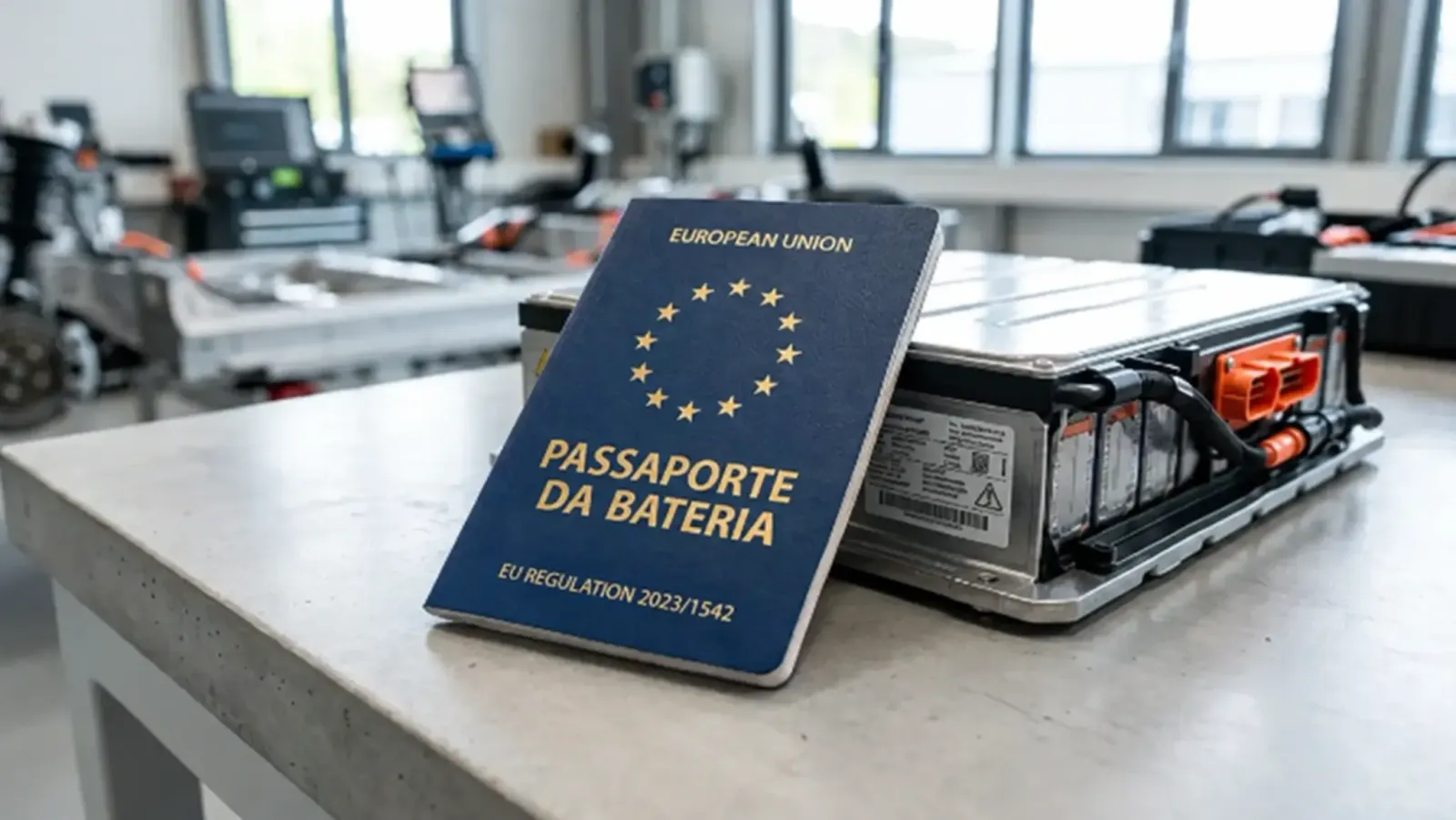
The battery passport will arrive in the EU in February 2027, but manufacturers still have doubts about the data they will need to provide.
Starting from February 18, 2027, batteries in electric vehicles on the European Union (EU) market will have to come with a digital passport. This measure is part of Regulation (EU) 2023/1542.
The goal is to make the origin, composition, environmental impact, and condition of batteries more transparent, allowing for comparisons between different manufacturers. The information will be available through a QR code that provides access to the battery passport.
This document will include, among other things, data such as the manufacturer’s name, place and date of manufacture, weight, capacity, and chemical composition. It will also indicate the presence of hazardous substances, the raw materials used, the appropriate extinguishing agent, and the battery’s useful life.
The passport will also include the battery’s health status (SOH, State of Health), which shows how much capacity it retains compared to when it was new. However, the method for calculating this indicator still raises doubts among manufacturers, just a few months before the measure takes effect.
Officials in the industry cited by Automotive News Europe claim that there is still no standardized methodology to directly compare the results presented by different manufacturers.
Lacking common criteria, batteries with similar levels of degradation may show varying indicators, depending on how each manufacturer calculates their health status.
ADVERTISING
Want a car “made in Europe”?
You can find the perfect car for you here for less than 20,000 euros.
"It is still unclear how the health status of a battery should be calculated to enable comparisons between batteries from different manufacturers. If each party conducts calculations based on its own criteria, the battery passport loses its meaning. There is still a lot of confusion on this issue," said Felix Wagner, co-founder and CEO of Circunomics, a German company specializing in solutions for battery second life.
DO NOT MISS:
Batteries will need passports to enter the EU
Many questions remain
In addition, to fill out the passport, manufacturers will also need to gather information on various stages of the production chain, from raw material extraction and material processing to cell manufacturing and component supply.
However, as Christian Marston, operations director at Atilium, explains, no single company controls all the necessary data on its own. The information is scattered across different suppliers and operators, making it more complex to collect, validate, and transmit the required data.
As a result, the lack of comparable information or effective mechanisms to trace the origin of materials may hinder compliance with regulatory requirements and, consequently, access to the European market.
The Chinese advantage
In this context, Chinese manufacturers may benefit from more advanced preparation in terms of data collection and utilization. Wagner believes these builders approach cars differently: “For them, a car is a computer on wheels,” he concludes.
This approach may benefit brands like BYD, which have been integrating data management into their operations and vehicle development. However, this advantage does not mean that all Chinese manufacturers are automatically ready to meet European requirements.