
Myths about photovoltaics: there’s life beneath the panels
Another claim about photovoltaic panels debunked by science: life exists beneath the panels. Far more than in cultivated fields, as scientists from the Argonne National Laboratory’s Environmental Science Division (Illinois) and the National Renewable Energy Laboratory (Colorado) show us through data and two years of observation. There is rich biodiversity that attracts birds, starting with bats. This is the complete opposite of the fake news spread by No Watt groups and their supporters, as well as by officials who use the “nature” argument in a more populist than rational manner.
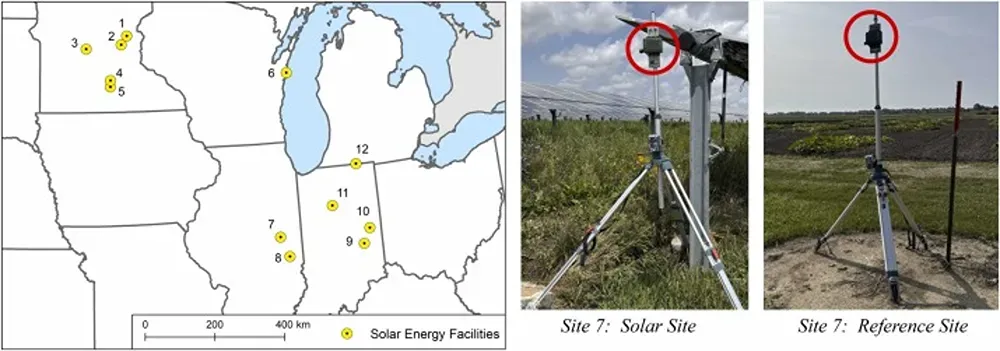
Two years of study across 12 facilities and 12 farms in the Midwest
"Microphones left on at 12 solar photovoltaic installations in the Midwest detected nearly double the number of prairie bird species compared to adjacent corn and soybean fields, with over 230 nests found on the support structures." This is the finding of researchers from two U.S. laboratories who reached their conclusions through scientific methods: observation and experimentation.
More lies about agrivoltaics: no monitoring? False
This summer, fake news spreaders amplified claims about a correlation between heatwaves and solar photovoltaic installations, highlighting the negative impact of panels on crops as an attack on biodiversity.
Is it true? Let’s see what science says. Researchers built on previous studies. “So far, positive responses from plant communities and insects to the native habitats present in solar farms have been observed.”
Another lie about photos and agrivoltaics: it harms animals. That’s not true.
The bibliography of studies that had already shown positive impacts from the installations was put to the test through field research. “We conducted passive ultrasound monitoring in 2023 and 2024 at 12 solar sites and paired reference sites (agricultural fields) to investigate bat responses to photovoltaic installations in the Midwest United States. We found that the overall average weekly bat activity was about 50% higher within the photovoltaic sites compared to the reference sites during the first half of the monitoring season.” Nothing like destruction of nature.
Photovoltaic installations as habitats for bats
Beyond speculative narratives, field research has shown the preservation of biodiversity and the attractiveness of these sites to wildlife. “There were no weeks in which bat activity was statistically higher at the reference sites, suggesting that bats in the Midwest do not avoid solar photovoltaic sites. On the contrary, our results indicate that photovoltaic sites in this region can provide habitat during the early part of the season (May–June), when resources in the surrounding landscape may be limited.” In short, these findings add to “the growing evidence of the positive ecological effects of photovoltaic systems.”
Renewables in Sardinia: Monuments as Weapons of Mass Distraction
A site planted with grasses and native herbaceous species and then left to grow undisturbed provides a ground-nesting bird with everything that a cultivated field denies. This is the evidence. The vegetation cover helps preserve nests. And most importantly, as confirmed by the study, there are more insects compared to a monoculture treated with pesticides. There is more food for the chicks.
Another advantage over a cultivated field: no machinery in the field. Corn and soybeans are planted, treated, and harvested according to a schedule that overlaps with every stage of the breeding season, and the safest way to destroy a ground nest is by driving over it with a vehicle.
This is not a study of small demonstration plots. They range from approximately 7.3 hectares to over 550 hectares, with capacities from 3.5 to 200 megawatts.
The selection of the site is crucial.
The research in the bibliography cites specific studies on installing photovoltaic systems in unsuitable areas where they could pose problems for biodiversity. In other words, we need to move beyond an absolute refusal to such systems as well as the opposite extreme view of granting unrestricted approval for them. In Italy, the regulations are clear: photovoltaic installations are prohibited in parks and protected areas. That’s straightforward. Yet often, even systems located miles away from protected sites face criticism due to their proximity, despite no scientific evidence of harm. Additionally, the Agricultural Decree prohibited ground-mounted photovoltaic systems on agricultural land (with a few exceptions). But this wasn’t because they destroy biodiversity—that’s fake news.
But let’s see what American researchers have to say. “There is also growing evidence that photovoltaic sites in agricultural landscapes attract certain native bird species for feeding and nesting, as indicated by an increase in the abundance and diversity of bird species. A recent study found that some bat species are not deterred by solar farms and fly over and feed inside the installations.”
To confirm the study’s findings, it is interesting to note that the overall bat activity and species-specific activity were never statistically higher in the agricultural fields under study compared to the solar farms. These results indicate that bat species in the Midwest do not avoid solar farms.
Finally, another piece of confirmation: “The low insect presence in agricultural fields from May to mid-July may explain why the average weekly overall bat activity was 50% higher in solar farms compared to the agricultural fields under study during the first half of the monitoring season.”
An agro-ecological program in the facilities
The environmental impacts of photovoltaic development depend heavily on the context, varying based on location and design choices. Some installations are built on mowed grass or gravel treated with herbicides: such sites naturally do not attract birds and fail to protect biodiversity. Therefore, the overall impact depends on the seeding decision made before construction.
According to researchers, prairie birds have lost more than half of their North American population since 1970, more than any other group. The main cause is the conversion of prairies into row crops. Solar farms almost become oases. But to increase biodiversity in such facilities, a plan is needed. The conclusion is clear: “Our results add to the growing evidence showing that properly located and managed solar farms can support biodiversity.”
The message is clear: solar power is not harmful to biodiversity, and when combined with agroecology programs, it can actually enrich the area and attract birds, even compared to many cultivated fields. A rational and scientific approach is required.
All the myths against wind energy: 94% is recycled, zero ends up in landfills
This is the title of the study, “Bat activity at ecovoltaic solar energy developments in the Midwestern United States,” and the authors are: Katherine E. Szoldatits, Leroy J. Walston, Heidi M. Hartmann, Laura Fox, Melissa E. Stanger, Sophie E. Steele, Irene Hogstrom, Jordan Macknick. And here is the research.
READ ALSO: Sardinia, buffalo festival against renewables and watch the VIDEO
Previous Article
Has China passed its oil peak? It’s the electric revolution, beautiful as it is
Next Article
Canada: Glencore brings 23 electric vehicles to the copper and nickel mine