
Baden-Württemberg is now supporting carsharing with full hybrids as well.
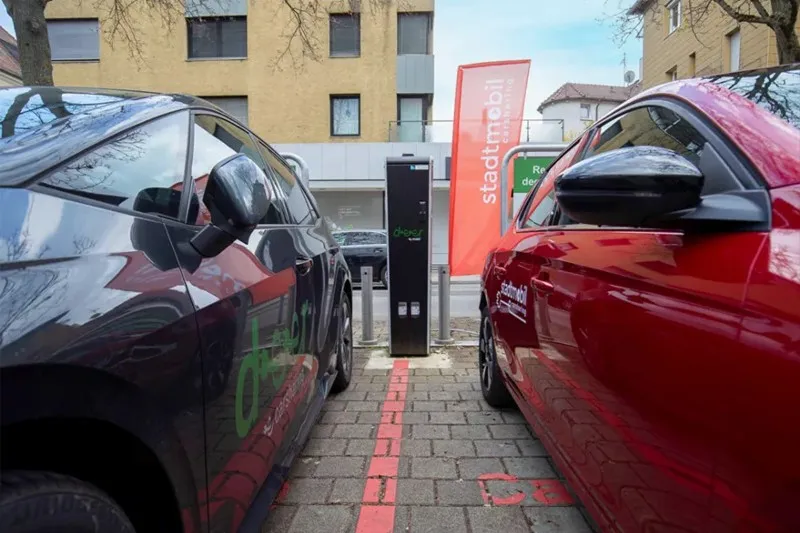
Baden-Württemberg is reformatting its subsidies for carsharing in rural areas. Not only electric vehicles and plug-in hybrids are supported, but also non-externally rechargeable full hybrids. Up to 15,000 euros can be provided per vehicle.
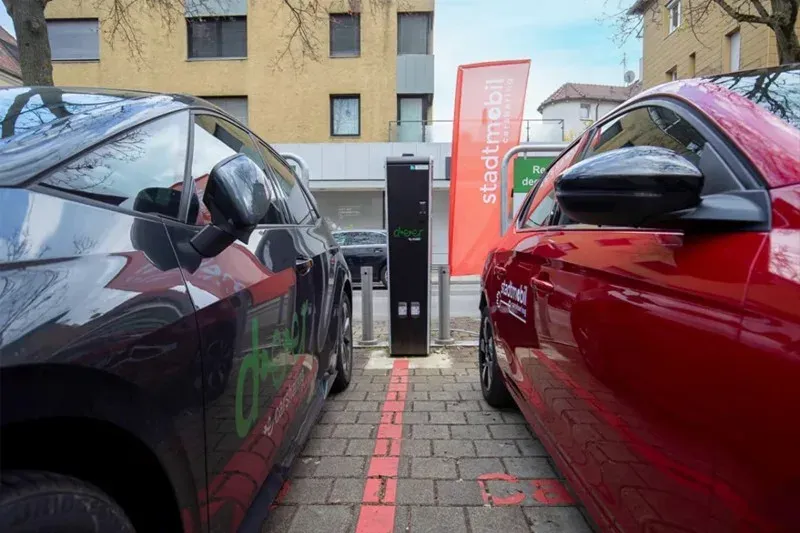
Only publicly accessible, station-based services like those in Stuttgart are eligible for funding.
Image: Leif Piechowski/Stadt Stuttgart
With the new subsidy policy, the transportation ministry aims to specifically support carsharing services in areas where none currently exist. A total of 500,000 euros are available for this purpose. Applications can be submitted by November 20, 2026.
Subsidies are available for the purchase of carsharing vehicles in rural areas as well as in underserved or previously undeveloped locations. Fully electric vehicles and hybrid models are eligible for funding. Notably, the guideline defines hybrid vehicles to include both plug-in hybrids and conventional HEVs without external charging capabilities.
The subsidy amount is generally 15,000 euros per vehicle, but it may cover at most 50 percent of the purchase cost. In addition to new vehicles, used vehicles are also eligible provided they were registered for no more than a year at the time of application. The vehicles must then be used primarily in Baden-Württemberg for at least four years.
Subsidies aim to develop new locations
The requirement is a newly established, publicly accessible carsharing service. Generally, no existing service may be available within a 500-meter straight-line distance. Up to two vehicles can be subsidized per station. For group applications, a maximum of 14 vehicles per applicant are allowed within a county or city area.
Free-floating services, station-flexible carsharing, and systems that are not publicly accessible are excluded from subsidies. Charging infrastructure itself is also not covered by these guidelines. However, a combination with the separate charge@BW subsidy program is explicitly permitted.
By doing this, Baden-Württemberg goes further than the federal government’s current electric vehicle incentives in addressing the issue of propulsion systems. While battery-electric vehicles are included, certain plug-in hybrids and range extenders are also taken into account there, but traditional full hybrids without external charging capabilities are not. In contrast, the state’s new carsharing guideline explicitly extends incentives to HEVs as well.
The program is also subject to additional requirements. Providers must, among other things, supply data to MobiDataBW and create incentive programs for new customers. According to the guideline, success in implementing these incentives is indicated by demonstrating appropriate carsharing usage and acquiring 100 new customers within the four-year designated period.
The program aims to establish carsharing in the country primarily as a complement to bus, train, cycling, and walking traffic. Emphasis is explicitly placed on areas that are currently underserved and rural regions.
baden-wuerttemberg.de,(PDF)