
ADAC study: Small diesel cars are getting more expensive, while electric vehicles are increasing in number. Unnecessary equipment artificially drives up prices!
City car prices in Germany are rising faster than drivers expected, with the segment that was supposed to be the cheapest way to get around increasingly becoming a luxury item. The latest ADAC analysis shows that gasoline-powered models are getting more expensive, while “electric” cars are becoming cheaper. Regardless of the type of propulsion, city cars remain too expensive. The automobile club is urging manufacturers not to abandon the small car segment and to reduce unnecessary features that artificially drive up prices.
In short:
Gasoline-powered small cars are expensive in Germany. The average price is 24,000 euros.
This represents an 80% increase compared to prices a decade ago.
There are fewer models with conventional engines. Only 46 such models are available on the German market today.
In the electric vehicle segment, the trend is opposite.
Regardless of the propulsion type, prices are still too high.
Unnecessary features artificially inflate prices, according to ADAC.
ADAC Takes a Close Look at the Small Urban Car Segment
The small car market in Europe is undergoing one of the biggest transformations in decades. The segment, which for years was considered the most affordable option, is increasingly straying from the definition of a “cheap entry-level car.” ADAC’s latest analysis shows that prices of new models in Germany are rising faster than drivers can afford. The automobile club is blunt: “Small cars are no longer automatically affordable models for beginners.”
According to ADAC, the average price of a new gasoline-powered city car today is nearly 24,000 euros, which is slightly over 100,000 złoty. This represents a rise of almost 80 percent compared to the situation a decade ago. Moreover, diesel and other combustion engine types are disappearing from this market segment, with the number of available models dropping to just 46 — the lowest level in history.
More BEVs are emerging, but still these prices
Paradoxically, the electric segment of the market is showing movement in the opposite direction. ADAC notes that the average price of urban electric cars in Germany has dropped by over 9 percent compared to 2024, now being below 30,000 euros. At the same time, the range of options is increasing—the ADAC catalog now includes nearly 40 models. Nevertheless, the association remains critical: “Despite everything, urban electric cars are still too expensive in the association’s view.” Ten years ago, a new electric car cost about 5,000 euros less (around 20,000 zł), and the choice was limited to just under ten models.
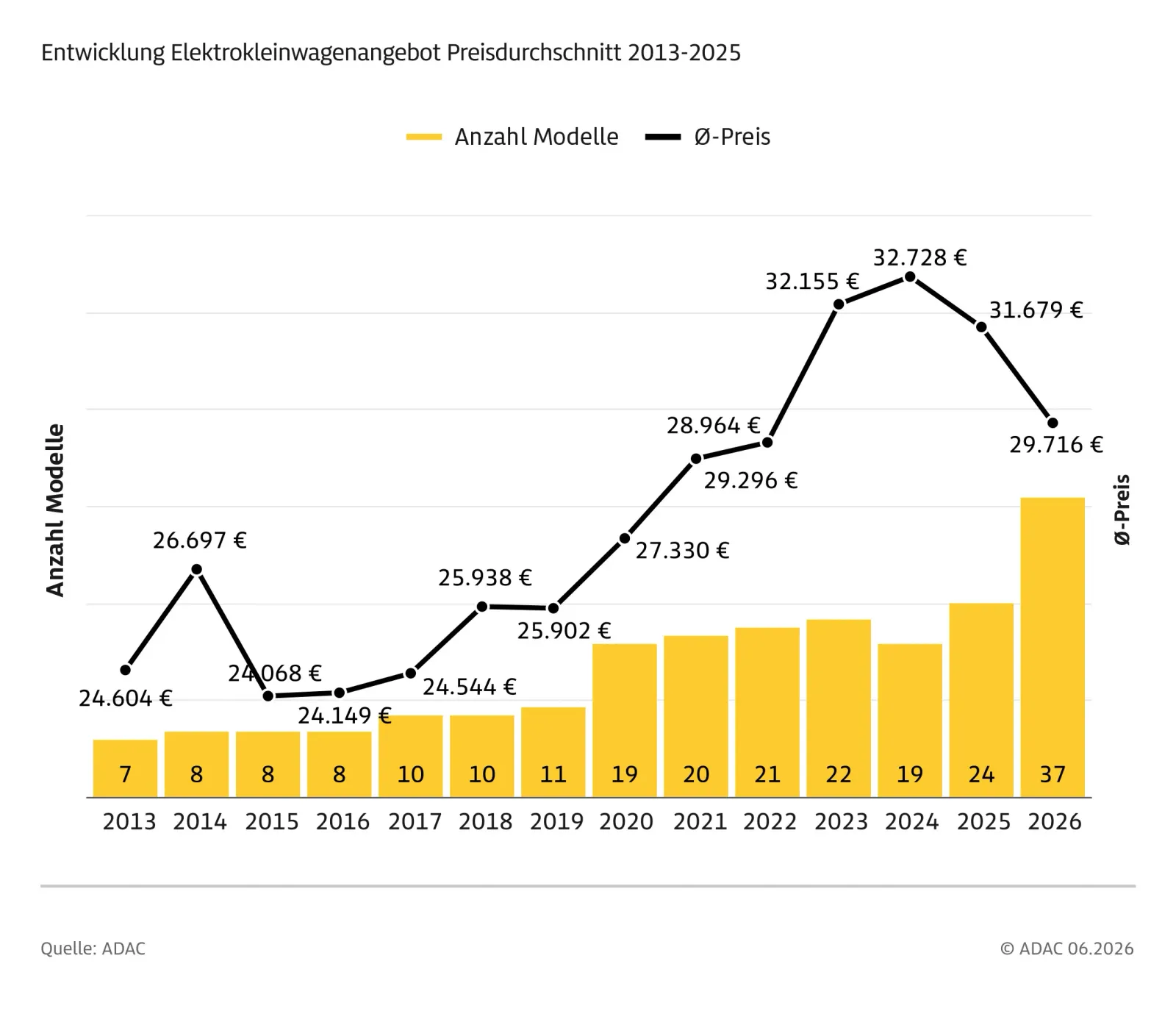
Combining all types of propulsion, ADAC notes that prices for small cars remain high and are even slightly rising. Indeed, the market offering has improved as drivers can now choose from over 80 models, the last time this happened being in 2017 – but the average price has increased by more than 10,000 euros (just under 40,000 zł) during that time. This level becomes an insurmountable barrier for many customers. Therefore, ADAC is calling on manufacturers not to abandon the small car segment and to reduce unnecessary features that artificially drive up prices.
Polish market: “Electric cars” still expensive, but options are available
Compared to German figures, Poland’s electric vehicle market presents an interesting picture. According to the “Electromobility Counter,” nearly 160,000 electric cars are already on our roads (as of today). This is an increase that is hard to overlook, but it still lags far behind the scale of Western markets. There are two main reasons for this: limited charging infrastructure and high prices — even the simplest battery-powered cars remain more expensive than their gasoline counterparts.
Nevertheless, in 2026 the range of cheapest models is larger than ever. Importantly, we are talking about cars priced below 120,000 zlotys.
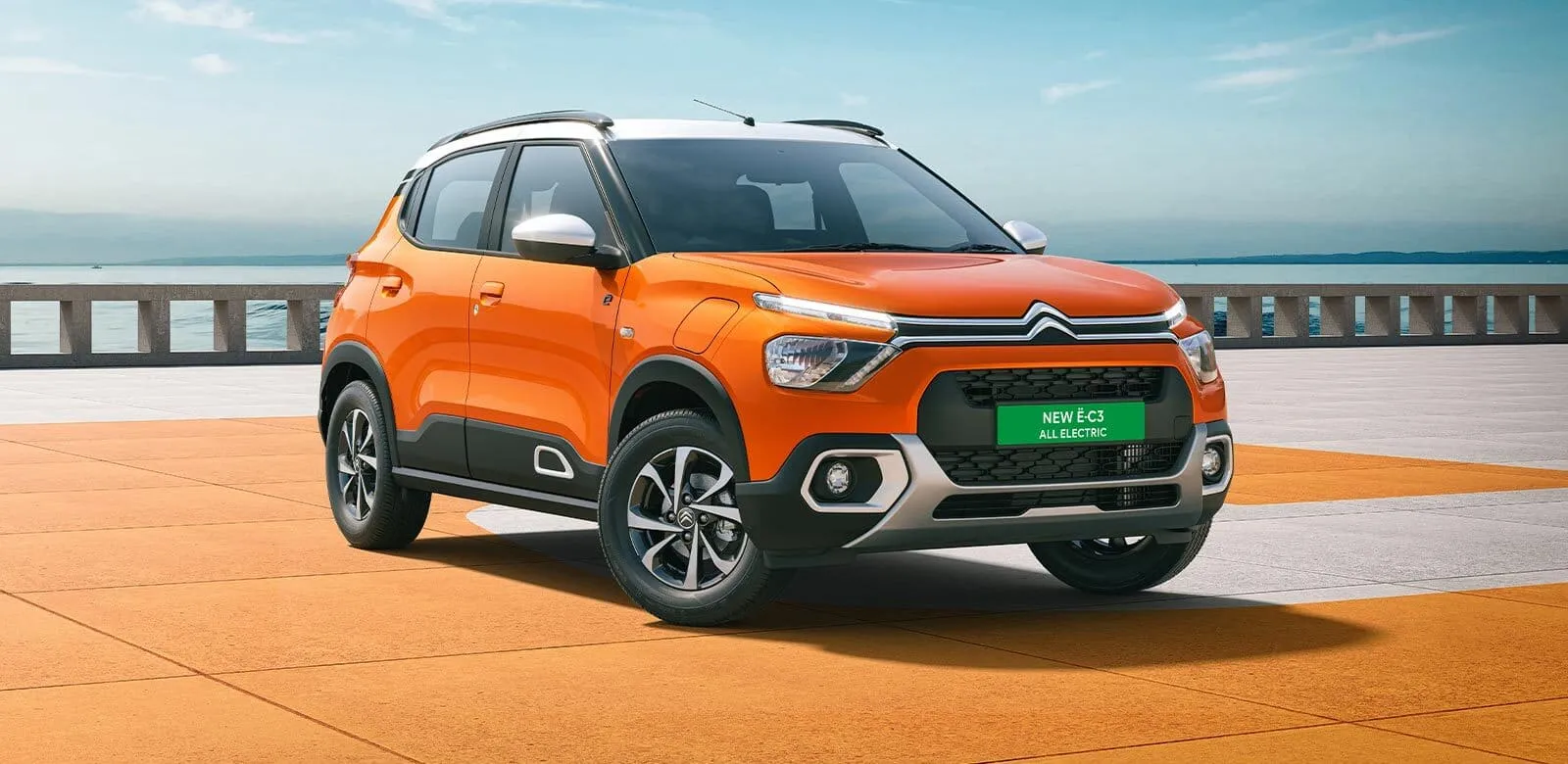
The most expensive in the comparison is the Citroën e‑C3 Aircross (around 120,000 PLN), available with 44 or 54.2 kWh batteries and a range of up to 400 km. Right behind it is the Leapmotor B05 (starting at around 1,100,000 PLN), which offers a range of up to 482 km and features typically found in higher-end models — such as 360° cameras, a large 14.6” screen, and adaptive cruise control.
The Hyundai Ioniq 5 (starting at around 105,000 PLN) is a more European-oriented option, available with two engine versions and a range of up to 370 km. At a similar price, we find the Fiat 500e and the Fiat Grande Panda E — both priced at 107,000 PLN, both with a city-oriented design and ranges of 190 km and 320 km respectively.
Below 100,000 zlotys, the real competition for customers begins. The Dongfeng Box (99,900 zlotys) comes equipped with features typically found in larger vehicles—ventilated driver’s seat, adaptive headlights, and 360° cameras. The BYD Dolphin Surf (97,700 zlotys) focuses on simplicity but still offers a range of 288 km.
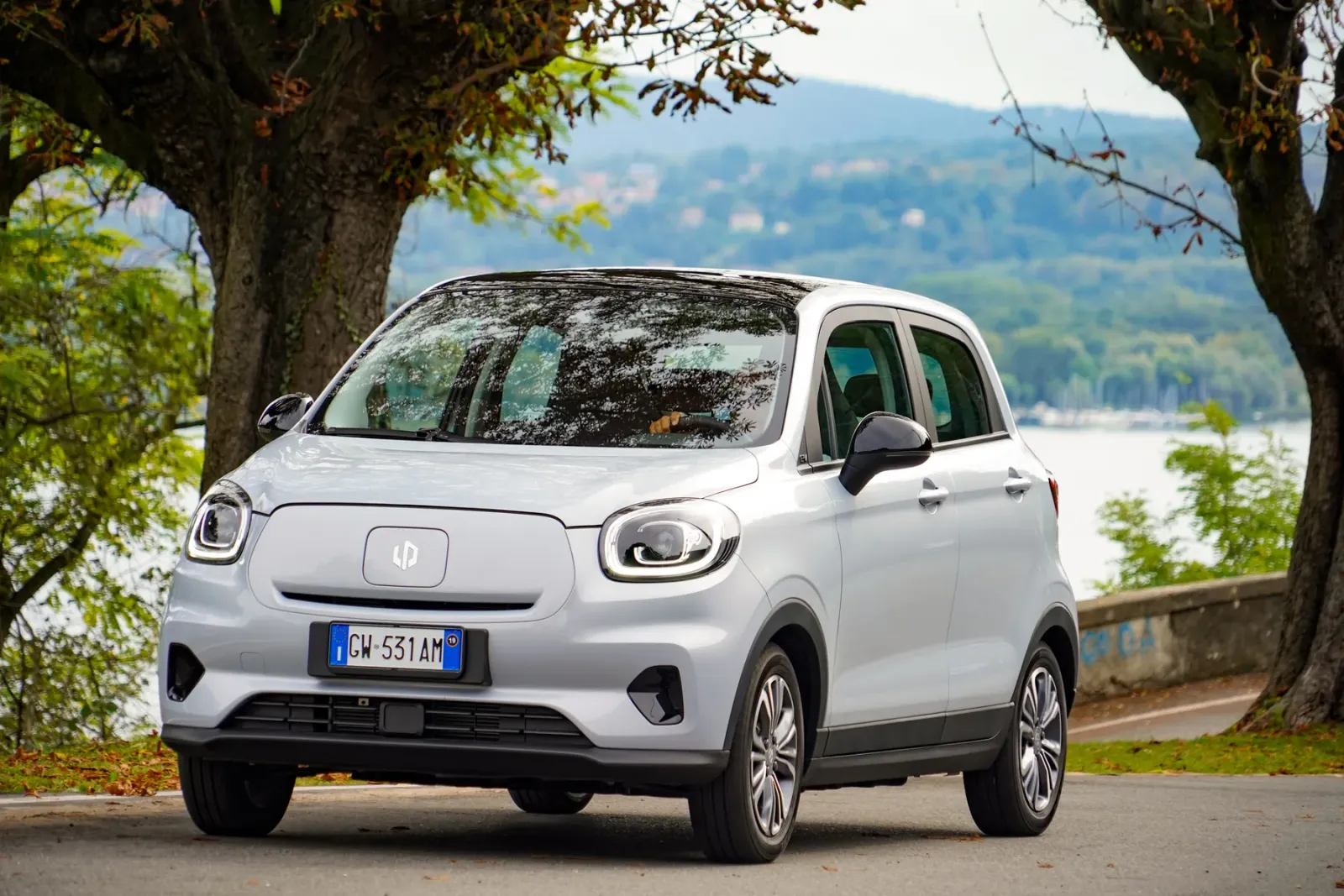
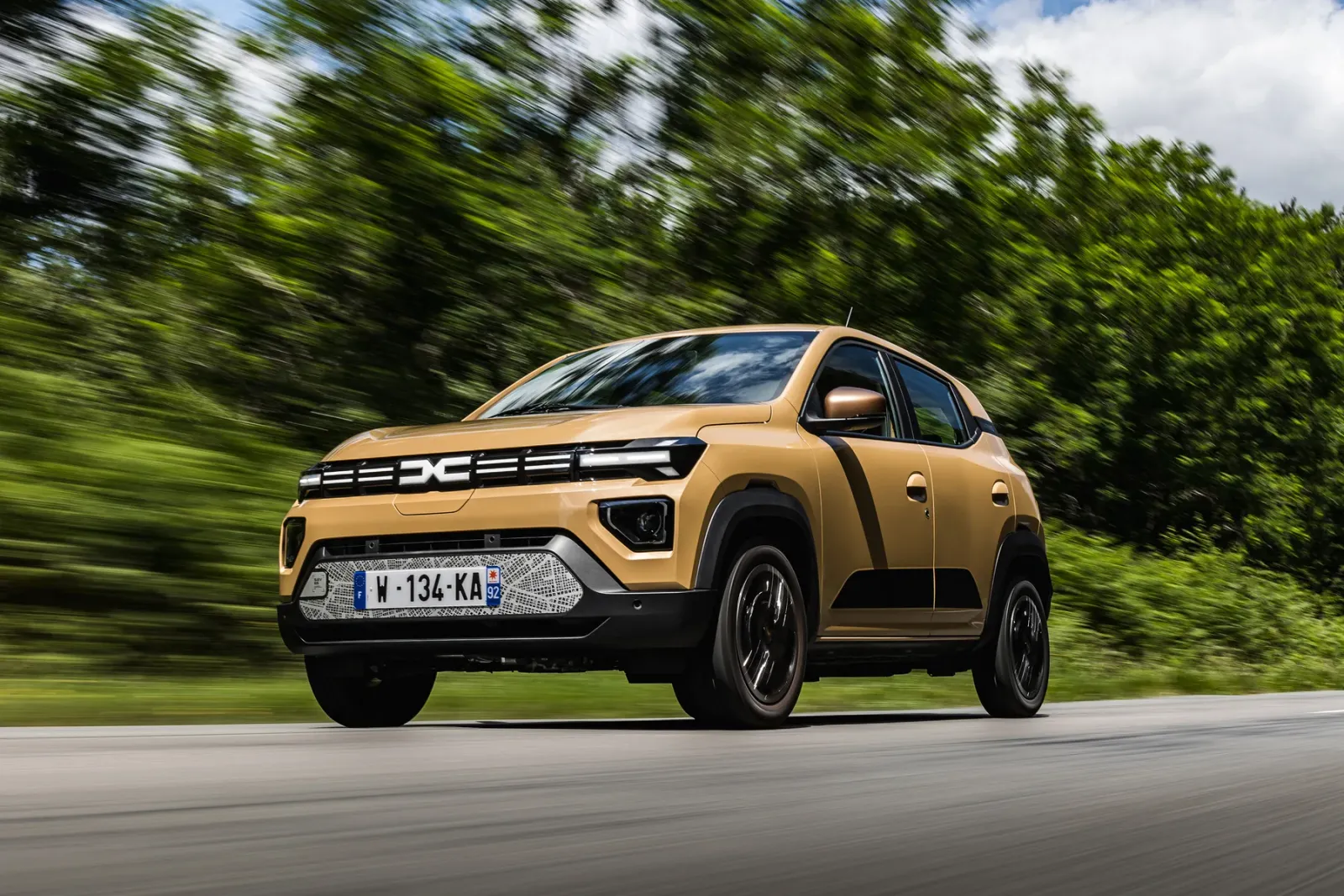
In the top tier of cheapest models we find the Citroën e‑C3 (starting at 89,500 PLN), Leapmotor T03 (starting at 84,900 PLN), and the leader of the list – Dacia Spring (starting at 73,500 PLN). This latter model, after its 2024 update, offers two power versions (70 and 102 HP) along with a range of up to 225 km. It remains a simple car, but for many drivers it represents the only practical option for going electric. Of course, customers can expect discounts and promotions at dealerships, so these prices might be slightly lower as well.
Are small cars the popular choice?
Both ADAC data and the Polish market show that the small car segment is at a crossroads today. On one hand, rising prices of gasoline-powered models are pushing consumers toward electric vehicles. On the other hand, these electric cars are still not cheap enough to become a mainstream choice. Drivers are looking for vehicles that offer “cheaper and more accessible mobility,” which is exactly what small cars should provide.
Oskar Włostowski