
Autobahn: Government makes land available for more fast chargers
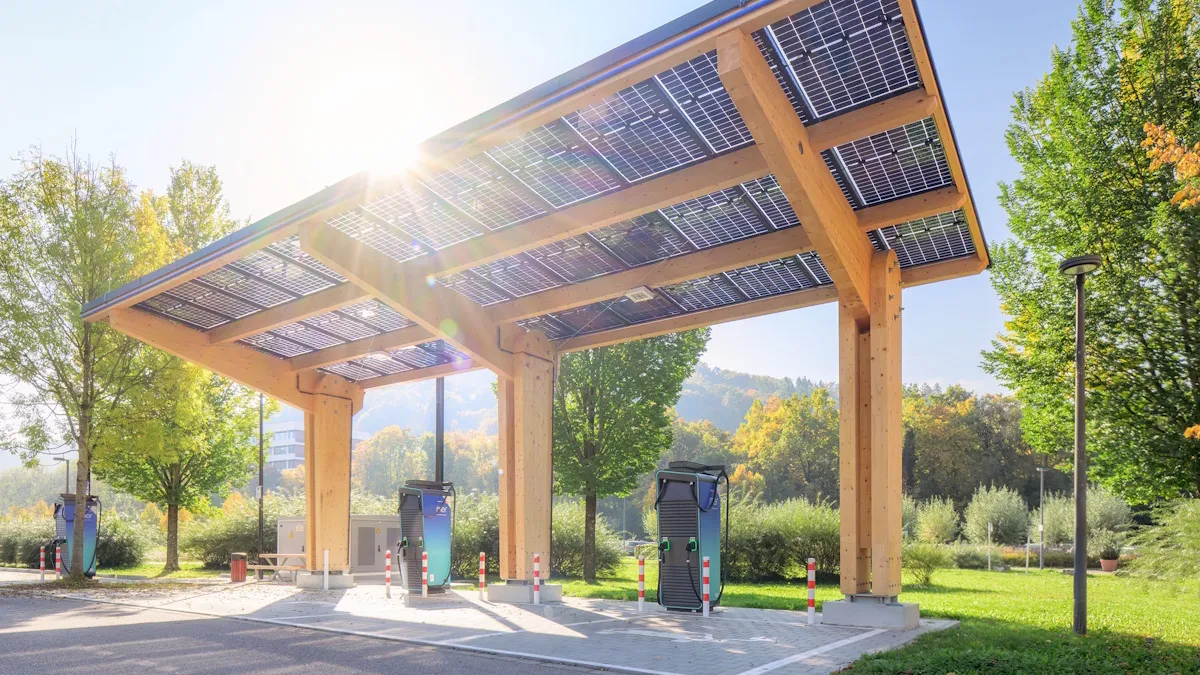
The Federal Ministry of Transport and the Autobahn GmbH are making available land at unused service areas where private investors can build fast chargers for electric vehicles. The bidding process is scheduled for spring 2027, and the ministry has not yet provided details on locations and charging points.
Advertisement
As part of the Deutschlandnetz initiative, fast charging parks are being established at unmanaged rest areas—that is, parking lots without gas stations or service areas—on behalf of the federal government. At the end of September, Federal Transport Minister Steffen Bilger (CDU) opened the 100th highway location under Deutschlandnetz on the A81 near Räthisgraben, with a total of 200 such locations planned. Additional fast charging points are now set to be added to more rest areas of this type, built by private investors.
The Federal Ministry of Transport (BMV) and the Autobahn GmbH have announced that they will approve sites for additional fast chargers for passenger cars on October 22, 2026. The ministry cites market growth, noting that already today more than one in four newly registered passenger cars are fully electric, with further increases expected. According to the latest registration figures in Germany, the share of fully electric cars was 35 percent in September, and 27 percent from January to September.
Tender in Spring 2027
First, the Autobahn GmbH plans to conduct a market consultation shortly on the key aspects of the project. The actual tender is scheduled for spring 2027. The ministry does not specify by when contracts will be awarded or the first charging parks built.
Operators are to decide on the scale and facilities of the charging parks through a competitive bidding process. The BMV expects this initiative to trigger investments in the tens of millions range. The statement does not clarify whether the federal government will contribute to the costs, mentioning only private investors.
According to Bilger, additional fast-charging stations directly on highways save electric vehicle drivers time and detours. The bidding process is intended to be simplified while ensuring adequate quality and transparent pricing. Private capital, he says, helps to implement projects more quickly and accelerate expansion along highways.
Advertisement
No figures available yet on locations and charging capacity
The ministry does not specify how many rest areas will be opened or how many charging stations might be established there. The announcement also does not indicate on which highways these locations will be situated. It contains no guidelines regarding charging power, manufacturers of charging columns, or payment methods such as debit or credit cards. It remains unclear as well how the goal of transparent pricing will be implemented in this process.
At the end of September, the Autobahn GmbH set a target of 1,000 fast charging stations for the highway locations in the Deutschlandnetz network. At the Räthisgraben location opened at that time, E.ON offers six charging stations, each capable of providing up to 400 kW of power. Payments can be made there using charging cards as well as debit and credit cards. According to the BMV, these additional locations are intended to complement the highway sites in the Deutschlandnetz network.
Deutschlandnetz and Other Programs
According to the BMV, Deutschlandnetz is intended to include around 9,000 additional fast charging stations at more than 1,000 locations in regions, cities, and unattended rest areas. Private companies build and operate these sites, with the federal government investing approximately 2.3 billion euros in this initiative.
In its statement, the ministry also mentions funding for charging points in multi-family buildings, which includes network connections and electrical installations. 500 million euros have been allocated for this purpose in the 2026 federal budget. For trucks, a separate fast-charging network will be established at 350 rest stops, featuring around 4,200 charging points for quick top-ups and overnight charging. In addition, there is the “Funding Directive for Charging Infrastructure for E-Trucks” for publicly accessible charging points, such as those at service plazas and industrial areas, as well as for non-public charging points in warehouses and plant grounds. For more information on expansion, the ministry refers to the 2030 Charging Infrastructure Master Plan.
Which sections of highways still lack fast chargers right along the route, and do you currently rely on service plazas instead?
Advertisement