
Perfect electric car, what’s missing? Rules on shared standards
The article “What Should Never Be Missing in an Electric Car? Here’s the Checklist” aimed to spark a discussion among readers by encouraging them to describe their “perfect electric car.” There were many comments on the blog, but Bruno’s is the first organic contribution. We look forward to more at info@vaielettrico.it.
by Bruno Deroma
The article published on Vaielettrico on September 3, 2026, written by Massimo Degli Esposti, finds me largely in agreement with almost all 10 points outlined. Below are some specific reflections.
More Information on the Battery
Is SOH always available?
I’m fairly agreeable but with 2 distinctions:
The rate of change in SOH is very steep in the first few years and then tends to decrease starting from the 3rd or 4th year. The easy availability of such data might make an uninformed buyer doubt their purchase, especially during the first year of the vehicle’s life (I can imagine long queues at dealerships).
What damages a battery? Too many “wrong” charges.
I am firmly convinced, however, that the greatest attention should be paid to the common standard for measuring this parameter. I believe that certificates provided to customers by any manufacturer must include certain “mandatory” elements, all measured using the same verification approach. In this regard, for example, I note that Compliance Declarations for electrical installations all follow the same format. This ensures that regulatory authorities have a consistent structure for the data describing the characteristics of the completed work.
DIY battery tests: Ivone puts Tesla and Hyundai to the test
Is battery temperature under control?
Completely agree.
All data during charging?
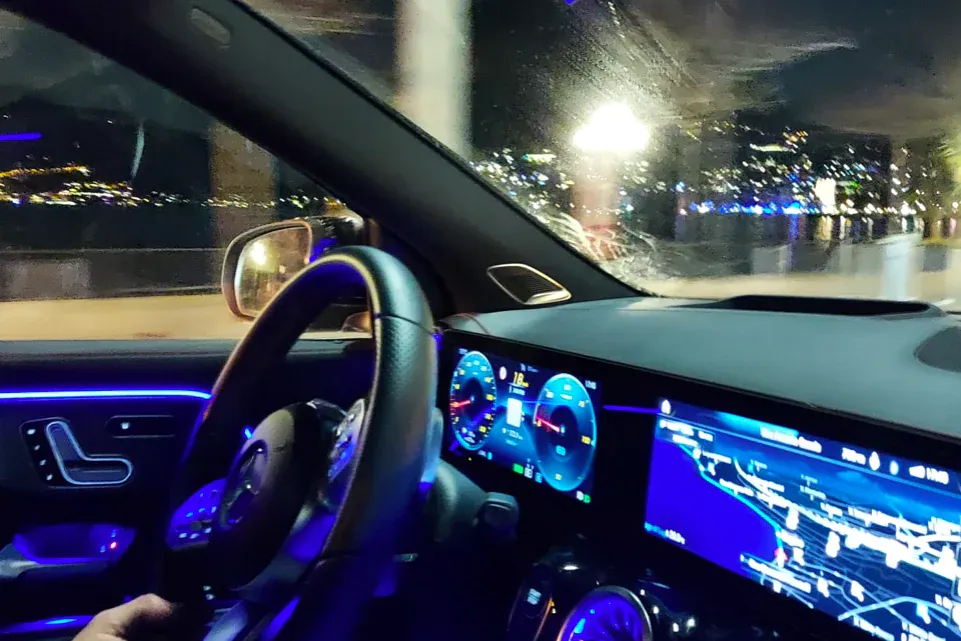
The information mentioned in the article are all useful details that I believe are available (as collected data) in almost all electric vehicles. The issue is whether they are made accessible to the driver and whether there is a standard format for displaying them. In this case as well, a more or less binding regulatory guideline for manufacturers would be appropriate.
Simplifying navigation and charging
Plug&Charge for everyone, always?
I completely agree, but again, some clarification would be helpful here.
Plug&Charge is useful and effective; yet in this case as well, regulatory aspects are crucial: charging recognition and authorization applications developed independently by individual CPOs cannot be relied upon.
I have used Plug&Charge based on the ISO 15118 standard in Italy, but especially in France, connecting to Ewiva and Ionity stations, and occasionally Free To X. However, if you use a French operator like Electra (whose charging stations are always highly efficient and offer competitive prices), you find that they have their own Plug&Charge system using a different standard, which does not recognize my car (among others). I’m not mentioning Tesla, as it has its own system dedicated solely to its vehicles. I don’t think this is the right approach at the European level.
Electrip seeks the perfect charge. And maybe with AutoCharge…
A navigation system that can plan trips?
….what else is there to add?….
A complete history of charges?
This is the aspect that excites me the least, and I’ll explain why.
It’s only relatively useful information because, good or bad, it can be inferred from the amount consumed in a month. That is, if one could charge to the same SOC every last day of the month. The product of average monthly consumption by distance traveled would give the actual kWh charged. In the absence of this method, having a history of energy charged into the battery could indeed be useful.
Distinguishing between consumption and costs
I would like to point out, however, that the cost incurred is something entirely different. Between what is stored in the battery and what is actually paid for, there are all the energy losses due to the charging infrastructure (up to the connector in the car), internal losses in the car related to the charging system, and energy used for battery cooling. Therefore, there is no alternative (assuming the average user is interested in knowing the real operating cost of their vehicle) other than reviewing the invoices issued by each CPO. These invoices show the actual energy drawn from the grid and the unit cost of that energy. These are the real useful information if one wants to know their costs, which are truly related to their consumption.
Apps, Features, Technology, and Design
A mobile app for remote management?
….absolutely…
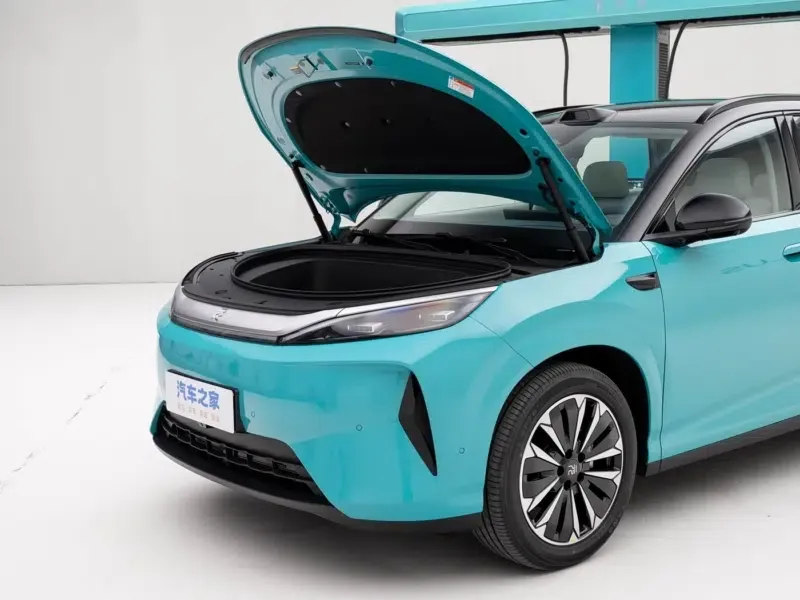
Space for new features: like a frunk?
I don’t think it’s essential, but (unfortunately) my car doesn’t have one.
I wouldn’t fight over it, but it would be very useful.
V2L, V2H, and V2G: a battery that can do more?
I’m pretty agreeable on this, though I believe there are regulatory hurdles for V2H at the moment and objective limitations (battery size) regarding V2G.
To explain:
V2H – connecting a car to one’s home is possible if the car isn’t connected to the grid, to prevent energy feedback in case of grid failures.
V2G – given that Italy still lacks the technical standards for this type of connection, this mode requires batteries of >70/80 kWh, thus limiting it to expensive cars. I hope for the spread of more affordable electric vehicles aimed at a broader audience with limited financial resources, which would have batteries insufficient for V2G.
However, it represents an interesting technical and economic opportunity:
- for the clear benefits in optimizing energy flows in distribution networks
- for managing peaks in excess or shortage of power generation, especially from renewable sources
Standard heat pump?
Completely agree.
I ended up buying it as an option for my car when I thought it was a necessity, particularly when conserving energy on long highway trips in winter. I recently checked out several used cars and found few that came with one, purchased from the original owner already equipped with it.
It’s impossible to have a civil comparison on the blog
While reiterating my appreciation for the educational work you do in the field of electric mobility, I would like to clarify that I prefer to respond via email rather than through comments.
Discussions on blogs are often far from civil and tend to be extremely hostile, mostly involving critics who oppose something simply because of it, without any direct experience with the topic at hand or even the slightest technical knowledge.
If I were to hold any incorrect views, I would hope they could be pointed out to me in a polite manner, along with solid technical evidence that would encourage me to reconsider my opinions. But I have never received such feedback.
READ ALSO: “My first 20,000 km in Xpeng G6: I stepped into the future” and watch the VIDEO
Previous Article
Zero, CCS breakthrough: charging in half an hour. It’s also coming to “old” motorcycles
Next Article
Kia EV3 after Leapmotor: AC charging issue (resolved)