
Corporate vehicles, a “holy alliance” to accelerate fleet renewal
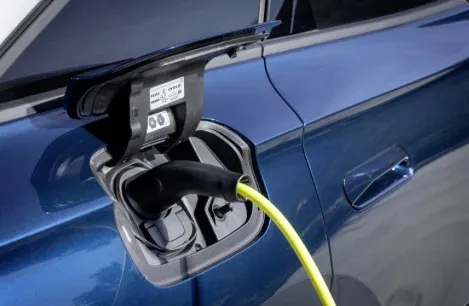
A “sacred alliance” between major companies and stakeholders in sustainable mobility to accelerate the electrification of corporate vehicle fleets. Top Thoudands, an organization that brings together Fleet Managers and Mobility Managers from leading international companies, has joined the proposal for reforming corporate vehicle taxation submitted to the government by ANFIA, ANIASA, Motus-E, and UNRAE. The goal is to create a more stable and predictable regulatory framework that supports fleet renewal, the adoption of more efficient vehicles, and the energy transition. Topics to be addressed include cost deductibility, VAT reimbursement, and the tax treatment of rebates for home charging of electric vehicles.
Corporate Vehicles: Taxation at the Heart of the Transition
For businesses, choosing business vehicles depends not only on purchase price or operating costs. Tax regulations directly affect renewal strategies, fuel selection, and the ability to plan medium- to long-term investments. It is in this context that the proposal supported by the Top Thousand Observatory comes into play, calling for a comprehensive review of taxes on business vehicles.
Taxes, fleets, and electric cars/ ECCO and Vaielettrico in Rome (and online)
According to Maurizio Capogrosso, president of the Observatory, the focus should not be solely on adjusting tax rates but rather on ensuring consistent, stable, and predictable rules. Regulatory continuity is indeed an important factor for companies that need to establish their own fuel policies and assess the transition to vehicles with lower emissions.
The proposal was submitted by ANFIA, ANIASA, Motus-E, and UNRAE to the Ministry of Economy and Finance and the President of the Council of Ministers. This discussion concerns a sector that can significantly impact the renewal rate of Italy’s vehicle fleet.
A tool for renewing the vehicle fleet
Corporate fleets can help spread newer models equipped with advanced safety systems and more efficient technologies. An accelerated turnover could also impact the used car market by supplying it with cutting-edge vehicles that eventually become accessible to private individuals as well.
For electric mobility, tax considerations take on particular importance. The overall affordability of a battery-powered car depends on various factors, including the initial cost, range, charging methods, and tax treatment applied to business use. Clear regulatory frameworks can assist companies in comparing different technologies based on actual costs, avoiding uncertainties that make planning purchases more difficult.
Corporate Fleets/Electricity Also Wins on Costs: 170 Euros in Savings per Month
The issues identified by the Observatory include the deductibility of costs, the tax deduction for VAT, and the fiscal treatment of reimbursements for charging electric vehicles at home. The latter aspect is particularly important for those who use an electric company car and charge it at their residence: the reimbursement methods must be compatible with users’ practical needs as well as with sustainable administrative management for companies.
What is Top Thousand and What Contribution Does It Offer
Top Thousand is an Observatory that brings together Fleet Managers and Mobility Managers from major companies, managing a total of over 200,000 vehicles.
The value of the proposal submitted to the Government lies in its ability to add, alongside the positions of industry associations, the perspective of companies that use vehicles directly. As Capogrosso emphasizes, engaging with those who manage fleets can help develop practical solutions that balance competitiveness, economic sustainability, and emission reduction.
Company Vehicles: Reform Focuses on the Budget Law
Top Thousand hopes that the proposal from ANFIA, ANIASA, Motus-E, and UNRAE can be the subject of constructive discussions with the Government and other relevant parties, especially in light of the upcoming Budget Law. The Observatory’s support is therefore accompanied by a request to participate in these institutional discussions with an independent contribution.
READ ALSO: “The ball at the feet of electric cars? Taxes on charging and corporate fleets” and watch the VIDEO
Previous Article
Transport ban? The paradox of incentives for polluting trucks
Next Article
Madonna di Campiglio: a jewel of the Dolomites, but not for charging