
Electric travel across Europe, that is, 30 countries in 30 vacation days!
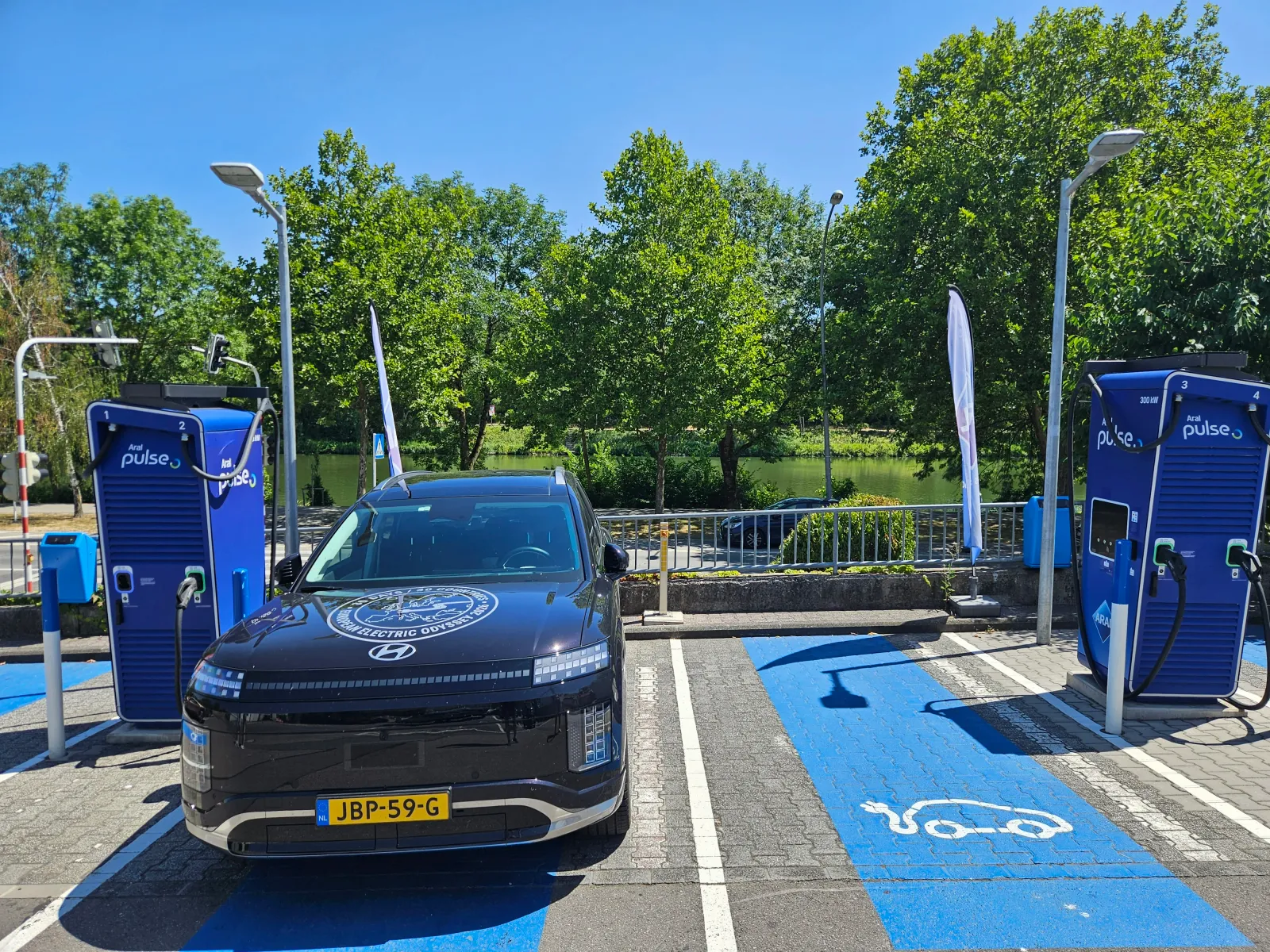
EPL: You completed an amazing project of driving around all of Europe with your family in an electric car. 30 countries in 30 days. What were your thoughts?
Mateusz Maćkowski: It was wonderful. From the start, I believed in the success of this trip. Seeing and visiting thirty different countries in 30 days… staying in a new country every night… meeting people… talking… tasting different things… Just driving forward. It’s the best idea for a vacation. When asked where we spent our vacation, my children answer: “everywhere.”
But it’s an electric car. People say it’s impossible.
I didn’t know that. If I had known it was impossible, I wouldn’t have gone… As Einstein said, “Everyone knows there’s something that can’t be done, and then there’s someone who doesn’t know it’s impossible, and that’s the one who does it.”
But seriously now. When you first came up with this idea, did you think, “This will be a great adventure,” or rather, “What made me want to challenge the infrastructure of an entire continent”? What was the atmosphere at home when you told your family they would spend a month traveling at breakneck speed, “one country per day”?
The family accepted my plan. The idea stemmed from my frustration with the low-quality way electric car trips are portrayed on social media. On Facebook groups and profiles of self-proclaimed electric car celebrities, posts about boring trips to Masuria or the Tatra Mountains keep appearing. These few-hour journeys are presented as hair-raising expeditions or logistical failures. Even worse, third-rate journalists show us how poorly they handle a childishly simple trip to Germany...
Yes, having been driving an electric vehicle for over a decade, I’m aware that this sensational narrative is a hoax, but someone uninformed about electric vehicles might believe it. It bothers me because traveling in an electric vehicle is not only better than driving a gasoline car, but also simpler, cheaper, and usually faster. So there were no other feelings aside from full acceptance, a desire for adventure, and a willingness to verify internet myths.
Preparing for such a challenge probably involved several months of crossing items off a list and getting everything just right. What turned out to be crucial in hindsight, and what got thrown out in the first week from the logistics plan?
To be honest, I skipped the preparation. I mean, at first I wanted to organize everything, but I quickly realized I couldn’t predict everything. So we just went ahead on a whim.
We put in serious effort only into researching road tolls in different countries and analyzing the calendar to choose the optimal day to start—ensuring we wouldn’t encounter holidays, Sundays with closed shops in certain countries, shift changes in tourist areas, or planned road repairs in the days that followed.
We also had the idea of limiting our meals on the road to homemade regional dishes prepared using equipment powered by the car. We abandoned this idea by the second or third day due to the scorching heat. Air-conditioned restaurants proved superior.
In such an extreme project, choosing partners is a matter of life and death — both professionally and psychologically. Why did you go with exactly this lineup, and how have these relationships survived the challenges of European roads?
To maintain the authenticity of a family vacation, we decided not to force the search for commercial partners. Many volunteers still stepped forward as soon as word got out about the 30/30 EV Challenge. So we simply limited our partners to media sponsors, industry organizations, and EV clubs from various countries. In the end, these partners also provided a car for testing and charging to verify the functionality of roaming.
Thirty days on the road constantly with children sounds like a test of mental endurance, where surviving a mission to Mars seems like a walk in the park. At what point during the journey was the sacred question “How much farther?” asked for the first time, and how did you handle it?
It’s fascinating! Questions about traveling with children come up more often than questions about cars, chargers, costs, or experiences in different countries. I already have older, independent children who have been traveling with us across Europe since birth. No problems or boredom at all. It wasn’t either our longest journey or the greatest distance covered. They always manage to make time interesting in their own way. Besides, our daily routine involves only an hour or two of driving, followed by a stop for sightseeing, picnics, walks, visits, or shopping. Then some more driving and a break. There was no time for boredom.
What was the mental state like after returning? After driving 15,000 kilometers, does one feel like immediately putting the keys in the drawer and heading to the Bieszczady without electricity, or is the desire still strong enough to consider another adventure?
15,000 kilometers is a relaxed pace for me. It’s slightly less than what I usually drive in a month. However, the penultimate day of the trip revealed some fatigue. The family grew quiet, and the familiar German landscapes no longer stirred any emotions. Entering the Netherlands brought another surge of enthusiasm!
We didn’t feel the need for rest. Just a few days after returning, we headed to Poland for the annual EV Club gathering in Łódź, where our fans could bombard us with questions and see the off-road Ioniq 9.
Exactly. The Hyundai Ioniq 9. Why this big SUV in particular?
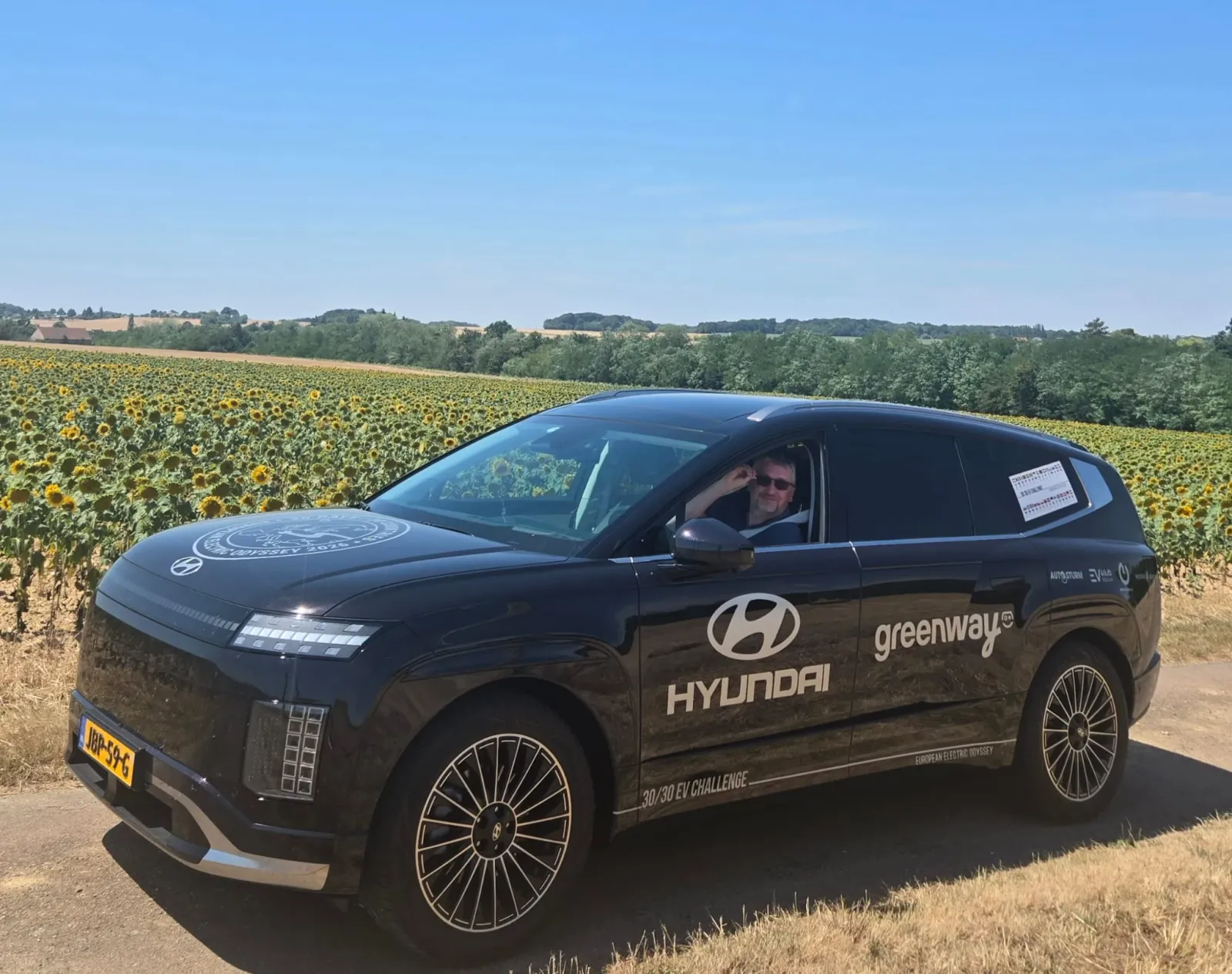
I had tested this car several times before and knew it would be perfect. Initially, it was supposed to be our old, beloved Ioniq 5, which we had already driven around half the world with, but its rental period ended in July and it went back to the dealer. Hyundai’s Dutch branch offered to lend us an Ioniq 9, so I agreed without hesitation. There were other options as well, but the Ioniq 9 Performance AWD in Calligraphy version was unbeatable.
A car without flaws?
By no means. The size of the Ioniq 9 is both a flaw and an advantage. It’s a large, comfortable, spacious SUV that handles perfectly on any surface, making it the king of highways. But in the narrow streets of Italian towns, it acts like an awkward elephant in an art gallery. Its equipment, comfort level, quietness, performance, and handling all represent the highest standard. However, it has weaknesses too, such as poor massage functions, subpar performance of adaptive headlights, a small trunk, and even the lack of a refrigerator.
What about energy consumption?
Surprisingly low. Around 21 kWh per 100 km for most of the trip, but the last three days were highway driving and the average eventually rose to 22 kWh.
The car stopped being just a means of transportation on this journey; it became a home, office, kitchen, and charging station all in one. How did the Ioniq 9 handle the daily, grueling routine of driving 500 kilometers a day, and what in its design made life easier for the whole family?
It’s a very comfortable car. An ocean of space. Lots of gadgets. Actually, now that you mention it, I realized how versatile this SUV is. The trip planner integrated with navigation is an excellent feature. The efficient multi-zone climate control kept things comfortable even during the hottest days. The panoramic glass roof is a great solution for passengers, though we had to cover it in the Spanish deserts.
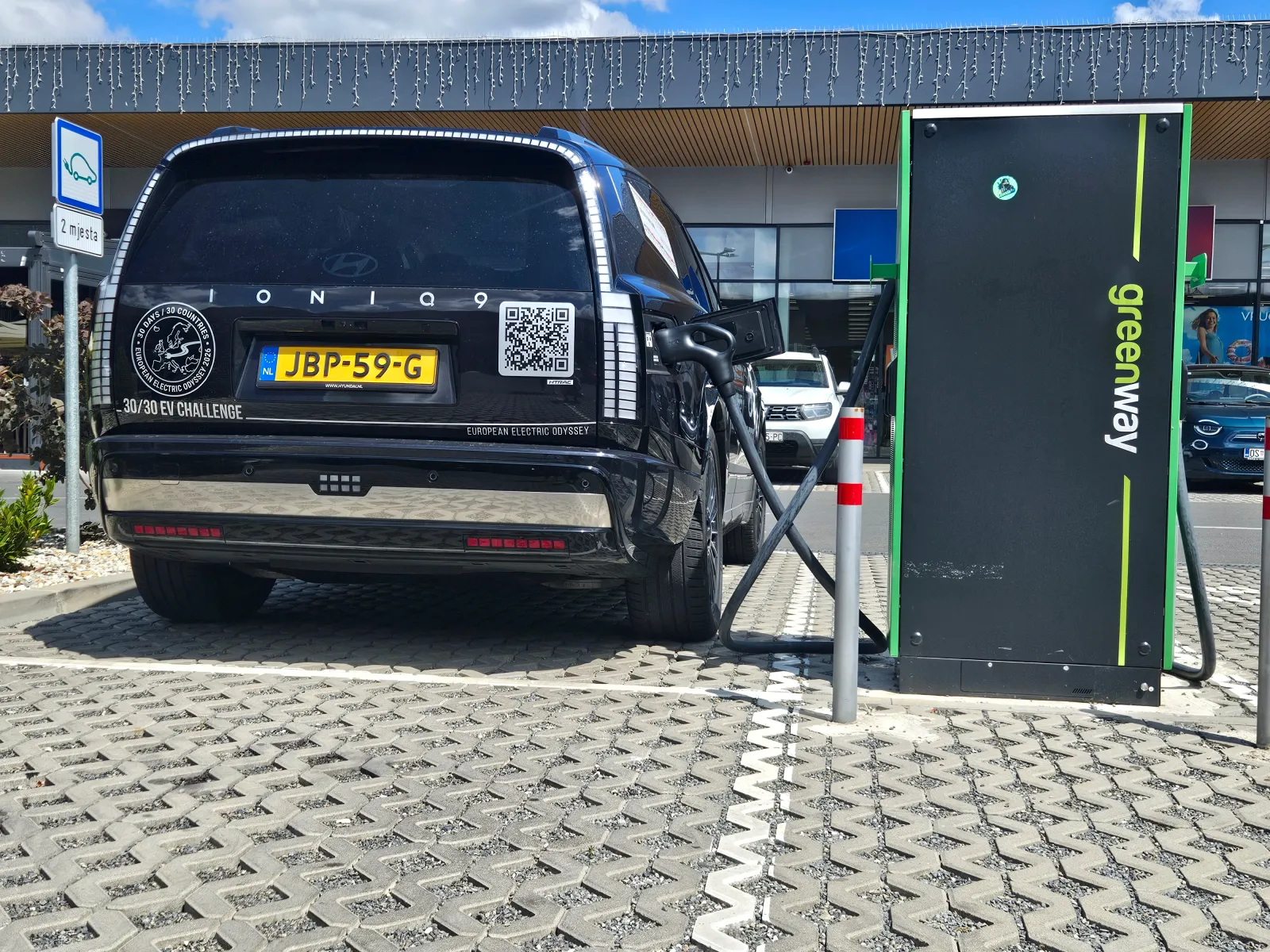
You mentioned gadgets – how often did V2L come in handy? Did having a coffee shop on wheels and pizza in the open field, powered by the car, become part of your regular routine?
We used V2L almost every day. We only skipped it during the hottest times and on days with long distances to cover. V2L allowed us to make interesting acquaintances while parking. A Frenchman, Bulgarian, or Finn offered us fresh coffee and was always willing to chat. Preparing meals on our own also helped keep costs under control.
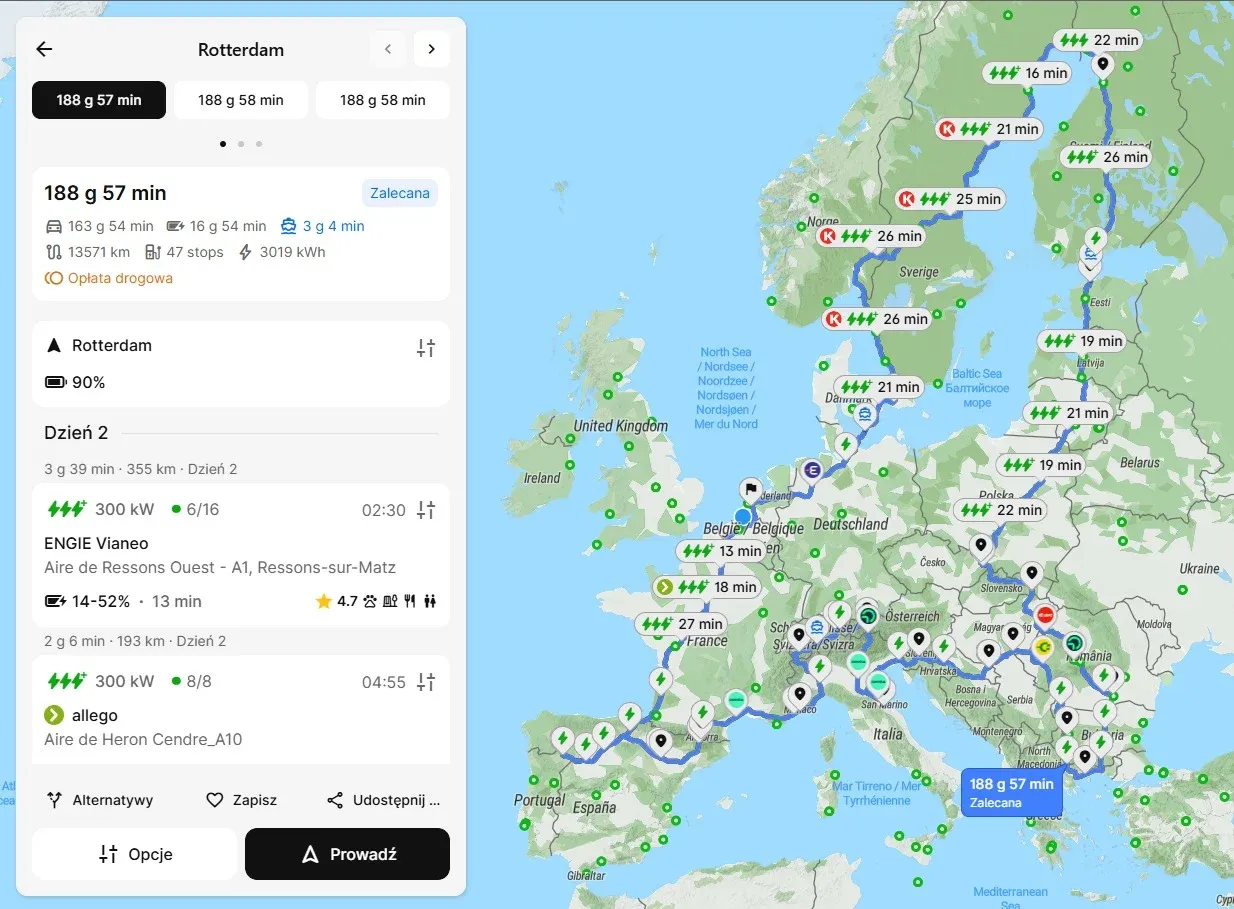
Let’s talk about what everyone thinks about but rarely speaks out loud: money. Is traveling by electric car over 15,000 kilometers actually cheaper than a comparable gasoline-powered vehicle? Were you shocked by tolls, shopping costs, accommodation fees, and the prices of fast chargers on highways?
It was definitely cheaper to go electric. There’s no doubt about that. It was also faster, but that’s not the point... We used 3000 kWh of energy, which depending on the chosen plan would cost between 0.30 and 0.60 euros per kWh. In total, that amounts to between 900 and 1800 euros. The cost of charging was partially reduced by free charging sessions at hotels and current promotions — overall, the charging cost in our case was 1100 euros.
A SUV of similar size with 500 horsepower and all-wheel drive would consume about 10 liters of gasoline per 100 km. At an average price of 2.20 euros per liter, that would cost 3300 euros, and no hotel or store will help us with free fueling. Going electric is three times cheaper, and it’s only on a trip of this scale that the difference becomes so evident.
We hardly felt the tolls, as we decided from the start to avoid highways. Only the bridges in Denmark, with a toll of over 100 euros per crossing, were a shock. It was costly. The prices of basic goods in Europe are similar, so it makes no sense to bring supplies with us. Of course, there are countries that are cheaper and others that are more expensive, but a one-day stay allows you to avoid the high prices.
You avoided highways in favor of local roads. What did you gain, and what did you lose by giving up fast roads for side paths?
We gained beautiful views, contact with people, spontaneous stops to explore, and delicious local food. Of course, we also saved a little money. We lost the convenience of travel and GSM coverage... I won’t surprise anyone by saying that Scandinavia is the most beautiful. The Alps are also wonderful.
What about the infrastructure? There are plenty of fast chargers along highways. Is it much worse on side roads?
It’s different. Usually, there aren’t hubs with dozens of charging points. There are individual stations with two or four plugs. They’re always free and available. The advantage of side roads is that there are many reasons to stop there, and charging can always be combined with that. We charged 55 times, and it always happened while we were doing other things. We’ve never really waited for the car to charge up. A shop, restaurant, sightseeing, or a visit was the purpose of stopping. Charging was always just an added benefit.
Usually, we didn’t even need to charge because the battery would last until our next overnight stay, but following the ABC rule (Always Be Charging), we connected the car whenever there was a chance. I’ve been doing this for years. And on side roads, everything is simply cheaper.
The most expensive and cheapest point in the program. Where did you pay so much per kilowatt-hour it hurt your wallet, and where was charging almost a free bonus from the local community?
Traditionally, Monaco was the most expensive. But there everyone enjoys spending money. It’s a different, better galaxy. Bulgaria was the cheapest, in every way. The most expensive chargers were in Italy, while the cheapest were in France.
Ten years ago, traveling by electric vehicle through 30 countries required dozens of apps, several cards, maps showing chargers, and almost a miracle to get it all working. What apps, cards, and systems help you survive such an adventure today, and which ones did you want to delete after just a week?
I avoid apps like the plague. I simply don’t like them. Sometimes I check prices or the availability of chargers in a car app. The built-in navigation handles planning the route and charging stops. I don’t use anything else. Though that’s not entirely true, as I often check access to chargers using Google Maps.
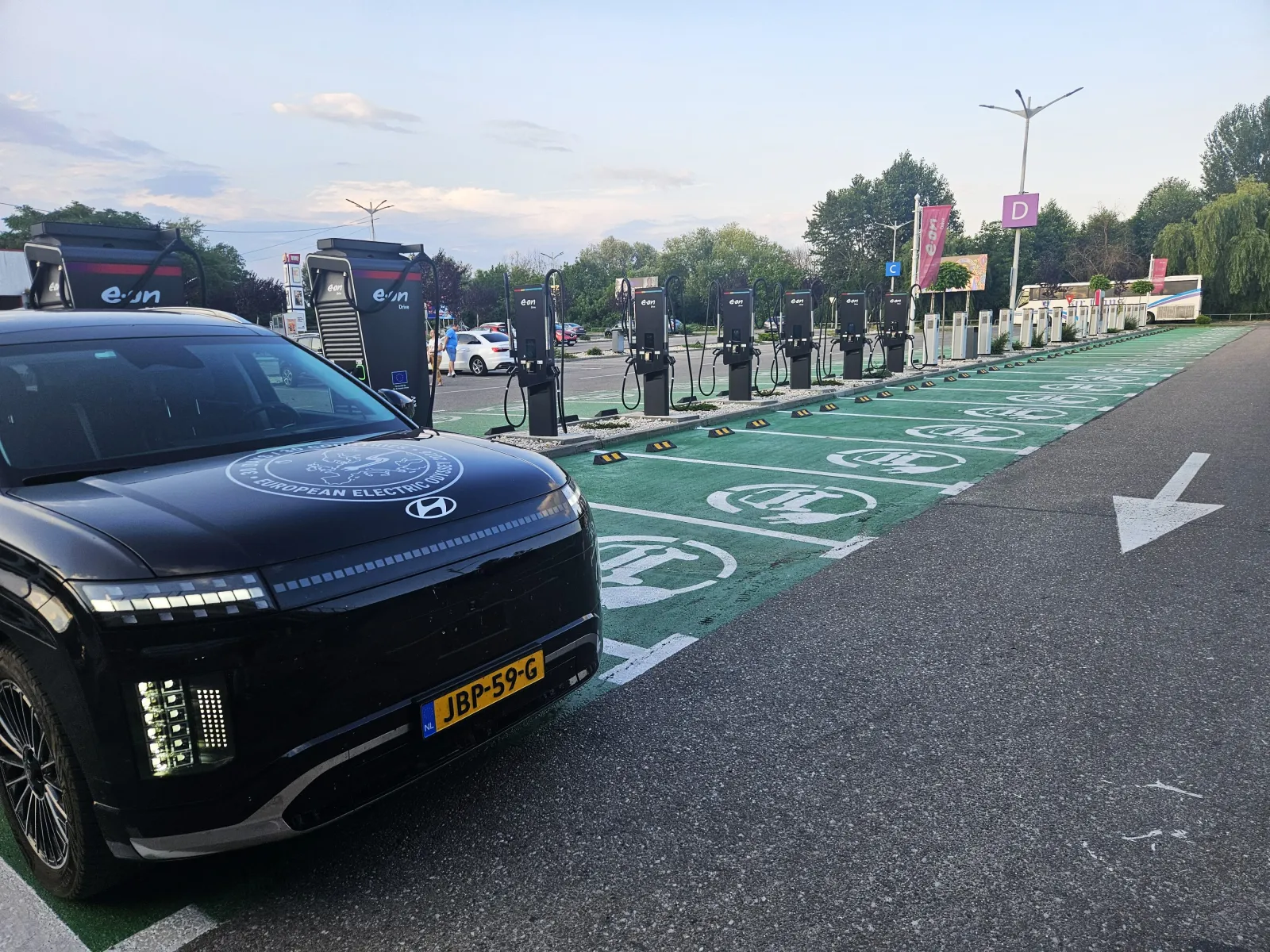
I use a card to charge my vehicle. During the 30/30 EV Challenge, the card was provided by a trip partner – GreenWay company. The goal was to test the functionality of European roaming in practice. Almost all charging sessions were handled by the Polish GreenWay card. There were no problems, so the roaming service can be rated very positively.
Ten years ago, things really looked different. Let’s appreciate this progress.
Finding a high-power charger is one thing, but what about reliability? How many times have you encountered a station that showed green in the app, only to find a rusty cable and communication errors upon arrival?
Two or three times, actually, one of the chargers had a faulty display. Another time it was offline due to a power outage at a nearby gas station. It didn’t affect our trip at all. There are always other stations nearby. Once in Estonia, a station had much higher power output than what was indicated online, so I had to return to the car after a few minutes and park the Ioniq, even though we planned to eat in peace. Things happen…
Let’s talk about facts and myths. What surprised you the most about the European charging infrastructure? Was there any country that harshly challenged your assumptions about modern electric mobility?
All the surprises were positive. After two million kilometers on electric power, Western Europe holds no secrets for me when it comes to infrastructure. New operators are expanding the network, and finding a town without a charger is almost miraculous. I was a bit worried about the infrastructure in Romania and Bulgaria, but it turned out that online information was highly outdated. The charger network in Romania is excellent, and in Bulgaria new charging points are popping up like mushrooms after rain—I saw many new locations prepared for installing charging stations. Greece and Italy were a disappointment, but I can’t really speak of surprises here, as this situation has persisted for several years.
Riding styles in different parts of Europe. Where did you feel safest, and in which country did drivers treat speed limits as a personal insult?
The worst conditions were in Italy, Bulgaria, and Croatia. There, speed limits are more like a gentle suggestion, while the one-meter following distance is practically an invitation to drive closely behind others. Poland and Lithuania also had poor conditions. Traditionally, Austria and Switzerland are the best, but Slovenia, Estonia, Sweden, and Luxembourg are also excellent.
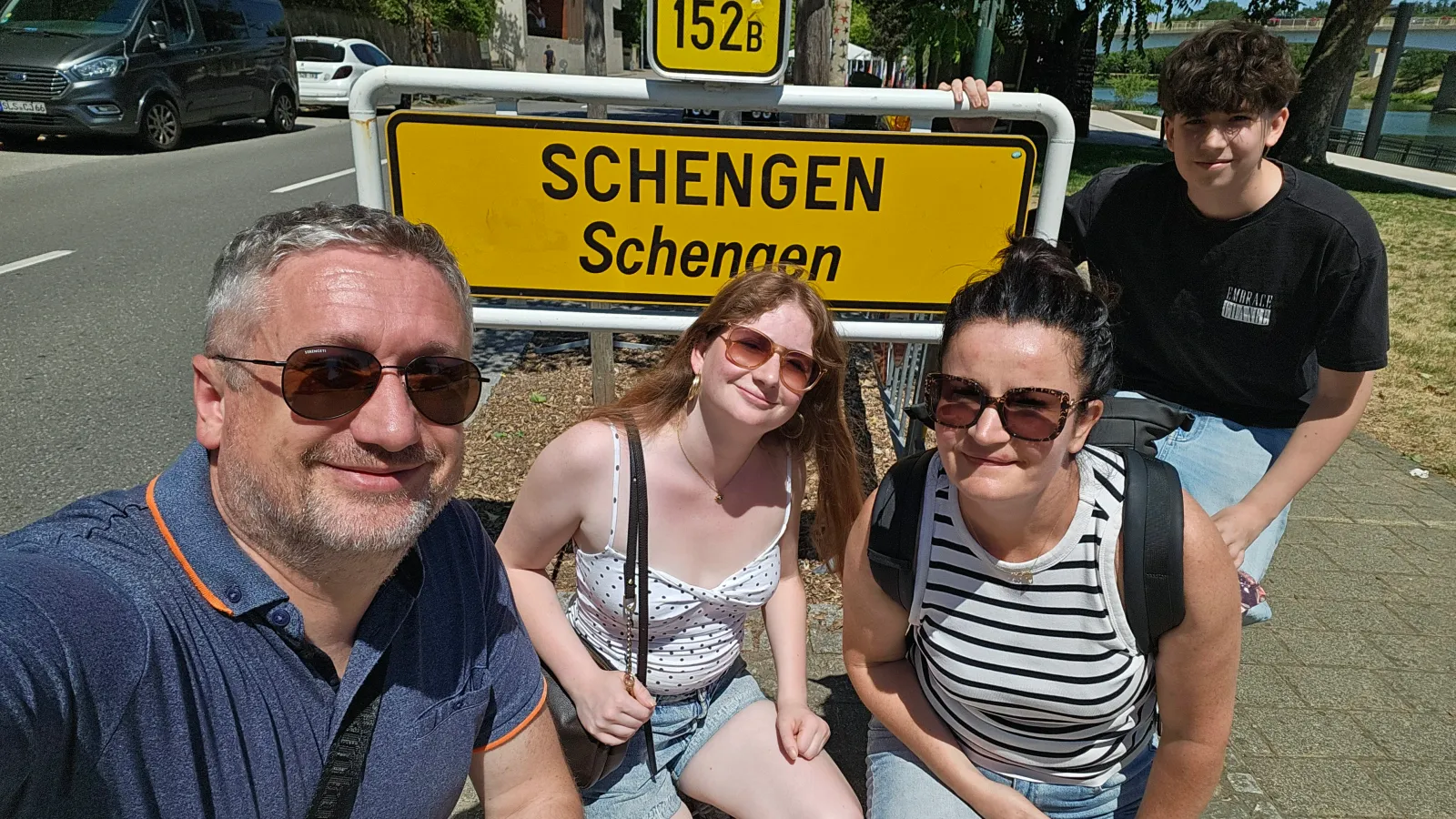
Although there seem to be no borders in the Schengen zone, people’s attitudes at the edges of Europe—say, in northern Finland and southern Greece—differ drastically. How did these local communities react to your trip?
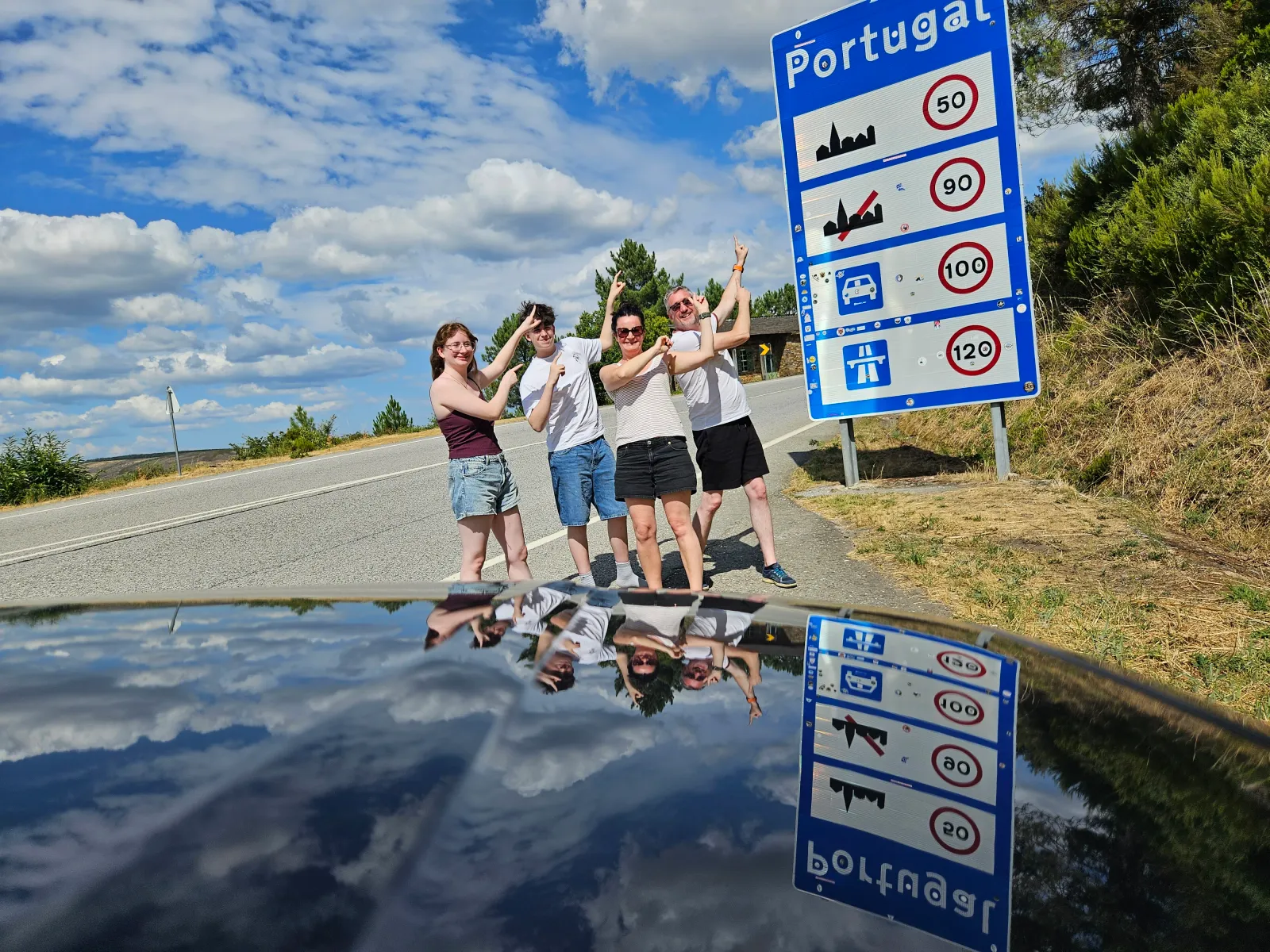
It was the same everywhere: great interest, often disbelief, and curiosity. Only in one place in Poland did we encounter a critic who preferred to spend a month on the beach. As for borders, they haven’t completely disappeared. Theory doesn’t always match practice—Bulgarians still stand at their posts, and customs officers in Andorra also like to check trunks.
How did you arrange accommodations? Was it always a hotel with a charger?
The first few nights were in well-known areas with no uncertainties. After that, we handled it as we went. Karolina drove, while I used a search engine to determine where we would arrive that day and which hotel would host us. I didn’t filter for the presence of a charger, but almost every hotel has its own or a public one in the immediate vicinity.
Hotel breakfasts in thirty different countries. After a month, can you still look at a hotel buffet? Are local flavors something that makes the journey enjoyable until the end?
All four of us love eating. Local dishes were one of the top highlights of the trip. We still remember Italian pizzerias and Greek taverns to this day. Pierogi in Poland, herring in Sweden, kvass in Latvia, goulash in Hungary, or Austrian cakes are the essence of such a journey. As for hotel breakfasts, I adore them for their variety and consistently high quality.
If you had to close your eyes and choose one, the absolutely most heartfelt and spectacular moment of the entire trip—the one for which it was worth taking the risk—what would it be?
Discovering and getting to know Andorra. It was our first time there, and this country captivated us. We want to go there for a longer vacation.
And the other side of the coin: what turned out to be the biggest disappointment? Maybe an overhyped place, a terrible hotel, or some situation that made you want to turn back?
I have only faint memories of Spain. It’s the most overhyped country in Europe, in my opinion. It always disappoints me. Then there was the hotel in Greece that closed its pool right at the start of the check-in period… I also had health issues—I got poisoned by something in the Balkans and spent the whole journey through Bulgaria and Greece lying on the back seat. As they say: it doesn’t have to be caviar all the time. Such situations are also memories.
To wrap things up: 30 countries in 30 days, checked off. The bar is now so high that perhaps only a round-the-world trip or an electric ride through the Pyrenees in reverse is possible. What are the plans for future trips?
There are no plans yet, not even a decision on whether there will be more challenges. Of course, we’ll keep traveling. The kids are growing up, so who knows… Maybe the next adventure will just be the two of us? Along Europe’s coast… or 40 capitals… Who knows?
Thank you for the conversation.
Elektromobilni.pl
Photo by Author