
Although it sounds 'crazy', Leapmotor will remove a key component that has been around for 70 years but still causes malfunctions in electric cars
28/09/2026 13:00
Updated to
28/09/2026 13:00
Electric vehicles have completely changed their propulsion system, but they still retain components inherited from older combustion engines. One such component is the small 12-volt auxiliary battery, which powers numerous electrical systems, and its depletion can leave an electric vehicle completely immobile even if its large traction battery has sufficient energy.
Leapmotor aims to solve this issue by completely eliminating it. The Chinese manufacturer has introduced its new CTC 3.0 High-Low Fusion battery, a technology that integrates high-voltage and low-voltage functions within the same system, thereby allowing the removal of the traditional 12-volt lead-acid auxiliary battery. The first vehicles from the company to feature this solution will begin arriving starting in 2027.
A single battery to power almost the entire car
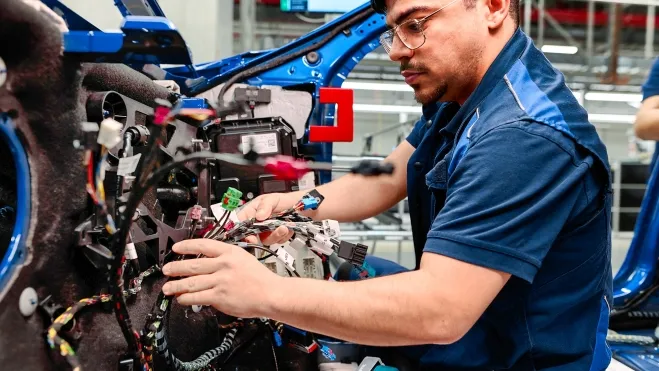
The 12-volt battery continues to play a fundamental role even in electric vehicles. It powers components such as control units, lighting, windshield wipers, climate control, multimedia system screens, safety systems, and airbags. It also helps activate the high-voltage system when starting the vehicle.
The solution developed by Leapmotor involves integrating these functions directly into the traction battery. Its CTC 3.0 technology uses the same cells and modules for high- and low-voltage functions, as well as sharing thermal management and energy distribution. The new generation offers seven times more low-voltage capacity and functionality than its predecessor, and according to the manufacturer, it can already match the output of a conventional 12-volt battery.
Leapmotor also does not use a conventional standalone battery pack. Its ‘Cell-to-Chassis’ technology integrates the cells directly into the vehicle’s structure, eliminating separate modules. The company describes this as a complete overhaul of the electrical power system and claims that the first models equipped with CTC 3.0 will be the first road vehicles in over 70 years to do without a 12-volt lead-acid auxiliary battery.
Less maintenance and a well-known cause of failure disappearing
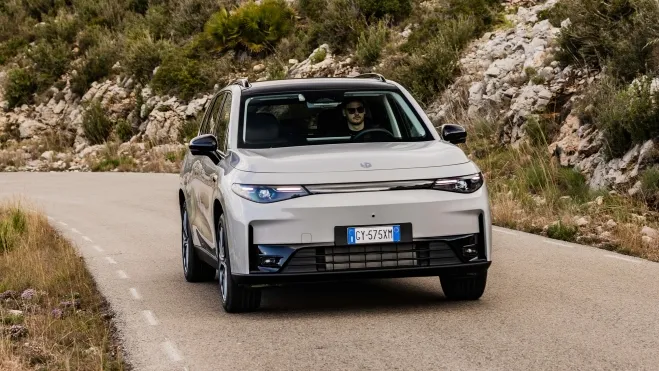
Removing this small battery could also offer advantages for the owner. Leapmotor promises to reduce the number of components and create a maintenance-free system throughout its lifespan, eliminating the need to replace the auxiliary battery as it ages. According to information from various studies, issues related to 12-volt batteries were among the most common causes of failures in electric cars during 2025.
The company also focuses on environmental impact. It believes that large-scale implementation of CTC 3.0 could prevent the manufacturing and subsequent disposal of tens of millions of lead batteries annually. However, it has not specified exactly how much weight or money this solution will save. It also has not yet explained how it will ensure redundant power supply for low-voltage systems in the event of a failure or disconnection from the main high-voltage system.
The new battery will come with the ‘LEAP 5.0 New Mobile Space’ architecture, which was also unveiled during Leapmotor’s Tech Day 2026. Both technologies have been developed to power the company’s next generation of vehicles and will begin to be integrated into new products starting in 2027. The brand, closely tied to Stellantis for its international expansion, aims to eliminate one of the few elements that electric cars have retained virtually unchanged for decades.