
August statistics: More than one in four new cars in the EU is a BEV
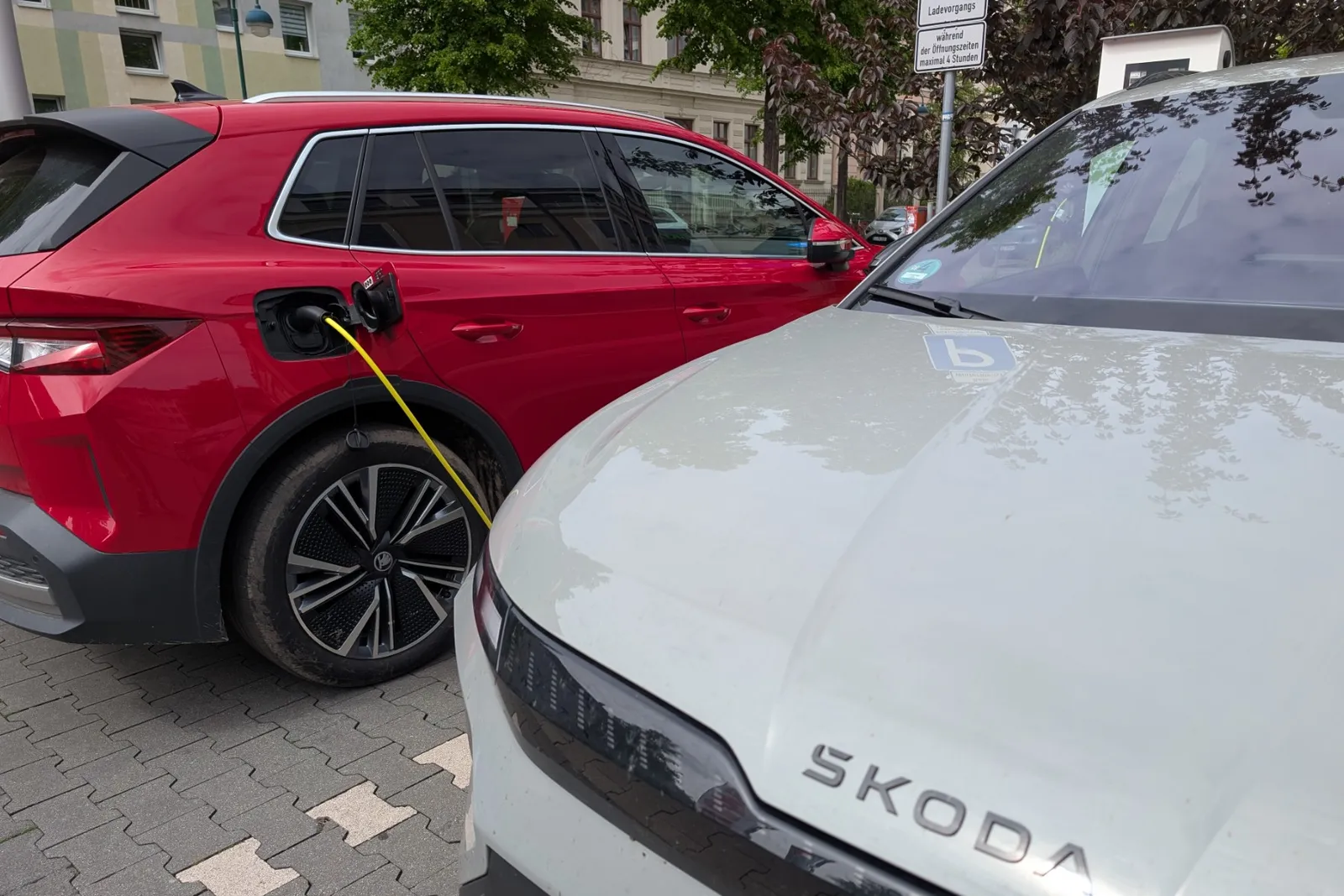
The sales of electric vehicles in the EU rose significantly in August. According to ACEA, 27.7 percent of newly registered cars were battery-electric, with another 11.1 percent being plug-in hybrids. This meant that nearly 39 percent of the market was accounted for by vehicles with external charging capabilities. The BEV market has also been growing strongly throughout the year so far.
The EU automobile market is becoming increasingly electric. According to the industry association ACEA in its latest statistics, 708,211 new passenger cars were registered in August, of which 196,486 were battery electric vehicles (BEVs) and 78,426 were plug-in hybrids (PHEVs). This gave BEVs a market share of 27.7 percent, meaning more than one in four new cars were electric vehicles. PHEVs accounted for 11.1 percent. Together, these vehicles made up nearly 39 percent of all new registrations.
The overall passenger car market, across all propulsion types, grew by 4.5 percent compared to August 2025. However, the trend for vehicles with plug-in capabilities was much more dynamic: BEV registrations rose by 62.7 percent from 120,797 units in August 2025, while PHEV registrations increased by 10.8 percent from 70,545 units in the previous year’s August.
Rapid Growth in BEV Registrations in Germany and France
The growth in BEV registrations was particularly strong in the major EU member states. In Germany, 68,930 electric cars were newly registered in August – 75.1 percent more than in the previous month; see also our separate analysis of KBA data in the eMobility Dashboard. France saw 36,159 new electric cars registered (+112.8 percent), while Denmark recorded 13,887 (+54.6 percent). Registrations also increased significantly in the Netherlands (+43.5 percent), Belgium (+43.9 percent), and Portugal (+65.2 percent).
In plug-in hybrids, the dynamic growth is less pronounced but still positive. In Germany, PHEV registrations rose by 6.0 percent in August to 25,406 vehicles. In Spain, the growth rate was 23.3 percent, while Italy saw a rise of 74.2 percent. In France, however, PHEV sales remained almost stagnant with a slight increase of 0.2 percent. Across the EU, more than twice as many BEVs were registered in August as PHEVs.
BEVs widen the gap over PHEVs
In the first eight months of the year, the gap between the two plug-in drive types widened further. Across the EU, 1.641 million BEVs were newly registered from January to August, 44.9 percent more than in the previous year’s period. As a result, the market share of pure electric vehicles rose from 15.8 percent to 21.7 percent so far this year. PHEV registrations increased by 19.6 percent to 758,082 vehicles during the same period, with their market share rising from 8.8 percent to 10.0 percent. Together, BEVs and PHEVs account for around 31.7 percent of the EU’s new car market so far this year.
In the January to August period as well, BEV growth is driven primarily by large markets: France saw a 74.2 percent increase to 322,099 vehicles after eight months, Germany reached 515,545 BEVs (+53.1 percent), and Denmark reached 106,265 (+40.9 percent). These three markets, along with Belgium, accounted for 64 percent of all BEV registrations in the EU. In contrast, among PHEVs, Italy (+77.6 percent), Spain (+33.9 percent), and Germany (+15.6 percent) stand out.
Significant growth in electric vehicle registrations is also evident outside the EU, though with varying focuses. In the three EFTA countries (Norway, Switzerland, and Iceland), 18,658 new BEVs were registered in August, representing a 9.5 percent increase from the previous month. Additionally, 2,000 PHEVs were registered, with their number declining by 14.4 percent. Norway, the benchmark market for electric vehicles, stands out with 13,274 new BEVs and a 98.7 percent market share — see our separate analysis.
Strong BEV growth in the UK as well
In the United Kingdom, BEV registrations rose by 27.7 percent to 28,063 vehicles in August, while PHEV sales increased by even more, at 39.8 percent to 13,707 vehicles. From January to August, Britain saw 355,748 BEVs registered (+28.6 percent) and 185,198 PHEVs (+37.9 percent). Across the EU/EFTA/UK region, BEV registrations totaled 2.13 million in the first eight months (+38.8 percent), with PHEVs accounting for 964,497 units (+22.2 percent).
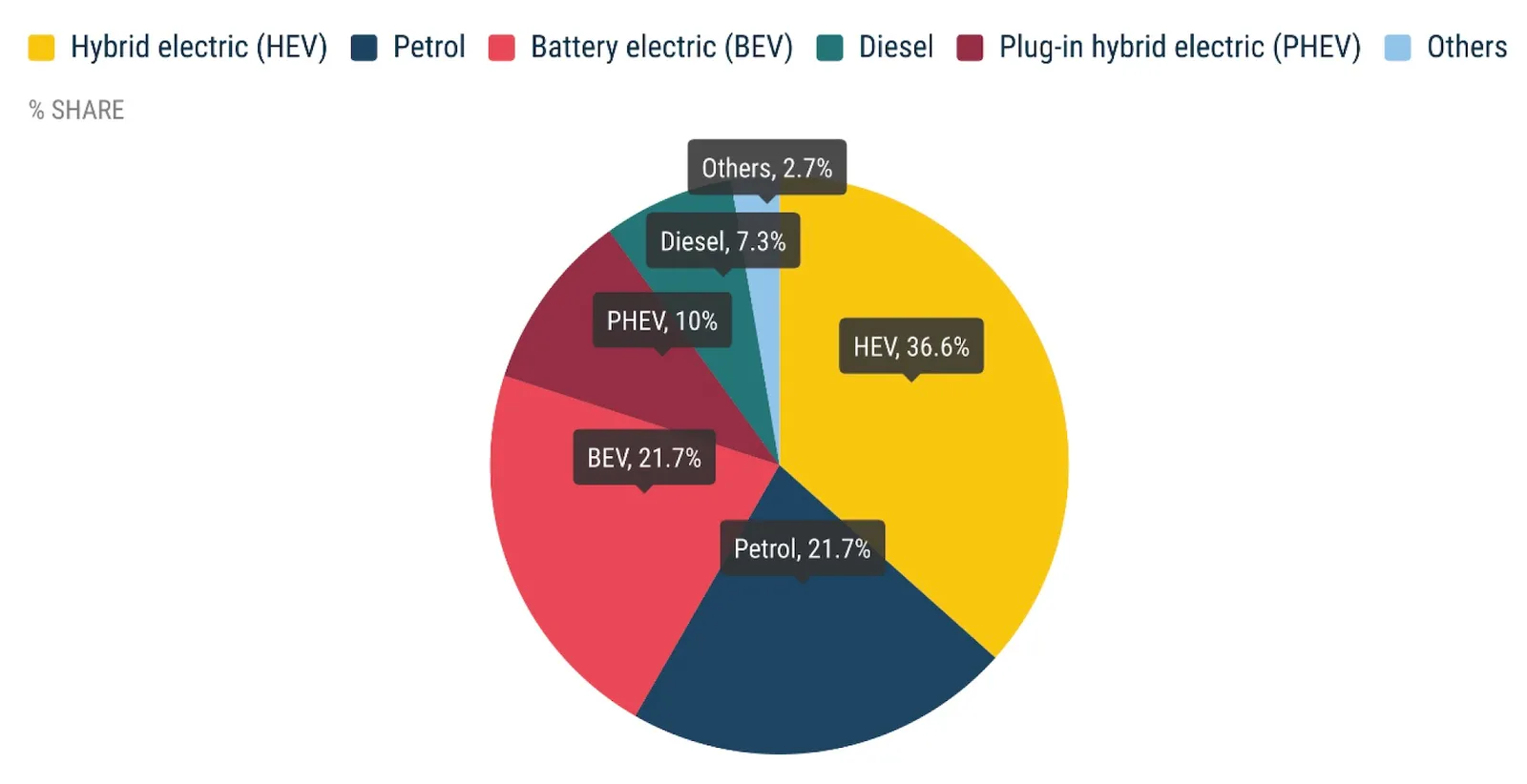
Meanwhile, traditional internal combustion engines continue to lose ground. After eight months, gasoline engines held a 21.7 percent market share at the EU level, while diesel engines accounted for 7.3 percent. Registrations of both types dropped by 18.6 percent each. Full and mild hybrids remain the largest single category at 36.6 percent, but the gap with pure internal combustion engines and the growing share of vehicles with charging ports are significantly changing the powertrain mix in Europe’s new car market.
Rapid Growth at BYD, Chery, and Leapmotor
There is also movement among manufacturers, although ACEA figures do not break down data by vehicle type, making it impossible to determine the BEV sales figures for individual brands. Still notable are the strong growth rates of several Chinese manufacturers, most of which focus on plug-in vehicles: BYD saw its EU registrations rise by 163.0 percent from January to August, reaching 177,752 vehicles, while Chery (including Jaecoo, Jetour, and Omoda) saw an even higher increase of 250.9 percent to 116,318 units. SAIC (MG Motor and Maxus) recorded 163,707 vehicles (+19.8 percent). Chinese subsidiary of Stellantis, Leapmotor, showed even more dynamic growth with a 426.8 percent increase in sales, reaching 62,508 registrations. The U.S.-based pure electric vehicle manufacturer Tesla, meanwhile, reported a 52.7 percent increase in August; cumulatively, from January to August, it saw a growth of 65 percent.
9 percent, totaling 142,165 vehicles.In the broader EU/EFTA/UK market, BYD leads with 234,099 registrations (+144.1 percent), followed by Chery with 207,871 (+279.7 percent) and SAIC with 230,290 (+19.7 percent), all significantly above their previous year’s figures; Tesla recorded 191,787 registrations (+43.3 percent) there, while Leapmotor had 73,297 registrations (+449.9 percent). These figures are particularly interesting because they illustrate how rapidly some Chinese manufacturers are expanding their sales in Europe — though the ACEA data alone does not reveal what proportion of these sales comes from BEVs, PHEVs, range extenders, or internal combustion engines. While SAIC and Chery also import internal combustion engine vehicles, BYD and Leapmotor offer PHEVs (BYD) as well as range extenders (Leapmotor) in addition to BEVs.