
Audi will not abandon gasoline cars: CEO Gernot Döllner makes it clear that there is “room” alongside electric vehicles
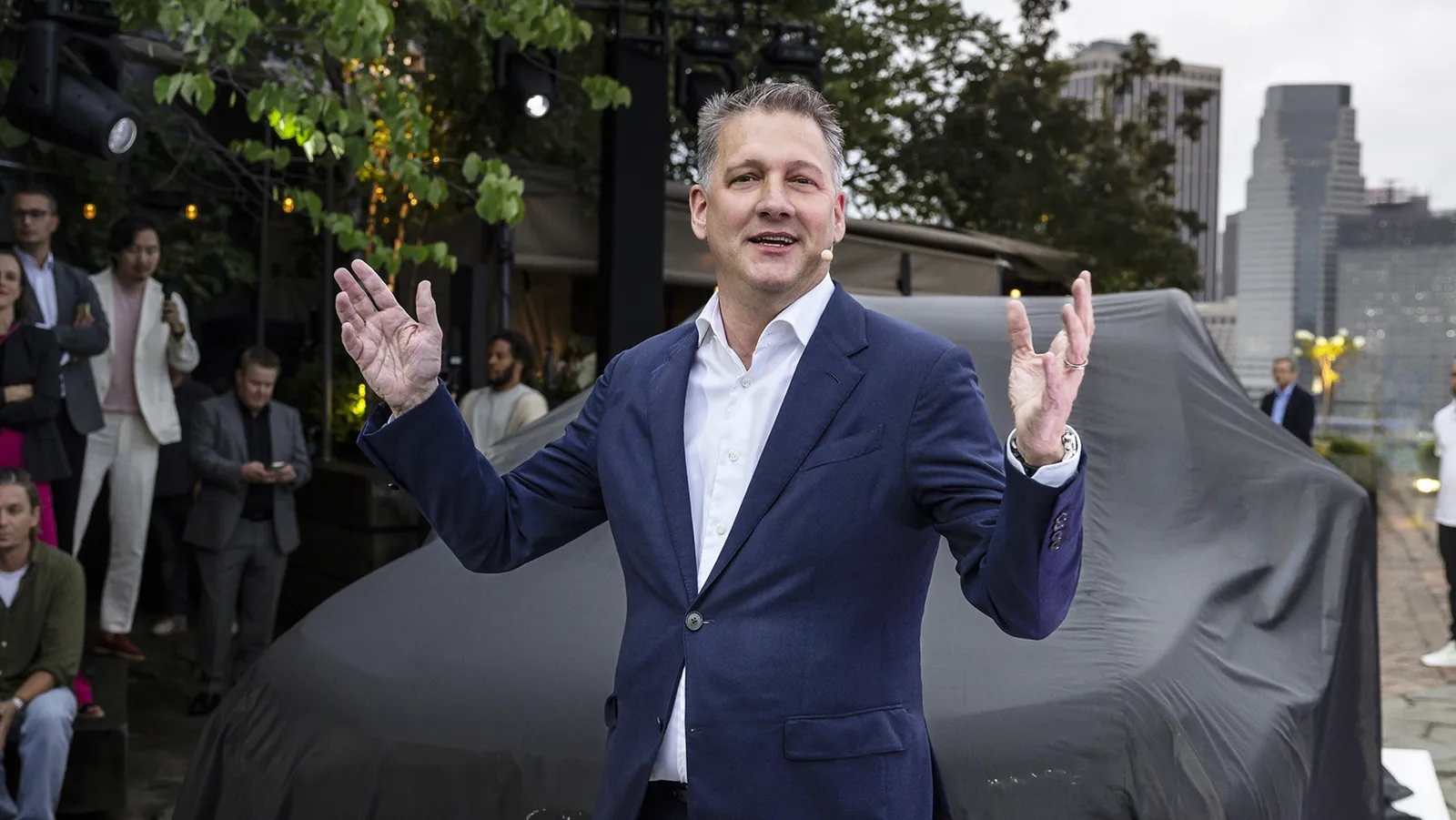
Audi is undergoing a profound transformation toward electric vehicles, but that doesn’t mean it will immediately abandon internal combustion engines in its most exclusive cars. The German company’s CEO, Gernot Döllner, has left the door open for future models of the brand to continue using thermal engines, albeit with electric enhancements, while simultaneously developing fully electric alternatives.
The best example has just arrived with the Audi Nuvolari. This new limited-edition supercar combines a twin-turbo V8 with three electric motors to deliver 1,001 horsepower, making it the most powerful and fastest production car ever developed by Audi. Döllner believes there is room for such vehicles within the company’s future strategy, and that different technologies can coexist depending on the product and what buyers expect.
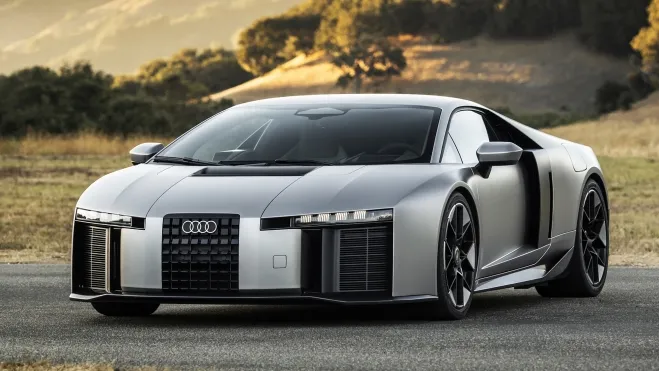
Audi wants to keep using different technologies
Döllner believes it makes no sense to necessarily view combustion and electricity as two incompatible technologies within the high-performance segment. The strategy is to use whichever is most appropriate for each product, especially in vehicles with limited production where priorities are significantly different from those of mass-produced cars.
"The Audi Nuvolari brings pure excitement and performance to the road. It also shows how we are taking ‘Vorsprung durch Technik’ into a new era," Döllner said during his speech. He considers it a tangible demonstration of the technological renewal Audi is undergoing, rather than just an effort to fill the gap left by the discontinued R8.
The decision is particularly significant because Audi is also developing all-electric sports cars. The Concept C previewed a future production two-seater electric sports car, while the Nuvolari took a radically different approach by using a massive gasoline engine paired with three electric motors. Instead of choosing exclusively one of the two approaches, Audi is exploring both.
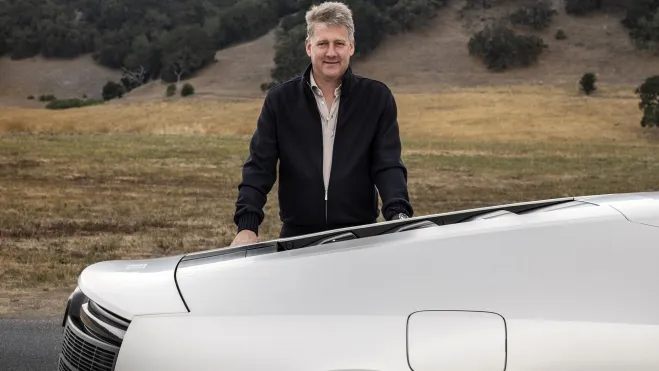
A 10,000 rpm V8 proves that internal combustion still has a future
The Nuvolari’s hybrid system illustrates just how far Audi is willing to go. Its main engine is a 4.0-liter twin-turbo V8 that generates 800 horsepower on its own, along with a maximum torque of 730 Nm. Even more impressive is its ability to reach 10,000 rpm—a speed previously reserved for racing engines.
In addition to this engine, there are three axial-flow electric motors, each with 110 kW of power. Two of them are installed on the front axle and are part of the Quattro all-wheel drive system, allowing for individual control of torque delivery, while the third is located between the central V8 and the transmission. A small 7.3 kWh lithium-ion battery completes the setup. The combined maximum power reaches 736 kW, equivalent to 1,001 horsepower.
The figures resulting from these tests are equally remarkable. Audi claims an acceleration from 0 to 100 km/h in 2.6 seconds, with only 6.8 seconds needed to reach 200 km/h. Its top speed exceeds 350 km/h. Döllner, in his interview with Automotive News, described the car as “a statement for Audi’s future, for a new form of performance, and for ‘Vorsprung durch Technik’ in the era of electrification.”
The Nuvolari won’t just be a new R8
Audi will produce only 499 units of the Nuvolari, with deliveries scheduled for the first half of 2027. The brand will officially open European orders in the fourth quarter of 2026, though interested customers can already register.
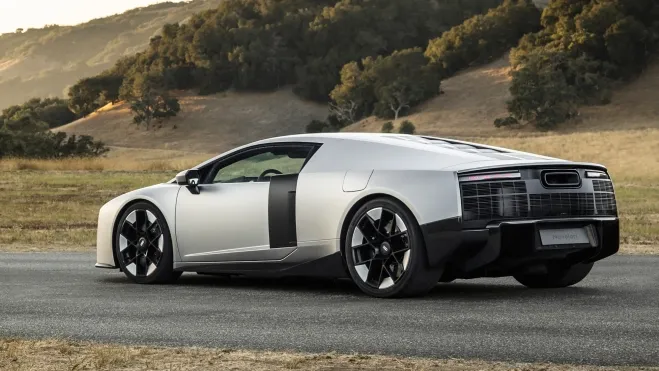
The project also highlights another of Döllner’s priorities: developing cars much more quickly. Audi took only 405 days to move from the first sketch to having a functional prototype of the Nuvolari. “The Nuvolari project is an impressive example of how quickly we can bring an idea to life at Audi,” says the CEO. The company aims to apply this rapid development pace across its entire organization.
The new supercar also carries a significant symbolic weight. Audi disappeared from this market after ending production of the R8, whose renowned naturally aspirated V10 engine eventually became one of the brand’s most iconic powerplants. Now it returns through a different approach: a highly electrified V8 twin-turbo engine that relies on electric motors not only to reduce emissions but primarily to enhance performance.
The electric models will also have their own sports car
Audi’s continued interest in internal combustion engines does not mean it is abandoning its electric vehicle push. The other side of this strategy is represented by the Concept C, a fully electric two-seater sports car whose production version is expected in the coming years and which also previews the company’s new design language.
The difference between the two projects helps to better understand Döllner’s approach. Audi does not intend for all of its sports cars to necessarily have the same technology. The future model derived from the Concept C will be electric, while the Nuvolari demonstrates that a highly electrified combustion engine can still fit into an extreme, limited-production vehicle.