
Audi switches to V2G switch with Octopus Energy’s tariff
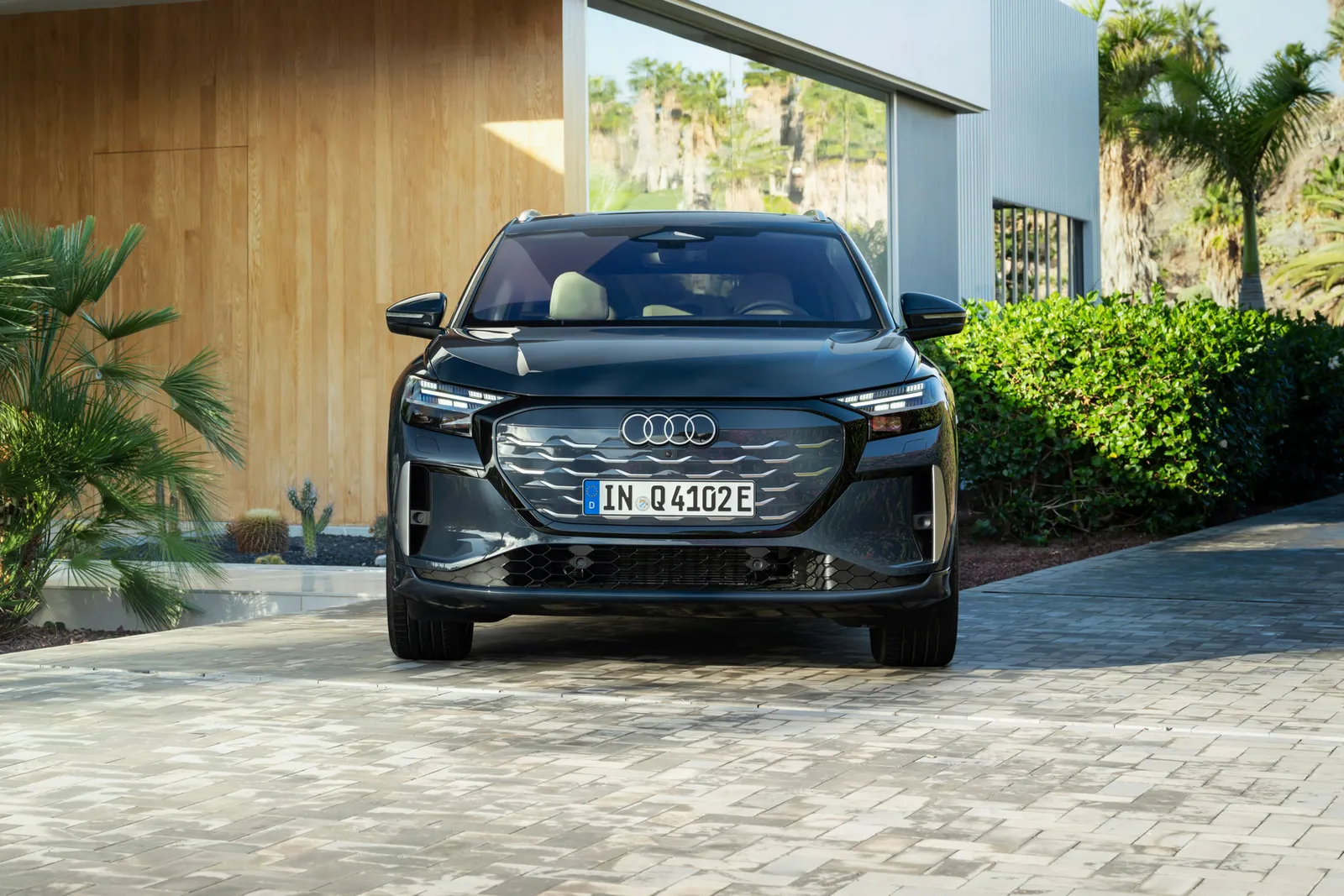
Audi is developing a bidirectional charging offering in Germany, bringing Octopus Energy on board for this purpose. Drivers of the new A2 e-tron and the recently updated Q4 e-tron will soon be able to feed electricity back into the grid using a compatible wallbox and a special tariff from Octopus Energy.
The Q4 e-tron already supports V2L for powering items such as coffee makers. Now, grid feeding is added to its capabilities.
Image: Audi
Within the Volkswagen Group, brands are aligning to enable their customers to feed electricity back from their electric vehicle batteries in the future. The core brand VW and its energy subsidiary Elli took action in spring, announcing a Bidi package initially for VW as well as its subsidiaries Volkswagen Nutzfahrzeuge and Cupra. For this purpose, The Mobility House was brought on board as a technology provider.
Audi’s subsidiary takes a different approach — by partnering with Octopus Energy. This British energy service provider is already collaborating with Ford on bidirectional DC charging for private customers in Germany. And this isn’t by chance: both the Capri and Explorer models used by Ford, as well as the A2 e-tron and Q4 e-tron models initially included in Audi’s lineup, are based on Volkswagen Group’s MEB+ platform. The A2 e-tron is the newest model in this group. This electric compact car was unveiled just earlier this week and is set to go on sale in December.
Only newer Audi Q4 e-tron models are compatible
Octopus Energy announces that drivers of the mentioned Audi electric vehicles will soon be able to use Octopus Energy’s V2G tariff. The exact launch date will be announced at a later time. However, the vehicle must have software version 6.3 or higher to be compatible. As a result, most of the existing Q4 e-tron vehicles, which have been on the market since late 2022, are not compatible.
Regarding the V2G tariff itself: Octopus indicates that customers will enjoy a significant discount on charging. “When the car is connected at home using a bidirectional wallbox, customers pay a flat rate of 18 cents per kWh, which is lower than their regular charging price. With an average electricity price of 33 cents per kWh, charging via the V2G tariff costs around 15 cents per kilowatt hour on average.” This example is based on averages. In areas with particularly high grid fees, the charging cost could be slightly over 20 cents per kWh, while in especially cheap areas it might be below 10 cents per kWh.
In addition, customers receive a monthly bonus of 30 euros provided the vehicle is connected to the wall charger for at least 300 hours per month, which is roughly ten hours per day. This results in a total bonus of up to 360 euros per year. Octopus Energy estimates that customers “can drive up to 18,000 kilometers for free per year when combined with the cheap charging electricity.” The company assumes an average consumption of 16 kWh per 100 kilometers. In reality, a higher actual consumption will result in a shorter driving distance.
Octopus manages the feed-in in the background
The tariff package for Audi drivers is identical to Ford’s offer from the beginning of the year. Intelligent charging and discharging into the grid is always handled “automatically in the background” by Octopus Energy. As is standard with such offers, customers still retain control over their vehicles by being able to set departure times and desired charge levels flexibly and individually.
Bastian Gierull, Octopus Energy’s German CEO, comments: “V2G is a classic win-win technology: Drivers will find their cars even more enjoyable when they also work for them in the garage and support the energy transition. For us, integrating Audi models is the next step in our effort to make two-way charging accessible to as many people as possible, regardless of the car they drive.”
_Source: Information via email_