
Audi changes strategy: Germans reorganize their business in the world’s largest market and split up their brands
13/09/2026 12:00
Updated to
13/09/2026 12:00
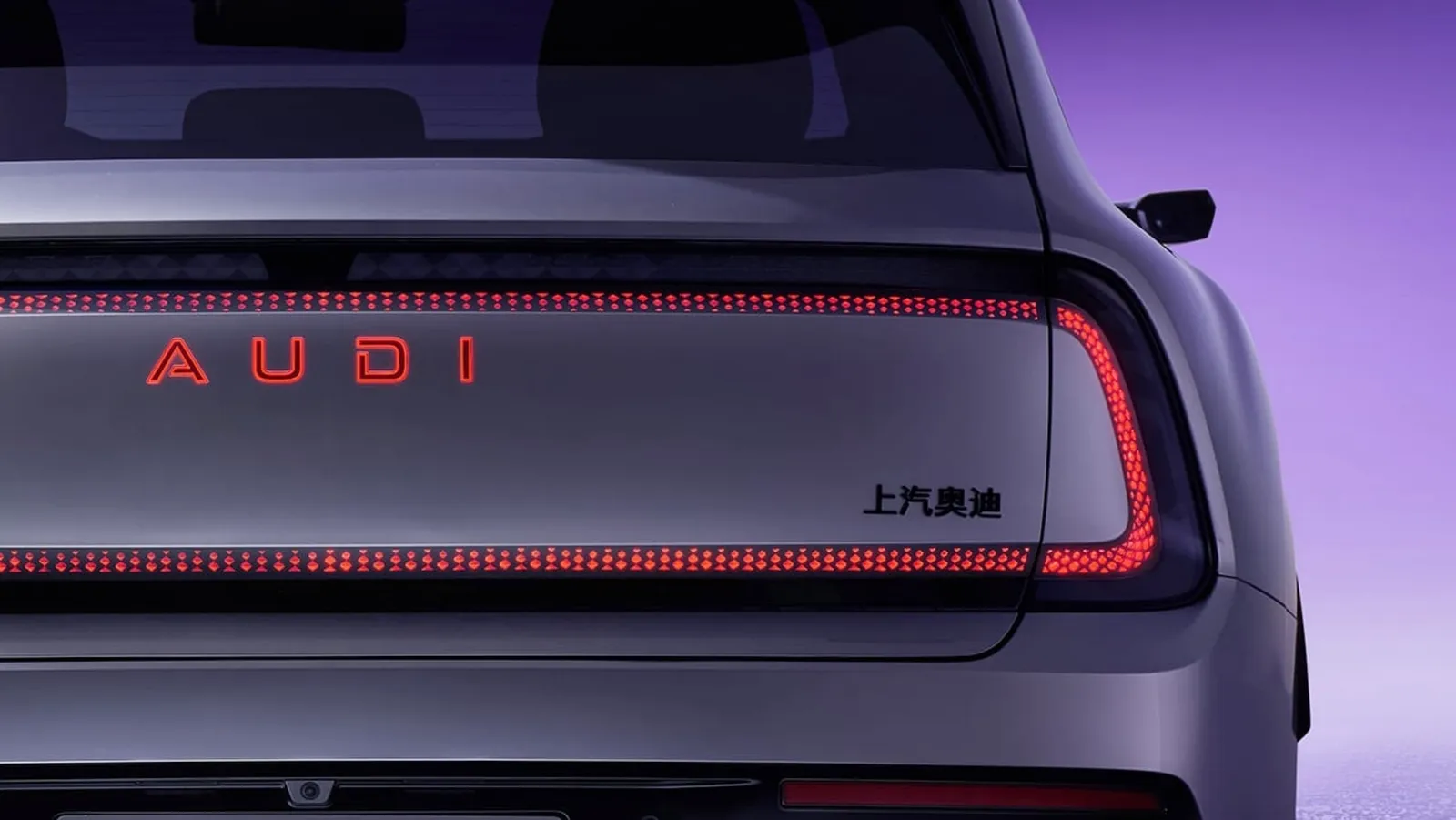
It is necessary for the major manufacturers to reorganize themselves in the Asian market to better address future challenges. Audi has laid the groundwork for a significant internal restructuring in China, aimed at eliminating overlapping product lines across its ranges. Under the new organizational structure, the joint venture SAIC-Audi will gradually phase out all sales and production of models featuring the classic four-ring logo, focusing solely on the AUDI brand (written in letters) for new energy electric vehicles developed to meet local demands.
The long-standing partner FAW-Audi will take full control of the design, production, and sales of the international lineup featuring the four-ring logo, covering both internal combustion and electric powertrains. While the detailed terms of the transition, after-sales technical support, and distributor network warranties are still under formal negotiation, the group’s management aims to reduce internal friction and accelerate technical development in the world’s largest automotive market.
The impact on the model portfolio and inventory clearance
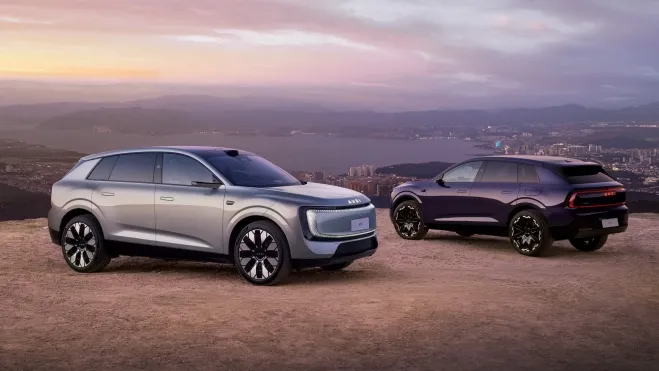
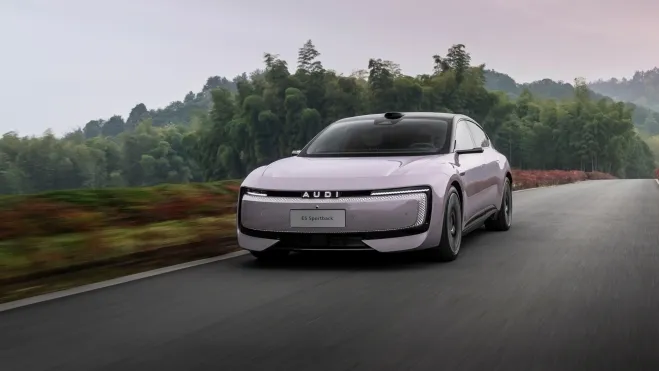
Saic-Audi’s abandonment of the four rings affects half of its sales volume. In the first seven months of the year, models bearing the traditional logo accounted for over 12,500 registrations for the subsidiary, including combustion engine models such as the A5L Sportback, A7L, and Q6, as well as the electric Q5 e-tron. Going forward, Saic-Audi’s lineup will be reduced to its battery-powered models without the traditional logo, led by the electric AUDI E5 Sportback and the SUV AUDI E7X.
To clear inventory before the transfer, the company has accelerated sales of its remaining stock with discounts of up to 40%. The A7L sedan has seen its price drop from 418,700 yuan to 262,800 yuan, equivalent to a reduction from around 53,700 euros to 33,700 euros at the current exchange rate. Similarly, the Q6 SUV has been priced lower, from its original 467,600 yuan (about 60,000 euros) to 279,800 yuan (around 35,900 euros), which aligns with third-party industry reports indicating that local production of these models ceased in July.
Financial setbacks forcing a strategy rethink
The urgency to simplify operations stems from the deterioration of the German manufacturer’s financial performance in the region. In the first half of 2026, Audi’s sales in China declined by 19% compared to the same period the previous year. Meanwhile, profits generated by its Chinese joint ventures plummeted by 74%, falling from 279 million euros in the first half of 2025 to just 73 million euros in the corresponding period this year.
The decline in profitability contrasts with the group’s overall operating profit, which remained at 1.120 billion euros, with the Chinese market being the main source of operating losses. Pressure from local manufacturers and the need to accelerate development cycles have exposed the rigidity of traditional platforms. Volkswagen Group is undergoing a major transformation on a global scale. All companies within the conglomerate will make significant changes to both their product offerings and workforce sizes.
Mechanical development and new electric architectures
To ensure AUDI maintains technical independence from its parent company, the launch of the Audi Innovation and Technology Center in Shanghai was officially announced on September 3. This new entity is owned 49% by SAIC, 41% by Audi AG, and 10% by Volkswagen China, bringing together a team of around 300 specialists focused on the development of advanced vehicles, driving assistants, and interior systems. The plan includes introducing a third electric vehicle by 2027 and launching four next-generation models based on the ADP 2.0 platform starting in 2028. With this architecture, the division aims to offset the loss of production volume and narrow the gap with the product cycles in the Asian market.