
Audi A2 e-tron: We got behind the wheel of the new compact electric car that focuses entirely on efficiency
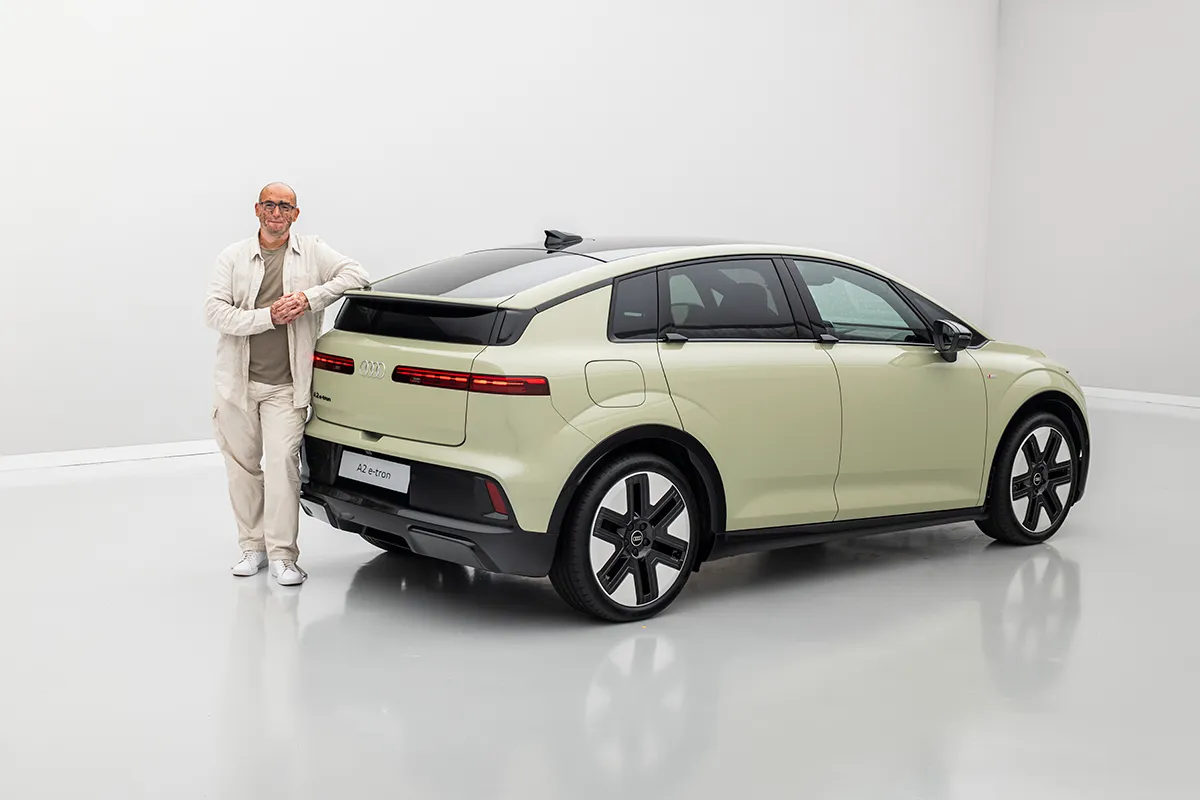
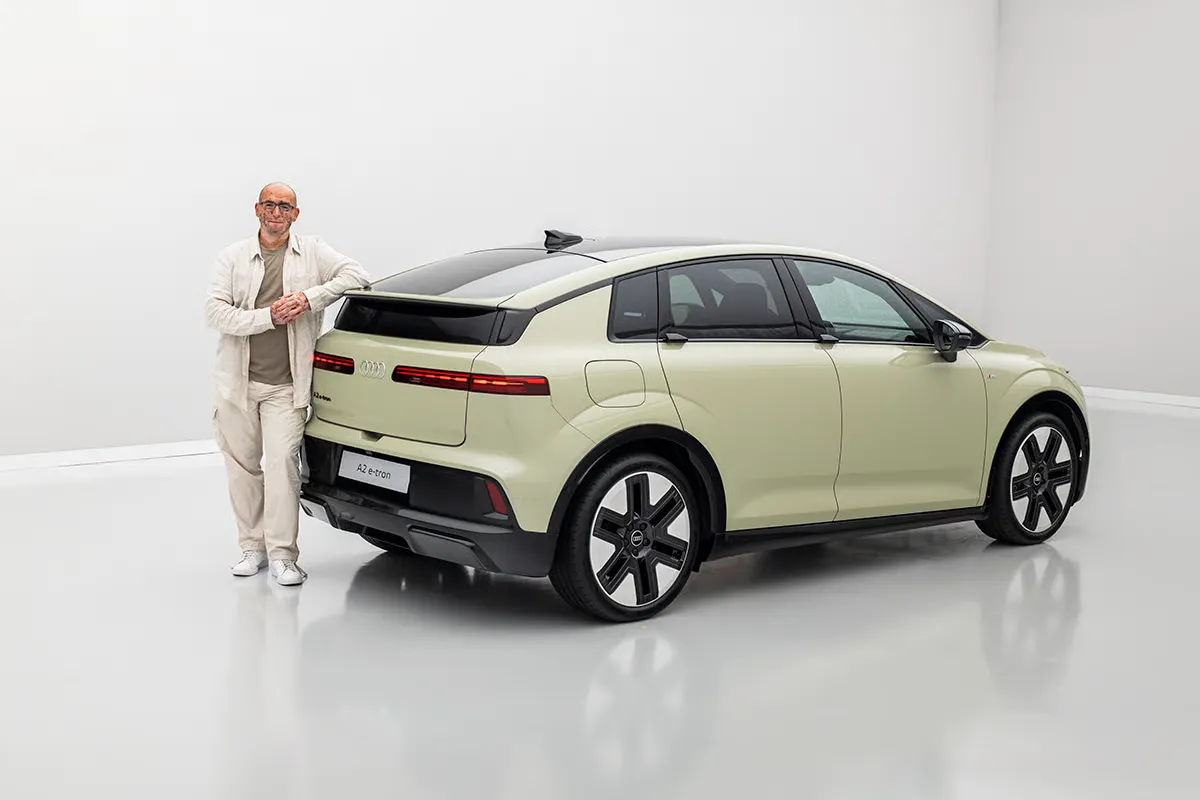
After taking the wheel of a prototype, we got an early look at the new Audi A2, the technical cousin of the Cupra Born.
"You can notice the sloping roof, similar to what was used in the past." At the launch of the final model, Audi still seems embarrassed by its attempt to revive the A2, the urban monospace that appeared in 2000. This once again shows that everyone, from the manufacturer to owners and repairers, preferred to forget this model that was right too early. Nevertheless, it is under this name that the Ringed Brand decided to call its new compact electric vehicle.
Also read
Audi A2 e-tron Test: We’ve Already Driven the Next Urban Electric Monospace
Aerodynamic Performance at the Heart of Attention
Although its silhouette and generous body lines may be confusing, the Audi A2 clearly falls into the category of 100% electric compact cars. At 4.32 meters long, it has dimensions very similar to those of its technical sibling, the Cupra Born. Yet the A2 manages to distinguish itself from other Volkswagen Group compact cars thanks to its distinctive silhouette that beautifully echoes that of the original Audi A2.
Like its predecessor, it placed aerodynamic considerations at the core of the design requirements. Its roof, typical of the brand’s Sportback SUVs, significantly contributes to reducing aerodynamic resistance. However, engineers also added numerous appendages to achieve a Cx value of 0.24. These include active front spoilers, optimized wheel arches, unique aerodynamic wheels, a flat bottom section, or a blade serving as a diffuser. Some contradictory choices can be observed, such as large mirrors—more practical than camera systems—but also very thin touch-sensitive door handles. Yet Audi did not install mechanical backup handles, opting instead for an electric system with a small battery in each door to ensure they can still be opened in case of failure. In short, the
A compact car gains in aerodynamics on one hand, but loses in weight on the other!Thanks to these technical choices, the A2 claims a Cx value of 0.24. This represents an improvement of just over 0.02 points compared to the Cupra Born and Volkswagen ID.3 Neo. Like most manufacturers, Audi does not disclose the SCx value, which is the true indicator of aerodynamic performance. However, based on our various calculations, we estimate it to be around 0.57 m². This is slightly higher than the 0.554 m² SCx of its predecessor in the 3L version (with a Cx of 0.25), which was optimized to set a fuel consumption record at 2.99 l/100 km on diesel.
Also read
Electric car: what is the impact of aerodynamic drag on range?
A practical driving position
Inside, the car remains true to other models of the brand with a straightforward design. The impressive digital dashboard is immediately noticeable, featuring an 11.9-inch instrument cluster and a 12.8-inch infotainment screen. The overall design, display quality, and available functions are also nothing new. It’s simple and efficient. It’s worth noting as well that the system runs on Android and now includes an AI-powered voice command along with a suite of Microsoft apps to enable working from inside the car.
In the center is a semi-central console that leaves space between the two front passengers. It features Fidlock attachments, magnetic hooks that allow for installing various accessories. Above it is a raised surface with two wireless smartphone chargers (25 W Qi 2.2 standard) and a panel providing quicker access to certain controls. These are touch-based, but the Audi A2 includes physical buttons for the most frequently used functions, such as those on the steering wheel or window lifters. However, the door opening button is both touch-based and electric.
At the back, the passenger space is adequate, at least comparable to that found in the Cupra Born or Volkswagen ID.3 Neo. Despite the sloping roofline, the headroom is sufficient even for taller passengers. However, this comes at the cost of the seats being very close to the floor, requiring passengers to lift their knees. The central seat is fully usable, but the passenger will sit elevated and may need to keep their legs close together if three people are traveling.
A “frunk” for the Audi A2
The Audi A2 Cube’s trunk capacity is 396 liters, giving a total of 1,336 liters. It offers about ten additional liters compared to its technical counterparts. In real life, this shouldn’t make much of a difference. The walls are very vertical, and there’s no space behind the wheel wells. Inside, there are 12 V and 220 V outlets for powering various devices, as well as Fidlock attachments with specific accessories like a cable storage bag. The two-part floor hides an additional lower compartment. The height is limited, but it can help adjust the loading height or store flexible items.
Also read
Cupra Born VZ review: an upgrade even in terms of price
On the other hand, the Audi A2 introduces a storage space under the hood. It’s hard to call it a frunk, as it more resembles a compartment with a total volume of 13 liters. This is sufficient to store a charging cable, but that’s about it. The capacity is certainly questionable, but the advantage of having such a space in this MEB-based compact vehicle cannot be denied. Additionally, it is one of the few electric compacts to offer extra storage under the hood.
Up to 649 km of WLTP range
Technically, the Audi A2 uses the well-known technical platform from Volkswagen Group. This compact car features all the engines previously seen under the hoods of the Cupra Born and Volkswagen ID.3 Neo. The entry-level model is powered by a 125 kW (170 hp) unit with a 50 kWh LFP battery. This capacity increases to 58 kWh in the 140 kW (190 hp) version. At the higher end, there are two versions equipped with a 79 kWh NMC battery. The first can deliver up to 170 kW (231 hp), while the second reaches 240 kW (326 hp). In terms of performance, the car offers acceleration times from 0-100 km/h ranging from 5.7 to 8.8 seconds. The curb weight is 1,840 kg for the entry-level model and just over 1,900 kg for the higher-end versions. All versions have a maximum towing capacity of 1,600 kg.
Note that the first three versions are equipped with the new permanent magnet synchronous electric motor codenamed APP350, delivering 350 Nm of torque. This innovative design, optimized for improved efficiency, features a silicon carbide inverter—a cutting-edge component that reduces energy consumption and is commonly found in so-called 800 V electric vehicles. The top-tier model with 326 horsepower uses the APP550 motor, providing 545 Nm of torque.
For charging, the entry-level model promises a peak power of 100 kW, while the higher version reaches 105 kW. The fast charging time (10-80%) is given as 24 and 26 minutes respectively. Although we don’t yet have charging curves, the average net power (depending on net capacity) is 89 and 95 kW. The first model confirms its urban-oriented positioning, even though it’s not afraid to be used on the highway. The second falls within the typical range for 400 V vehicles. The 79 kWh battery charges fastest, achieving 10-80% in 29 minutes with a peak power of 183 kW. Here, the average power rises to 116 kW. It remains among the best 400 V vehicles in this regard. Slow charging is handled by an 11 kW AC charger in all cases, and all versions come equipped with recovery functions.
Inverse voltage for V2L/V2H.Also read
Volkswagen ID.3 Neo review: Has the compact electric car fixed its flaws?
Controlled consumption, but…
The Ingolstadt-based compact car has thus made efficiency the core of its design goals. This strategy paid off, as the top version of the series boasts a WLTP fuel consumption, including charging losses, of 12.8 kWh/100 km. This is only slightly higher than that of the most fuel-efficient models, such as the Tesla Model 3 (12.2 kWh/100 km) or the Mercedes CLA 200 (12.3 kWh/100 km)! However, to achieve this figure, one must opt for the 58 kWh version equipped with the Efficient Package. This specific trim level, a spiritual successor to the Audi A2 3L, includes features like aerodynamic wheels and a lowered sports suspension, while eliminating power-hungry components such as the LED matrix lighting. Yet, for marketing reasons, we won’t have access to it in France.
Thus, this powertrain will match the levels of other models in the range, with fuel consumption ranging from 13.7 to 13.9 kWh. This remains a quite impressive level of efficiency, allowing the entry-level version to achieve up to 423 km of WLTP range. With a 231 hp powertrain and a 79 kWh battery, the range increases to a maximum of 649 km. This represents an improvement of nearly 20 km compared to equivalent Cupra Born and Volkswagen ID.3 Neo models. This is how all the efforts made by the Ringed Brand translate into terms of range.
Technical specifications
A2 e-tron
125 kW (170 hp)
A2 e-tron
140 kW (190 hp)
A2 e-tron
170 kW (231 hp)
A2 e-tron
240 kW (326 hp)
Power (kW)
125
140
170
240
Torque (Nm)
350
545
WLTP fuel consumption (kWh/100 km)
13.7
12.8
13.9
14.2
Max speed (km/h)
160
200
0 to 100 km/h (s)
8.8
7.9
7.0
5.7
Max WLTP range (km)
423
501
649
630
Brute/net battery capacity (kWh)
52 / 50
61 / 58
84 / 79
DC charging power (kW)
100
105
183
DC charging from 10% to 80% (min)
24
26
29
According to official data, the Audi A2 leads the category. Among premium cars, the Volvo EX30 claims a minimum fuel consumption of 17.0 kWh/100 km, with a WLTP range of up to 475 km in the best cases. The same is true among mass-market manufacturers, where there are more competitors. A Smart #3 has a fuel consumption of 16.3 kWh/100 km (455 km range), while the Kia EV3 81 kWh model has a consumption of 14.9 kWh/100 km (605 km range).
On the other hand, the Nissan Leaf can compete with the Audi A2 in terms of efficiency. Without highlighting any advanced aerodynamic research, this Japanese vehicle claims a minimum Cx value of 0.25 and an SCx value of 0.60 m² based on our estimates. It also achieves a WLTP fuel consumption of 13.8 kWh/100 km, with a WLTP range of 445 or 622 km depending on whether it has a 52 kWh or 75 kWh battery.
The Audi A2 is back, at a high price!
The decision to bring the Audi A2 back might seem surprising from this German brand. On one hand, its name only resonates with a few enthusiasts and those interested in unique cars. On the other hand, those who had the chance to experience the original model preferred to forget about it. Additionally, this electric compact car bearing the Rings seems to arrive a bit late, at a time when the MEB platform is nearing its end, although it is now more mature than ever thanks to its new drive trains.
The Audi A2 takes the form of an original compact car that doesn’t unnecessarily cater to the SUV trend, successfully carrying forward the formula of its predecessor. This involves maximizing efficiency while avoiding costly solutions that would be detrimental to customers. But does this mean lower prices? Not really. The starting price will be set at 38,600 €, with the 58 kWh version costing from 42,900 €. At the top end, prices rise to 46,900 € or 52,000 € respectively. And that’s without considering various options, a practice common among German brands. Based on a straightforward comparison of listed prices (we don’t yet have the list of trims and equipment), the Audi A2 costs an average of 2,300 € more than a Volkswagen ID.3 Neo and 6,200 € more than a Cupra Born!
The Audi A2 will make its first public debut at the Paris Motor Show in October. Orders will be accepted in the fall, with the first deliveries expected at the beginning of December.