
Audi A2 e-tron: New electric drive reduces consumption to 12.8 kWh
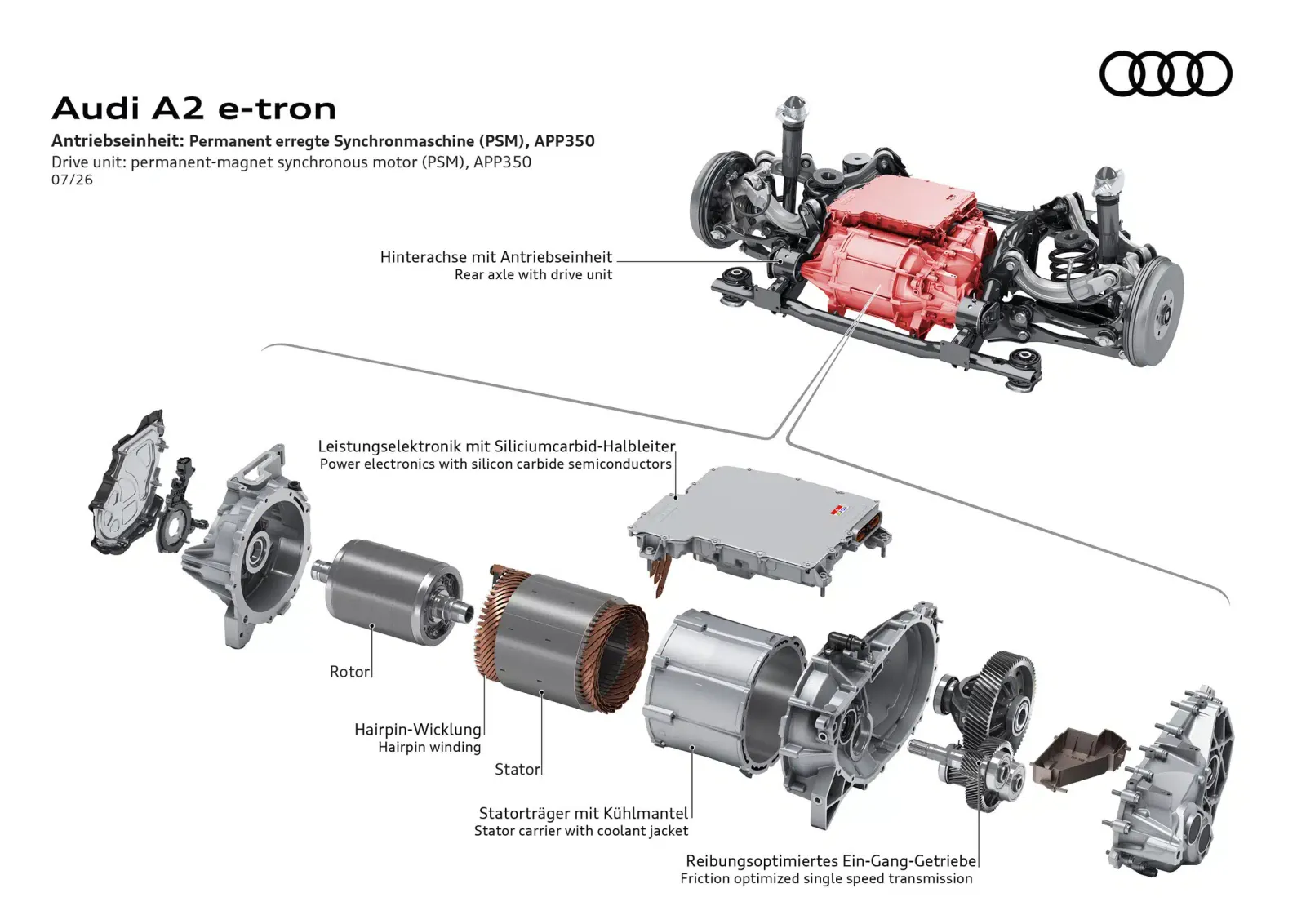
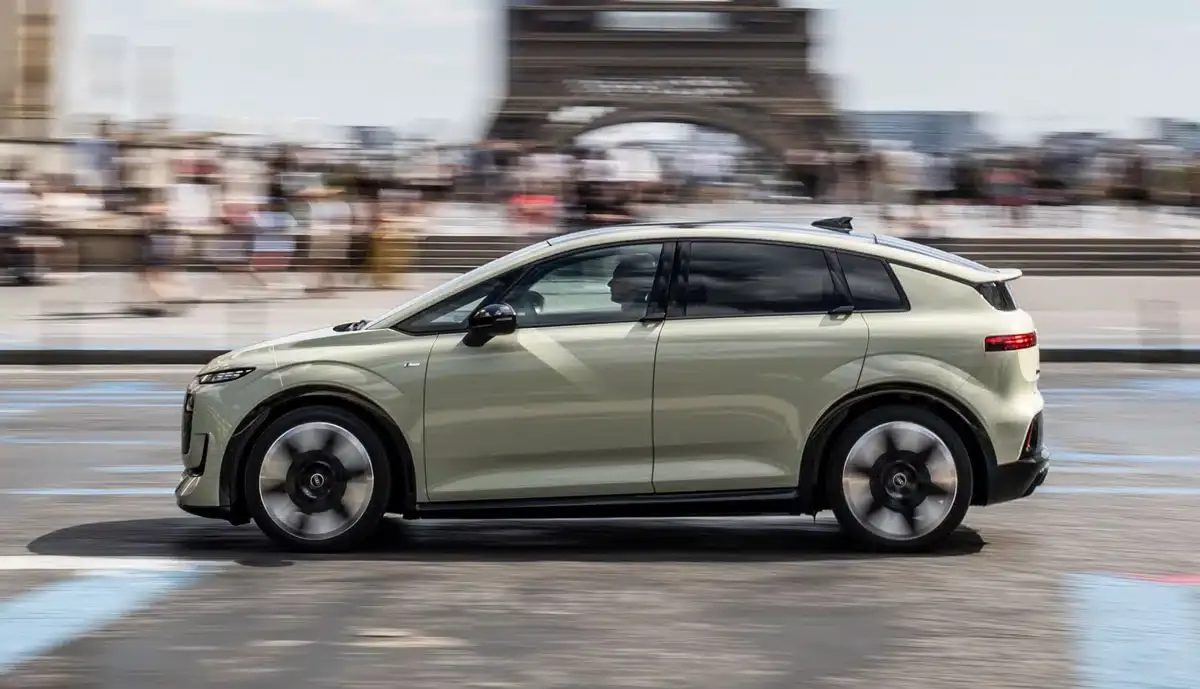
Image: Audi
Audi introduces the new A2 e-tron, an electric compact vehicle designed from the ground up to minimize energy consumption, according to the developers. The manufacturer calls this electric car the most efficient Audi ever produced. Besides aerodynamics and battery technology, advancements in power electronics, the electric motor, and the transmission also contribute to its efficiency, according to the company.
The A2 e-tron, in the version with 140 kW/190 hp of power and an optional efficiency package, achieves a WLTP fuel consumption of 12.8 kWh per 100 kilometers. At the rear, a permanently excited synchronous motor APP350 operating at 400 volts, sourced from the Volkswagen Group, provides up to 350 Nm of torque. Developed for the Modular Electric Architecture (MEB), this drive system has been optimized for higher efficiency, greater range, and improved driving comfort.
A key innovation relates to the pulse converter, which converts the direct current from the high-voltage battery into alternating current for the electric motor. Instead of the silicon bipolar transistors previously used, carbon silicon-based MOSFET power semiconductors are now employed, which reduce switching losses and enable efficiency levels of over 97 percent. An adaptive software control adjusts the switching frequency to the specific operating point, thereby reducing energy losses, especially in urban driving as well as during long-distance trips at moderate speeds and loads. The improved energy utilization also allows full driving power to be delivered even when the battery charge level is low.
The electric motor has been redesigned compared to its predecessor, the APP310. The thickness of the rotor blades has been reduced by more than 30 percent, thereby lowering the iron losses that occur during demagnetization. Additionally, the rotor segments are arranged offset rather than in a linear pattern to prevent first-order natural vibrations and almost completely eliminate dominant tonal noise components, especially during startup. These measures aim to improve the smooth operation of the drive system and reduce noise levels inside the cabin.
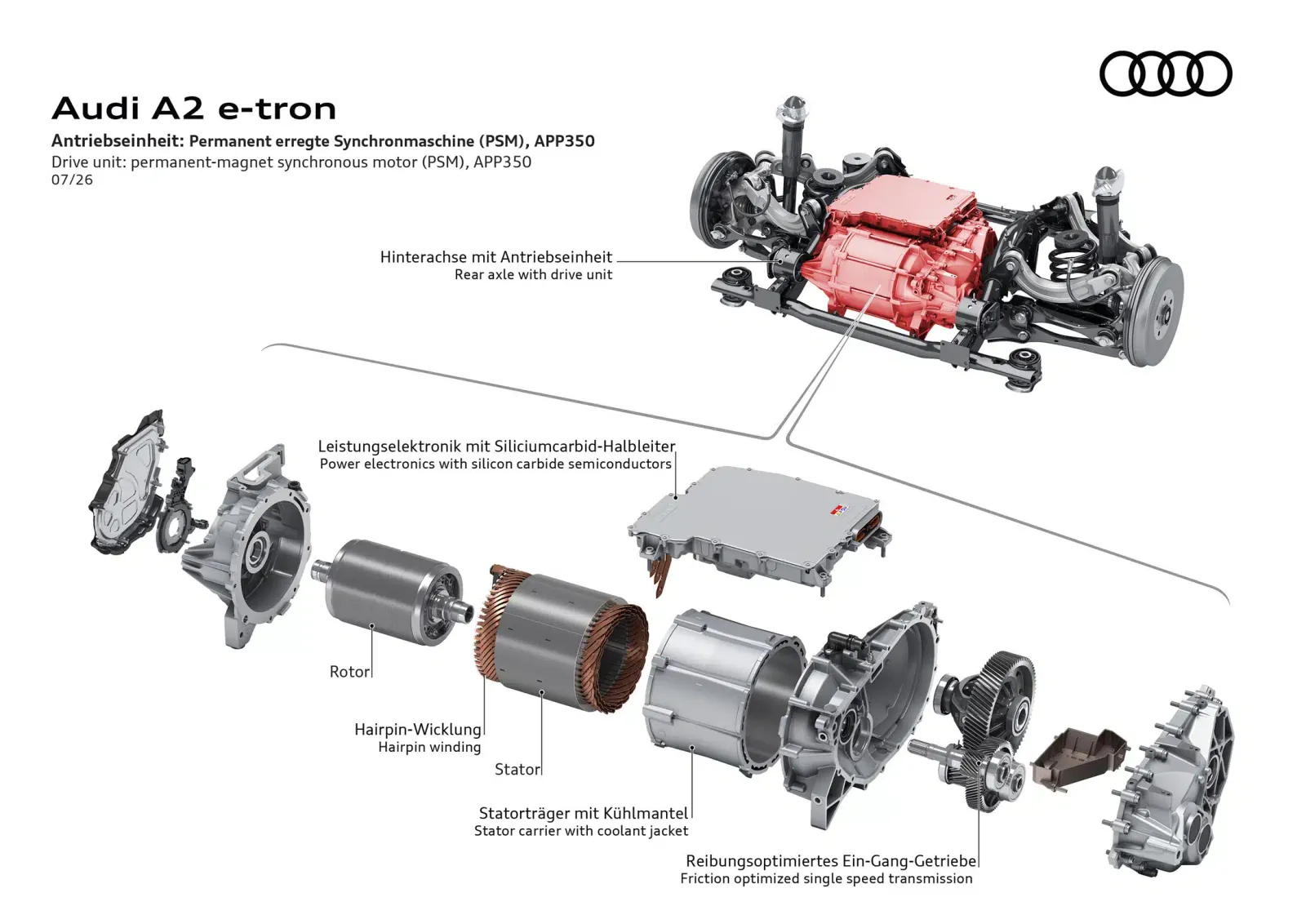
Further efficiency gains, according to the developers, come from changes to the stator windings. Audi replaces the existing star connection with a delta connection while reducing the number of parallel winding branches. This increases the motor’s efficiency, especially during everyday driving under partial load in urban areas and on highways. Torque and power output remain unchanged with this improvement.
The compact and lightweight transmission of the APP350, according to the engineers, is also designed to minimize energy losses. The 125 and 140 kW (170 and 190 hp) power versions use a gear ratio of 10.21:1, while the 170 kW version (231 hp) features a gear ratio of 11.53:1. These specifically tuned gear ratios shift the engine speeds to more favorable operating ranges, thereby reducing consumption during typical driving conditions. Fine surface finishing of the gear teeth further reduces friction losses within the transmission.
Audi also uses a specially developed low-viscosity gear oil for smoother operation. Combined with an optimized oil delivery system, this helps significantly reduce slippage losses in the wheel sets. The pulse inverter further enhances acoustic comfort by intentionally adding high-frequency harmonic components to the motor current, thereby compensating for distracting noises depending on operating conditions.
Have you found any errors? Please let us know
by email
about them. Thank you!
Also interesting
About the author
Thomas Langenbucher is an expert in electromobility with experience in the automotive and financial industries. Since 2011, he has been covering electric vehicles, sustainable technologies, and mobility solutions for ecomento.de. Learn more.
Reader interactions