
Atoms suffer badly from drought in Europe

Energy Week: Nuclear plants in Europe face water shortages; Rybnik Coal Plant will operate until 2028; URE on gas market, 75% of wholesale supply to Orlen; NFOŚiGW to subsidize car chargers; Westinghouse going public; Tauron has over 1 billion euros in loans for wind power.
Table of Contents
Record-low water levels on the Danube have shut down nuclear power plants in Hungary and Romania. Two units at Romania’s Cernavodă plant have already been shut down.
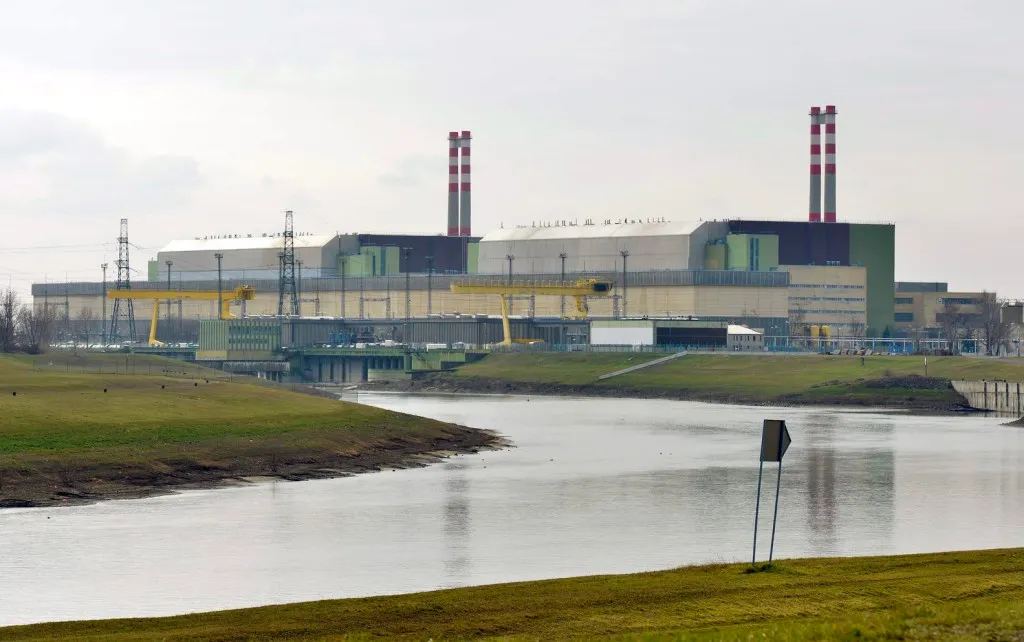
One of the four units at Hungary’s Paks plant has also been halted. Another unit had to reduce its capacity by half, and Hungary’s government does not rule out the entire plant shutting down in the coming days due to a lack of cooling water.
Hungary’s Prime Minister Peter Magyar warned that the country could face an energy shortage in the coming week, with demand rising further due to heatwaves.
Magyar urged citizens to conserve electricity, especially during the evening hours when the power grid is under the most strain as solar power stops generating. He warned that if other measures fail, “rotating blackouts” might be necessary.
For now, Hungary relies heavily on electricity imports from Austria and Slovakia. Romania also imports a significant amount, particularly outside solar power generation hours, but no major problems have been reported there so far.
For some time now, France has also been reducing the capacity of nuclear power plants located along its rivers, but there is no decline in total nuclear power production in the country; instead, plants cooled by seawater are producing more electricity.
Drought in France this year has reached catastrophic levels, with official data showing that at least 16% of rivers and streams have completely dried up.
A shortage of cooling water in rivers is also a problem in Poland, with the largest issues affecting plants in Połaniec and Kozienice. Fortunately, Poland’s nuclear power plant, once built, will be cooled by water from the Baltic Sea.
The Rybnik coal power plant will operate a little longer
PGE GiEK has decided to extend the operation of four coal-fired units at the Rybnik Power Plant. According to the previous schedule, the 225 MW units built in the 1970s were supposed to be shut down starting July of this year, with the last ones ceasing operation by mid-2027. PGE’s original decision in 2020 even set the deadline for the end of 2023. The ongoing reason cited was their unprofitability and lack of prospects for modernization.
Under the latest decision, one unit is already being shut down, another will be shut down next year, but the last two will continue operating until mid-2028. All units will rely on support from the power market until they cease operation. Additionally, the power plant will continue supplying heat to external customers until March 31, 2029.
The coal-fired units in Rybnik will be replaced by two gas-fired units with capacities of 882 MW and 600 MW. The first unit is set to start operating by mid-next year, while the second will begin operation in 2030.
Despite the extension of coal use in Rybnik, union members are dissatisfied with the decision, arguing that according to the so-called social contract, coal was supposed to be burned in Rybnik until 2030.
Almost 1.3 billion zł from NFOŚiGW for charger connections
The National Fund for Environmental Protection and Water Management will subsidize four major distribution network operators with 1.26 billion zł. The funding from the Modernization Fund is intended for building high-power charger connections for electric vehicles, including trucks.
In total, by the end of 2029, this will enable the construction or modernization of 147 connections with a target capacity of 493 MW in 13 voivodeships. PGE Dystrybucja, Tauron Dystrybucja, Enea Operator, and Energa-Operator have signed agreements with the Fund.
URE on the gas market in 2025: 3/4 of wholesale sales to Orlen
Orlen Group companies sold 142.2 TWh of gas in the wholesale market in 2025, while other sellers sold 49.7 TWh — according to the URE President’s report on the gas market in 2025. This means Orlen was responsible for about 75% of wholesale gas sales in Poland.
Compared to 2024, the number of entities selling gas to end-users increased from 82 to 85. According to URE data, the five largest sellers together hold 90.64% of the market share, with this figure reaching 96.69% in the residential segment and 88.28% in the segment of other users.
In terms of volume, almost 70% of the gas was sold through free-market offers. However, in terms of the number of users, over 97% rely on regulated tariffs. 28% of the sold gas went to households, 22% to energy production, including heat, and 40% to industry.
Interestingly, URE once again did not disclose Orlen’s share in sales to end consumers, stating only that more than 5% of this segment is held by 2 unnamed entities.
In the President of URE’s performance report for 2025 published in April, the regulator omitted for the first time the share of the dominant entity in gas sales to end consumers. This figure appeared in all previous annual reports, reaching 85% in 2024.
URE’s data also shows that following regulatory changes last year, the volume of mandatory gas reserves held abroad increased significantly. While it was 83 GWh (7.9 million cubic meters) as of September 30, 2025, accounting for 0.6% of the total volume, it rose to 1545 GWh (146 million cubic meters) from October 1, 2025, to September 30, 2026, representing over 10% of total reserves.
Westinghouse Goes Public
The American nuclear reactor manufacturer AP 1000 announced that it has filed a prospectus with the U.S. Securities and Exchange Commission (SEC). No details of the prospectus were disclosed, as Westinghouse utilized a procedure allowing for confidentiality at this stage of the application.
According to industry media, the American company and its owner, the Canadian fund Brookfield, aim to capitalize on the positive trends in the market: a large number of letters of intent for building new nuclear power plants to supply data centers, along with $80 billion in federal funding that could be allocated for constructing new nuclear reactors in the U.S. The issue is that these letters of intent and announced plans have not yet translated into actual investments.
Tauron Secures Large Loan for Miejska Górka Wind Farm
Tauron obtained a 1.12 billion zł loan from the European Investment Bank to complete the Miejska Górka wind farm in Greater Poland. According to the company, the interest rate is “attractive,” with a repayment period of 18 years. Once completed, Miejska Górka will be the second largest wind farm in Poland. The 53 turbines will have a total capacity of 190 MW. Construction is nearly finished, with all turbines already installed.