
This is how money is made from fast charging electric cars.
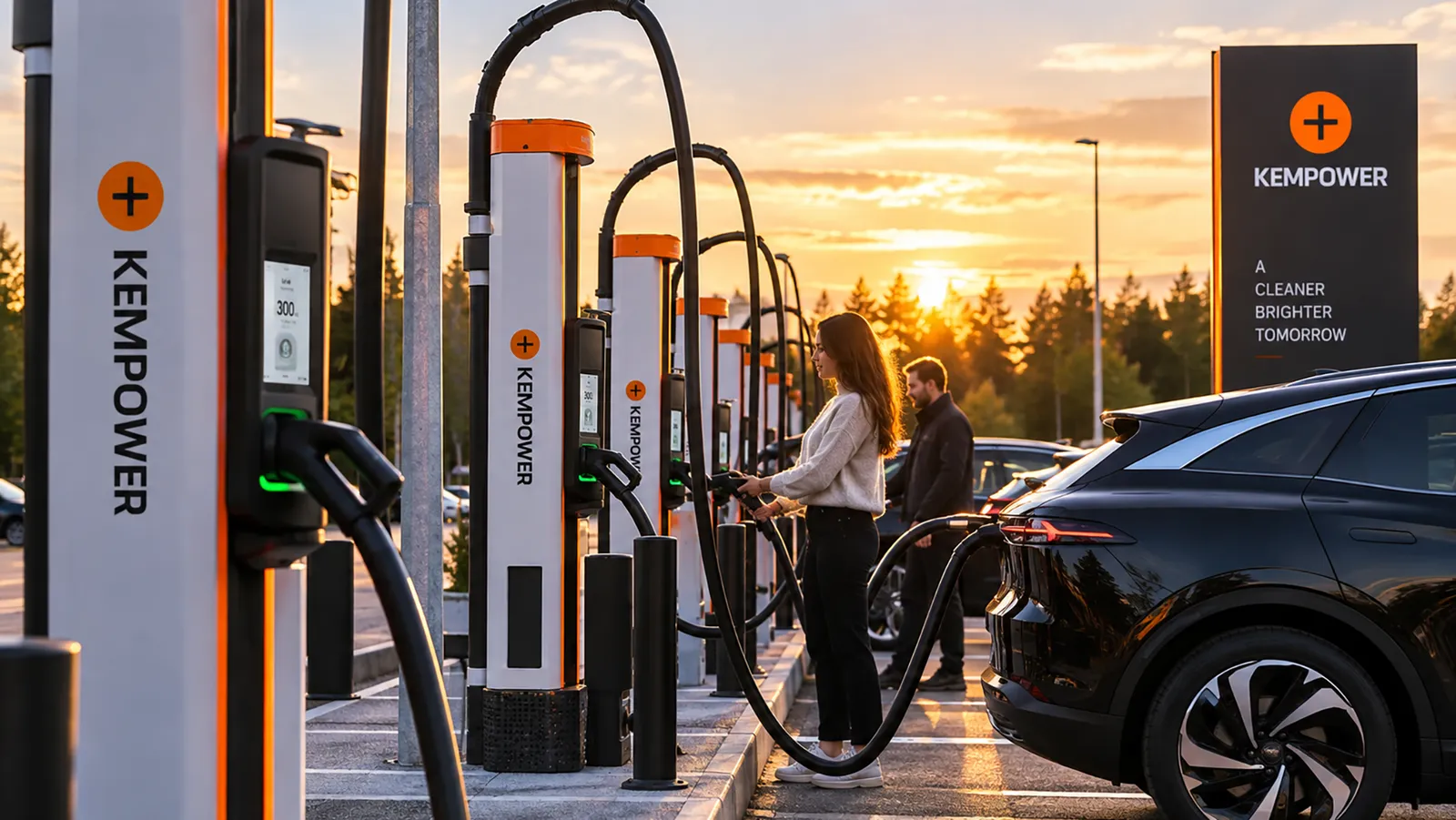
The maximum power of a charger is just one part of the equation. For operators, it matters how many cars they can serve, how much energy they sell, and how effectively they utilize the power at their disposal.
When a company announces a new fast charging station, one of the figures that catches attention most is the power of its chargers: 150, 200, 300, 350, or even 400 kW.
At first glance, it seems simple. The more kW, the better the station.
But to understand how the public charging business actually works, one needs to look beyond that figure. A station doesn’t make money just because it has high kilowatt ratings on its chargers. It needs cars to arrive, be able to connect, stay charged, and most importantly, consume energy.
And that brings up an issue that significantly changes the way we view these installations: it may be more advantageous to have many points that intelligently share a certain power level rather than installing few chargers capable of delivering extremely high kW ratings.
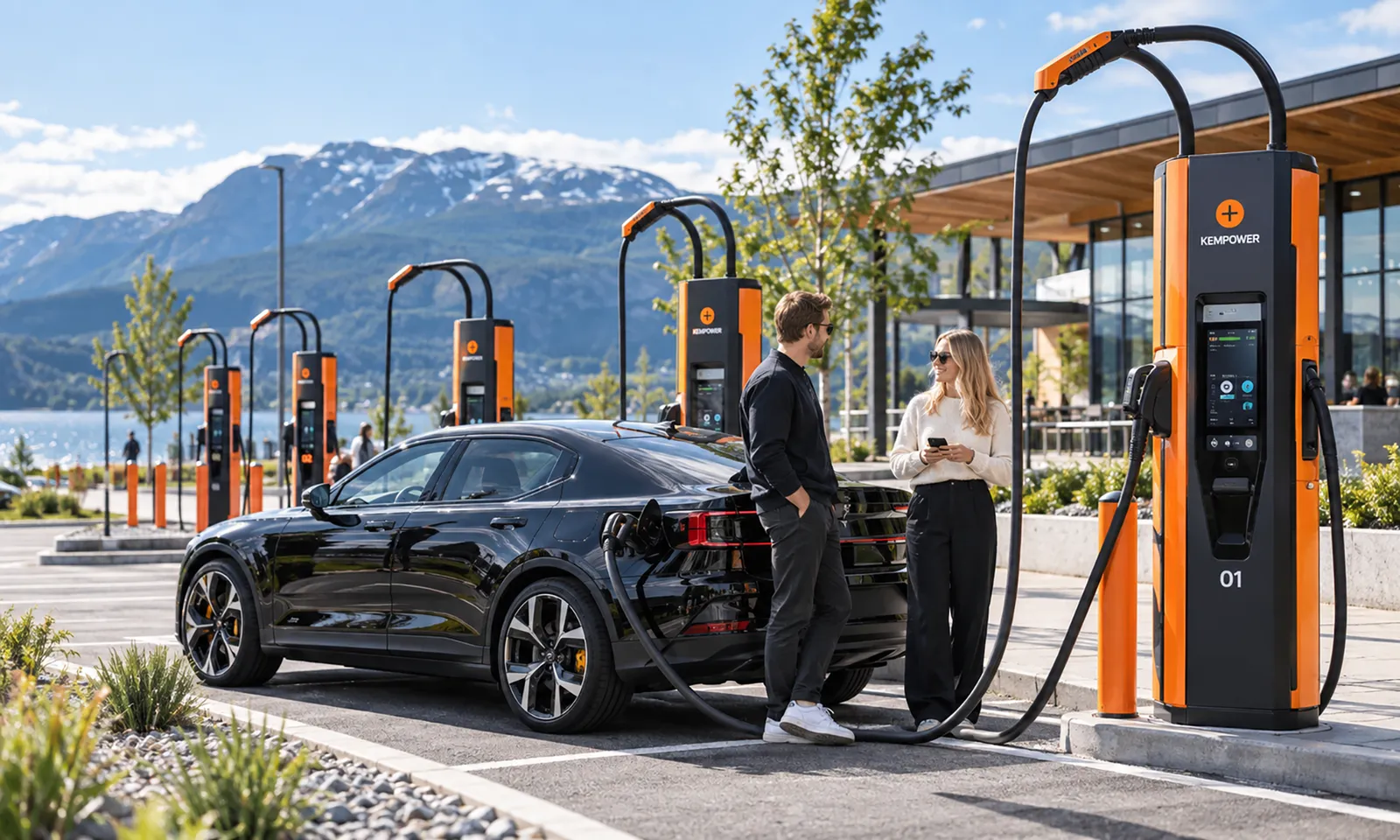
This is exactly what a recent analysis by Kempower of public stations connected to its ChargEye platform in North America has shown. According to their data, the number of connectors correlates with station usage at roughly three times the rate of total installed power.
To understand why this happens, we first need to distinguish between two fundamental concepts.
kW indicates speed; kWh is the energy that the station ultimately sells.
A 300 kW charger can, under certain conditions, supply power to a car at a maximum capacity of 300 kilowatts.
But kW measures power, that is, the speed at which that energy can be transferred.
KWh, on the other hand, measures the amount of energy delivered.
To put it simply, kW is similar to the maximum flow rate that can come out of a faucet, while kWh represents the amount of water that has passed through it.
For a company operating a charging station, this difference is crucial.
Your business relies heavily on the energy you are able to supply and sell to vehicles that pass through your facility. Additionally, you must account for the costs of chargers, infrastructure construction, transformers, power electronics, electrical connections, maintenance, land rental, and other expenses associated with the station.
Therefore, having a facility capable of providing high power but using it only a few hours per day can be a poor business decision.
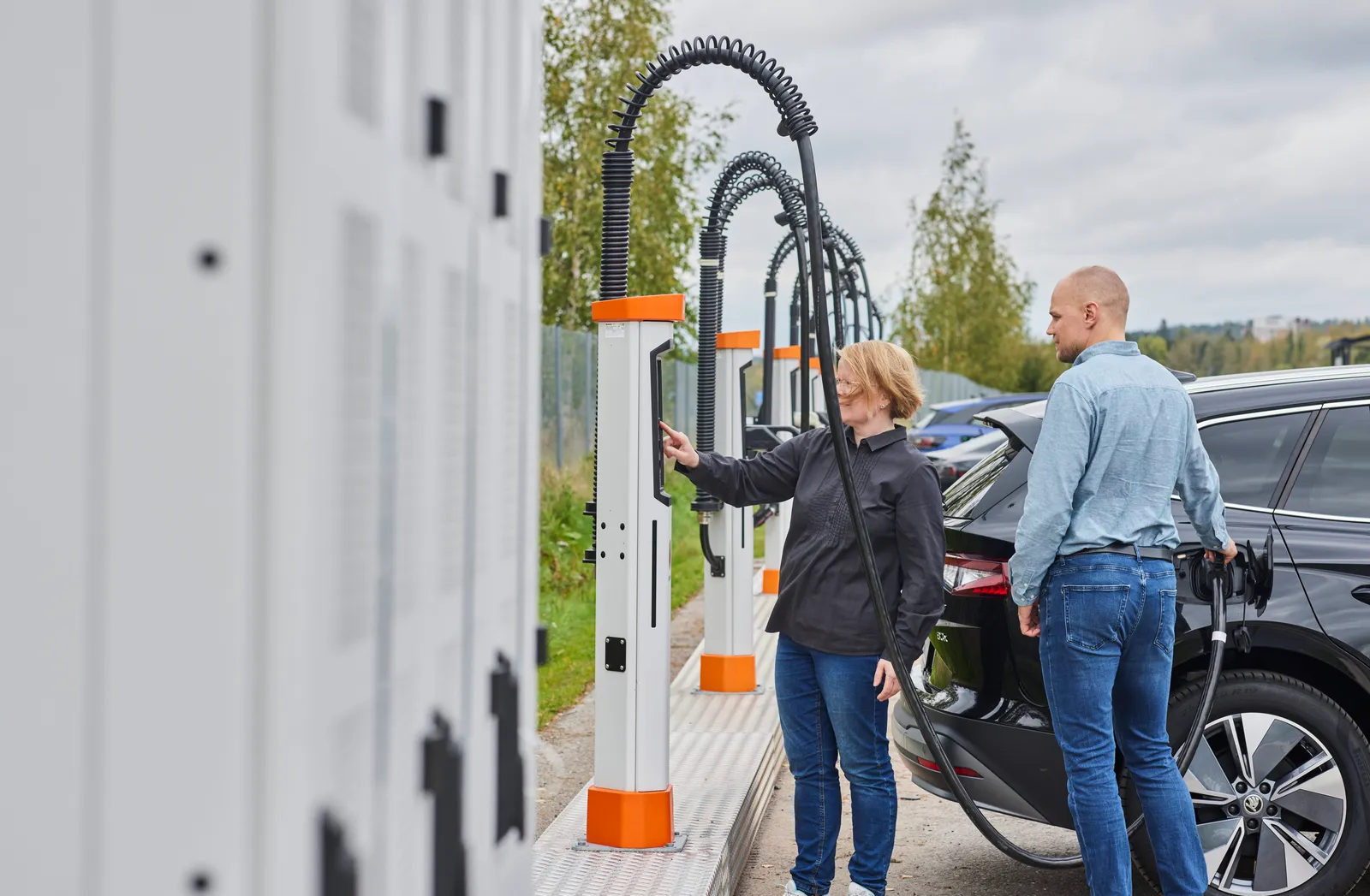
The economic analyses by the National Renewable Energy Laboratory (NREL), one of the leading research centers under the U.S. Department of Energy focused on renewable energy, energy efficiency, and sustainable transportation, show that utilization is a key factor in the economics of a fast-charging infrastructure. The less a high-capacity facility is used, the harder it is to spread its costs across the kWh it ultimately supplies.
Let’s imagine a station with 600 kW
This is where an example helps clarify things best.
Suppose an operator has a facility capable of providing a total of 600 kW of power.
Simplifying greatly, it could be designed in two ways.
The first would be to install two units, each capable of providing up to 300 kW.
If two cars arrive that can draw that power level, theoretically they could share the 600 kW available.
But only two vehicles can charge simultaneously.
Now let’s imagine another possibility.
The same operator maintains that total of 600 kW, but installs six charging stations and uses a system capable of dynamically distributing the power among them.
There is no longer necessarily 100 kW reserved permanently for each car.
The system monitors what each vehicle needs at any given moment and distributes the available 600 kW among all of them.
For example, one car might receive 180 kW, another 140 kW, another 100 kW, another 80 kW, with the remaining two using lower power levels.
The specific figures are merely illustrative, but they help explain the principle: the power belongs to the station, and the system decides how to distribute it among the connected vehicles.
If there are only two vehicles and both can handle high power, they can receive a significant portion of those 600 kW.
If more vehicles arrive, the power is distributed among them.
The key point is that vehicles don’t need their maximum power all the time.
Here comes the second fundamental element.
A vehicle that claims a maximum charging power of 250 kW doesn’t necessarily consume 250 kW from the moment it connects until charging is complete.
In fact, it usually doesn’t.
The battery can reach that maximum power during a certain part of the charging session, but then it starts to reduce it.
This is what we call the power curve.
A vehicle may start by receiving 220 kW, then drop to 180 kW, followed by 130 kW, and end up using much lower power levels as the battery charge increases.
Temperature, the initial battery level, its cooling system, and the vehicle’s electrical architecture also affect this curve.
This creates an interesting situation.
If a charging station permanently reserves 300 kW for a car that is only requesting 100 kW at that time, some of that available capacity may go unused.
With a distributed power architecture, that capacity can be allocated to another car.
And when that second vehicle begins to reduce its demand, that power can be reallocated to a third one.
The charger is no longer an island
This is one of the fundamental differences between a setup made up of independent chargers and one based on a shared power architecture.
In the first case, each charger can have its own power electronics and a specific capacity.
In the second case, multiple charging points can be powered by a common infrastructure that distributes available power according to each vehicle’s needs.
Kempower, for example, currently sells systems where a 600 kW power unit can supply up to 12 charging points, dynamically allocating capacity among them.
This does not mean that twelve vehicles can each receive 600 kW simultaneously.
It means exactly the opposite: there is a certain amount of power available that is intelligently shared among multiple vehicles.
From the operator’s perspective, this allows them to make better use of the capacity already installed for a longer period.
More connected cars can mean more kWh sold
Let’s go back to our example.
A station with two 300 kW points can serve at most two cars simultaneously.
If four vehicles arrive, two will have to wait, even though the cars that are charging aren’t using all 300 kW that the chargers can provide at once.
In a setup with six points and 600 kW shared, all four vehicles could connect.
Perhaps none receive 300 kW continuously, but the station could be supplying a much larger portion of its total 600 kW.
And for business purposes, that is very important.
More connected vehicles can mean more charging sessions, longer usage of the infrastructure, and more kWh supplied throughout the day.
This helps explain the results published by Kempower. At the American stations studied by the company, those using distributed charging recorded an average usage that was 83% higher than facilities with fixed power configurations.
This is precisely the company’s business argument: enabling the same electrical infrastructure to serve more cars simultaneously and supply more energy.
It might also be better for the driver, even though they don’t always charge at maximum possible power.
From the user’s perspective, the situation looks different.
Imagine we are on a trip and can choose between two charging stations.
The first one has two chargers at 300 kW each.
The second one has six ports that share 600 kW dynamically.
If we arrive at the first station and both chargers are in use, having 300 kW available is of no use to us. We will have to wait.
At the second station, we have much better chances of finding an available port and starting charging immediately.
It’s possible that our car receives 150 or 180 kW instead of the 250 kW it could achieve under ideal conditions.
But starting to charge immediately at 150 kW might end our trip sooner than waiting 15 minutes to access a 300 kW charger.
Therefore, for the driver, maximum power alone doesn’t explain how good a charging station is.
We also need to consider how many stations exist, how many are operational, how many are occupied, and what power the station can actually provide when multiple vehicles charge simultaneously.
But that doesn’t mean power is no longer important
It would be a mistake to take the argument to the opposite extreme.
The solution isn’t simply to install dozens of connectors and distribute insufficient power among them.
If a station has 600 kW available and many vehicles capable of handling high power arrive simultaneously, that capacity must be shared, which may reduce the individual charging speed.
In addition, newer electric cars are rapidly improving their charging performance.
800-volt architectures and new generations of batteries allow for increasingly high power levels throughout a significant portion of the charging session.
In high-demand corridors, especially for long-distance trips, having sufficient total power will remain essential.
Therefore, the issue should not be framed as a choice between power and the number of ports.
The key is to find a balance between these two factors.
A charging station increasingly resembles a gas station
There is also a fundamental difference compared to traditional refueling.
When a car enters a gas station, the pump supplies fuel at a relatively constant and predictable rate.
In electric charging, each car behaves differently.
One might request 250 kW.
The one next to it only 80 kW.
Five minutes later, the first might have reduced its request to 150 kW while a third vehicle arrives ready to receive over 200 kW.
The station must continuously manage these demands while trying to maximize the connection capacity available.
This makes energy management and software an increasingly important part of a fast charging station.
It’s not simply about installing poles capable of delivering a certain level of power.
It’s about deciding how to distribute limited electrical capacity among numerous cars whose power demands keep changing.
And that’s where the real value lies
Kempower’s announcement makes much more sense from this perspective.
The company isn’t saying that a 100 kW charger is better than a 350 kW one, nor that cars should charge more slowly.
What it argues is that, from an operator’s point of view, having more vehicles connected and intelligently distributing the available power can help make better use of a very costly investment.
And that can translate into more energy supplied, more charging sessions, and a faster return on investment.
It should also be remembered that Kempower has a clear commercial interest in this conclusion.
The company sells distributed charging systems, and the analysis comes from American stations connected to its own ChargEye platform. Its results show a correlation rather than proving that installing more connectors automatically leads to higher usage.
A station with eight ports may record higher usage simply because it is located in an area with much greater demand than one with two ports.
Therefore, the data should not be interpreted as a universal solution.
They do, however, raise an issue that will become increasingly important as the fleet of electric vehicles grows.
The best station is not necessarily the one with the highest kW rating.
So far we have learned to compare fast charging mainly by looking at one figure:
150 kW.
250 kW.
350 kW.
400 kW.
But a charging station is much more complex than that.
To determine if it is well designed, one would also need to know its total available power, the number of ports, how that power is distributed, what happens when all ports are in use, its actual availability, and how much energy it can supply throughout the day.
For the operator, these factors determine how much they can benefit from their investment.
For the user, they can determine something even simpler: whether they can arrive, plug in, and continue their journey or if they have to wait for another car to finish charging.
And that explains why a station with six or eight properly sized outlets can, under certain conditions, be more useful and also more profitable than one with only two chargers capable of showing an impressive maximum power rating.