
This is the inside of BYD’s new hybrid sedan with a 2,000 km range, which has sold 387,315 units in just one year.
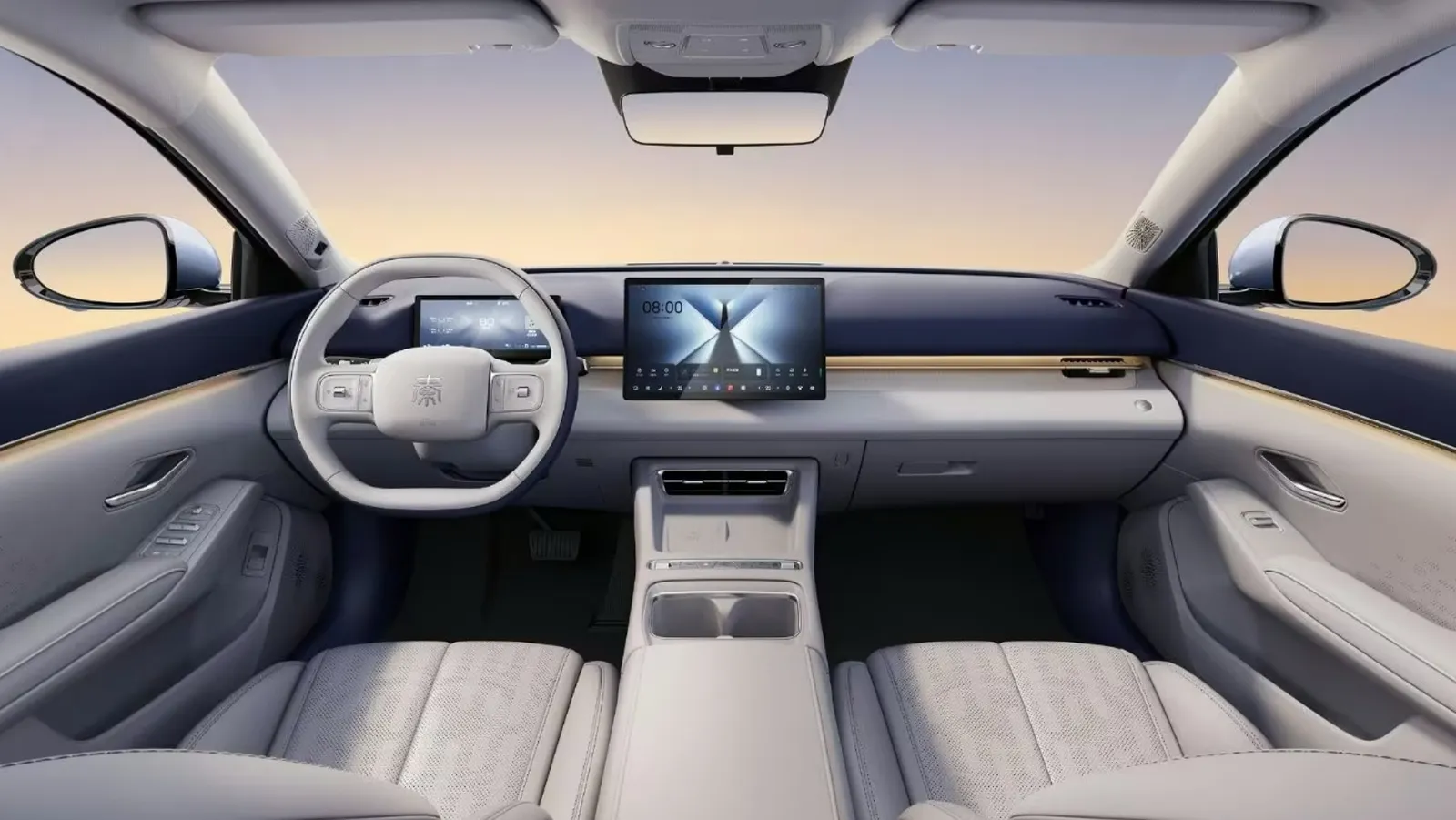
A two-spoke steering wheel, slightly concealed air vents, and a floating central screen above the dashboard. This is the interior of the third-generation BYD Qin Plus, the most affordable sedan in the Qin series and one of the brand’s best-selling vehicles in China. BYD has just unveiled it for the first time. Lu Tian, general manager of BYD’s Dynasty series, says the interior design reflects feedback from customers themselves.
BYD is revealing the car in stages. On October 16, it hinted at its expanded size both outside and inside; on the 21st, it showed the exterior, and now it’s time for the interior, though there are still no prices or release date announced. This refresh comes at a critical moment, as sales of the Qin series have dropped by 54.71% in the first nine months of the year, so the brand needs this third-generation Qin Plus DM-i to succeed.
Softer, more practical, and with more light
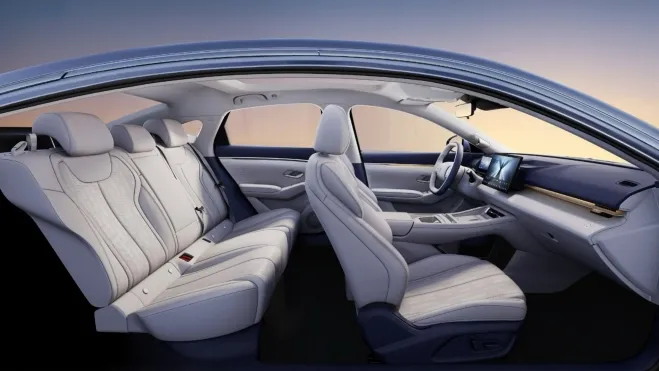
The new Qin Plus features the latest design language from the Dynasty series inside, with extremely simplified lines. The two-spoke multifunction steering wheel, semi-hidden air vents, and soft ambient lighting set the tone, while the model shown comes in a blue and white two-tone color scheme. In front of the central armrest is a wireless charging pad for phones.
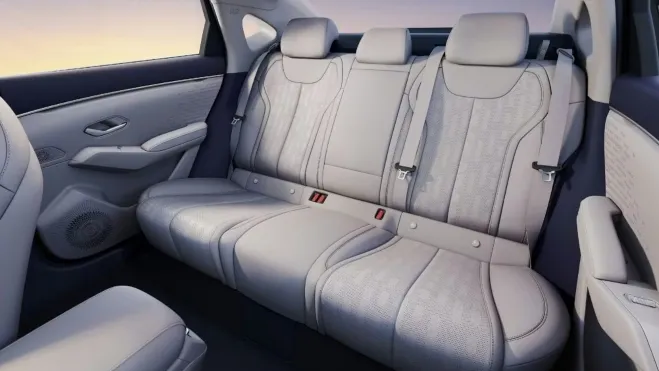
The most interesting changes, however, are those made to the interior. BYD claims it has added larger areas of soft materials, more compartments for storing items, a bigger panoramic roof, and more comfortable seats. According to Tian himself, the overall experience exceeds what is expected for its class.
A sedan that approaches the size of larger models
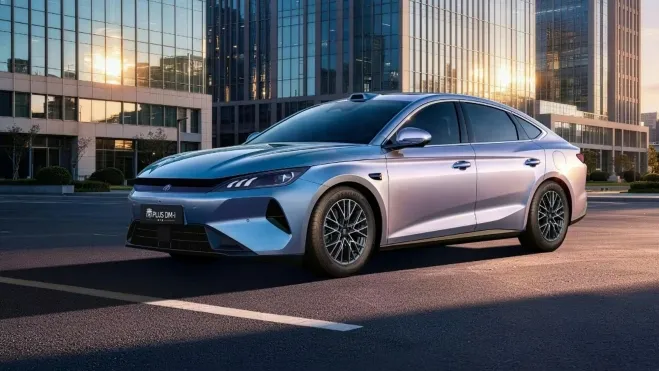
Exteriorly, the front end stretches horizontally, the roof slopes backward in a fastback style, and the rear section becomes wider. The back features side-mounted headlights shaped like Chinese knots, and a new color option called Island Blue is available. This lighting signature is already common in the brand’s lineup.
The size increase is significant. It measures 4,840 millimeters in length and 1,900 millimeters in width, with a wheelbase of 2,800 millimeters, meaning it is 75 millimeters longer, 63 millimeters wider, and 82 millimeters more between axles than the current model. With these dimensions, it moves from a mid-size sedan to approaching the size of a full-size sedan, the D segment in Europe, with the rear seats likely to benefit the most.
Plug-in hybrid and electric versions, with familiar mechanics
The DM-i version retains the formula of the successful DM-i hybrid technology. It combines a 1.5-liter, 101-horsepower atmospheric gasoline engine with an electric motor producing 163 horsepower, powered by lithium iron phosphate (LFP) batteries of 16.227 kWh or 24.337 kWh capacity. These batteries give it an electric range of 107 or 160 kilometers under China’s CLTC cycle. Its combined range (electric + combustion) is expected to exceed 2,000 kilometers, though no official figures are available yet.
The all-electric version is already listed in the certification documents from China’s Ministry of Industry and Information Technology (MIIT). Its engine delivers 136 horsepower and also uses an LFP battery, with a top speed of 170 kilometers per hour. BYD has not yet disclosed the battery capacity or range.
A Qin lineup that needs a boost
The Qin Plus is now the entry point to the Qin lineup, with electric and DM-i versions priced between 79,800 and 131,800 yuan, or between 10,370 and 17,130 euros. Above it are the BYD Qin L and the BYD Qin Max, launched in August, both offering electric and plug-in hybrid options. The new model faces a challenging road ahead. In 2025, the Qin Plus sold 387,315 units, over 30,000 per month, but in September sales dropped to 10,652 units. The entire Qin lineup sold 23,472 cars that month, 65.27% less than a year earlier, though 7.54% more than in August. From January to September, cumulative sales totaled 207,589 units, a 54.71% decrease.