
800-volt architecture and nearly 700 km of range: details on the new Renault Trafic electric vehicle
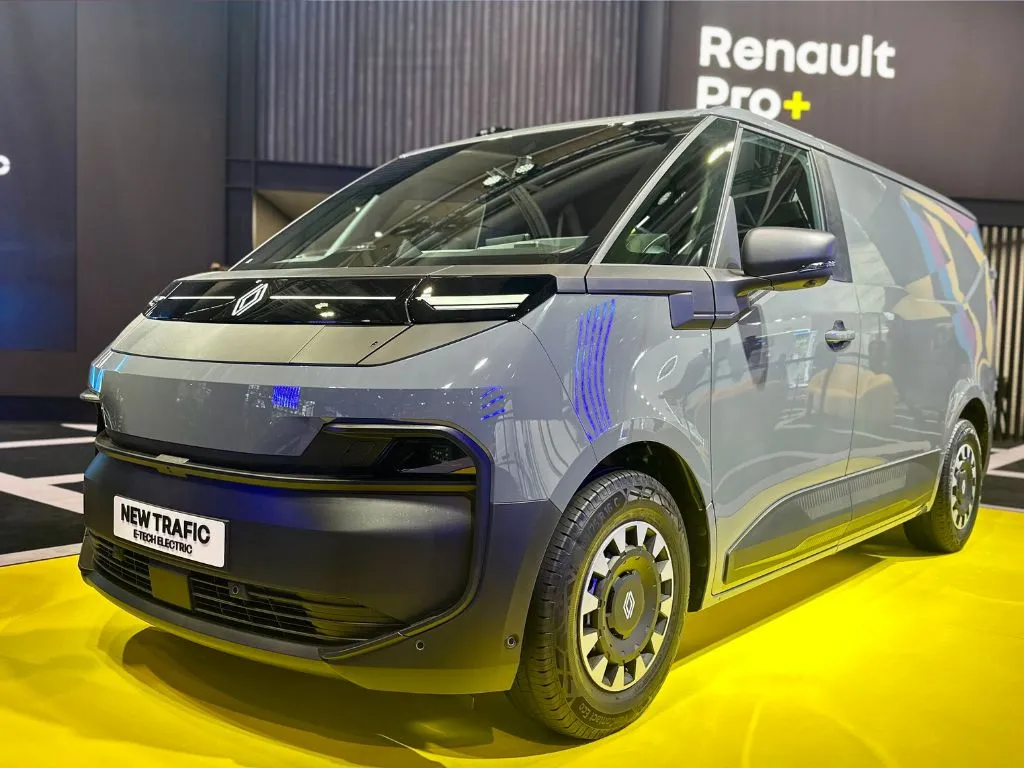
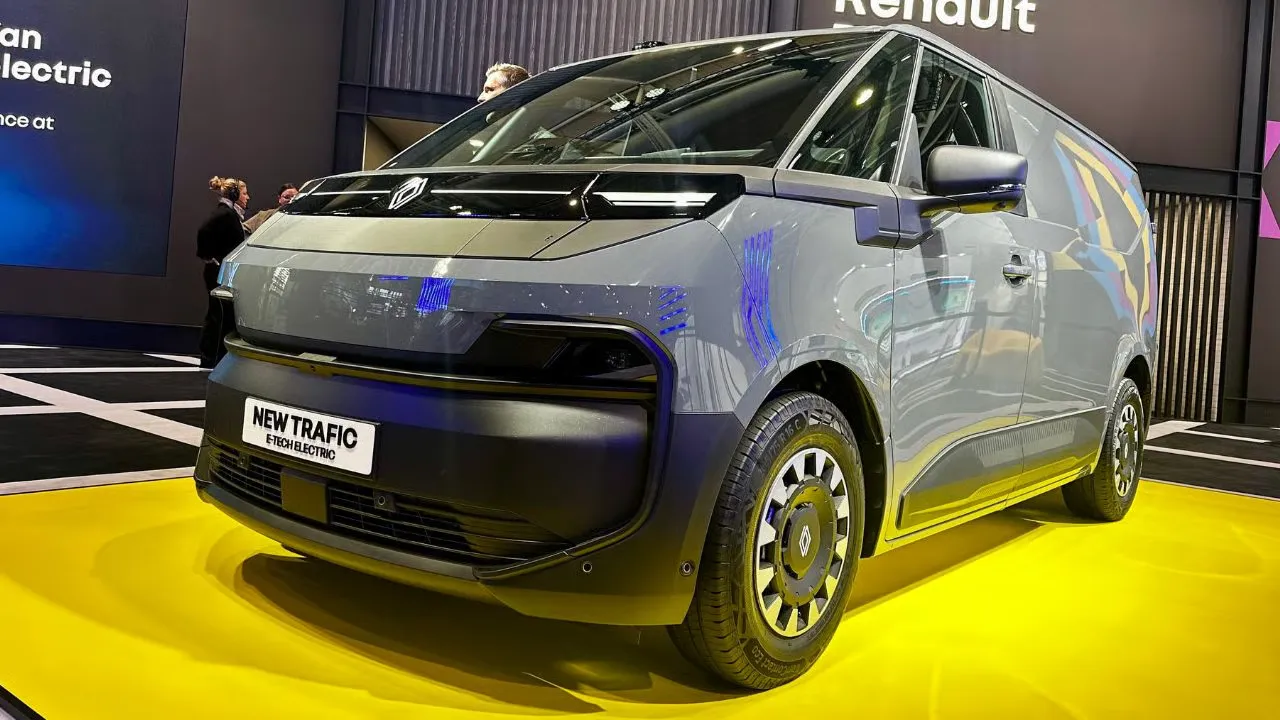
Renault took advantage of the IAA Transportation press day on September 14 in Hanover to unveil the final version of the new Renault Trafic electric vehicle. This van features an 800-volt architecture and a centralized software system, claiming a range of nearly 700 kilometers in urban driving conditions. First customer deliveries are expected in 2027.
Renault did not come empty-handed to the Hanover industrial vehicle exhibition (IAA Transportation). The brand used this event to present the final version of its new Trafic electric vehicle, now ready for road use.
An 800-volt architecture that makes a difference
The new Trafic is built on what Renault now calls the RGEV medium van platform, a skateboard-style chassis. Its electric architecture operates at 800 volts, the first time this has been used in the medium van category, where all currently available models still use 400 volts. The manufacturer promises this will enable rapid charging, setting a standard in the European light commercial vehicle segment.
Also read
We tested the Renault Niagara: the pickup aiming to conquer Latin America
Without disclosing the maximum charging power at this stage, the manufacturer claims 280 km of range can be restored in twenty minutes, and up to 380 km for urban use. Using a calculator, achieving 280 km of range requires injecting just over 48 kWh in twenty minutes, resulting in an average power of around 145 kW. This suggests a peak power of around 200 kW is possible. It’s significantly better than what other models in this segment offer today, but it’s still far from the peak levels achievable with 800 volts in a consumer vehicle. The actual benefit will depend on the charging curve, which the manufacturer has not yet detailed.
Model
Battery
Claimed Range
Architecture
Fast Charging
Renault Trafic Van E-Tech electric (2027)
81 kWh
Over 470 km (unapproved)
800 V
280 km in 20 minutes
Ford E-Transit Custom
71 kWh usable
Up to 373 km WLTP
400 V
125 kW, 80% in 29 minutes from 10%
Peugeot e-Expert 75 kWh
75 kWh
330 km WLTP
400 V
100 kW, 80% in 45 minutes
Renault now in sole control
The new Trafic was not meant to be a Renault project. It originated from the FlexEVan initiative and was later integrated into Flexis, a joint venture established in 2024 with Volvo Group and CMA CGM Group, each contributing its resources to develop a family of electric commercial vehicles based on a common skateboard platform. The Trafic was the first model in this line, with a van version followed by the Goélette and Estafette. Unfortunately, things did not go as planned. After a mediation process failed in early 2026, Renault Group acquired the shares of its two partners, with the transaction finalized last June. Volvo Group still has an interest in the project, as Renault Trucks is set to market the vehicle starting in 2027.
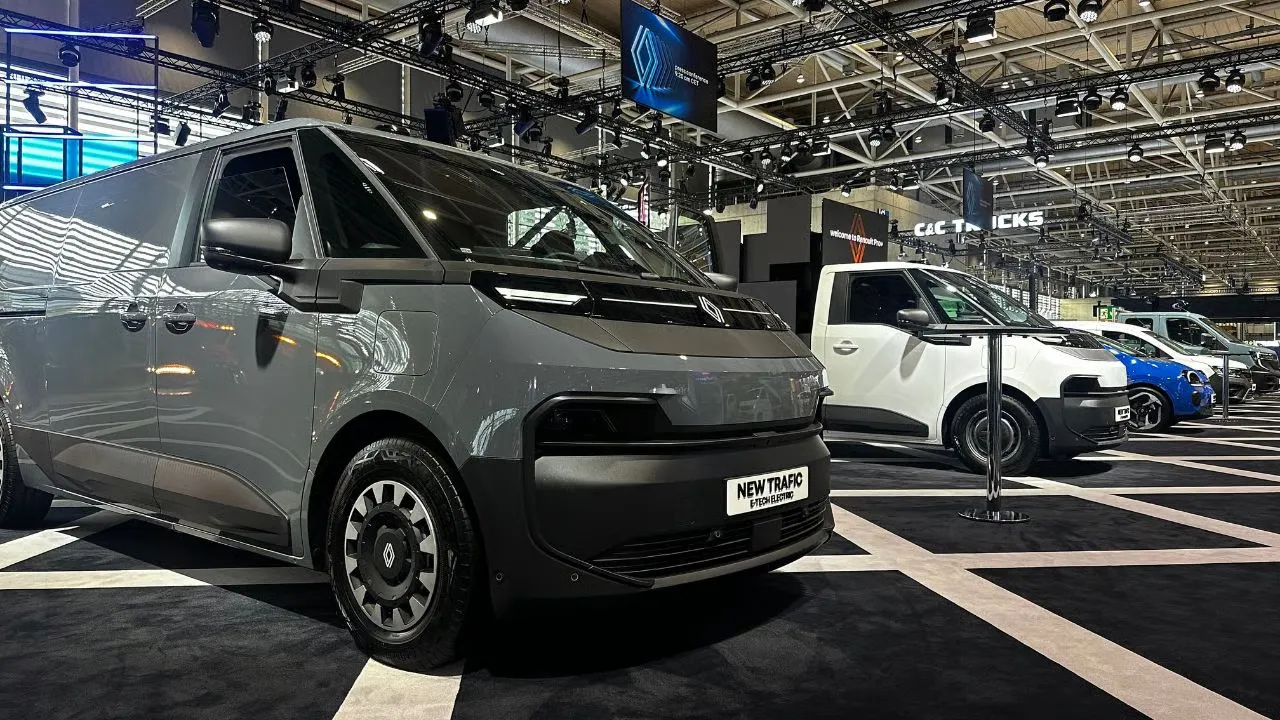
It is clear that the chapter seems definitively closed. The word Flexis does not appear even once in the 2,700 words of the press kit released by Renault d’Hanovre, and the joint venture’s skateboard platform is renamed RGEV medium van in it.
Almost 700 km of range (in urban areas)
According to Renault’s preliminary figures, pending official approval under the WLTP cycle, the range in mixed conditions is expected to exceed 470 km. Renault even claims a range of nearly 690 km in urban use, which is equivalent to five days of work for certain professions without needing to recharge.
In terms of battery capacity, the pack totals 81 kWh, resulting in a consumption rate of around 17.2 kWh/100 km according to our calculations, compared to just over 19 kWh/100 km for a Ford E-Transit Custom with a 71 kWh battery and a range of 373 km. While these figures will obviously need to be tested in real conditions, Renault states that it has focused heavily on optimizing consumption through three approaches: a 6% improvement in SCx efficiency, an engine system with an efficiency rate exceeding 90%, and a deliberate trade-off between battery capacity, weight, and range to optimize the overall performance.
Although not mentioned in Renault’s press release, a 60 kWh battery is also listed on the manufacturer’s website. Claiming a range of 350 km in mixed conditions, it is scheduled to be launched at a later date.
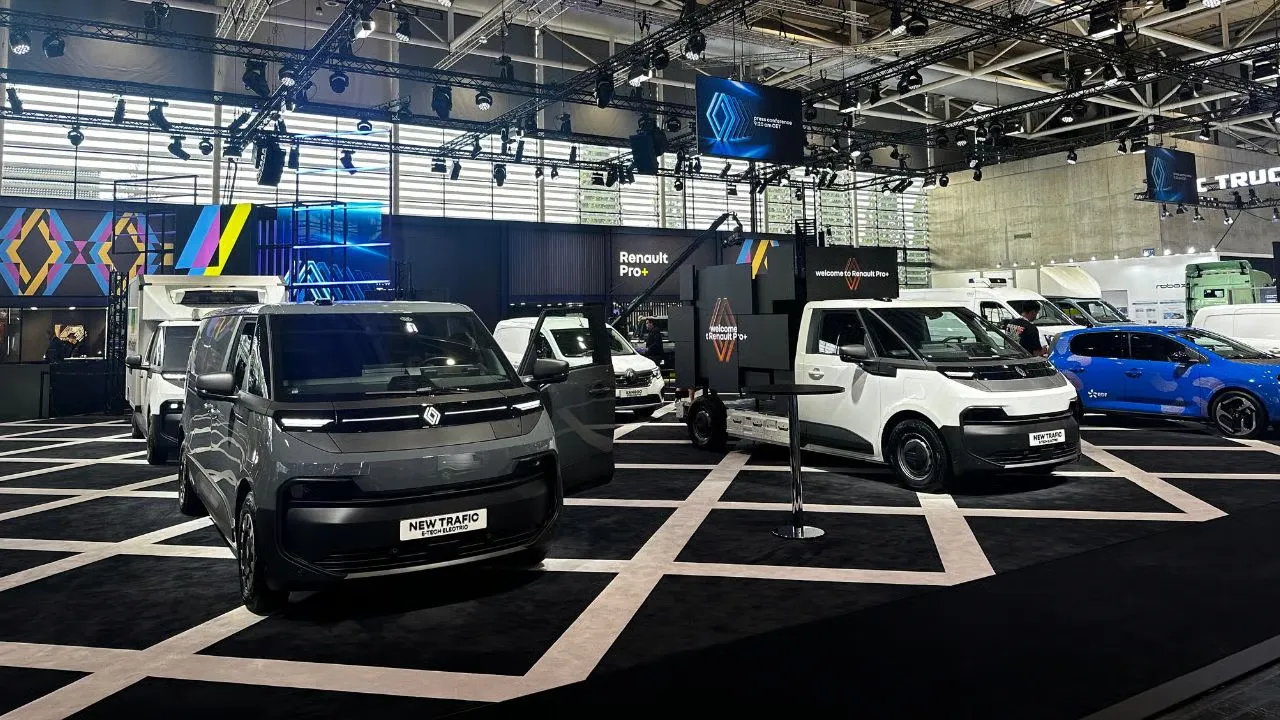
In terms of practicality, the new Trafic will also feature a Vehicle-to-Load (V2L) function. Aside from allowing connection of various devices via a socket located in the loading area, it will also simplify conversion work for the manufacturer’s body shop partners. Equipment such as refrigeration units can thus be powered directly from the battery using an ePTO socket.
On its website, Renault also confirms the arrival of bidirectional charging (V2G), with a launch expected in 2027.
A utility vehicle designed for the city
In practical terms, it’s likely the size that will make the difference. At 1.89 meters tall, 5.27 meters long, and 1.92 meters wide in its largest version, the new Trafic fits through standard underground parking lots, which remains a limitation for some vans in this segment. Another distinguishing feature is its turning radius of 10.3 meters, comparable to that of a Clio—a advantage for urban driving and maneuvering in confined spaces.
The basic capabilities aren’t compromised either: with 5.8 cubic meters of useful volume, the new Renault Trafic electric can carry three euro pallets, all with a loading height of 53 centimeters. Its payload capacity reaches 1.3 tons, plus an additional 2 tons of towing capacity.
If initial tests confirm this, Renault also promises a driving comfort level close to that of a passenger vehicle, thanks in part to a multi-link rear axle—a feature rarely found in commercial vehicles.
The group’s first vehicle to adopt an SDV architecture
The new Trafic is Renault Group’s first vehicle, and the first commercial vehicle in Europe according to the brand, to use a centralized software architecture called SDV, or Software-Defined Van. Specifically, the roughly 80 electronic controllers in a conventional vehicle are replaced by two supercomputers controlled by CAR OS, an operating system based on Android developed in collaboration with Google.
Also read
The Tesla Semi finally arrives in Europe: here’s its range and charging speed!
The benefits listed are those now known about the latest electric vehicles: over-the-air updates, predictive maintenance, customizable functions, and a residual value expected to hold up better over time thanks to the vehicle’s continuous evolution.
Commercial release by year’s end, but no price yet
Renault announces that a van version will be available by the end of the year. A cabin chassis and an extended cabin will complete the lineup in 2027, with various options offered by the manufacturer’s body shop partners. At this stage, no date for taking orders has been announced. The vehicles are not expected to reach customers until early 2027.
Most importantly, the press kit does not include any pricing information at all. Neither a call cost nor a rental fee... Yet Renault claims the total ownership cost is 10% lower than that of a conventional vehicle, without detailing its calculation methodology. We will likely have to wait a few more weeks to find out more...