
Pre-sales for the Arcfox Alpha T7 began at 137,800 yuan. BAIC’s large SUV resembles the Xiaomi YU7 in appearance.
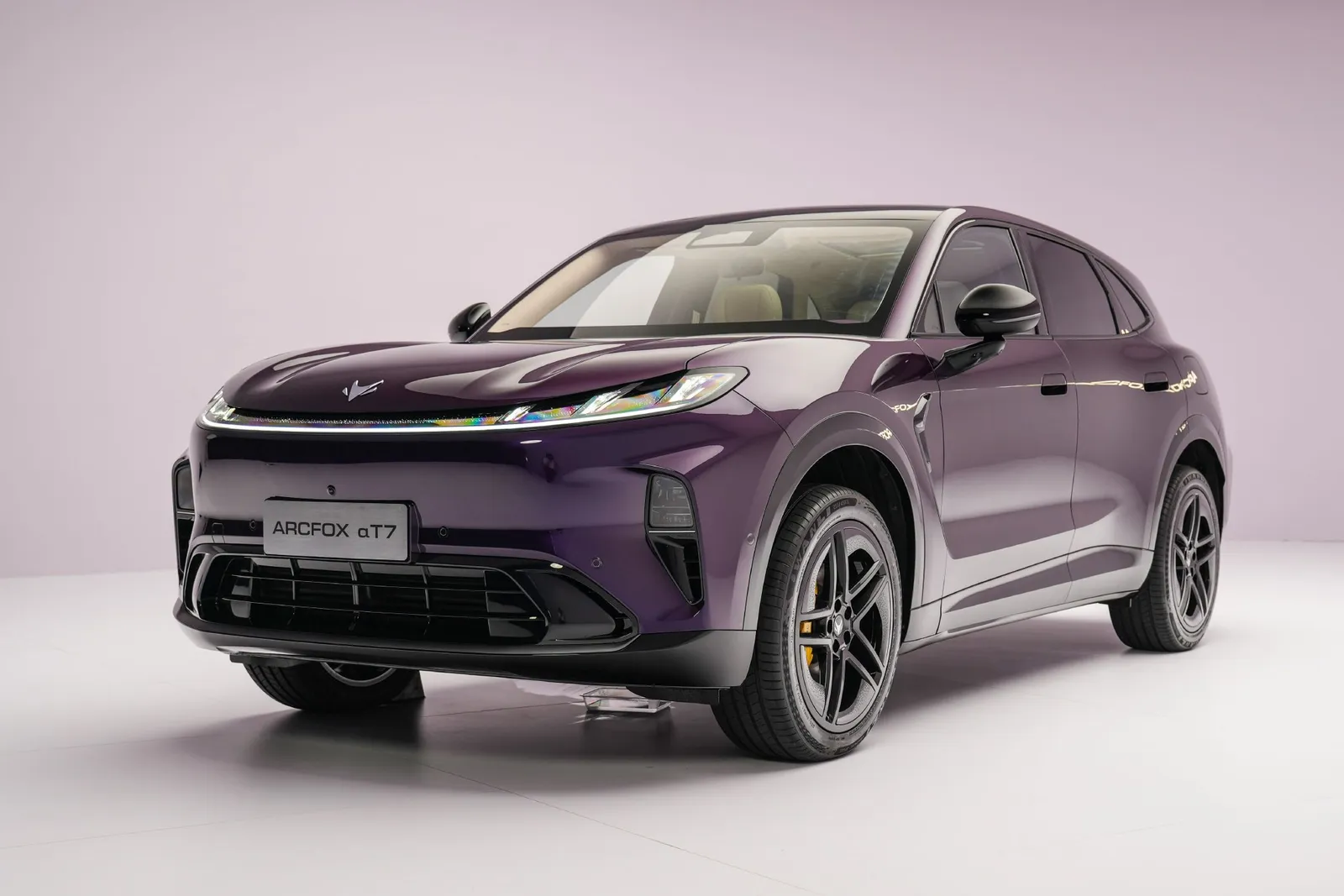
Arcfox, a brand owned by BAIC, began pre-sales for the Alpha T7 model in China on August 26, 2026. The vehicle starts at 137,800 yuan after a pre-sale deposit, is available as both a BEV and EREV, and the manufacturer claims over 10,000 orders were placed within 2 hours.
Table of Contents
Show
Hide
On paper, this seems like a very precise strike at the Chinese mid-market. A large body size, 800 V electric system, Huawei in higher trims, and a price clearly below 200,000 yuan.
A large car at a low price, at least by Chinese standards
The Arcfox Alpha T7 is a five-seater SUV that falls in the mid-to-high-end segment. It measures 5,020 mm in length, 1,996 mm in width, 1,685 mm in height, and has a wheelbase of 3,040 mm. This is no longer a compact car disguised as a family vehicle—it’s a truly large automobile.
9 rear-wheel-drive versions are available in pre-sale. The prices after the initial discount range from 137,800 to 174,800 yuan, while the listed price is 141,800 to 178,800 yuan. Thus, the initial discount amounts to 4,000 yuan per variant.
In practice, Arcfox targets customers with a budget of up to 200,000 yuan, focusing on the most competitive segment of the Chinese market. Today, simply having an “EV with a large screen” is no longer enough there. Consumers also expect larger size, fast charging, and at least basic advanced ADAS features.
BEV and EREV in one model
The most interesting aspect is that the Alpha T7 doesn’t follow a single approach. Arcfox sells the same model as both a traditional electric vehicle and as a range extender.
There are four EREV versions. The cheapest is the 1315 Plus. It features an electric motor with 200 kW of power, a 43.9 kWh battery, and a 1.5-liter gasoline generator. The claimed electric range is 320 km according to CLTC standards, while the total range is 1,315 km CLTC.
There are five BEV versions. The base 650 Plus costs 140,800 yuan during pre-sales and comes with a 75.4 kWh battery. Its claimed range is 650 km CLTC.
The other electric variants are equipped with a 84.8 kWh battery from CATL and are said to offer up to 715 km of CLTC range. This sounds very good on paper. It’s just important to remember that CLTC figures are usually much more generous than real-world driving distances, especially for large SUVs.
Specs of Arcfox Alpha T7
Parameter
Arcfox Alpha T7 BEV
Arcfox Alpha T7 EREV
Length
5,020 mm
5,020 mm
Wheelbase
3,040 mm
3,040 mm
Drive Type
RWD
RWD
Engine Power
227 kW
200 kW
Architecture
800 V
400 V
Battery
75.4 kWh or 84.8 kWh
43.9 kWh
Electric range
650 km or 715 km CLTC
320 km CLTC
Total range
N/A
1,315 km CLTC
Charging 30-80%
15 minutes
15 minutes
Starting price
140,800 yuan
137,800 yuan
800 V in BEVs, but not everywhere
The all-electric models feature an 800 V platform and a 227 kW engine across the range. Arcfox claims 30-80% charging in 15 minutes. This is now one of the essential requirements on China’s checklist. Almost every manufacturer promises “very fast” charging, so only the actual charging curve will show whether this is a real advantage or just a well-chosen segment of the test.
The situation gets more interesting with EREV. Here, the voltage drops to 400 V, but according to the manufacturer, the charging time remains the same at 15 minutes to reach 30–80% charge. This is achievable, especially with a shorter energy window and more aggressive control, but without data on peak power and charging session duration, it’s hard to consider this a certainty.
CATL supplies the batteries for both versions. This is a practical advantage, not just a marketing one. Given the scale of the Chinese market, it usually means better availability and fewer issues related to battery sourcing.
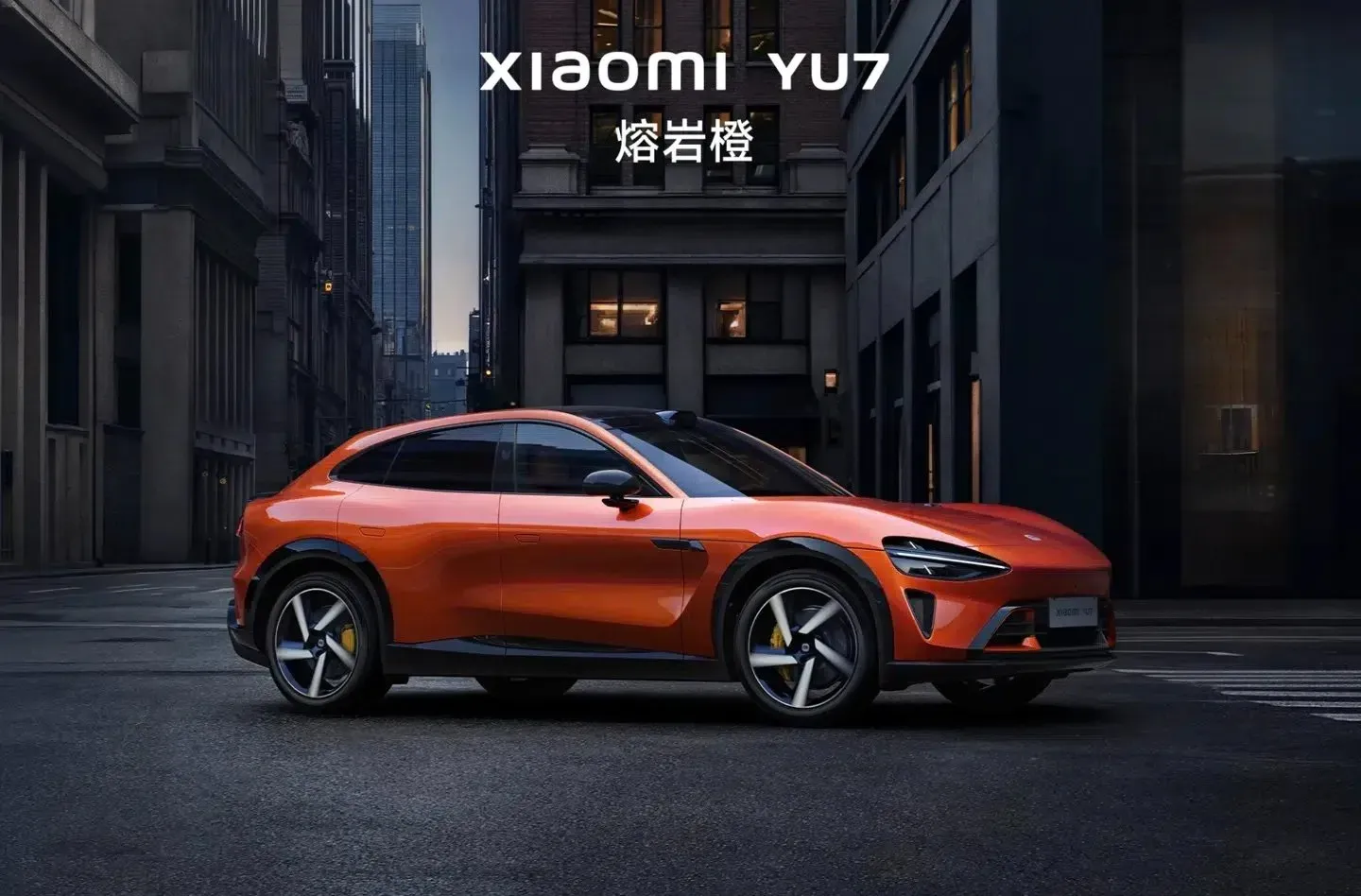
The Alpha T7 looks like the Xiaomi YU7, and it’s likely not by chance
It’s hard to avoid comparing it to the Xiaomi YU7. The Alpha T7 features a similar fastback design, a heavily sloped rear section, wide proportions, and a relatively low roofline. It’s not a 1:1 copy, but the similarities are obvious at first glance.
The interior moves even closer in direction to this approach. Arcfox has used a 1.1-meter-wide panoramic screen, referred to as the skyline screen. This is complemented by a steering wheel and button layout that also evokes similarities to the YU7.
This is actually a broader trend in China. Following Xiaomi’s success, many manufacturers are trying to combine family SUVs with a more sporty, “low” styling. The traditional tall and boxy SUV is no longer the only option for family customers.
Huawei in higher-end versions, but base model is less equipped
Arcfox also adds to the T7 a feature that increasingly functions as its own selling point in China: driver assistance systems. Selected versions are available with Huawei Qiankun ADS 5 Pro.
This is not however standard equipment across the entire range. According to the specifications, 4 variants labeled Qiankun come equipped with this system as well as a LiDAR in the cabin. The cheaper versions use the BAIC Yuanjing system and have a LiDAR on the roof. The cheapest EREV version, the 1315 Plus, lacks both a branded ADAS system and a LiDAR.
This is an important distinction, because at this price point it’s easy to lump all versions together and say “a large SUV from Huawei.” Not really. Huawei is only available in some configurations, and it’s likely these better-equipped variants will feature in most promotional materials.
Inside, there’s also a 17.3-inch 3K screen, and the infotainment system integrates the language models Doubao from ByteDance and Qwen from Alibaba. As is usual with automotive AI, it will take time before it becomes useful for daily use. It looks good in presentations but performs poorly after just three months of use.
Suspension, Trunk Space, and Family Focus
Arcfox tries to sell the T7 not just with its screens. The car features a continuously adjustable CDC suspension and a chassis tuned in collaboration with Magny. This doesn’t guarantee excellent driving performance, but it shows the manufacturer aims to create a more refined product rather than relying solely on a competitive price.
The trunk has a capacity of 645 liters, which increases to 1,845 liters when the seats are folded down. There’s also a 200-liter front trunk. For a car of this size, these are reasonable figures and a solid argument for families, rather than just a marketing figure.
10,000 Orders in 2 Hours, But the Harder Part Begins Now
Arcfox reported that the Alpha T7 received over 10,000 pre-orders within 2 hours of the pre-sale starting. Such numbers are impressive in China, but they need to be interpreted carefully. Pre-orders do not yet equate to actual deliveries, and a high number of reservations can result from a mix of genuine demand, low down payments, and the novelty factor.
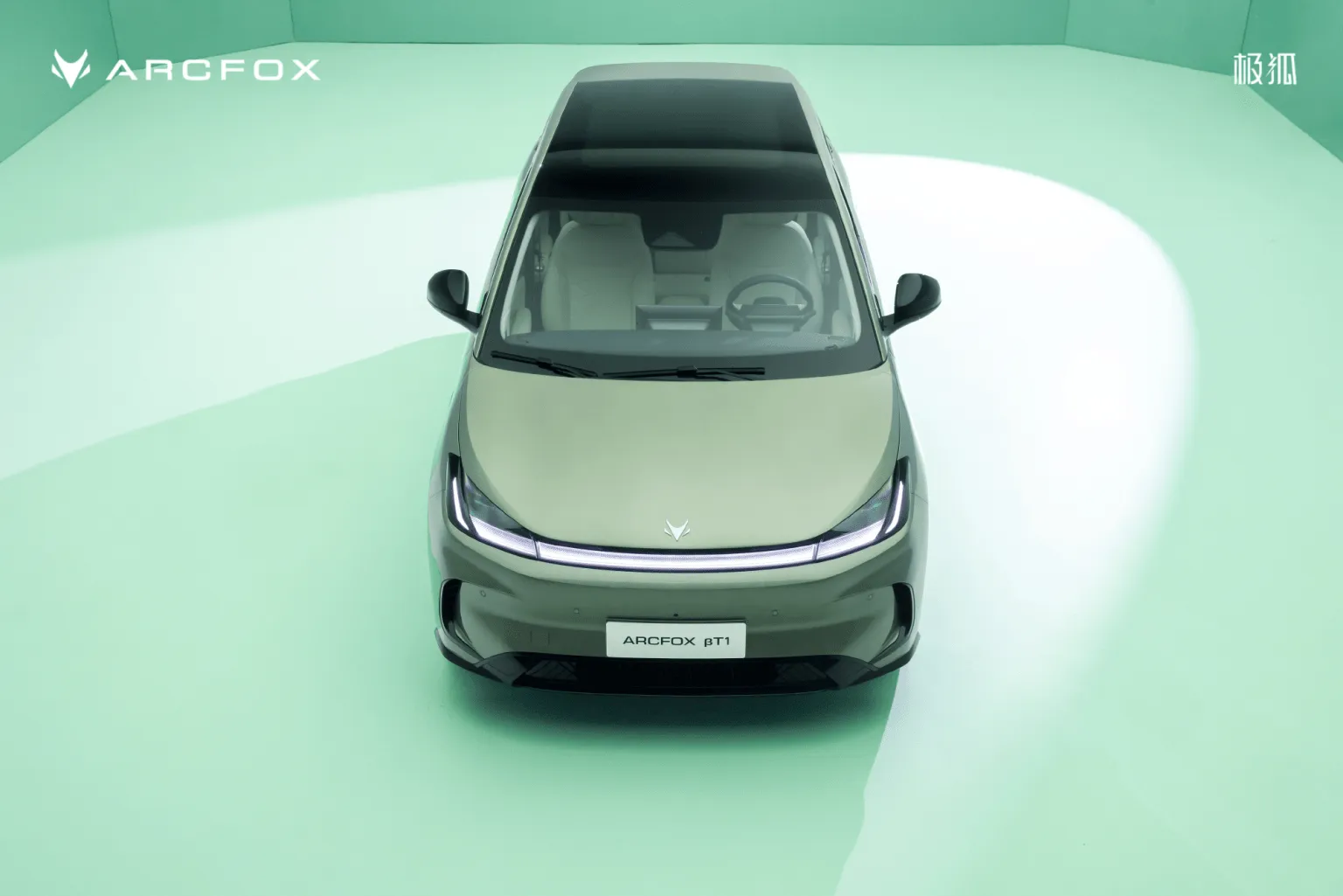
The brand had a strong July. Arcfox sold 23,517 vehicles, with the Beta T1 accounting for 8,628 units and the Beta S3 accounting for 6,941 units. This shows a certain scale, but it also indicates that the T7 still has to prove itself as a true volume model.
And this is where it gets crucial. The Alpha T7 seems to attempt to capture several trends at once. It features Xiaomi’s design style, a large family-oriented format, EREV for cautious buyers, BEV 800 V for those leaning more electric, and Huawei elements for those wanting a “smart car” experience. If the final prices don’t rise at launch, this vehicle could make a big impact.
It’s unlikely to reach Europe soon, and if it does, not at such prices. However, it clearly shows just how far China’s mass market has advanced. There, 137,800 yuan—roughly 76,000–77,000 zł—enables access to a 5-meter SUV with a CATL battery and optional Huawei features. In Europe, with that amount of money, one can at best expect to be in the early stages of negotiations.
The Chinese are once again raising the bar in the “family-oriented, but not just any” segment. What do you think? Would a BEV 800 V version have better prospects in Europe, or would an EREV with 320 km of pure electric range be more competitive?