
Saudi Arabia aims to revolutionize electric cars: here are the two models set to arrive in 2027
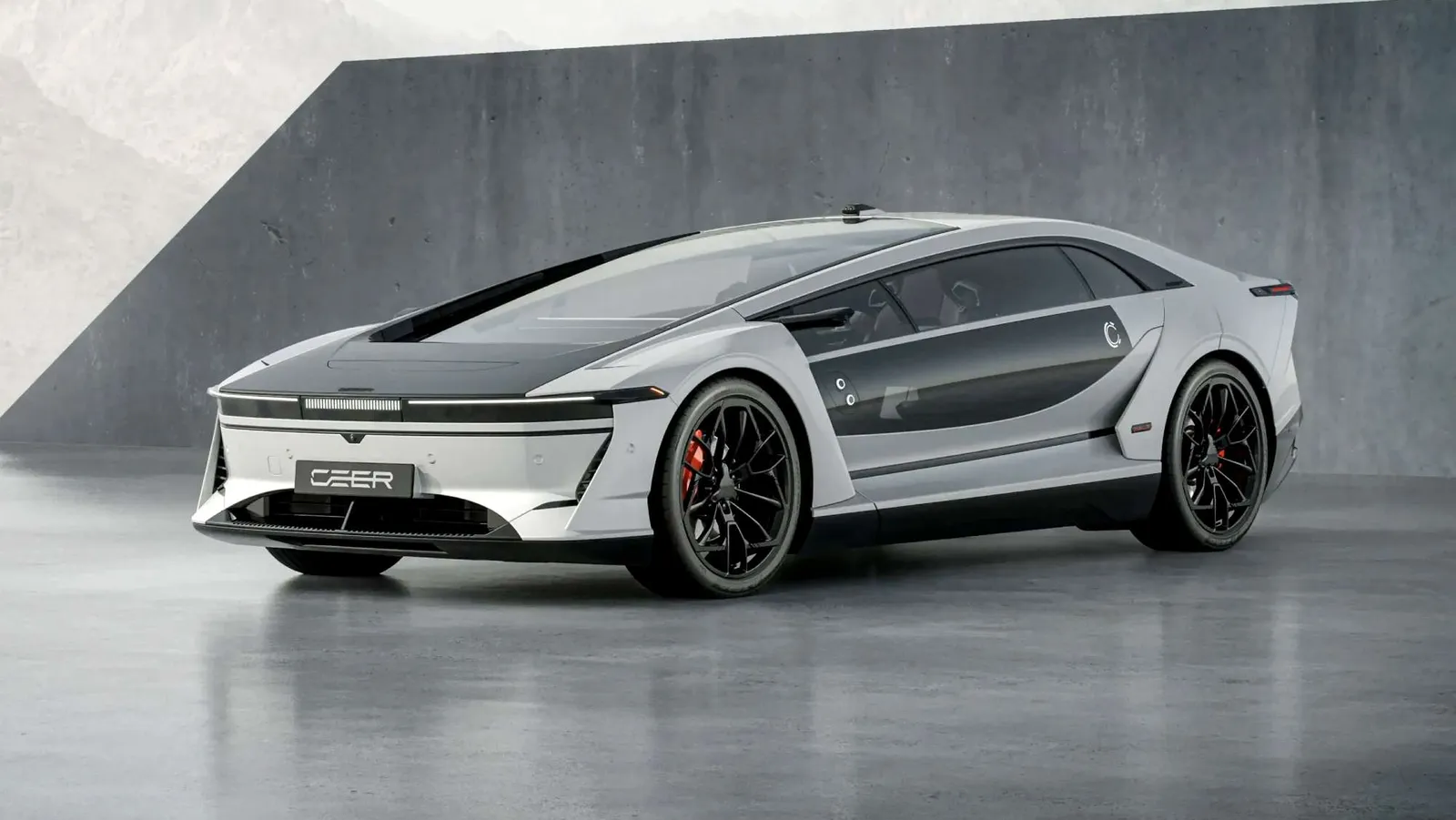
Saudi Arabia has taken another step in its economic diversification strategy with the launch of Ceer Automotive, its first domestic automobile brand. Backed by the sovereign fund Public Investment Fund (PIF) and Taiwanese manufacturer Foxconn, the company has unveiled its first two models—two high-performance, premium electric vehicles.
The fact that these are battery-powered vehicles might be noteworthy, but the project is part of Vision 2030, Saudi Arabia’s plan to reduce its economy’s reliance on oil and foster new industries, including the automotive sector.
Created with public funds
Ceer was founded in 2022 and already has a factory in King Abdullah Economic City on the country’s western coast. The facility is part of an effort to establish an automotive industrial hub there, a region that also hosts Lucid, an electric vehicle manufacturer backed by PIF, as well as supplier companies like Hyundai Transys. In the initial phase, Ceer will focus its sales on Saudi Arabia and Gulf markets, though the company plans to expand its future product lineup internationally. Its goal is to have seven models and potentially be present in global markets by 2030.
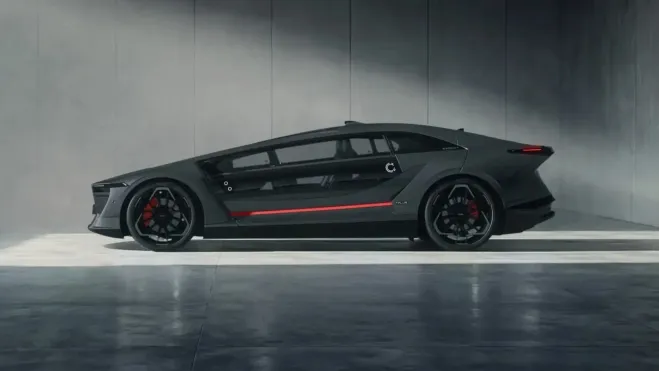
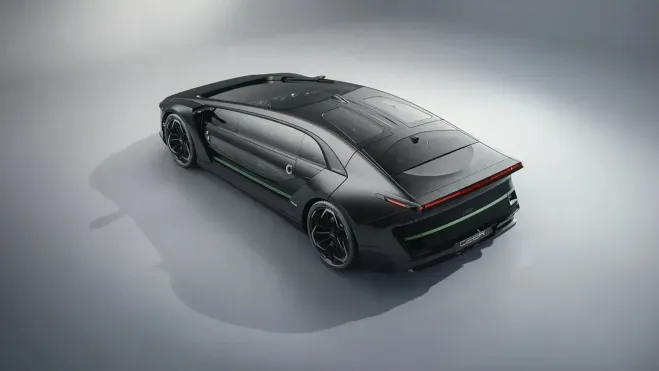
The first models in that range are two variants of the Exobot, an SUV and a sedan that share a quite striking aesthetic design. Both belong to the E segment and feature angular body shapes with a highly futuristic appearance, defined by a wedge-shaped silhouette and a massive glass roof that, according to Ceer, is the largest ever used in a car. The company claims the goal was to create an image that stands out from industry norms and to offer vehicles that are easily recognizable from the first glance.
Among the most distinctive features are the large, vertically opening doors and the absence of B-pillars. Although visually similar to gull-wing doors, Ceer notes that their operation remains within a space comparable to that required by conventional doors. The optical groups also include a specific detail: light bars composed of 32 elements, a reference to the year 1932, when Saudi Arabia was unified.
Solutions adapted to the desert
The interior combines technology with physical controls, featuring a central screen on the dashboard alongside conventional buttons. Among the announced solutions are steer-by-wire steering, acoustic actuators replacing speakers, and a system called “halo cooling.” The windshield also receives a silver coating designed to reflect heat, a feature particularly necessary for a vehicle developed in a country with high temperatures.
The SUV will also feature a specialized approach for off-road driving, enabling it to navigate desert terrain and serving as a utility vehicle for users in Saudi Arabia and the rest of the Gulf region. The company believes this capability, combined with its electric design and propulsion, will set the Exobot apart from other models in its category.
According to James DeLuca, Ceer’s top executive, as explained to Autocar, testing and prototype development are nearly complete, and the company has entered the final stage of product validation. Mass production is set to begin in January 2027, with the first deliveries to customers scheduled for March of the same year.
“His Royal Highness really pushed us to our limits. I’ve been in this industry for 47 years, and our design chief, Rob Melville, comes from McLaren. We thought we’d done an excellent job, but the board told us, ‘Don’t show us what the rest of the world does; we want something new, unique, and different.’ We offer something unprecedented on a global scale, and when we launch these cars, the whole world will take notice,” he explains.