
After an accident, this scanner allows checking the condition of an electric car battery without removing it.
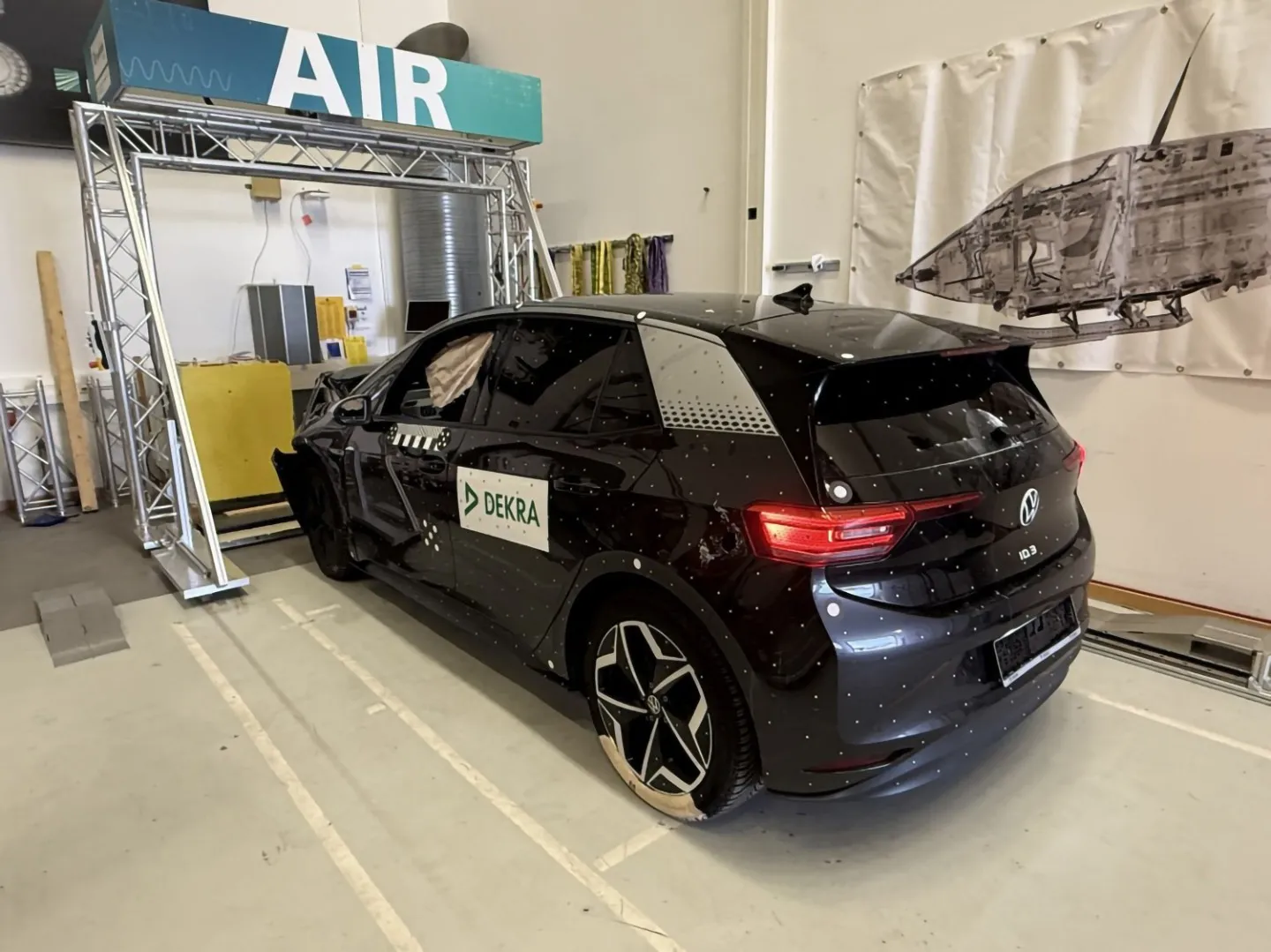
After an accident, the outside of a battery may appear intact while some cells might have shifted or deformed. In Germany, the Fraunhofer institute is developing a system capable of radiographing an entire battery without disassembling it. Now automated, this analysis is intended to simplify decisions regarding repair, recycling, or reuse.
A giant scanner for batteries
X-raying an electric vehicle to determine if its battery has been damaged is not entirely new at Fraunhofer. The AIR device was already introduced in 2024. The innovation now lies in the software, which can automatically analyze the images obtained. Its operation resembles that of a car wash tunnel.
Also read
After 100,000 kilometers around the world, how has the battery of this Volkswagen ID.Buzz aged?
An X-ray source is placed above the vehicle, while a detector installed on the ground captures images after the beam passes through the car and its battery. The battery pack can also be checked separately. The software developed by Fraunhofer IIS and the University of Applied Sciences Munich can identify the three main types of battery cells: cylindrical, prismatic, and pouch.
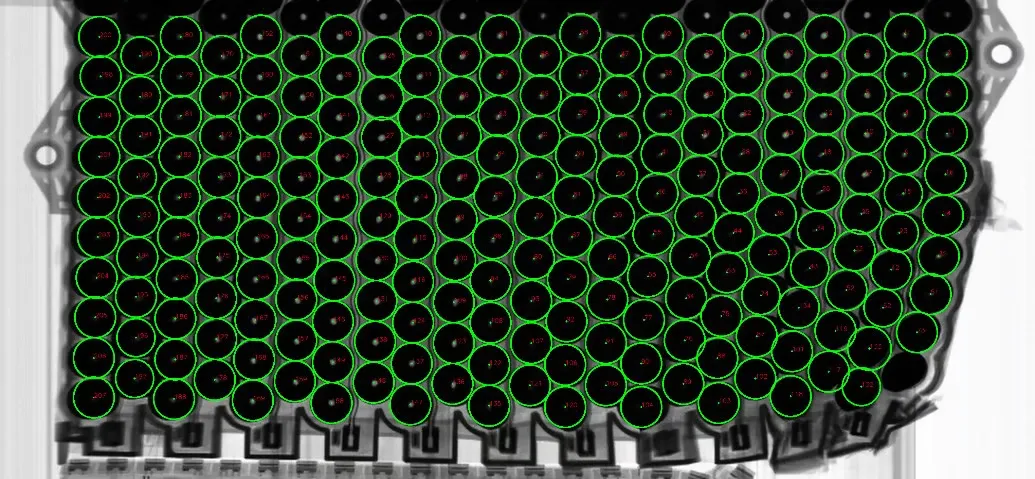
It can then detect geometric anomalies such as displacement, deformation, or swelling. In the testing environment used by researchers, the automated analysis of a single pack took about five minutes. However, the total inspection time may vary depending on its size and the number of images required.
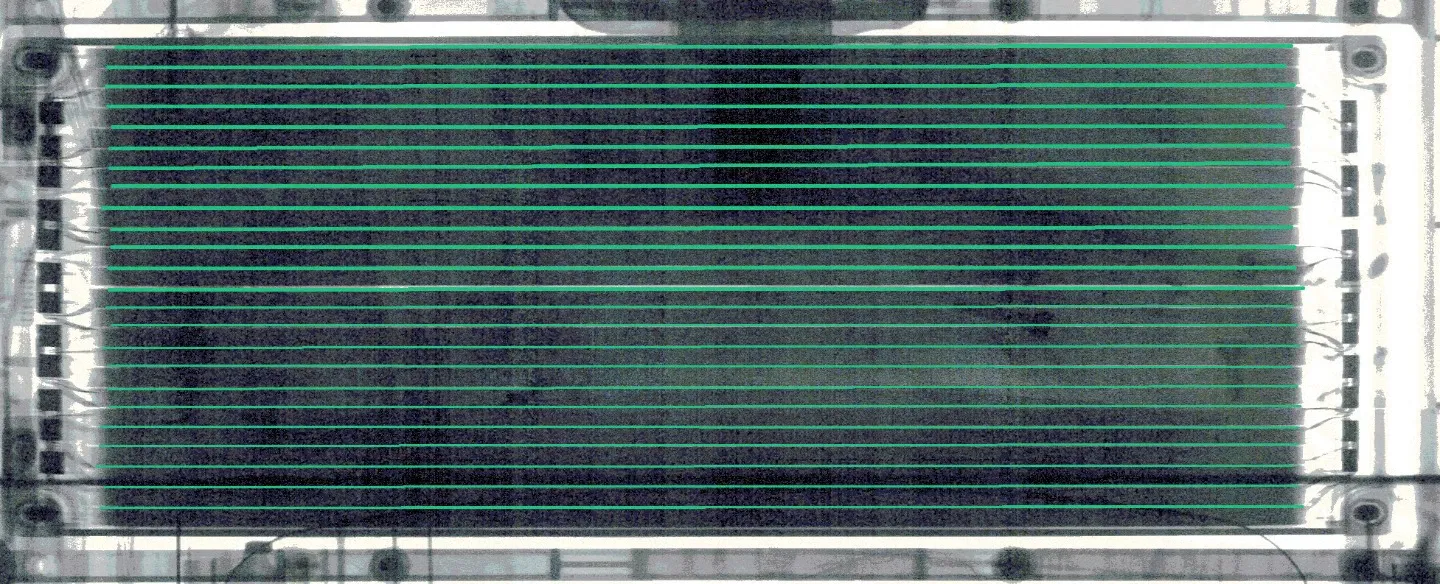
A Volkswagen ID.3 undergoing a crash test
To assess the system’s effectiveness, researchers specifically examined a Volkswagen ID.3 after a front-end collision. The compact vehicle had hit the rear of a Volkswagen Tiguan at 79 km/h. Despite severe damage to the front, the images revealed no critical structural abnormalities in the battery. This diagnosis alone was not sufficient to approve its reuse. Data from the BMS, event recorder, electrical checks, and a safety evaluation were also analyzed.
At the end of this process, the battery was classified at the lowest EUCAR 0 risk level. In contrast, for another accident-damaged battery with cylindrical cells, the system detected a heavily distorted area and several displaced cells. In this case, Fraunhofer advised against its reuse.
An effective tool for the used car market
A such inspection could complement the State of Health (SOH) report, which primarily provides information on the battery’s electrical and electrochemical condition, by adding data on its mechanical integrity. The German institute also believes this technology could find application in future concepts for regular monitoring of electric vehicles. However, no specific implementation has been announced at this stage.