
Electric cars can also get into accidents too... the obvious turned into news
Electric cars can also get into accidents... But the obvious can become news if it helps fuel fear toward BEVs. An example? “Spoleto: Electric car crashes into mother and daughter; rushed to hospital by helicopter.” It’s not a joke or satire, but the headline published by several Umbria news outlets. We went further and read the article: no connection to the vehicle’s electric power source is mentioned. It was a simple collision, like millions of others that occur worldwide. Unfortunately, this is an example of explicit “No Watt” narrative—intentional or unintentional—that spreads the completely unfounded idea that electric cars are more dangerous. A mistaken perception among those who don’t know them and rely on headlines.
In the headlines, diesel is never mentioned, but a faulty electric car causes kilometer-long traffic jams.
A collision is a dynamic event related to distraction, following distance, speed, and road conditions. None of these factors have anything to do with the battery, electric motor, or vehicle architecture.
Even though in this news story the car’s power source was completely irrelevant—to the point where it wasn’t even mentioned—the media never reports on collisions caused by diesel cars. Yet, obviously, diesel cars also cause and are responsible for collisions. It’s common sense.
People are wary of electric cars: “They catch fire…”
We conducted a Google search using the phrase: diesel car collision. As expected, there were no results. We repeated the search with: diesel car accident. Same outcome: zero headlines.
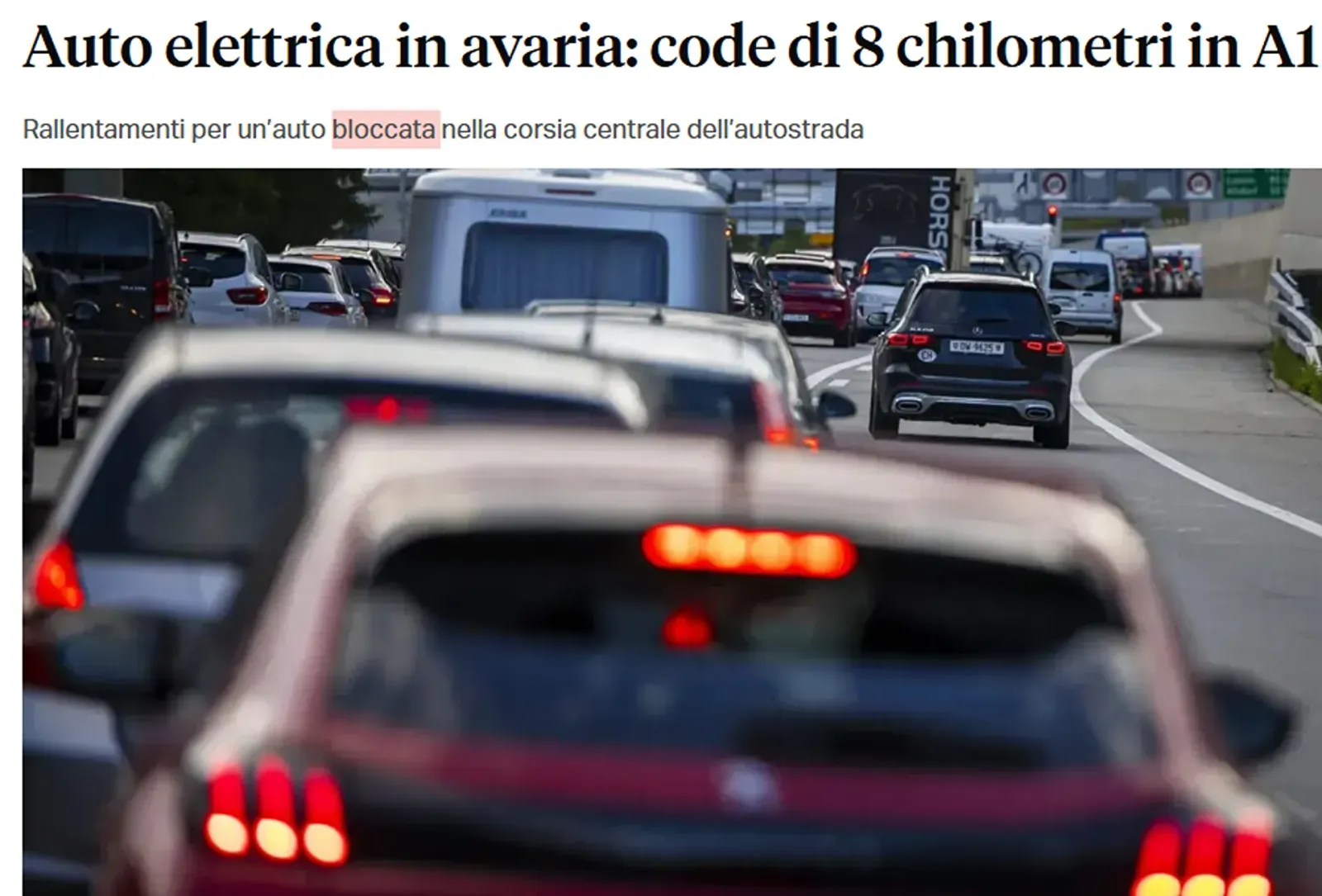
What about electric cars? Here, headlines are abundant—so many that they rival satirical newspapers: “Electric car breaks down: 8-kilometer queues on A1.” Once again, the article provides no explanation for the connection to power supply.
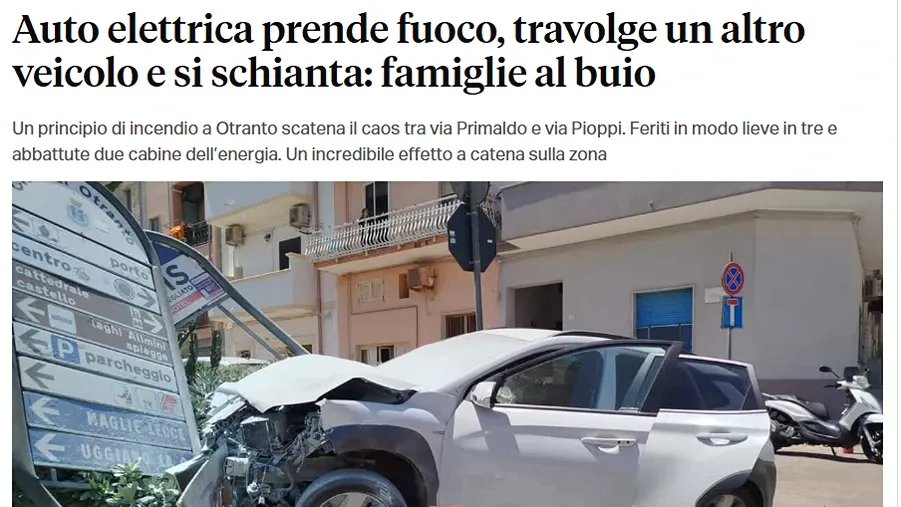
Naturally, when a car catches fire, the headlines always refer solely to it being electric: “Electric car catches fire, hits another vehicle and crashes: families left in darkness.” Note that the power outage isn’t a direct result of the electric car but rather from the vehicle knocking down two Enel power poles. Here too, the headline ties it to the power supply: “Electric Fiat 500 catches fire on Bitonto-Palombaio road: driver suffers minor burns.”

But let’s look for “cars on fire.” In just the past 24 hours, there have been several such incidents reported, yet headlines never mention “diesel cars on fire.” Here are some examples: Fire on the beltway: a postal truck caught ablaze, road closed; Panic in Palinuro due to a car on fire: prompt action by firefighters was crucial; Fear on Via Lucera as a car caught fire while moving: passengers escaped unharmed, with another vehicle also destroyed.
There are countless internal combustion engine cars that catch fire, but it almost seems like a shame to mention the type of fuel used.
The disastrous collision of a gasoline car with charging stations, a headline lacking context
Last June, a gasoline car crashed into an Atlante charging station, causing a fire that damaged the charging infrastructure before it was reopened. In that case, it would have made sense to specify the vehicle’s type of fuel. This was not done, as confirmed by our monitoring of even national news outlets.
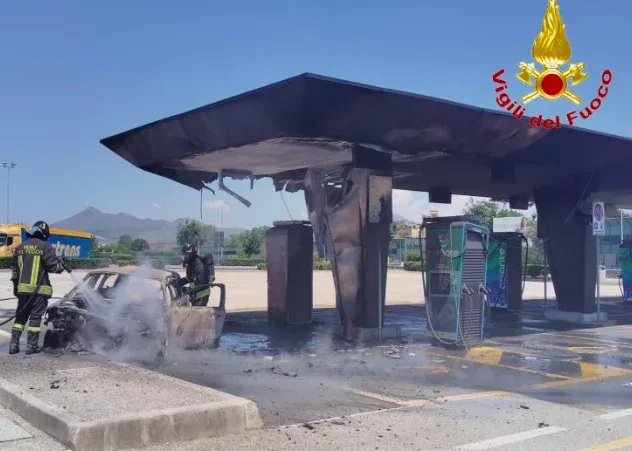
Here is a summary: The Fanpage headline read “Car catches fire and destroys charging stations: panic at San Nicola service area on the highway,” similar to Il Mattino’s headline “Car catches fire at service area, destroying electric charging stations.” There was no mention of the vehicle’s fuel type in either headline or summary. It wasn’t until halfway through the article that it stated, “Upon arriving immediately at the scene, the firefighters found the diesel-powered vehicle completely engulfed in flames.” Il Giornale Locale also did not mention the fuel type in its headline, as did Caserta Web and Edizioni Caserta.
Electric car fires/What do manufacturers know (and what do they do)?
What should be done? It would be useful if those responsible for training within the Journalists’ Association organized some courses focused on providing accurate information about electric mobility.
READ ALSO: “Fire Risk and Electric Cars? Here’s How and Why” and watch the VIDEO
Previous Article
Are Used Teslas Too Expensive? Let’s take a look...
Next Article
PresaDiretta returns to energy: renewables, fossil fuels, and electric mobility