
Ampol to acquire Evie Networks in AU$225m deal
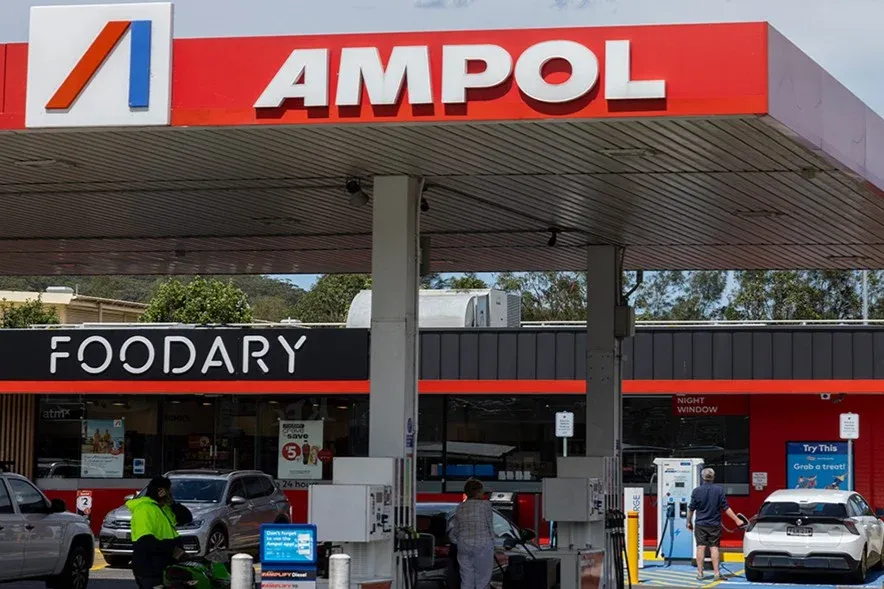
Australian fuel retailer Ampol is to acquire the charge point operator Evie Networks for AU$225 million (~€135 m). The deal is set to add over 1,030 charging bays to Ampol's existing network, meaning it will feature around 1,425 bays across over 400 sites.
Image: Ampol
Ampol subsidiary Ampol Energy has signed an agreement to acquire 100 per cent of Fast Cities Australia, the company operating Evie Networks. The transaction, which remains subject to regulatory approval, is expected to close during the first half of 2027 with both networks expected to continue operating independently until completion.
In a statement, Ampol said the acquisition will strengthen its position in Australia’s growing eV charging market by providing additional access to established locations, long-term site agreements, and existing grid connections. Matt Halliday, Ampol’s CEO and managing director, said: “For Ampol, EV charging is ultimately a question of disciplined investment at the right time. That means closely monitoring customer behaviour, EV uptake, site economics, grid connections and the broader charging network to ensure our capital is deployed where it can create the greatest value.” He added: “Evie’s high quality, attractive long-term tenure sites with established grid connections and some with expansion capacity, provides Ampol with an opportunity to grow its charging footprint at scale and at pace.”
The comes off the back of wider expansion of Ampol’s AmpCharge network in Australia. In February, electrive reported that Ampol had installed Australia’s first 400 kW ABB A400 ultra-fast chargers at a site on Sydney’s M4 motorway. The ten-bay charging hub is designed to accommodate electric trucks and larger vehicles.
Conversely, Evie Networks has been developing a nationwide fast-charging network connecting Australia’s major cities. Its initial rollout plan included more than 80 ultra-fast charging stations at 42 locations. The firm has reported that charging sessions rose by 116 per cent across its existing network during the first half of 2026, while energy supplied rose by 120 per cent.
