
AMH brings Farizon (Geely) electric vans to Spain: the SV with 13 m³ of cargo for 36,600 €, and the V7E with 7 m³ for 23,500 €.
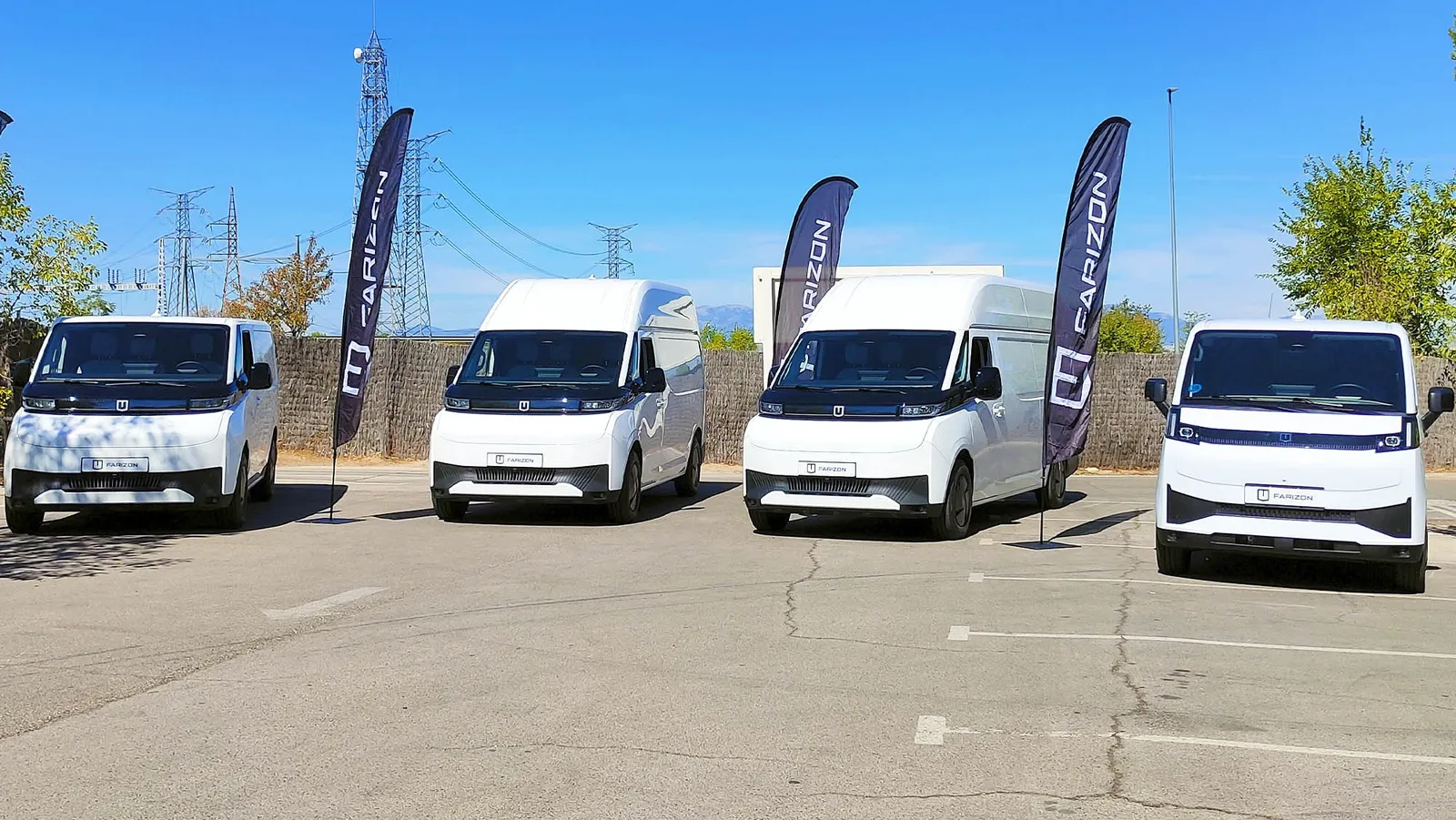
Automoción y Movilidad Hispania (AMH) unveiled in Madrid the Farizon line of electric vans, a brand specializing in new-energy commercial vehicles under the Geely Group. The Spanish launch features two models, the Farizon SV and V7E, targeted primarily at businesses, fleets, urban distribution, and last-mile delivery.
The introduction of these vans builds on the agreement AMH struck with Farizon in 2026 to expand its operations in Spain. The company is already working with the brand on buses and now adds electric light commercial vehicles to its portfolio.
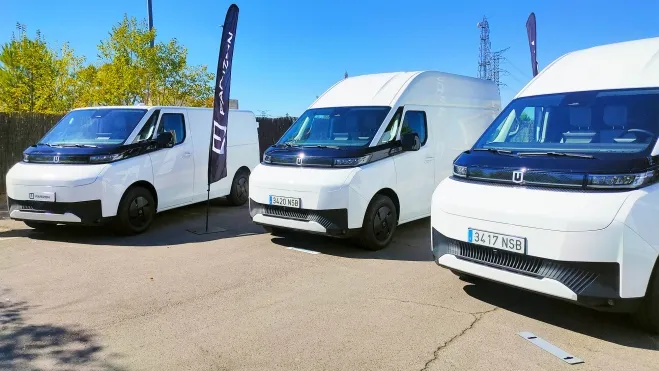
Geely’s industrial vehicles division
Farizon is part of Geely’s industrial ecosystem and focuses the group’s efforts on new energy commercial vehicles. The company works with various types of vehicles and technologies, though its current strategy in Europe emphasizes electric models designed for both urban transportation and long-distance operations.
Its entry into Spain comes at a time of international expansion. In September 2026, Farizon showcased its SV and V7E models at the IAA Transportation in Hannover as part of its growth strategy in the European market.
With the SV and V7E, AMH introduces to Spain a range of electric vans that cater from last-mile urban deliveries to professional applications requiring larger cargo capacities.
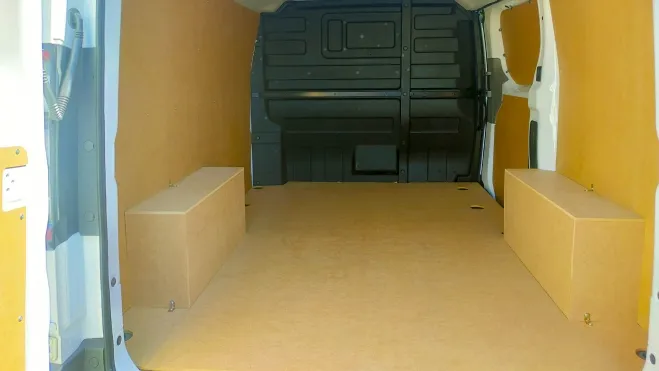
Farizon SV: Up to 13 m³ of cargo volume
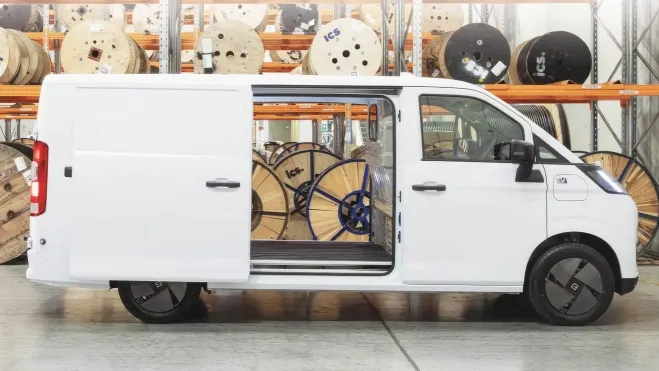
The Farizon SV is the largest model in the series, designed as an electric van specifically for professional transportation use. It comes in various lengths and heights, with cargo volumes reaching up to 13 m³ and payload capacities of up to 1,465 kg depending on the configuration.
The AMH figure indicates a range of up to 551 km for the longest-range version, with fuel consumption at 20.5 kWh/100 km. It is equipped with an integrated electric motor of 170 kW / 231 HP, 336 Nm of torque, and a top speed of 135 km/h.
The SV also features a CTP-S (Cell-to-Pack) battery, a technology that integrates the cells directly into the pack without using conventional intermediate modules, thereby reducing space and weight. According to the specifications provided, it can regain 300 km of range in 20 minutes of fast charging.
In terms of safety, the SV is equipped with numerous ADAS systems and received five stars from Euro NCAP in the 2025 commercial vehicle tests. The European agency particularly highlights its accident prevention capabilities: the model tested, with a 66 kWh battery and a 200 kW motor, achieved an 85% score in the collision prevention category.
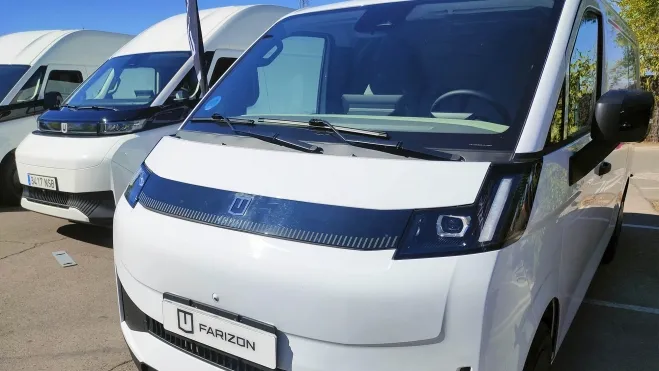
V7E: An electric van for the last mile
The second model in the range is the Farizon V7E, a more compact version designed for urban use. It has a length of 4.995 meters, a width of 1.82 meters, and a height of 1.985 meters, with a cargo volume of approximately 7 m³.
The V7E uses the GXA-M electric platform and structurally separates the body from the chassis. This architecture allows for modifications to the battery pack, fenders, and various mechanical components to adapt the vehicle to different professional applications.
There are two battery options available, with capacities of 50.23 and 66.67 kWh. The AMH indicates ranges of up to 240 km WLTP for the smaller battery and 329 km WLTP for the larger one, with higher NEDC figures as well. The combined WLTP range for the version with the larger battery is 328 km.
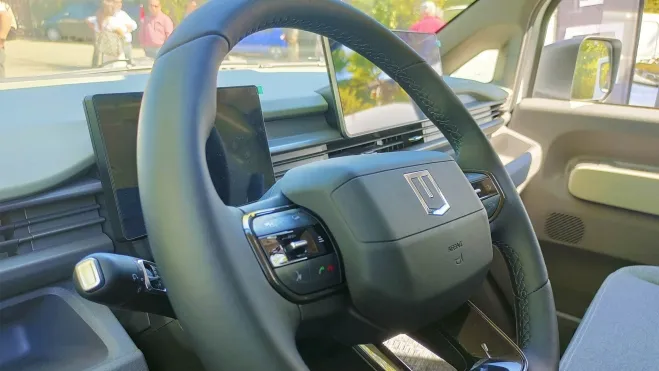
The payload capacity reaches up to 1,373 kg. The technological features include a 360-degree surround view camera, driving assistance systems, a 12.3-inch central display, and a 7-inch instrument cluster. The brand also highlights an interior layout closer to that of a sedan, with heated and ventilated seats along with various storage solutions.
Prices for professionals
One of the elements AMH discussed during the presentation was the price. For reference, the Farizon V7 equipped with a 50 kWh battery costs 23,500 euros plus VAT.
For the Farizon SV, the price starts at 36,600 euros plus VAT for the Super Van L1 H1 configuration with an 83 kWh battery. These are reference prices and may vary depending on the configuration and equipment.
Market data confirms the electrification of the sector
Farizon’s entry comes at a time when Spain’s electric commercial vehicle market has seen significant growth: 2,790 electric vehicles were registered in 2021, compared to 10,727 in 2025.
The evolution has not been linear: 2023 reached 10,200 units and 2024 dropped to 7,214, before new growth was recorded in 2025. As of May 2026, there were 4,821 units, which is 130% more than in the same period of the previous year.
The data published by Ganvam also confirm the strong growth of electric vans: 862 units were registered in May 2026, a 59% year-on-year increase, while the cumulative total up to that month reached 4,038 units, representing a 43.4% growth rate.