
AMG Lithium is opening a solid electrolyte testing lab in Frankfurt
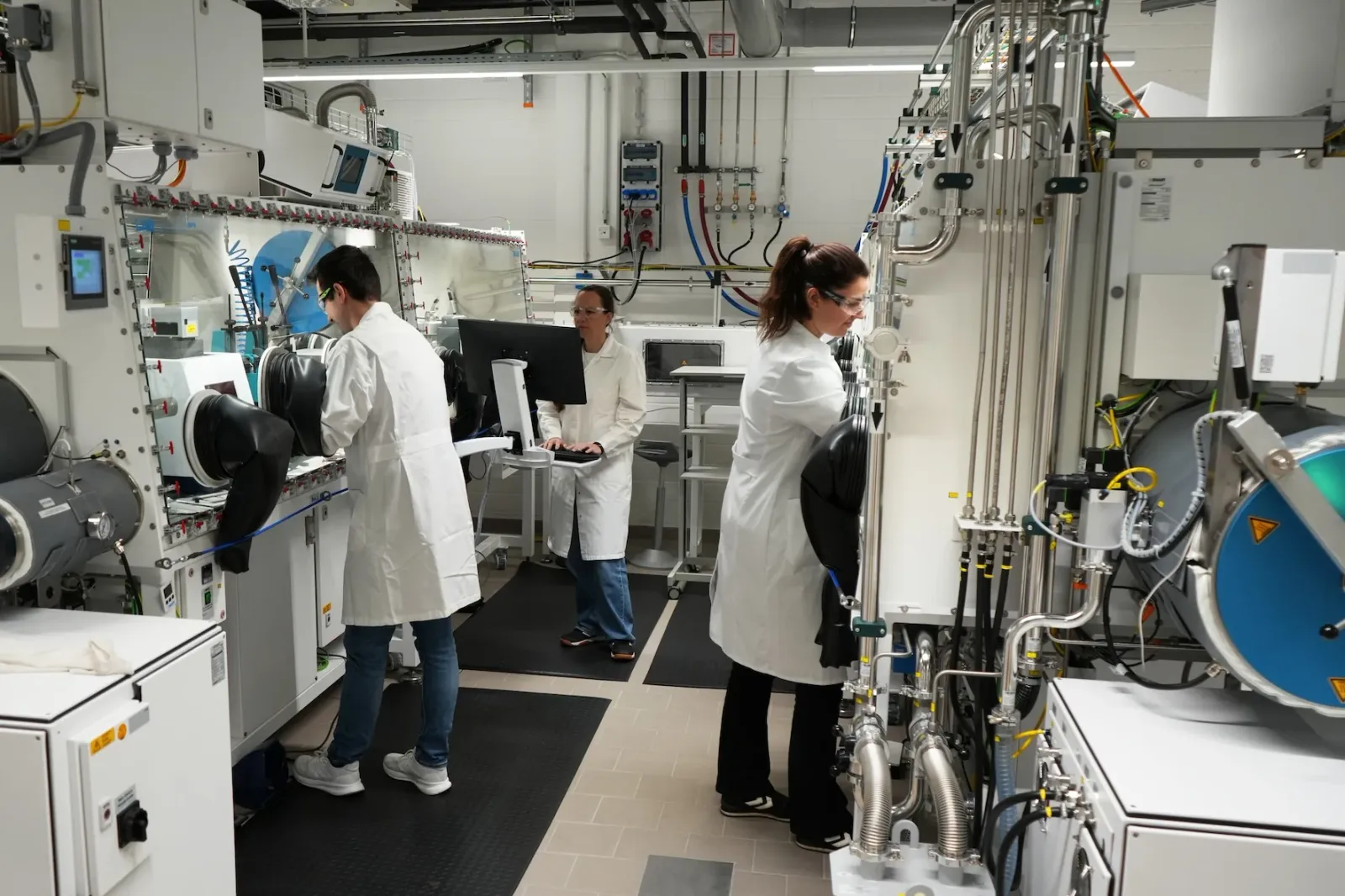
AMG Lithium has opened its new performance lab “PerLa” in Frankfurt. There, the company plans to test sulfide solid electrolytes under more realistic conditions in full-scale lab cells and further develop them together with customers.
AMG Lithium’s lab in Frankfurt for solid electrolytes.
Image: AMG Lithium
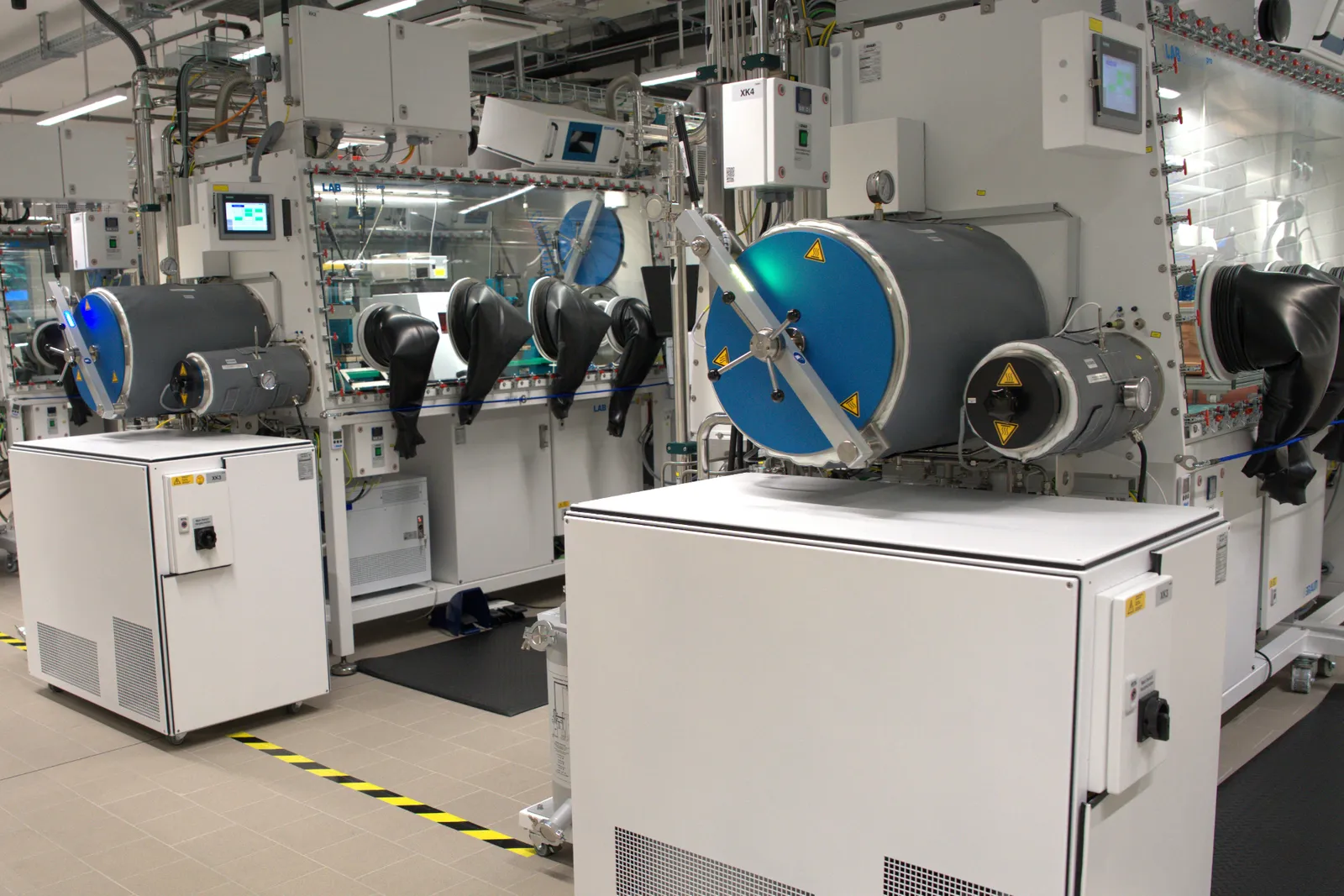
With this new lab, AMG Lithium is expanding its development activities for solid-state batteries at its Frankfurt site. The lab area has increased by 250 square meters to around 1,100 square meters. At its core is a glovebox line that allows the entire manufacturing process of lab cells to be carried out under controlled, inert atmosphere.
This includes the production of electrode pastes, coating, cell assembly, and finally packaging as pouch cells. According to the company, more than 200 testing stations are available for electrochemical studies.
The key advantage lies less in additional laboratory space and more in the ability to test materials under conditions closer to real-world applications. AMG Lithium can now characterize its solid electrolytes not only at the material level but also in complete battery cells using standardized test protocols.
This is intended to facilitate joint development projects with customers. By doing so, AMG Lithium positions itself more strongly at the intersection of material development and cell validation. However, this does not imply industrial-scale cell production.
Focus on sulfide solid electrolytes
AMG Lithium is developing sulfide solid electrolytes in Frankfurt for future solid-state batteries. Such materials are intended to replace the liquid electrolytes used in current lithium-ion cells. This technology promises advantages in energy density and safety, but it still faces challenges related to material stability, cell integration, and industrial production.
That is precisely why validation in complete cells is crucial. Material properties that perform well on a laboratory scale must also prove effective when combined with electrodes, interfaces, and actual manufacturing processes.
With PerLa, AMG Lithium will now take this step more closely within its own organization. The company describes it as a crucial component for launching its solid electrolyte technology into the market. However, AMG Lithium has not yet provided any specific details regarding customer projects, delivery agreements, or a potential increase in production for the solid electrolytes.
Meanwhile, the company is expanding its industrial base for battery materials in Germany. In Bitterfeld-Wolfen, AMG Lithium is increasing its capacity for producing battery-grade lithium salts. To achieve this, the company will receive 36 million euros from the federal STARK funding program, bringing the total investment to 180 million euros. The planned annual capacity is 20,000 tons of battery-grade lithium compounds. According to the Federal Ministry of Economics, this corresponds to an annual battery production capacity of around 34 GWh.
_Source: Information via email_