
“Safe and low-cost energy storage,” claims this professor at the University of Florida about the battery that challenges lithium.
18/10/2026 22:00
Updated to
18/10/2026 22:00
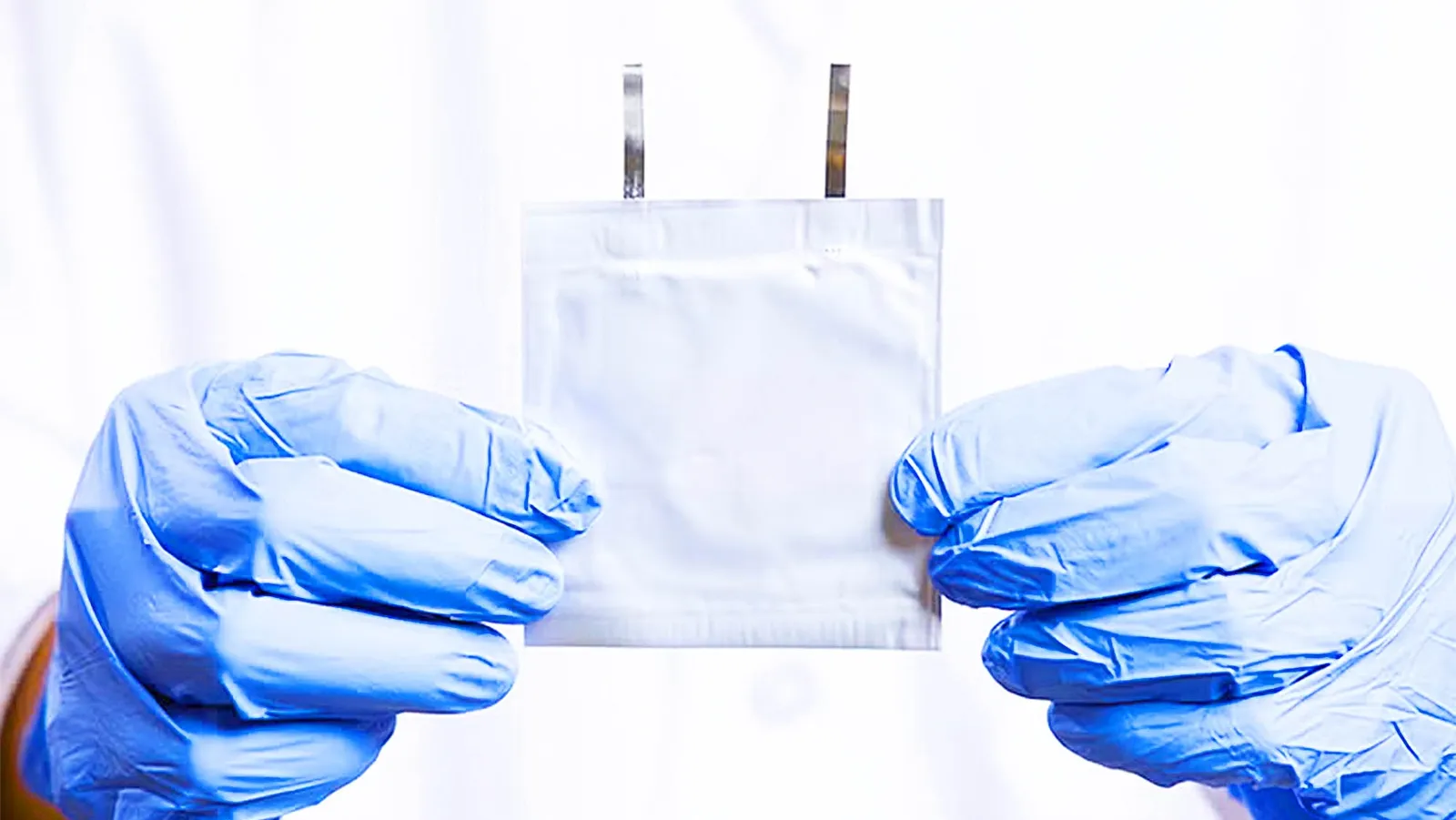
A team from the FAMU-FSU College of Engineering, the joint engineering school of Florida A&M University and Florida State University, has developed an aqueous-based zinc-ion rechargeable battery aimed at finding applications in large-scale energy storage as well as in home systems.
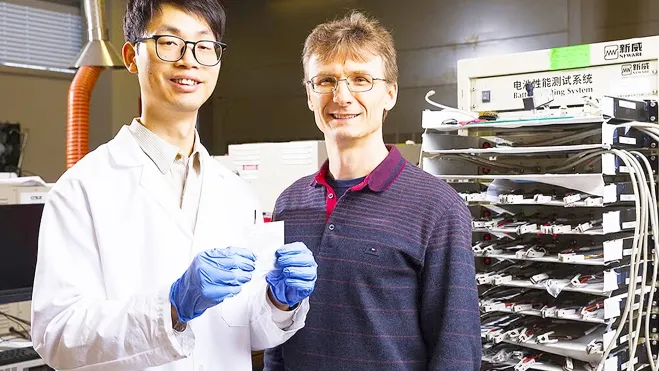
The research, led by Professor Petru Andrei and doctoral student Peng Wang, was published in ACS Omega and relies on low-cost materials along with a simpler assembly process than usual.
A Challenge to Lithium
The advancement comes at a time when lithium-ion batteries remain the industry standard, but they suffer from two persistent problems: the risk of overheating and their flammability. Added to this is their environmental impact, a factor that has prompted various research groups to explore alternatives with greater safety and lower impact.
In this context, zinc-ion aqueous batteries, known as AZIBs, have gained attention due to their low cost and more environmentally friendly profile, although their expansion has so far been hindered by technical limitations.
The key indicator of this advancement’s significance is its durability: the battery retained its capacity after over 900 rapid charge and discharge cycles, a figure researchers cite as a solid foundation for considering its use in real-world applications such as homes, power grids, and large-scale backup systems.
The main obstacle has been the growth of dendrites—tiny metallic structures that form during charging and can penetrate the battery’s internal barriers, causing short circuits and leading to premature failure. This is compounded by manufacturing complexity and a lack of long-term stability, three challenges that have hindered its transition from the laboratory to more ambitious industrial applications.
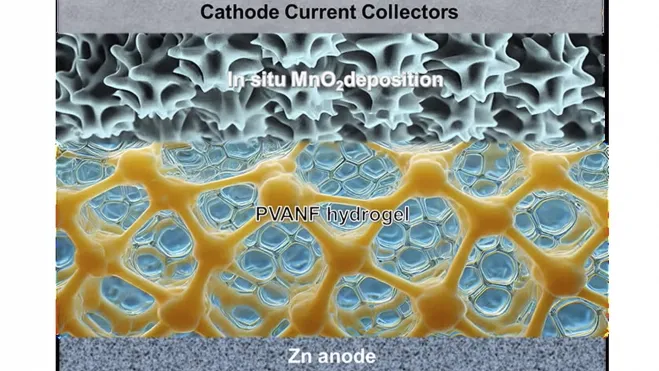
The team from Florida’s proposal aims to address this weakness by designing the electrolyte itself. Rather than using conventional methods, the system incorporates a specialized hydrogel with in-situ electrodeposition of manganese dioxide, so that one of the critical components is formed within the cell during assembly rather than as a separately manufactured part to be inserted later.
According to the researchers, the entire process takes place in water using a non-flammable hydrogel that helps stabilize the battery and prevent the formation of dendrites.
That hydrogel is composed of polyvinyl alcohol and aramid nanofibers derived from Kevlar, the material used in bulletproof vests. This combination creates a flexible yet strong network capable of retaining electrolytes and serving as a physical barrier against zinc, which forms the dendrites. According to the authors, the result is a battery that can be charged and discharged quickly without relying on hazardous solvents or intensive energy drying processes.
The difference also lies in the manufacturing process. While the traditional method requires mixing powders with solvents to create a thick paste, coating metal sheets, and then subjecting them to prolonged drying, the new technique eliminates this slurry mixing step entirely. This reduces the need for equipment, quality controls, and production stages, which, according to researchers, facilitates its integration into industrial lines.
Beyond the laboratory, the project’s interest lies in its potential applications. The authors highlight network-scale storage, which is crucial for managing power generated from sources such as solar and wind, as well as home backup systems, flexible electronics, and portable medical devices—areas where the flammability of conventional batteries poses an additional risk.
Andrei believes that the future of this technology depends on developing safe, low-cost storage with long cycle life, even if it means not achieving the highest energy density available on the market.