
Alfa Romeo is developing new models while continuing to use several different powertrain technologies
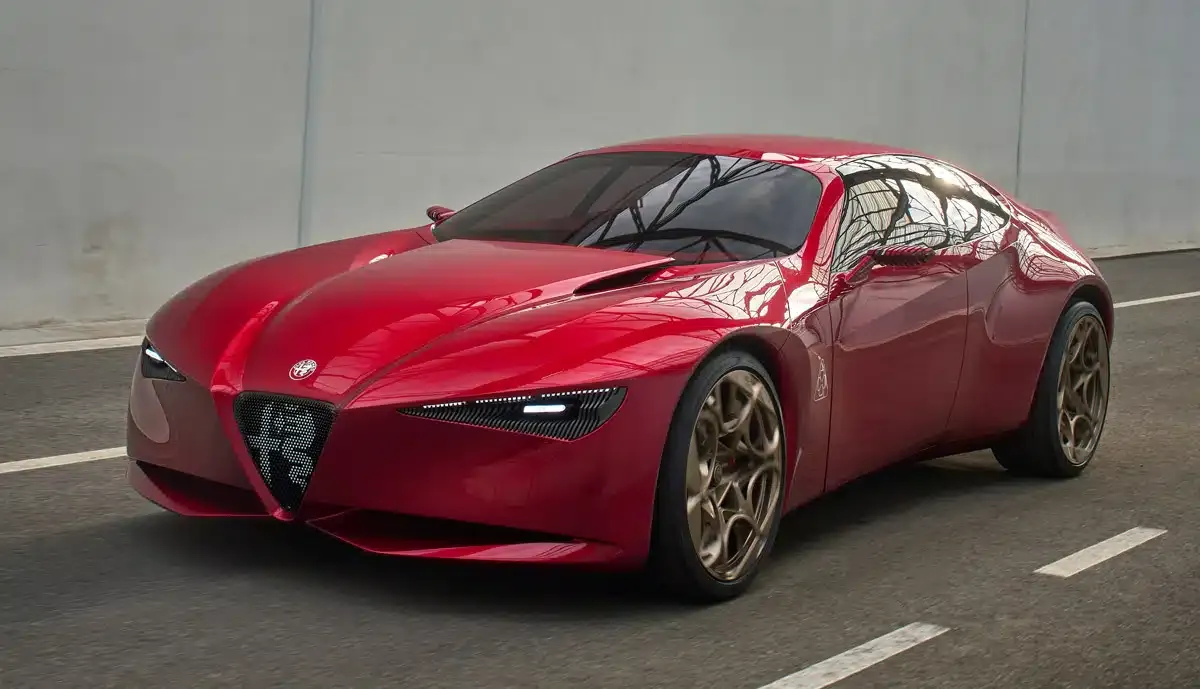
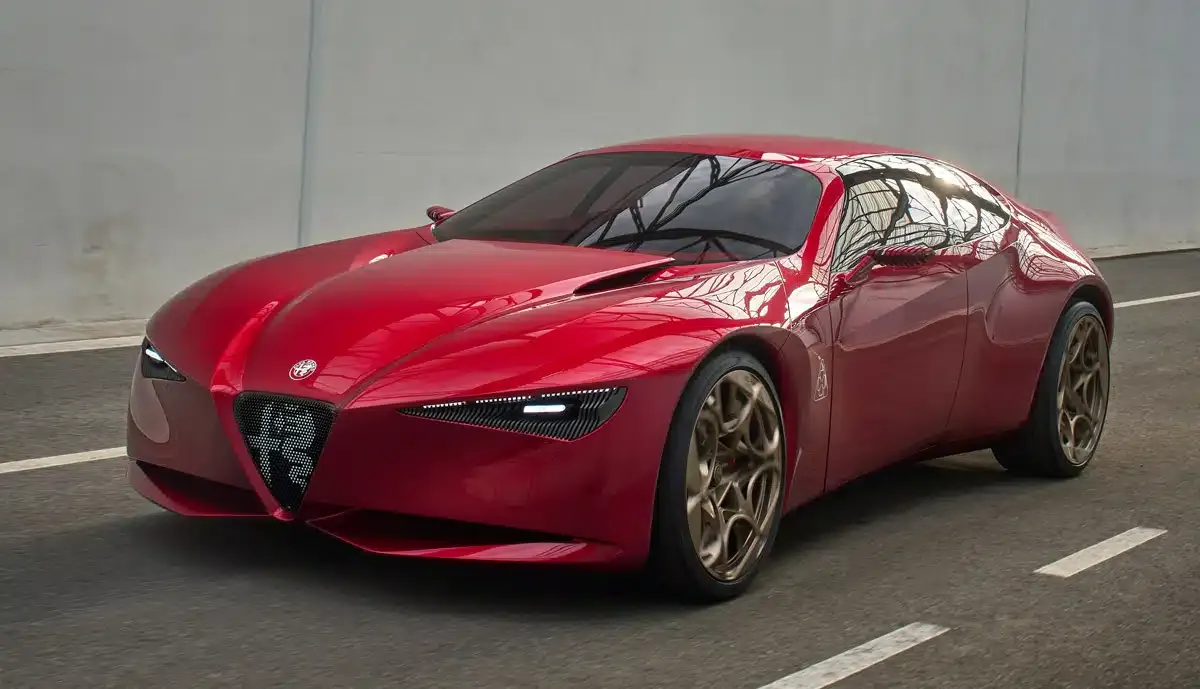
Image: Alfa Romeo
In an interview with B2B Movement, Alfa Romeo’s CEO outlined the brand’s future strategy and its focus on various propulsion technologies. The recently unveiled concept car Cuorerosso serves as a manifesto for this new era of electrification, aiming to inspire future models of the Italian Stellantis subsidiary.
The future propulsion strategy is based on a multi-energy approach. Alfa Romeo plans to offer a range that includes fully electric solutions, plug-in hybrids, mild hybrids, and full hybrids. According to brand chief Santo Ficili, the goal is to meet various usage requirements and put technology at the service of driving pleasure and sportiness.
The interior design of the new models calls for a reduction in screens. The focus is to be on driving, thereby minimizing distractions from large displays. Instead, more analog control elements with tactile feedback are intended to be used. “We definitely don’t want displays in a home theater format,” said the CEO.
Regarding the model portfolio, production of the Tonale, Giulia, and Stelvio will continue until the end of next year. The Giulia and Stelvio, including their highly sporty Quadrifoglio versions, will be produced until 2027. For the mid-size segment, new interpretations using Stellantis’ flexible architectures are being considered.
Starting next year, the introduction of a new C-SUV is planned, followed by a hatchback model in the compact segment. The latter is intended to be inspired by earlier models such as the 147 and Giulietta. According to the CEO, both new vehicles will be equipped with various powertrain technologies, including fully electric options.
Alfa Romeo does not rely on a single technology but uses flexible architectures for different segments and market conditions. According to Ficili, the character of an Alfa Romeo should be defined beyond the engine through steering, suspension tuning, design, and the emotional connection between driver and vehicle.
While Alfa Romeo utilizes platforms from its parent company Stellantis, the brand aims to stand out through its own design, specific proportions, and driver-focused tuning. The shared architectures are intended to serve as a foundation for vehicles that remain recognizable as authentic Alfa Romeos.
Also interesting
About the author
Thomas Langenbucher is an expert in electromobility with professional experience in the automotive and financial industries. Since 2011, he has been covering electric vehicles, sustainable technologies, and mobility solutions for ecomento.de. Learn more.
Reader interactions