
Germany shut down its nuclear power plants and is now converting some of them into giant backup batteries.
Germany shut down its last nuclear power plant in April 2023, concluding a process of abandoning atomic energy that had accelerated after Fukushima. This decision still sparks debate in the country today, with critics arguing it was made too quickly, especially since the development of alternatives did not keep pace and then Ukraine’s crisis arose. Now, some of those facilities are finding a very different second life: becoming massive electric energy storage systems.
The reason is quite simple. The old nuclear power plants not only had reactors, turbines, and cooling systems. They were also located in strategic points within the power grid and featured very high-capacity connections that would take years and a great deal of money to recreate from scratch. This makes them particularly interesting locations for installing large batteries capable of storing electricity when there is an excess and releasing it back into the grid when needed.
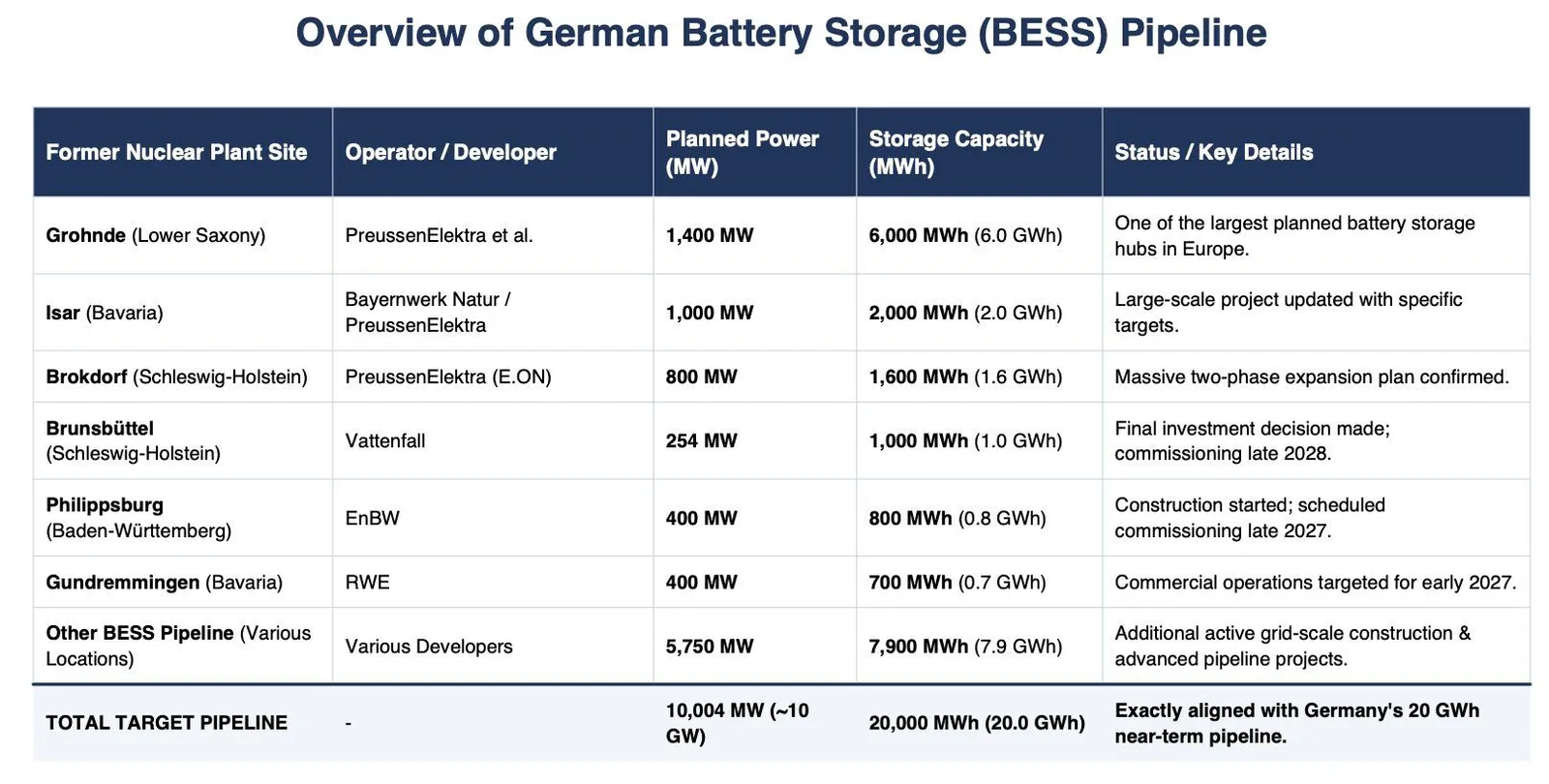
The movement is gaining momentum in Germany. One of the latest examples is the project announced by Vattenfall in Brunsbüttel, where the company has just made the final investment decision to build a 254 MW and 1,000 MWh facility at the site of the former nuclear power plant. It is scheduled to come online by the end of 2028 and will use the existing connection to the 380 kV grid.
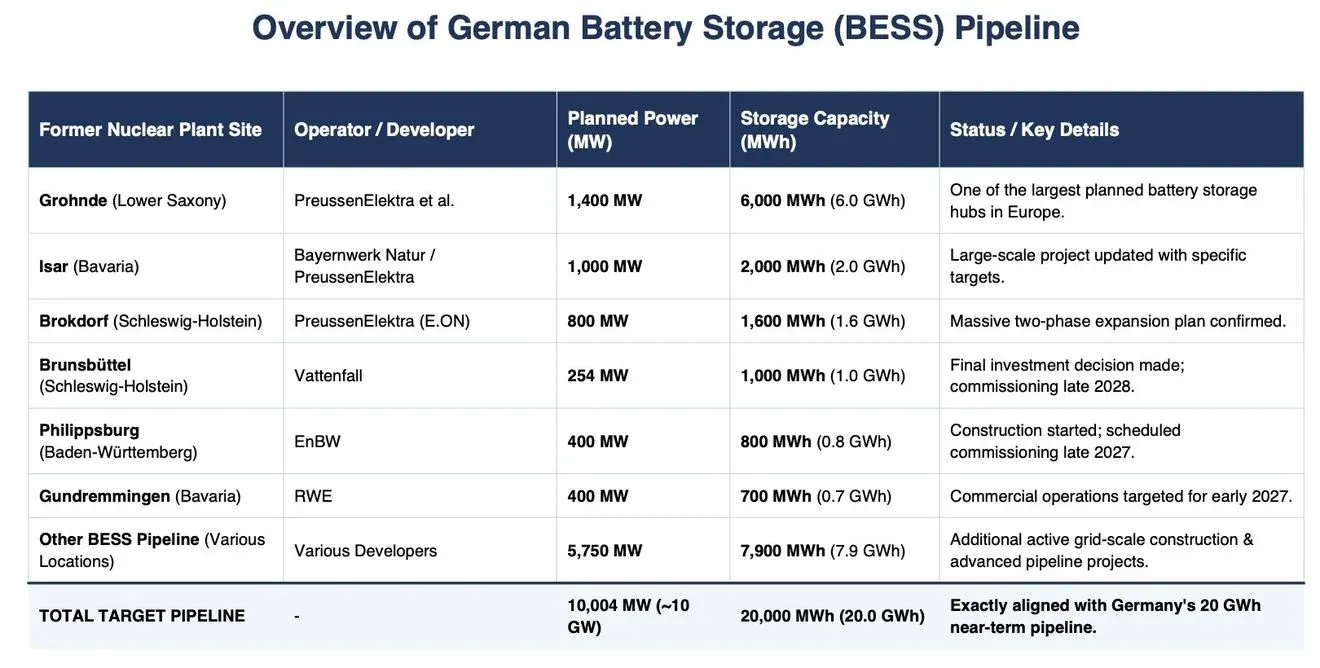
This is not an isolated case. In Gundremmingen, RWE is building another large storage facility with 400 MW of capacity and 700 MWh of storage capacity, also leveraging the connection to the grid from an old nuclear power plant. Commissioning is scheduled for 2027, with investments amounting to around 230 million euros.
In Philippsburg, the project is even more notable. At the site where two nuclear reactors operated, EnBW is constructing a battery with 400 MW of capacity and 800 MWh of storage capacity. Construction began in 2026, and it is designed to store electricity primarily from wind and solar energy and release it back into the grid when needed.
The logic behind these projects is precisely one of the major contradictions in Germany’s energy transition. The country has placed tremendous emphasis on solar and wind energy, but both face an obvious problem: they generate electricity when there is sunlight or wind, not necessarily when demand is highest.
That’s where batteries begin to play a key role. Instead of wasting part of the renewable electricity when there is an excess of production, large storage systems can absorb it and release it later. They can also respond within milliseconds to changes in the grid, helping to keep the electrical system stable.
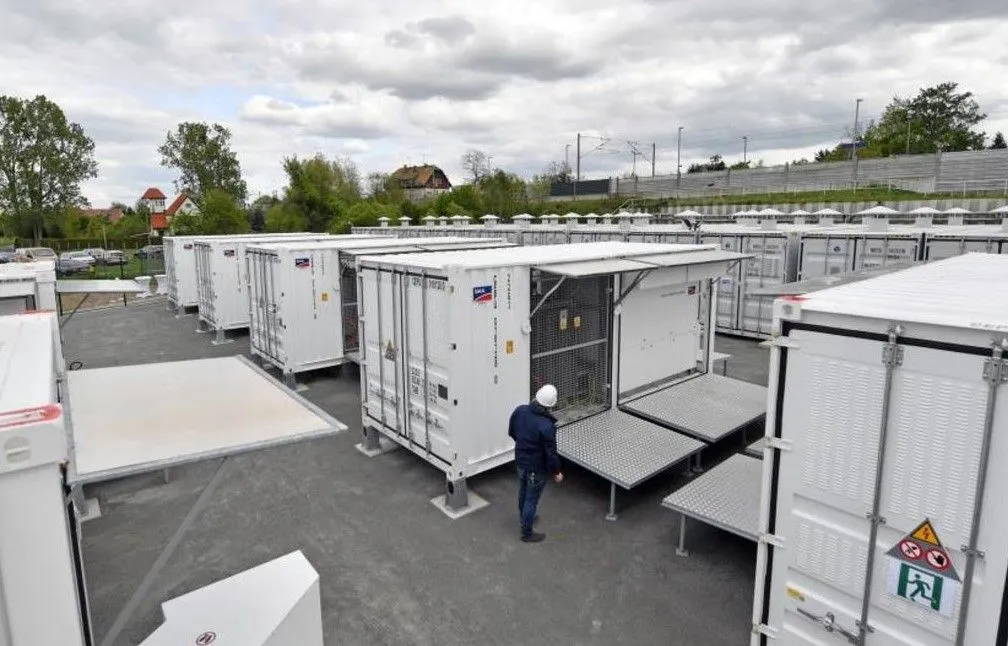
Germany is accelerating this process after several years during which large-scale storage progress was slower. According to Fraunhofer ISE, the capacity of large battery systems increased from 2.3 to 3.7 GWh in 2025, while the total storage capacity installed in the country approached 25 GWh. Their models also indicate a need for between 100 and 170 GWh of storage by 2030, depending on the scenario.
The reuse of old power plants also has an obvious advantage. A study by Fraunhofer ISE concludes that sites of former conventional and nuclear power plants could be particularly suitable for large-scale storage precisely because they already have high-capacity electrical connections. According to this analysis, such reuse could meet up to 65% of Germany’s storage needs by 2030.
The Isar 2 project shows that this trend continues to grow. In September 2026, plans were submitted to install a battery with a capacity of up to 900 MW at the site of the former Bavarian nuclear power plant, along with a data center. The location is particularly attractive due to its connection to the grid and the possibility of using existing electrical infrastructure to integrate new renewable energy sources.
Therefore, it is tempting to describe Germany’s old nuclear power plants as giant backup batteries, although there is a significant technical difference. A battery does not generate electricity like a nuclear power plant does. Its function is to shift electricity over time and provide flexibility to the system. It can be crucial for compensating for fluctuations in solar and wind power, but it requires electricity to store beforehand.
This also does not eliminate the need for other technologies capable of providing energy during prolonged periods of low renewable generation. Current batteries are especially useful for managing hour-long fluctuations, while covering several days with little wind and low solar generation will require other solutions, along with a much more powerful and flexible power grid.
Still, the change is striking. The same sites that for decades were among Germany’s main power generation locations are beginning to transform into storage hubs, leveraging connections that remain extremely valuable even though the reactors have stopped operating.
For a country that decided to permanently shut down its nuclear power plants in 2023, the situation carries a certain irony. Germany is dismantling its reactors, but in some of those same locations it is now building massive facilities capable of storing electricity and releasing it back into the grid when needed.
The final outcome is still to be seen. But if battery expansion continues at the current pace, these old nuclear plants could end up playing an important role in Germany’s new electricity system. Not as direct substitutes for nuclear energy, but as large-scale power storage for a grid increasingly dominated by solar and wind power.