
Volvo’s CEO, Akhil Krishnan, leaves no doubt: “We want to become a manufacturer of purely electric cars.”
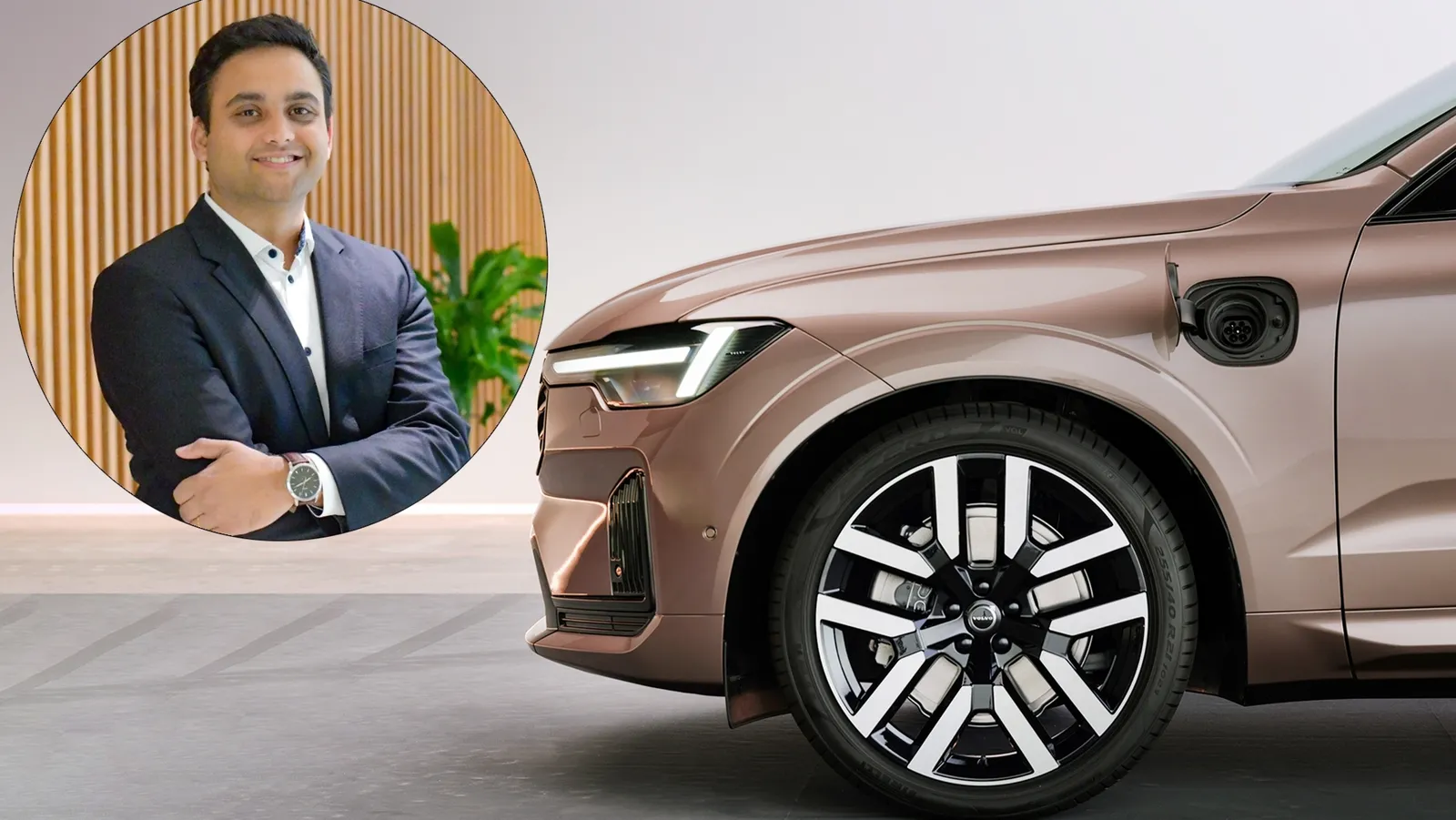
Volvo remains committed to becoming a manufacturer of purely electric cars, but it recognizes that some of its customers are not yet ready to completely abandon internal combustion engines. Therefore, the Swedish company has developed a new proposal aimed at narrowing the gap between these two technologies.
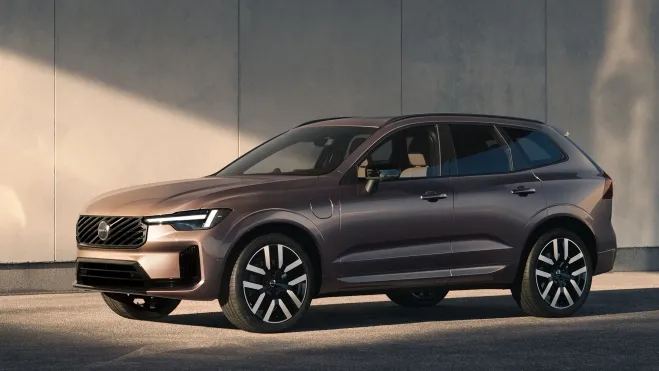
The star of this initiative is the future Volvo XC60 plug-in hybrid, an evolution of the popular SUV that will significantly enhance its electric capabilities. However, what’s truly interesting is the explanation provided by Akhil Krishnan, a Volvo executive, in an interview with the German magazine Automobilwoche.
Volvo Wants to Prepare Its Customers Psychologically for Electric Cars
"We want to become a manufacturer of all-electric cars, and that’s why we’ve invested heavily in new models like the EX60," explained Krishnan. However, he acknowledges that the current market situation requires offering alternatives for those not yet ready to make the transition.
Their main argument is particularly striking: "If the market isn’t ready yet, we want to offer a plug-in hybrid that prepares customers psychologically for an electric car." The executive added that when someone cannot drive an all-electric vehicle for any reason, Volvo wants to provide them "a car that comes very close to an electric one."
That is precisely why the brand has increased the battery capacity of the XC60 from 18.8 kWh to 41.2 kWh. With this, the SUV can travel up to 200 kilometers using only electricity. This range allows for numerous daily trips without needing to start the gasoline engine, reflecting the goal of gradually familiarizing drivers with electric mobility. “It still needs to be charged, but not daily like with the previous XC60. However, fast charging will remain exclusive to fully electric vehicles,” he specified.

Why Won’t Volvo Bring the Chinese XC70 to Europe?
During the interview, Krishnan also explained why Volvo has chosen to develop this new alternative instead of introducing the plug-in hybrid XC70 directly in Europe, which already exists in China and also offers around 200 kilometers of electric range.
According to the company’s official, the XC70 was developed specifically for the needs of the Asian market. Adapting it to European requirements would be too complicated, especially regarding aspects like towing capacity, which in this segment must reach 2,000 kilograms.
Volvo has also ruled out using an extended-range electric vehicle (EREV) mechanism, a solution that is becoming increasingly common among Chinese manufacturers. Krishnan believes this approach, in which a small combustion engine acts as an electric generator, does not deliver sufficient performance when the battery is depleted and the vehicle needs to pull heavy trailers. Therefore, the chosen alternative is a conventional plug-in hybrid with long electric range. In this setup, the gasoline and electric engines can operate together or separately, maintaining the capabilities Volvo deems necessary in Europe.
Up to 461 HP and a 41.2 kWh battery
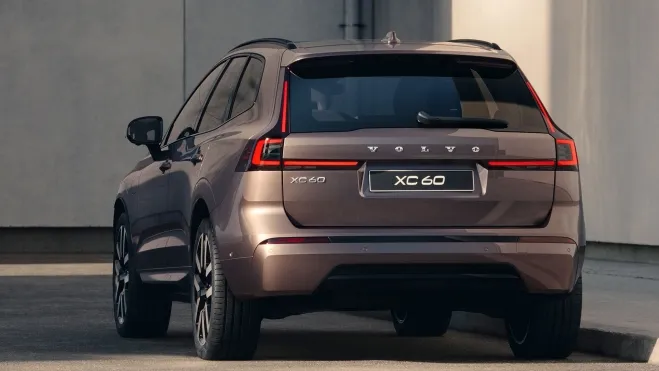
The new Volvo XC60 plug-in hybrid is available exclusively with all-wheel drive. Its electric motor increases power from the previous 156 to 180 horsepower and is combined with a combustion engine to deliver a total power of either 357 horsepower or 461 horsepower, depending on the chosen version.
Also depending on the version, the 0 to 100 km/h acceleration time is either 5.7 seconds or 4.8 seconds. The top speed remains limited to 180 km/h, in line with the manufacturer’s usual policy. The 41.2 kWh battery can be recharged via an external connection or using the gasoline engine itself. Volvo claims approximately 4 hours to complete a 0 to 100% charge.
The price comparison between the two technologies is also noteworthy. In the German market, the new XC60 Long-Range Plug-in Hybrid starts at 67,950 euros, whereas its all-electric alternative, the Volvo EX60, begins at 64,900 euros. In other words, the electric model is almost 3,000 euros cheaper in their respective entry-level versions.
