
AION is developing an affordable electric sedan with a range of over 600 km, fast charging, and Huawei technology.
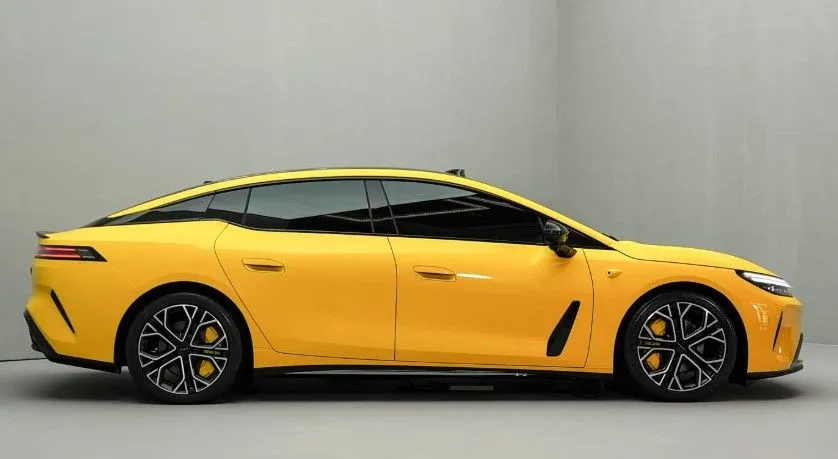
AION continues to expand its presence in Europe and has just introduced a model that could fit into a range still in its early stages on the continent. The new AION Ray7 is an electric sedan nearly five meters long that marks the debut of a new family of models for the brand, featuring a striking combination of Huawei’s technology, a cable-braking system, and tuning focused on dynamic performance as well.
The Ray7 was first introduced in China in August, and now, with the start of production, AION has unveiled its interior for the first time and opened early reservations. The model falls into the segment of large electric sedans, targeting young urban consumers. Its arrival comes at a particularly interesting time for AION, which is accelerating its expansion into Europe in 2026 with models such as the AION V and the AION UT.
The company, part of the GAC group, is already present in countries such as Spain, Portugal, Finland, Poland, Greece, and the United Kingdom, while preparing for a gradual expansion of its product range in the coming years. The brand has stated that it aims to offer six model lines in Europe by 2028 and eight by 2030, so the Ray7 could become one of the candidates to expand this lineup, although there is no official confirmation yet regarding its launch in Europe.
The AION Ray7 focuses on design, technology, and a more dynamic driving experience
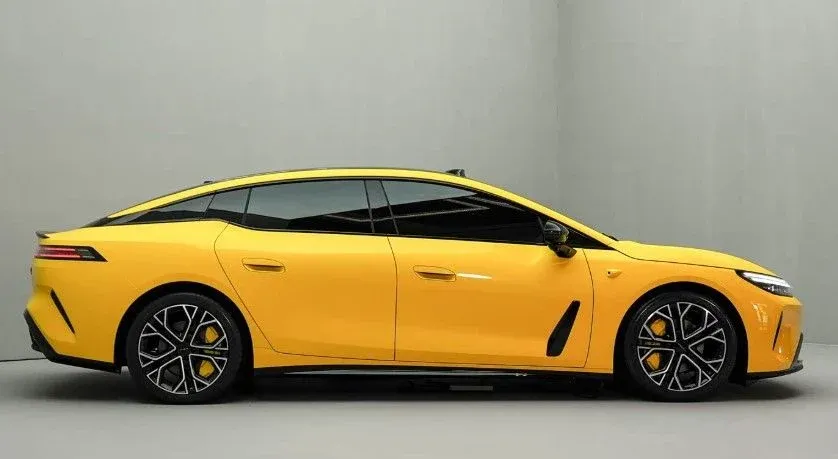
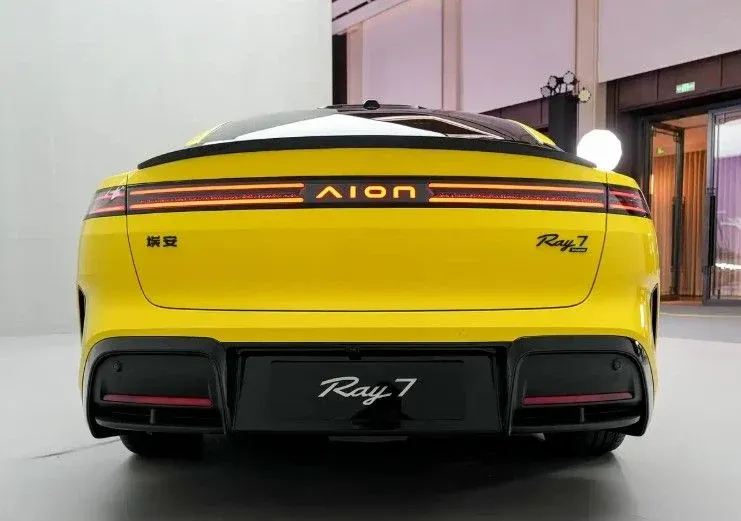
The new AION Ray7 features an electric sedan body style with a low and wide silhouette, clearly inspired by current sporty models. The front end adopts AION’s “quantum star ring” design language, while the body has undergone 14 aerodynamic optimizations to achieve a drag coefficient of 0.22.
Its dimensions make it clear this is a large vehicle: it measures 4.96 meters in length, 1.90 meters in width, and 1.46 meters in height, with a wheelbase of 2,920 mm. AION will also offer two particularly eye-catching colors, electric yellow and summer purple, using different painting processes to enhance the appearance of the body.
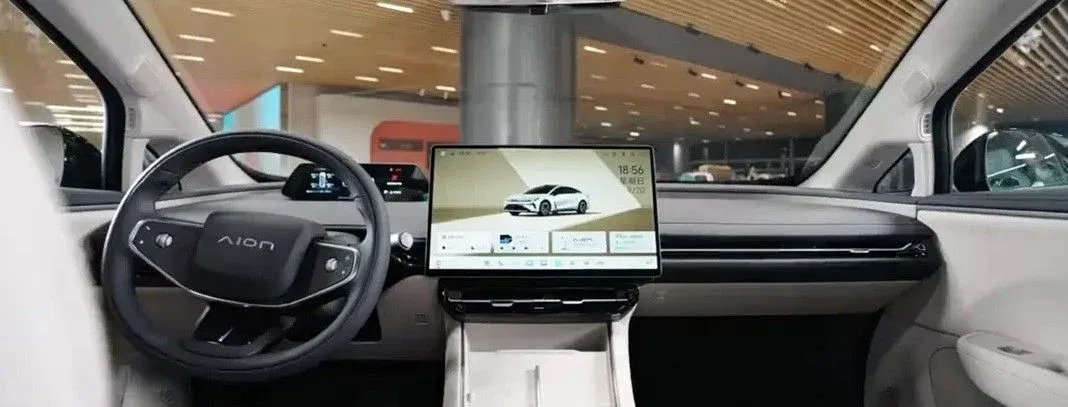
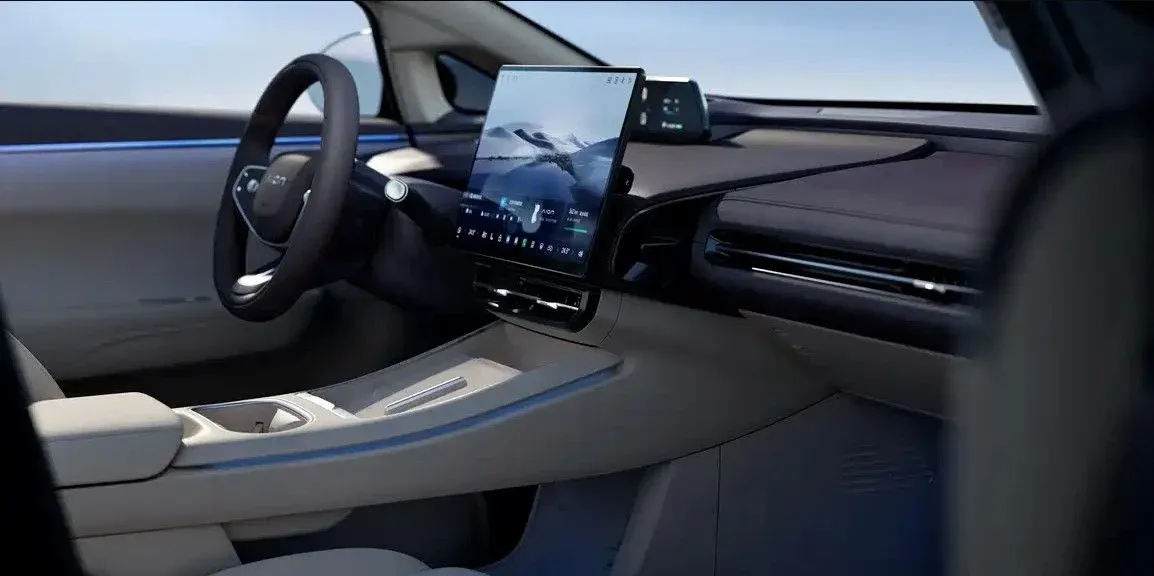
The interior follows a much simpler philosophy. The cockpit features a three-dimensional-designed digital instrument cluster and a three-spoke multifunction steering wheel, with the gear selector located behind the wheel. In the center of the dashboard sits a large touchscreen, and beneath it are integrated ventilation outlets, storage compartments, a wireless charging surface, and two cup holders.
The dashboard has a horizontal and uncluttered design, with a floating appearance intended to convey a lighter feel. The Ray7 also comes standard with integrated sports front seats, including an additional shoulder support. Other features listed include a large panoramic roof with three layers of solar protection.
However, the area where AION aims to set the Ray7 apart is in terms of dynamics. The car features a double-triangle front suspension and a five-link rear suspension, along with stabilizer bars on both axles, FSD variable-stiffness shock absorbers, and an HRS hydraulic rebound control system.
Add to this suite is one of the main innovations of the model: the Huawei Drive ONE architecture, which integrates motor and braking system control at the chip level. According to data provided by the manufacturer, communication between the various cores occurs with a latency of less than 10 microseconds.
The Ray7 is also the first model to combine the Huawei Drive ONE propulsion system with a fully electric EMB braking system. AION claims a braking distance of 33 meters from 100 km/h to a complete stop, along with a redundant architecture that can maintain braking capability even in an extreme scenario where all four wheel brakes fail.
The system is completed by Huawei’s iTRACK, which dynamically manages the torque available to the wheels. Its purpose is to enhance traction when the road surface has low grip, especially on wet or slippery surfaces.
The technological aspects are also top-notch. The AION Ray7 is equipped with 27 sensors, including a 192-line lidar and three 4D millimeter-wave radars. According to AION, the driving assistance system uses algorithms developed from the technology employed by WeRide in its level 4 autonomous vehicles.
Among the announced features is even the ability to navigate without entering a route in advance and find parking spaces. As with such systems, these capabilities and their actual performance will depend on regulations and the functions that are ultimately enabled in each market.
Regarding its mechanics, the Ray7 uses a single electric motor located at the rear axle, with a maximum power of 180 kW, equivalent to around 245 horsepower. The propulsion system comes from Huawei and works together with the 28-element thermal management system developed by AION.
The brand has announced a range of 700 kilometers under China’s CLTC cycle for the Ray7. Applying an approximate adjustment to convert this figure to a similar WLTP scenario, we would be looking at an estimated range of around 609 kilometers.
AION also highlights the model’s energy consumption and the integration of its thermal management system, with the battery utilizing the company’s Magazine Battery 2.0 technology. Early released data also suggests batteries supplied by CATL, though the exact capacity of the battery pack has not been specified in the information presented alongside the interior reveal.
For now, AION has also not announced the final price of the Ray7. In China, the pre-order process has just begun, requiring a deposit of 299 yuan, with various benefits for early buyers including discounts on the purchase price, additional equipment, and priority in delivery.
The launch of the Ray7 comes at a time when AION is trying to move beyond being an unknown brand among European consumers. The AION V is already available in several markets on the continent, and the AION UT was added to the lineup in 2026, as the company expands its sales network and local infrastructure.
In Spain, GAC officially launched AION during the summer with the AION V and AION UT as the first models, as part of a strategy to continue expanding its lineup in the coming years. The company has also begun European production of the AION UT at Magna’s factory in Austria, a move that underscores its commitment to locating part of its operations on the continent.
In this context, the Ray7 would fit, in terms of size and positioning, into a segment that is increasingly dominated by Chinese electric sedans. It has not been confirmed whether it will be sold in Europe, but its emergence is particularly significant because AION has made it clear that it intends to significantly expand its European catalog.
If the Ray7 eventually crosses into Chinese markets, it will do so equipped with some technological features that are uncommon in its segment, particularly the combination of Huawei’s propulsion system, fully electric braking, and a platform designed to deliver more dynamic performance. For now, we must wait to see if AION decides to make this new electric sedan part of its upcoming expansion in Europe.