
AgNes and MiSpeL: New rules for charging parks and two-way charging
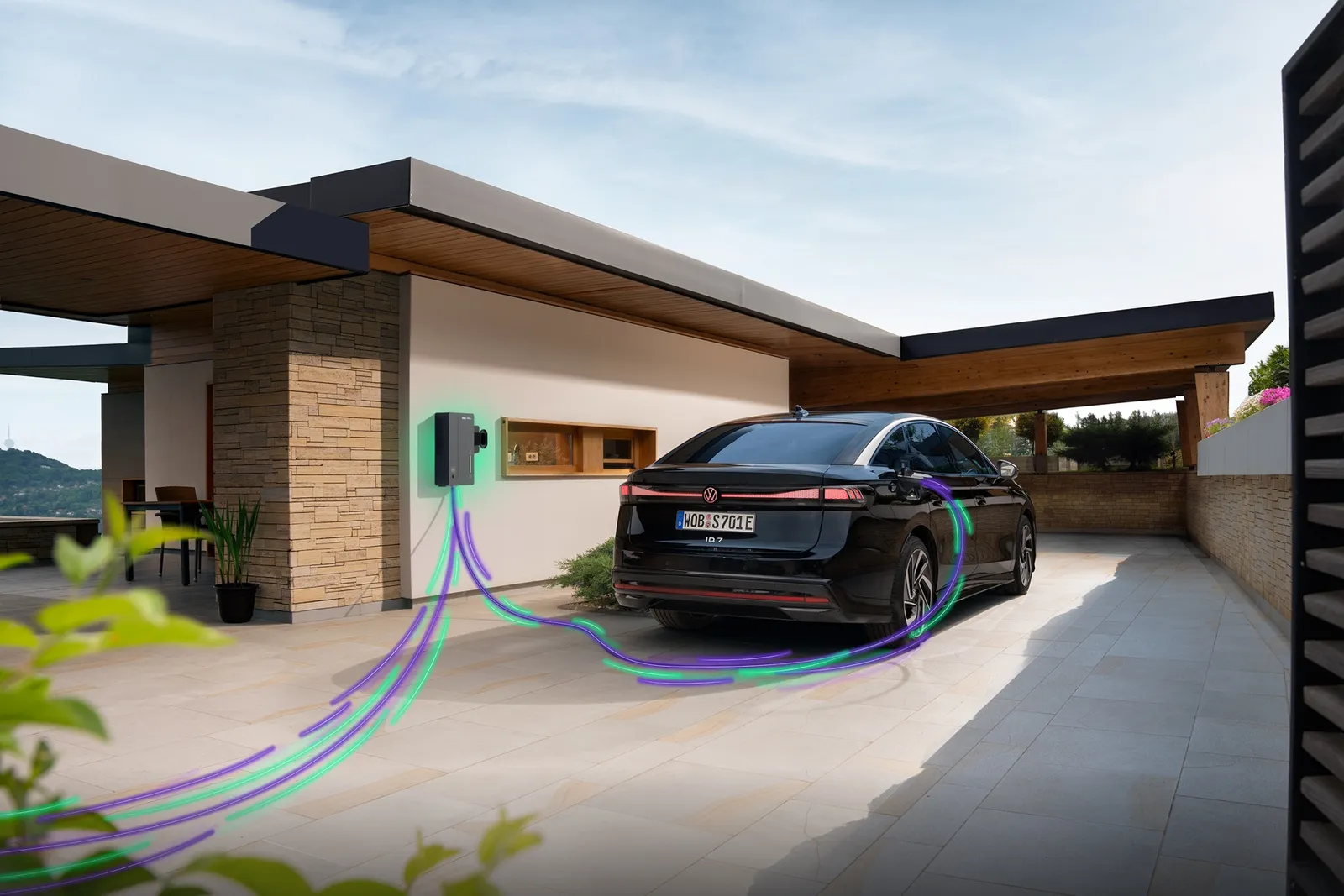
The Federal Network Agency is simultaneously refining the reform of electricity grid fees and the market integration of energy storage systems. Large charging parks are expected to pay more in the future for the connected capacity they use. This also creates the desired foundation for two-way charging, thereby reducing grid electricity fed back into the system from costs and surcharges tied to consumption levels.
The Federal Network Agency has been working for some time to equate two-way charging with stationary storage: Now the agency has released the final draft for reforming the General System of Electricity Network Charges, or AgNes, for public consultation. Comments can be submitted by September 18, 2026. The framework regulation is expected to be approved by the end of 2026 and further detailed in 2027. Starting in 2029, the new system is intended to replace the current Electricity Network Charges Regulation.
Meanwhile, the agency has published an update on the status of market integration for storage systems and charging points, known as MiSpeL. This does not involve a new consultation process. Instead, the documents aim to outline the measurement, allocation, and billing rules that AgNes can apply to storage systems and two-way charging points.
Connection capacity becomes more important for charging stations
For low-voltage customers with an annual consumption of up to 100,000 kWh, the basic fee and a usage-based charge remain unchanged. However, so-called prosumers are subject to a surcharge of 70 to 90 percent on the basic network fee. In this context, prosumers refer to connection users who consume the electricity they generate themselves via, for example, a photovoltaic system using the same connection. A single wall box does not trigger this surcharge.
For low-voltage connections with an annual consumption exceeding 100,000 kWh, as well as for connections above the low-voltage category, a reservation capacity will be required in the future. The operator determines how much network capacity they want to maintain on a permanent basis and pays an annual capacity fee for it.
For energy consumption within this capacity, the regular rate AP1 applies. If the ordered capacity is exceeded, a higher rate of AP2 applies to the energy consumed during that excess usage. This rate is intended to be between 200 and 350 percent of AP1.
As a result, economic incentives to avoid peak loads increase for fast charging parks and electric depots. Intelligent load management, battery storage, peak shaving, and timed control of charging processes can help to work with a smaller ordered capacity. However, how specifically the reform affects charging costs depends on the prices set later, the utilization level of the location, and its load profile.
The draft provides for a retroactive billing calculation in the first calendar year for newly installed grid connections. The optimal ordering capacity is determined based on actual operation. This special rule does not automatically apply to charging parks connected to existing grid connections.
The equally important construction cost subsidies are not part of AgNes. They are handled by the Federal Network Agency through a separate process.
MiSpeL assigns electricity volumes at charging points
MiSpeL is intended to determine which measured electricity volumes at storage systems and bidirectional charging points can be taken into account for allocation privileges under the Energy Financing Act or for the EEG market premium. The rules explicitly apply to both public and non-public charging points.
The so-called boundary option is based on quarter-hour values. Consumption and generation are calculated against each other for every calendar month. It is also suitable for more complex setups involving PV systems, stationary storage, consumers, and bidirectional charging points.
A simplified flat-rate option is available for certain system combinations with solar panels totaling no more than 30 kWp. The relevant storage and bidirectional charging points must be assigned to the direct sales along with the associated generation systems. The use of this option is also subject to approval under anti-subsidy rules by the EU Commission.
A special feature of mobile storage is the so-called foreign tank electricity. If a vehicle releases more energy at a charging station within a month than it has absorbed there, at least the difference is treated as electricity charged elsewhere. This amount cannot be classified as eligible solar power at that charging station nor can it be offset against the local grid connection. MiSpeL generally balances the charging station as a whole, not a specific vehicle. Therefore, different vehicles can use the same bidirectional charging station.
Relief for Vehicle-to-Grid
For two-way charging, the two approaches complement each other: MiSpeL provides the calculation rules for determining the grid electricity that was previously drawn from and later fed back in. AgNes proposes exempting this amount fed back into the grid from the usage-based charges in electricity tariffs, provided it can be clearly distinguished through measurement techniques. Two-way charging stations are thus treated in the same way as stationary storage systems connected to an installation. This has been a long-standing demand of the industry.
This is intended to prevent electricity that is only temporarily stored in the vehicle and then returned to the grid from being treated under grid fee regulations as electricity that has been permanently consumed. However, it does not mean complete exemption from grid costs: the shared connection capacity remains subject to fees. Feed electricity and non-privileged losses are still considered load on end consumers. Unlike certain stationary storage systems, charging stations do not have any special provision for allocating storage losses differently.
For ordinary end-users, AgNes will not introduce any new, short-term network tariffs that respond immediately to grid conditions. The existing time-varying Module 3 for controllable consumer devices under Paragraph 14a of the EnWG will remain in place. In contrast, dynamic network tariffs are set to be introduced for storage systems at grid and substation levels 1 through 5 between 2030 and 2033. This could potentially apply to larger bidirectional charging parks or fleet locations in the future as well.
According to the still-unfinalized draft of MiSpeL, the regulations are scheduled to take effect on October 1, 2026. However, their application would only be possible with the consent of the respective grid and metering operator until September 30, 2027. AgNes is intended to form the basis for future network tariff systems starting in 2029.
In combination, AgNes and MiSpeL eliminate a significant regulatory hurdle for Vehicle-to-Grid: The electricity fed back into the grid can be identified and freed from certain volume-based charges. However, profitability still depends on measurement technology, the marketing of flexibility, and especially the management of costly connection capacity.
Flexibility is set to become more profitable in the future
In simple terms, MiSpeL determines which amounts of electricity are considered consumption during bidirectional charging and which are merely temporarily stored and later returned to the grid. AgNes then decides what grid fees apply. This is intended to prevent electricity from being charged twice with volume-based costs during charging and refeeding into the grid.
For operators of large charging parks and electric fleets, the reform means that it is no longer just the amount of electricity charged that matters. The permanently reserved and temporarily demanded grid capacity also becomes a cost factor. Those who intelligently manage charging processes, avoid peak loads, or use battery storage can therefore gain an advantage in the future.
AgNes and MiSpeL thus create important prerequisites for two-way charging and a more flexible operation of charging infrastructure. However, these regulations do not guarantee an automatic breakthrough for vehicle-to-grid technology. The costs of measurement equipment and marketing, the specific grid fees, and whether any revenue can actually be generated from the flexibility of vehicles remain crucial factors.