
Africa: In arid lands, solar-powered agricultural equipment
Increasing Africa’s agricultural productivity to reduce poverty is achievable, and solar-powered electric tools play a key role in this effort. This approach is especially valuable in countries like Malawi, where farming still relies on hand tools. However, machines and solar panels are expensive, and bringing electricity to villages is not always a priority over basic daily needs. To address this, a social program has been developed alongside technological solutions to ensure farmers can access these tools, making the transition possible even for those living in poverty.
A micro tractor to boost production and electrify villages
The electric micro-tractor, which we can describe as a solar-powered tiller, could boost agricultural productivity for farmers in Sub-Saharan Africa while also improving access to electricity. This is the dual goal of the project. On the technological side, Aftrak—a company founded by Loughborough University in England—is responsible for bringing this “electric micro-tractor” to market.
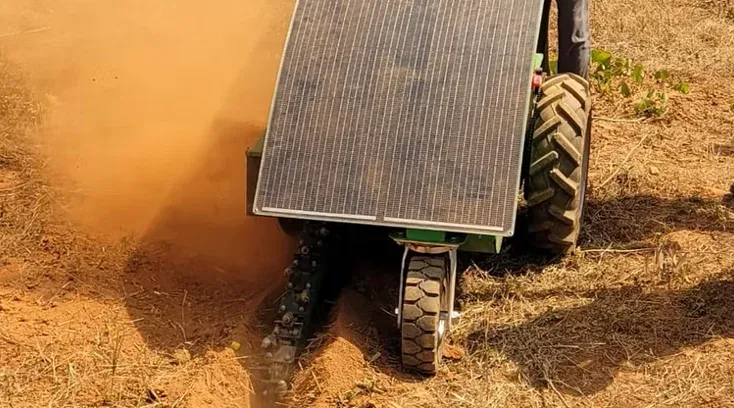
It is equipped with a steel coulter that penetrates the compacted soil layer typical of fields cultivated manually in Sub-Saharan Africa. What does this mean? Breaking through this layer and creating deeper furrows allows roots and rainwater to penetrate the soil, reducing erosion and maximizing water absorption.
Africa and electric mobility: Nigeria and Morocco driving change
In this way, the soil becomes more resilient to drought. This is the logic behind deep bed farming (DBF), a technique that involves deeper soil cultivation.
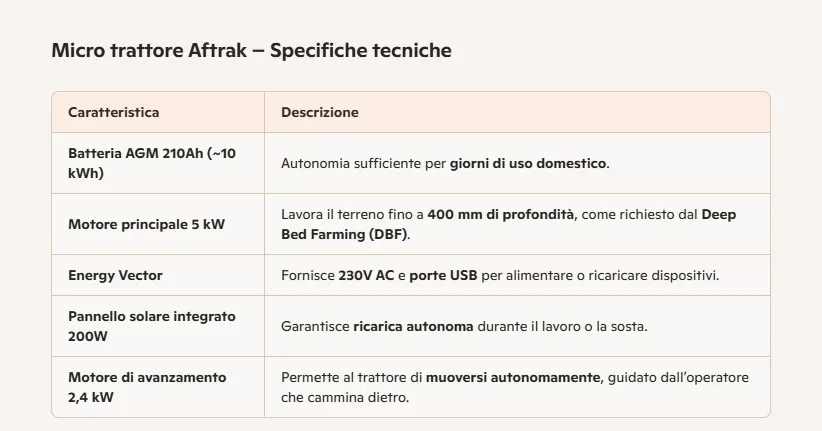
This technique, which in this case is associated with the solar micro-tractor, is developed and promoted by Tiyeni, a nonprofit organization focused on food security and poverty reduction. According to Tiyeni’s experience, the DBF can more than double agricultural yields and increase farmers’ incomes by up to nine times. Well, but to make the project effective in an area without electricity, the company combines mechanization with the sale of solar panels.
Solar boom in Africa: 100,000 new solar panels per day
In Malawi, in 2023, only 15.6% of the population had access to electricity; in rural areas, the percentage dropped to 6%. This is the reconstruction reported by the outlet Egypt Independent.
Solar energy comes after food
Technology alone is not enough to bring about change. Tiyeni argues that electrification is hindered when people do not perceive a sense of ownership or economic benefit. What’s the use of energy when food is the priority? Solar power combined with tractors could increase farmers’ incomes and, in the long term, enable them to afford electricity and solar panel maintenance — what Aftrak calls a «self-sustaining model of decentralized energy access».
Electrification is a cost, as emphasized by Aftrak’s project leader Jonathan Wilson, an instructor in sustainable energy systems at Loughborough University. “We need to address the lack of income and we need to address the lack of food, and only after that can we address the lack of electricity.” Therefore, it’s necessary to reduce the barriers to adopting this technology: that’s Aftrak’s model. Tractors will cost around $3,500 each, and solar panels about $1,500 per unit. The plan is to sell them to agricultural cooperatives, small businesses, and non-profit organizations, sometimes at a discount, to ensure the technology remains accessible. Farmers can rent a tractor on an hourly basis through a leasing app, powered by a central solar system.
Initial Tests and First Results
Aftrak won the $1 million Milken‑Motsepe Green Energy Prize in 2024. With funds from the prize, donations, and Tiyeni’s connections, Aftrak began testing its system in Malawi. It installed solar panels at an elementary school and a maternity clinic, and is experimenting with a combination of tractors and solar panels in the agricultural village of Mzamu in the north of the country, where 58 people live.
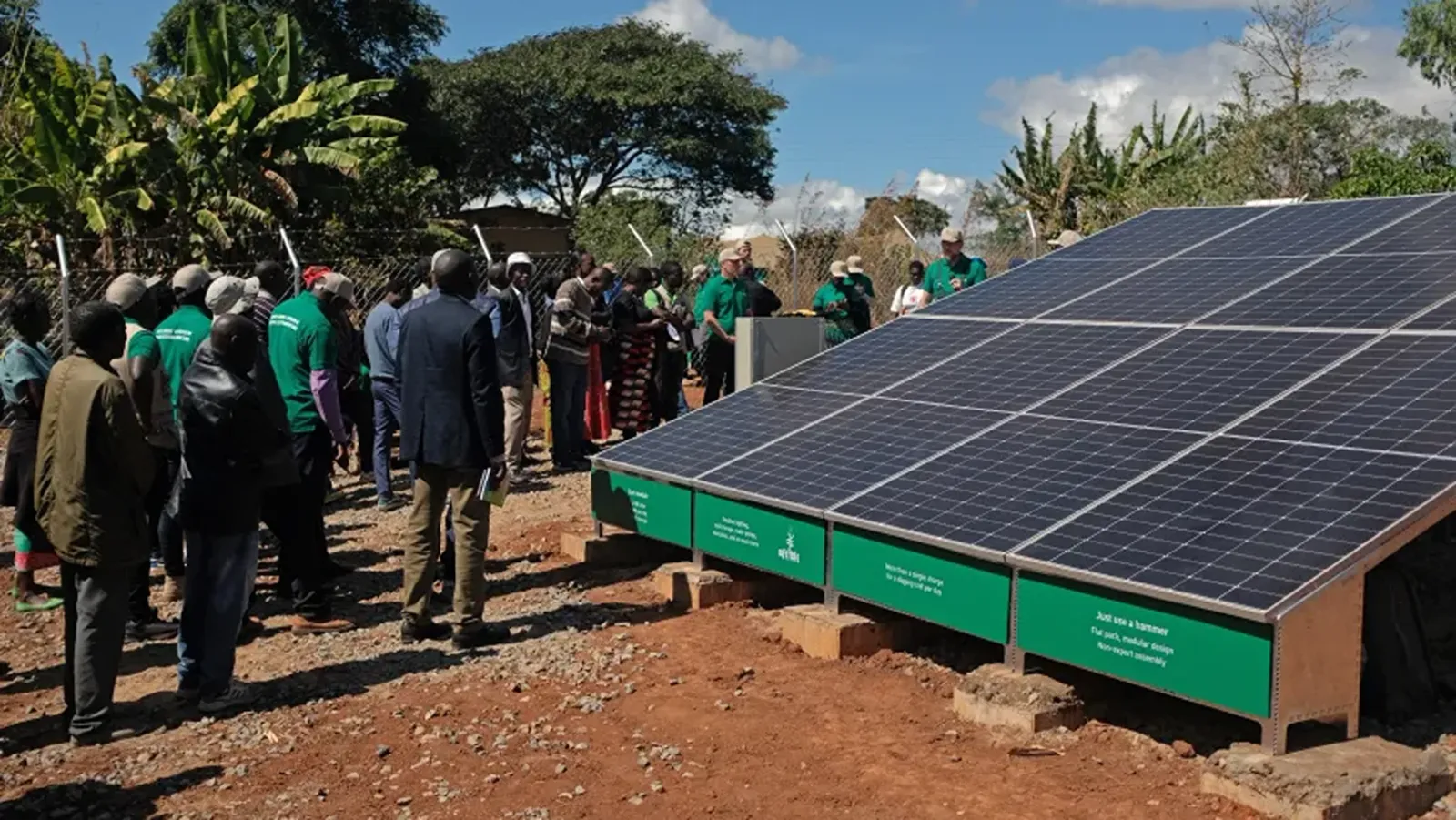
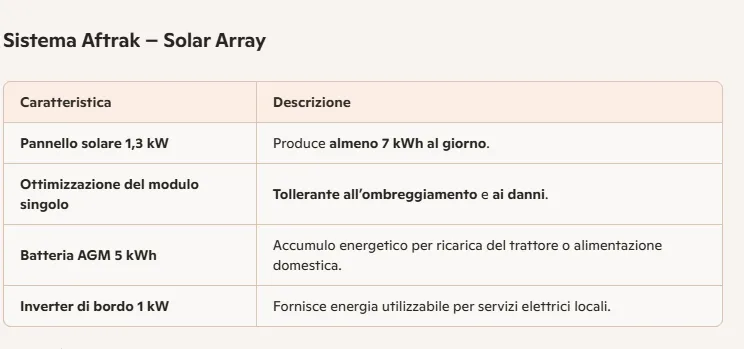
"Before Aftrak, we used shovels to dig the soil, and it was hard work. It could take three or four days," said Arnold Soko, 74, the village chief who grows corn, beans, and pumpkins, to CNN. "Now, with the tractor, it takes one or two days." After a day in the fields, farmers recharge the tractor using a module from the solar grid hub. Each module generates 7.5 kWh per day, enough to recharge the micro tractor or supply electricity to the community.
From the initial tests, villagers emphasized the importance of electricity, which has particularly improved children’s learning and thus their education. What about after the tests? Aftrak claims to have 100 tractors in production in the UK and intends to start manufacturing in Blantyre, Malawi, in partnership with INFLO Inc., a local renewable energy technology manufacturer. Local craftsmen will be trained to assemble the tractor kits and perform repairs.
The company plans to distribute its system to other areas of Malawi and later to Kenya, South Africa, Ghana, and Nigeria.
READ ALSO: Cardinals: Italian electric car going backwards. You need an alarm—watch the VIDEO
Previous Article
Ministry responds, excluding subsidies for charging stations
Next Article
The diesel engines' defeat in T&E's figures