
ADAC studies electric car charging losses
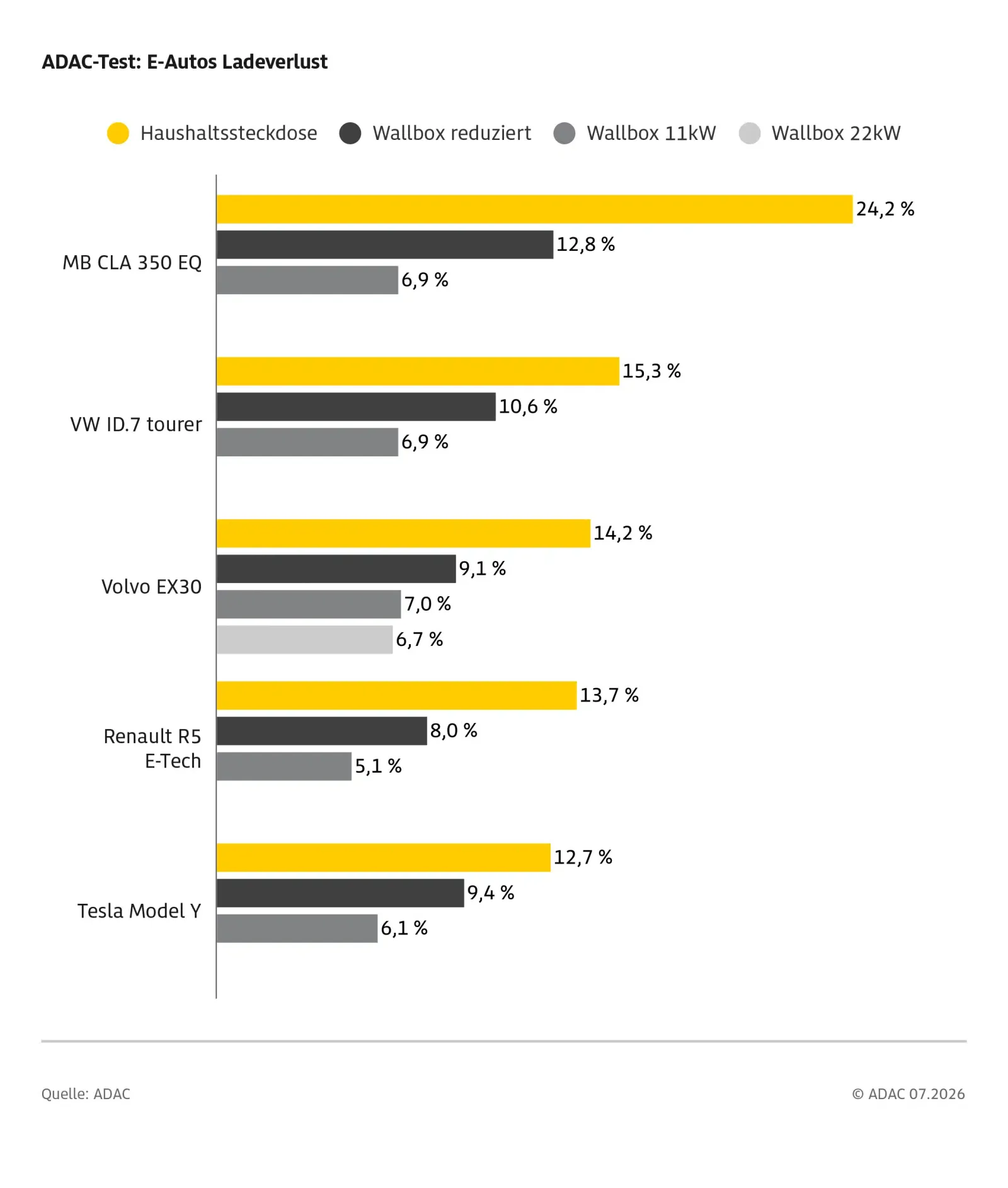
Image: Renault
When charging an electric car, not all of the electrical energy can be stored in the battery. This is because certain onboard systems in the vehicle remain active during charging and require power. Additionally, losses occur during the conversion of alternating current to direct current (AC/DC). The ADAC investigated exactly how high this additional energy demand is through a study using five current electric cars.
The vehicles were charged for evaluation using a household outlet and a wall charger. The charging processes at the wall charger were conducted at maximum power and at reduced power levels, thereby simulating charging with excess electricity from a photovoltaic system. According to the testers, the result is clear: charging at the 2.3 kW household outlet results in the highest losses across all vehicles.
The least efficient was the electric Mercedes-Benz CLA, with nearly a quarter of the electricity consumed not reaching the battery pack. For all other electric vehicles, losses were around 15 percent. Charging using excess power from a photovoltaic system is more efficient, even when the charging capacity is reduced to 4.2 kW due to low output. The losses for all vehicles in the study were below 13 percent.
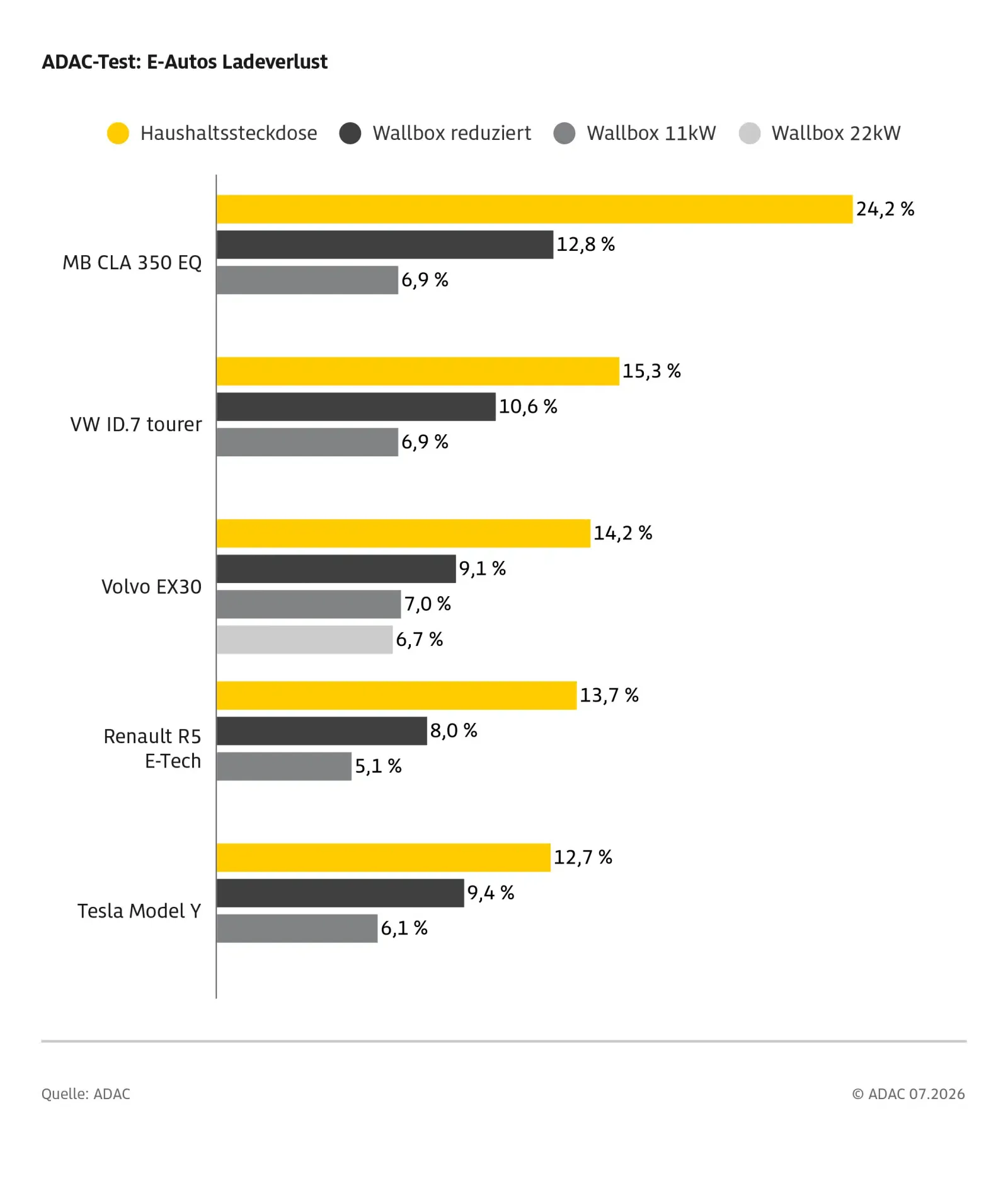
The most efficient way, however, is to charge electric vehicles using a wall charger with the highest possible charging power. Depending on the vehicle, this can be 11 kW or even 22 kW; in all cases, charging losses were below seven percent. The Renault 5 electric vehicle was the most efficient, showing the lowest losses both when charged using excess photovoltaic power and at a wall charger.
From ADAC’s perspective, these results confirm the existing recommendation: a household outlet is unsuitable for regular charging of an electric vehicle, not only for safety reasons but also due to efficiency issues, and should be considered only as a last resort.
Also interesting
About the author
Thomas Langenbucher is an expert in electromobility with professional experience in the automotive industry and finance sector. Since 2011, he has been covering electric vehicles, sustainable technologies, and mobility solutions for ecomento.de. Learn more.
Reader interactions