
ADAC study: “Dangerous security gap in emergency braking assist systems”
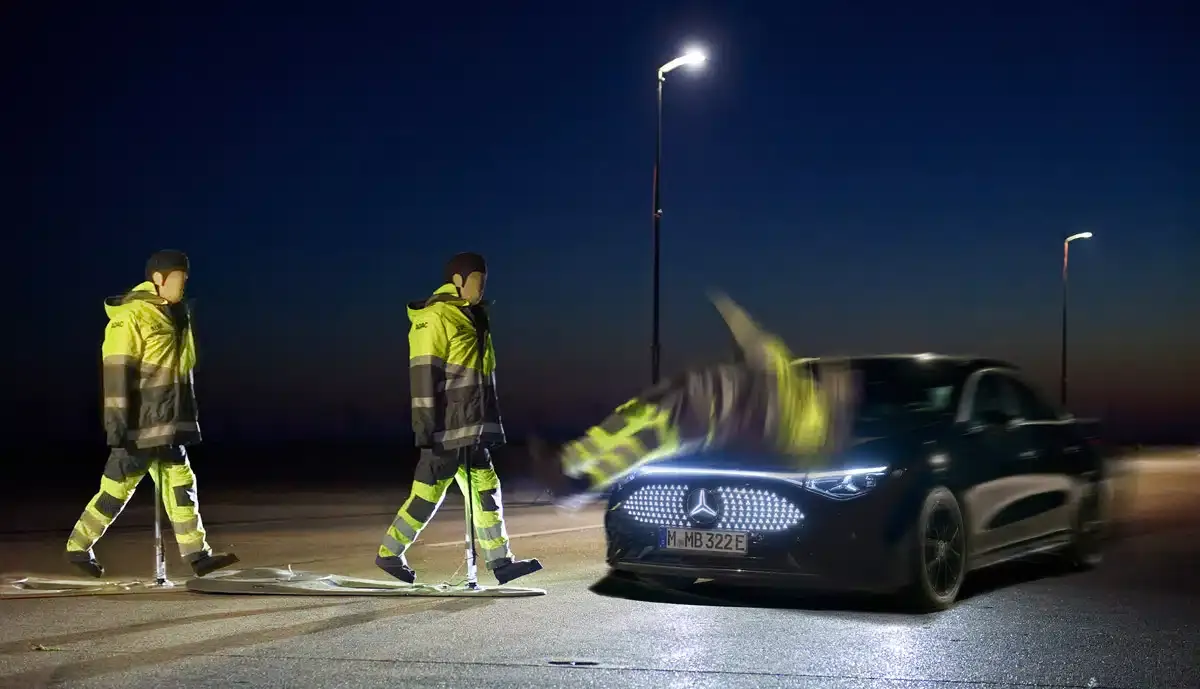
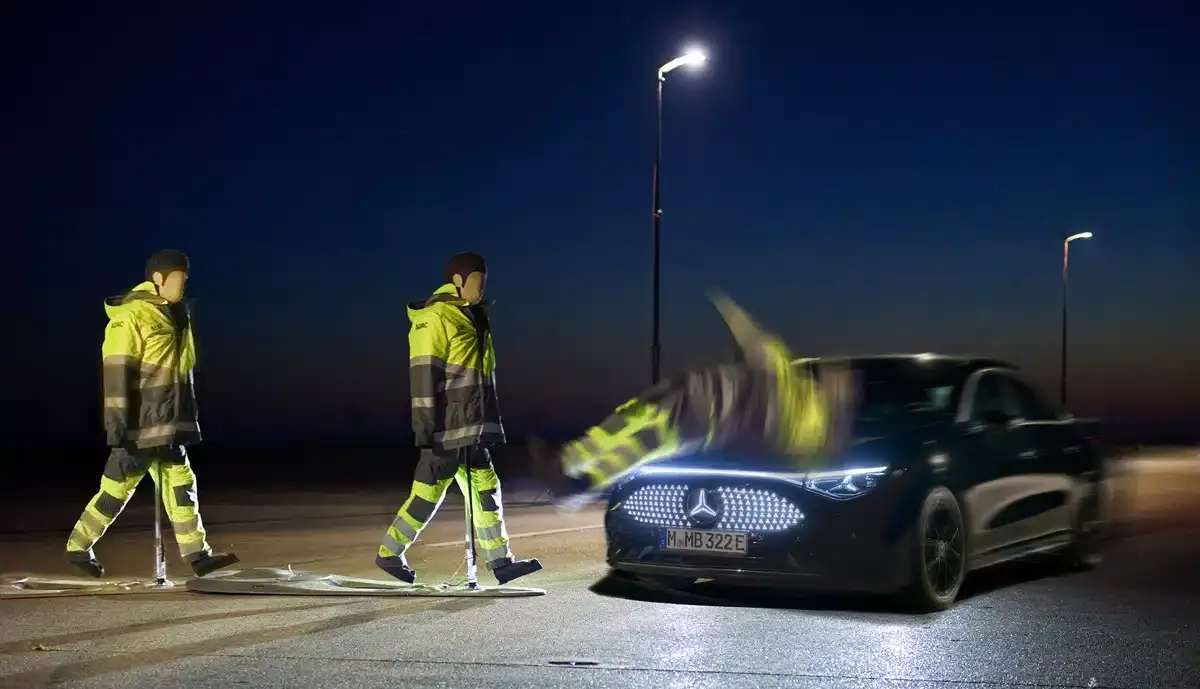
Image: ADAC | Uwe Rattay
During the darker months, many people wear reflective vests while on the road to be more visible to drivers. In a study using six vehicles, ADAC tested how well emergency braking systems can detect pedestrians wearing reflective vests or reflective clothing. Although this function is not required by law or under recognized testing protocols such as Euro NCAP, ADAC considers it a relevant scenario in road traffic. The results revealed “surprising security gaps” in the systems of all participating manufacturers.
To conduct the tests, it was first examined how the systems performed in darkness with a pedestrian dummy and a child dummy without protective clothing. The study investigated various speeds for each vehicle, with the highest speed at which an accident could still be avoided in each scenario serving as the basis.
In tests using an adult dummy dressed in a standard reflective vest, all vehicles recognized the scenario and were able to avoid a collision. The results were quite different when using standard work clothing, such as that worn by construction workers, emergency services personnel, police officers, or traffic wardens. Almost all vehicles failed to detect the pedestrian or did so too late to brake in time. “Equally fatal: although all cars recognized a child wearing dark clothing, nearly every system failed when dealing with a child in reflective clothing carrying a school bag,” criticizes the ADAC.
The auto club describes the findings as a “significant security gap” and urges manufacturers to make rapid improvements. Since the problem appears to lie less in the hardware and more in the classification of road users, it can likely be resolved in many cases through a software update. That detection is possible at all shows the Mercedes CLA: it was the only vehicle tested that was able to recognize a child wearing reflective clothing crossing the road behind a parked car.
According to ADAC, the results mean that for drivers, while assistance systems provide support, they are not yet capable of taking over driving tasks independently and without any errors. “The study results suggest that these vehicles are unable to detect, for example, a rescuer on the road in darkness. Since the driver always bears responsibility, they should never take their eyes off the road and take control in case of doubt,” said the testers.
At the same time, pedestrians or children should still wear highly visible warning clothing during dark seasons. It significantly improves visibility, making the safety benefit much greater than the risk of an accident caused by a braking assist system that fails to respond or responds too late.
The study examined the following vehicles: Mercedes CLA, Tesla Model Y, BYD Seal, Hyundai Tucson, Dacia Duster, and Opel Astra. The testers note: “The results for each vehicle are not directly comparable, as an individual reference speed was chosen for every vehicle. This approach is based on Euro NCAP’s night tests.”
Also interesting
About the author
Thomas Langenbucher is an expert in electromobility with experience in the automotive and financial industries. Since 2011, he has been covering electric vehicles, sustainable technologies, and mobility solutions for ecomento.de. Learn more.
Reader interactions