
ACEA reports strong growth for electric trucks and buses in the EU
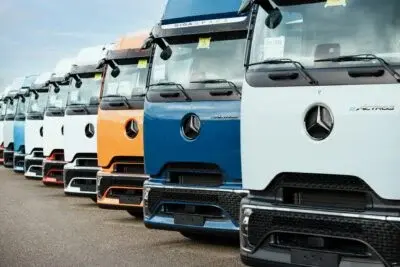
According to ACEA, 171,933 new trucks and 22,590 buses were registered across the European Union in the first six months of the year. This represents year-on-year growth of 9.8% for trucks and 22.7% for buses.
The association attributes the increase in truck registrations to a recovery from a low base in the first half of 2025, while bus demand remained robust. At the same time, ACEA stresses that the market ramp-up for zero-emission commercial vehicles continues to face structural barriers. In the accompanying press release, the association states that “electrically-chargeable vehicles continued to gain market share, but uptake remains below the required pace, constrained by insufficient enabling conditions, notably in the heavier vehicle segments.”
Before examining the country rankings in detail, a brief clarification of terms: In the truck sector, ACEA divides its statistics into different weight categories. The association classifies trucks weighing between 3.5 and 16 tonnes as medium-duty trucks, and those over 16 tonnes as heavy-duty trucks – anything under 3.5 tonnes falls into the van category, which is not covered here.
For buses, ACEA does not distinguish by weight classes; all vehicles intended for passenger transport over 3.5 tonnes are recorded. Additionally, the association does not differentiate between battery-electric vehicles and plug-in hybrids, instead grouping them simply as ‘electrically chargeable’.
Electric truck registrations grow nearly 50%
The truck market was driven primarily by demand for heavy-duty vehicles, with registrations increasing by 11.1%. Medium-duty truck registrations also rose, albeit more modestly, by 2.8%.
Diesel remained the dominant powertrain by a considerable margin. It accounted for 92.1% of all newly registered trucks in the European Union, with diesel registrations increasing by 9.3% year on year.
At the same time, electrically chargeable trucks continued their rapid growth trajectory. Registrations increased by 47.7% compared to the first half of 2025, lifting their market share from 3.6% to 4.8%. Although battery-electric trucks still account for fewer than one in twenty new registrations, they significantly outpaced overall market growth.
Germany leads electric truck uptake
The expansion was concentrated in a small number of countries. Germany recorded the strongest increase among the major markets, with electric truck registrations rising by 88.5%. The Netherlands followed with growth of 44.5%, while France recorded an increase of 43.7%. Together, these three countries accounted for 74% of all electrically chargeable truck registrations in the European Union during the reporting period.
Looking at the overall truck market, Poland posted the strongest growth among the largest markets, with registrations increasing by 25.9%. Spain followed with a 13.2% rise, while Germany recorded growth of 7.1%. The French market remained broadly stable compared to the first half of 2025.
Despite the strong percentage growth for battery-electric trucks, the figures underline that adoption remains concentrated in a limited number of markets and continues from a relatively low base. Diesel therefore remains overwhelmingly dominant in the European heavy-duty vehicle sector.
Electric buses approach 30% market share
The bus segment once again delivered the strongest progress towards zero-emission mobility. Registrations of electrically chargeable buses increased by 56.8% year on year, raising their market share from 21.6% to 27.7%. More than one in four newly registered buses in the European Union is therefore now electrically chargeable.
As in the first quarter of this year, Italy again played a key role in this development. ACEA says registrations of electrically chargeable buses more than quadrupled in the country, helping Italy become the EU’s largest bus market. Overall bus registrations in Italy increased by 51.6%.
Germany and France each recorded overall bus market growth of 21.6%, while Spain was the only major market to decline, with registrations falling by 8.5%. Poland stood out with growth of 78.0%, making it the EU’s fourth-largest bus market.
ACEA calls for stronger framework conditions
Despite the rapid growth of electrically chargeable buses, diesel continued to account for the majority of new registrations. Diesel bus registrations increased by 11%, giving the powertrain a market share of 58.2%. Hybrid-electric buses also expanded, with registrations rising by 10.7% and market share reaching 6.1%.
The latest figures highlight the differing pace of electrification across Europe’s commercial vehicle market. While battery-electric buses continue to establish themselves rapidly, electric trucks are growing strongly but still account for only a small share of new registrations. ACEA therefore reiterates that stronger enabling conditions are required if the transition to zero-emission heavy-duty transport is to accelerate in line with Europe’s climate ambitions.
acea.auto, acea.auto (PDF)