
A2 is getting more expensive. The government is checking whether the concession contract can be terminated.
In short:
Why the Ministry of Infrastructure is considering ending the concession contract for the A2 Nowy Tomyśl-Konin section
How much highway tolls have increased over the past decade
Why the government cannot effectively block rate increases at present
What arguments are put forward by both the infrastructure ministry and the highway concessionaire
The government is scrutinizing the A2 concession
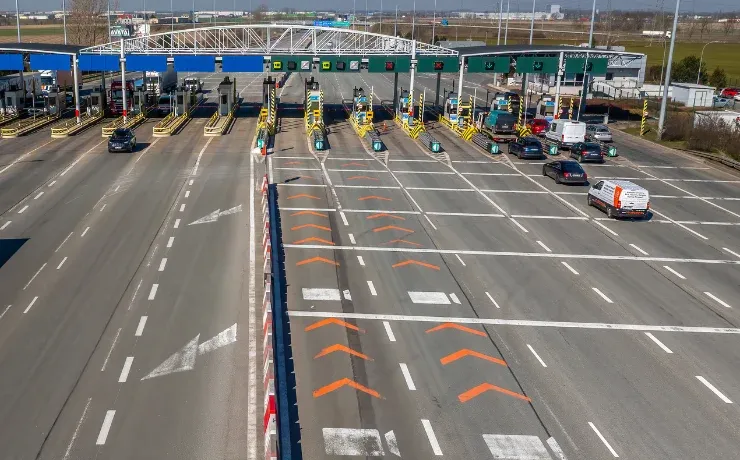
After years of disputes over highway tolls on A2, the government is taking another step. The Ministry of Infrastructure announced that it has requested the General Directorate of National Roads and Highways to conduct an analysis of terminating the concession contract for the Nowy Tomyśl-Konin section.
According to the ministry’s response to a parliamentary inquiry, an audit of the concessionaire’s fulfillment of its obligations is currently underway. This is part of a broader analysis regarding the future of the contract, which expires in March 2037. The ministry’s rationale for taking action is clear. It openly criticizes Autostrada Wielkopolska’s pricing policy, pointing to frequent and systematic increases in fees. Such practices are described as “unacceptable,” but the current contract terms do not allow the public party to prevent price hikes as long as they remain within the maximum rates specified in the contract.
17 zł became 41 zł
The scale of changes is best illustrated by the figures provided by the Ministry of Infrastructure. Between September 2015 and September 2026, tolls for the Nowy Tomyśl-Konin section rose by about 141-145 percent, depending on the vehicle category.
For passenger cars, the cost to use the entire toll road section increased from 17 to 41 zł. This represents a more than double increase over eleven years, according to the Polish Press Agency (PAP). Importantly, these increases occurred regularly. The Autostrada Wielkopolska company itself implemented a second increase in 2025. As of September, passenger car drivers now pay 37 zł for each of the three 50-kilometer sections of the highway between Nowy Tomyśl and Konin, with higher rates also applying to other vehicle categories, PAP notes.
The contract from the 1990s limits the state’s options.
The source of the problem lies in the terms of the concession contract signed back in 1997. That contract adopted a model under which a private operator is responsible for financing the construction, maintenance, and repairs of the highway, with the costs covered by users who pay tolls to use it.
The ministry reminds that, unlike other toll road sections such as A1 Gdańsk-Toruń or A2 Świecko-Nowy Tomyśl, the state has no direct control over the toll rates on the Nowy Tomyśl-Konin route. This is precisely why successive price increases are causing tensions between the public administration and the highway operator. The ministry emphasizes that, despite dissatisfaction, it currently lacks an effective tool to halt the rise in fees.
UOKiK found no irregularities
The ministry also tried to find a solution under consumer law. In March 2026, it turned to the Office for the Protection of Competition and Consumers asking for an assessment of the possibility of addressing cyclical price increases. However, the office’s response did not bring about any breakthrough. UOKiK concluded that there was no basis to accuse the concessionaire of practicing unfair pricing. The reason is simple: the current rates remain below the maximum levels specified in the concession contract.
The ministry also notes that it is not currently working on legal changes that would restrict the ability of concessionaires to raise fees, nor on a subsidy system for selected user groups — according to Portal Samorządowy.
Concessionaire: Rising costs and investments
Autostrada Wielkopolska attributes the price increases to rising costs of maintaining infrastructure and ongoing investments. The company states that greater expenses are needed for road surface repairs, modernizing safety systems, and servicing investment debt.
In its statements, the company also mentions current projects, including expanding sections of A2 near Poznań to three lanes and modernizing interchanges. According to the operator, these investments are funded by private sources, without public support.
Additional costs stem from implementing electronic toll collection systems and the ongoing maintenance of infrastructure. Money.pl reports that, according to the company, maintenance costs rose by over 9.5% year-on-year in the first half of 2025.
Does a more expensive highway mean less safe roads?
GDDKiA points out another issue. The management has previously criticized frequent price increases, arguing that higher fees might encourage some drivers, especially freight operators, to avoid the highway and opt for alternative routes. According to road authorities, this goes against the fundamental purpose of highways, which is to handle transit traffic and ensure a higher level of safety. GDDKiA emphasized that diverting traffic to local roads could increase risks for both drivers and residents living near alternative routes.
Oskar Włostowski